
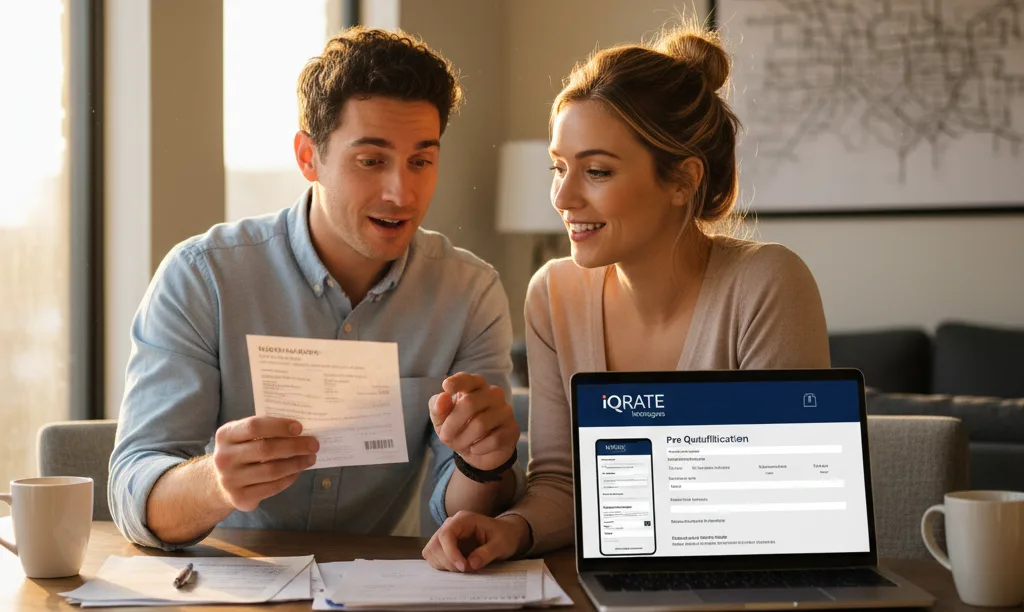

No Credit Score vs. Bad Credit Score: A Critical Distinction
Many potential homebuyers in Texas believe that having no credit score is the same as having a bad one. This is a significant misunderstanding that can stop a homeownership journey before it even begins. Lenders view these two scenarios completely differently.
No Credit Score: This means you have a 'thin file' or are 'credit invisible'. You simply haven't used traditional credit products like credit cards, auto loans, or personal loans long enough for the major bureaus (Equifax, Experian, TransUnion) to generate a FICO score. It’s a blank slate, not a negative one. You may have diligently paid every bill in cash or with a debit card, but those actions don't typically build a credit file.
Bad Credit Score: This indicates a history of financial missteps. It means you do have a credit file, but it contains negative information like late payments, collections, charge-offs, or a bankruptcy. A low score (typically below 620) signals to lenders that you have struggled to manage debt in the past, making you a higher risk.
For a mortgage lender, a blank slate is often preferable to a history of negative marks. While an automated system will likely reject an application with no score, a human underwriter can see the potential in a borrower who simply lives a debt-free lifestyle but is otherwise financially responsible.
What Is Manual Underwriting for a Mortgage Loan?
Manual underwriting is the key that unlocks homeownership for borrowers without a traditional credit score. In a standard mortgage process, your application is fed into an Automated Underwriting System (AUS) like Fannie Mae's 'Desktop Underwriter' (DU) or Freddie Mac's 'Loan Product Advisor' (LPA). This software uses an algorithm to analyze your income, assets, debts, and credit score to issue an initial approval or denial within minutes.
If you have no FICO score, the AUS will almost always issue a denial or a 'Refer' finding, meaning it cannot make a decision. This is where manual underwriting comes in.
Manual underwriting is a process where a human loan underwriter personally reviews your entire financial profile. Instead of relying solely on an algorithm, they dig into your documentation to build a complete picture of your ability and willingness to repay a loan. They analyze your bank statements, pay stubs, and, most importantly, your history of paying non-credit bills. This human-centric approach allows for nuance and consideration of 'compensating factors' that an algorithm would ignore.

Key Aspects of Manual Underwriting:
- Comprehensive Review: The underwriter looks at the stability of your income, your cash reserves, and the consistency of your savings.
- Focus on Non-Traditional Credit: It is designed to evaluate borrowers using alternative credit sources.
- Compensating Factors: A large down payment, substantial savings, or a low debt-to-income ratio can strengthen your file.
What Types of Alternative Credit Can I Use for a Houston Mortgage?
When you don't have a FICO score, you must prove your financial discipline in other ways. This is done by building a case with 'alternative credit' or 'non-traditional credit'. Lenders need to see a documented 12-month history of consistent, on-time payments. The more accounts you can provide, the stronger your application will be.
Here are the most common and powerful forms of alternative credit accepted for a manually underwritten loan in Houston or Pasadena:
- Rental History: This is the single most important piece of alternative credit. Your history of paying rent on time every month is the closest equivalent to making a mortgage payment. It must be verified directly with your landlord or property management company.
- Utility Payments: A 12-month history of on-time payments for essential services is excellent proof of reliability. This includes:
- Electricity
- Natural gas
- Water
- Cable or internet service
- Insurance Premiums: Consistent payments for car insurance, renters insurance, or life insurance demonstrate ongoing financial responsibility.
- Phone Bill: Your cell phone or landline bill can be used.
- Childcare Payments: If you make regular payments to a licensed daycare provider, these can be documented and used.
- School Tuition: Regular tuition payments can also serve as a strong credit alternative.
The goal is to provide at least three sources of alternative credit, with each showing a clean 12-month payment history with zero late payments.
How Do I Properly Document My Rental and Utility Payment History?
Simply saying you pay your bills on time isn't enough; you must provide concrete, verifiable proof. An underwriter needs clear documentation that leaves no room for doubt.

For Rental History:
Your lender will require a Verification of Rent (VOR) form. This document is sent to your landlord or property management company to complete. It asks them to confirm:
- The monthly rent amount.
- The dates of your tenancy.
- A 12-month payment ledger showing the date each payment was received.
- A rating of your payment history (e.g., 'Excellent', 'Good').
Important Note: If you rent from a private individual (like a family member), documentation is more stringent. You will need to provide 12 months of canceled checks (front and back) or bank statements showing the rent payment electronically clearing from your account to theirs each month. Cash payments are nearly impossible to verify and generally cannot be used.
For Utilities and Other Bills:
- Canceled Checks: If you pay by check, provide copies of the front and back of each cleared check for the last 12 months.
- Bank Statements: If you use online bill pay, provide 12 months of bank statements and highlight each payment to the utility provider.
- Direct Verification: Some lenders may accept letters directly from the service providers confirming your 12-month payment history.
Organization is key. Before applying, gather 12 full months of these records to ensure your application process is smooth and efficient.
Which Home Loans Are Best for Buyers With No Credit Score in Pasadena?
For most homebuyers in Pasadena or greater Houston with no established FICO score, the Federal Housing Administration (FHA) loan is the best and most accessible option. FHA loans are insured by the federal government, which gives lenders the confidence to approve borrowers who may not meet conventional loan standards.
The U.S. Department of Housing and Urban Development (HUD), which oversees the FHA, has specific guidelines that permit manual underwriting for borrowers with no credit score. They explicitly allow for the use of non-traditional credit history as a means of qualifying.
Why FHA loans are ideal:
- Clear Guidelines: The FHA handbook provides a clear framework for lenders to follow when manually underwriting a loan using alternative credit.
- Government Backing: The government guarantee reduces the lender's risk, making them more willing to approve the loan.
- Accessibility: FHA loans are designed to help borrowers who may be shut out of the conventional market.
While VA loans (for eligible veterans) also have provisions for manual underwriting, FHA loans are the primary vehicle for non-veteran, first-time homebuyers in this situation.
How Much of a Down Payment Will I Need?
A common misconception is that a no-score loan requires a 20% down payment. While FHA loans are famous for their low 3.5% down payment option, the requirements can be different for a manually underwritten file.
For a borrower with no credit score, lenders will look for 'compensating factors' to offset the perceived risk of not having a FICO history. A larger down payment is a powerful compensating factor.
While it's possible to get approved with 3.5% down, it is more likely that the lender will require at least a 5% to 10% down payment. (The data, information, or policy mentioned here may vary over time.) A higher down payment demonstrates your financial commitment and reduces the lender's loan-to-value ratio, which lowers their risk. Having several months of cash reserves (in addition to your down payment and closing costs) also significantly strengthens your application.
For example, on a $300,000 home in Pasadena, a 10% down payment would be $30,000, compared to the minimum FHA down payment of $10,500.
What Is the Step-by-Step Process for a Manually Underwritten Loan?
The process is more involved than an automated one, but it's straightforward if you're prepared. Here is what to expect:
- Find the Right Lender: Partner with a mortgage broker or lender who is experienced and comfortable with FHA manual underwriting. Not all lenders are.
- Gather Your Documents: Before applying, collect 12 months of statements and records for your rent, utilities, insurance, and any other alternative credit sources.
- Complete the Application: Fill out the Uniform Residential Loan Application (URLA) with your loan officer, being meticulous about disclosing all income and assets.
- Submit for Underwriting: Your loan officer will package your application, income/asset documents, and alternative credit proofs and submit it to a human underwriter.
- Underwriter Review: The underwriter will meticulously review every document. This takes longer than an AUS review, often several days.
- Address Conditions: The underwriter will likely issue a conditional approval with a list of 'conditions'—requests for additional documentation or clarification. This is a normal part of the process. Respond to these requests promptly.
- Receive Final Approval: Once all conditions are met and the underwriter is satisfied, you will receive a 'clear to close', meaning your loan is fully approved.
Does Using Alternative Credit Result in Higher Mortgage Interest Rates Today?
Yes, it is likely that your interest rate will be slightly higher than the best-advertised rates. Lenders use a system of risk-based pricing. A borrower with a documented, high FICO score represents a lower statistical risk than a borrower whose creditworthiness is proven through alternative means.
This doesn't mean you'll receive a bad rate, but you should expect a small premium. For instance, if a borrower with a 780 FICO score qualifies for a 6.75% interest rate, a manually underwritten loan for a no-score borrower might be approved at 7.125% or 7.25%. (The data, information, or policy mentioned here may vary over time.) The difference is often marginal and is the tradeoff for being able to secure a home loan that would otherwise be unattainable. By making consistent mortgage payments, you will begin to build a traditional credit score, which will open up opportunities to refinance to a lower rate in the future. If you have a history of responsible payments but no credit score, don't let that stop your homeownership dream. The key is working with an expert who understands the nuances of manual underwriting. To see how your alternative credit can get you approved for a home in Texas, why not Apply for a Mortgage and connect with an experienced strategist?
Don't let a thin credit file stop you. See how your responsible payment history can get you approved for a Texas home loan.
Author Bio
David Ghazaryan is the expert mortgage strategist and founder behind iQRATE Mortgages. With a mission to fund home loans that traditional banks won't touch, David specializes in helping clients with unique financial situations, including those recovering from foreclosure or bankruptcy. He expertly crafts smart, strategic, and stress-free mortgages by leveraging a vast network of over 100 lenders to secure competitive rates for investors and homebuyers alike. Praised for exceptional customer service, David has helped hundreds of families with a 97% satisfaction rate, guiding them to the mortgage they deserve.
References
HUD Handbook 4000.1 - FHA Single Family Housing Policy Handbook








