
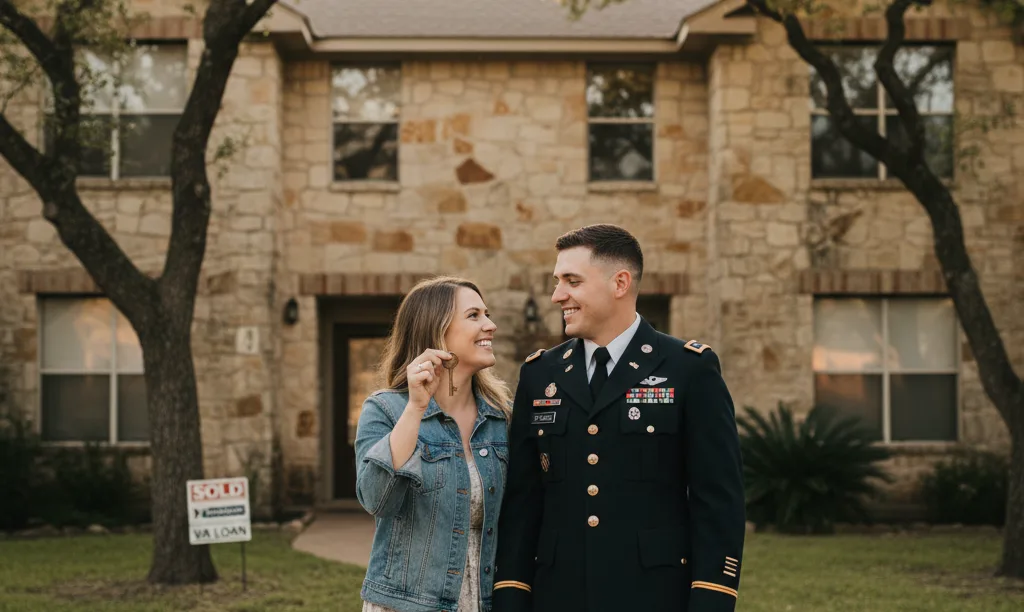

Can I Really Buy an Investment Property with a Veterans Affairs Loan?
This is one of the most common questions, and the answer requires a specific distinction. You cannot use a VA loan to buy a property solely for investment purposes, like a rental home you never intend to live in. However, you absolutely can buy a multi-family property—a duplex, triplex, or even a fourplex—as long as you occupy one of the units as your primary residence. This strategy is popularly known as 'house hacking'.
Essentially, the Department of Veterans Affairs guarantees the loan for your home, and if that home happens to have other units attached, that is perfectly acceptable. You get to live in one unit while your tenants in the other units help pay down your mortgage. This is arguably one of the most powerful and underutilized benefits of the VA home loan program, allowing you to build wealth and generate passive income with a zero down payment mortgage.
Understanding the Primary Residence Rule
The core of this strategy hinges on the primary residence rule. The VA loan is designed to help service members and veterans secure housing, not to finance a rental empire. By living in one of the units, you fulfill this requirement. You are purchasing a home first and an investment second, which aligns perfectly with the program's intent. After fulfilling the initial occupancy period, typically one year, your options for the property may expand, but the initial purchase must be for your own residence.
What are the Occupancy Requirements for a Multi-Family Home Loan in Killeen?
For veterans looking to purchase a multi-family property in a military-centric city like Killeen, understanding the occupancy rules is critical. The VA requires you to have the 'intent to occupy' the property as your primary residence within a reasonable time, which is generally defined as within 60 days of closing.
This requirement is not a suggestion; it is a firm rule. You will be required to sign documents at closing certifying your intent to live in one of the units. The standard expectation is that you will live in the property for at least 12 months. This prevents individuals from using the benefit to quickly flip properties or use it as a pure investment from day one.
- Active Duty Considerations: If you are an active-duty service member who receives orders to relocate after purchasing, the VA has provisions to prevent you from being penalized. You would not be forced to sell the home and could potentially rent out your unit. However, at the time of purchase, the intent must be to live there.
- Spouse Occupancy: In some cases, a spouse's occupancy can fulfill this requirement if the veteran cannot occupy the property, for instance due to an overseas deployment. This should be discussed with your lender as specific circumstances apply.
How Do Lenders Calculate Future Rental Income for Qualification in San Antonio?
This is where the financial power of buying a multi-family home shines, especially in a market like San Antonio with a strong rental demand. Lenders can use the projected rental income from the units you will not be occupying to help you qualify for the loan. This additional income can significantly boost your debt-to-income (DTI) ratio, allowing you to afford a more valuable property.
Here is how it typically works:
- Appraisal and Rental Schedule: The VA appraiser will complete a 'Comparable Rental Schedule' (Form 1007). This document provides an official estimate of the fair market rent for the units you plan to lease out, based on similar rental properties in the area.
- Using a Percentage: Lenders will not use 100% of the gross projected rent. To account for potential vacancies and maintenance costs, they typically use 75% of the projected income.(The data, information, or policy mentioned here may vary over time.) This is a conservative and standard industry practice.
A Practical Example in San Antonio
Let's say you want to buy a duplex in San Antonio for $450,000. Your primary mortgage payment (PITI: Principal, Interest, Taxes, and Insurance) is calculated to be $3,000 per month. You plan to live in one unit and rent out the other.
- The VA appraiser determines the fair market rent for the second unit is $1,600 per month.
- Your lender will use 75% of that amount: $1,600 x 0.75 = $1,200.
- This $1,200 is added to your qualifying income, or in some cases, subtracted from your housing expense. Effectively, your housing payment for DTI calculation purposes becomes $3,000 - $1,200 = $1,800.
This adjustment can be the difference between getting approved or denied, as it dramatically lowers your DTI ratio. If you have existing leases on the property at the time of purchase, lenders may use that information as well, but the appraiser's schedule is often the key document.
Does a Veterans Affairs Loan Work for a Four-Unit Building?
Yes, it does. The VA loan program is not limited to single-family homes or duplexes. You can use your benefit to purchase a property with up to four residential units. This includes:
- Duplex: A two-unit building.
- Triplex: A three-unit building.
- Fourplex (or Quadplex): A four-unit building.

Any property with five or more units is classified as commercial real estate and is not eligible for a standard VA residential home loan. A different type of financing would be required for those properties. For the veteran homebuyer, the four-unit limit provides a fantastic opportunity to scale their 'house hacking' strategy and maximize rental income from a single property purchase.
What are the Property Condition Standards for a Multi-Unit Home?
All properties financed with a VA loan must meet the VA's Minimum Property Requirements (MPRs). These standards ensure the home is safe, sanitary, and structurally sound. For a multi-unit property, the requirements extend to all units, not just the one the veteran will occupy.
Key MPRs for a multi-family property include:
- Separate Utilities: Each unit should ideally have its own separate utility meters, particularly for electricity. While not always a deal-breaker, shared meters can complicate things.
- Independent Access: Each unit must have its own private entrance and exit.
- Self-Sufficient Units: Every unit must be self-contained, meaning it must have its own kitchen facilities (sink, stove), bathroom, and living space.
- Safety and Soundness: The entire property must be free of major defects. This includes a sound roof, functional plumbing and electrical systems, no lead-based paint hazards, and no pest infestations.
If the VA appraisal notes any MPR-related issues, they must be repaired before the loan can close. It is crucial to work with a real estate agent familiar with VA MPRs to avoid properties that will not pass inspection.
How Does the Veterans Affairs Funding Fee Differ for a Duplex Purchase?
This is a simple but important point of clarification: it does not differ at all. The VA funding fee is calculated based on three factors:
- The loan amount.
- The size of your down payment (if any).
- Whether this is your first time using the VA loan benefit or a subsequent use.
The type of property—be it a single-family home, a condo, or a fourplex—has no impact on the funding fee percentage. A first-time user with zero down payment will pay the same funding fee percentage on a $400,000 single-family home as they would on a $400,000 duplex. Certain veterans, such as those receiving VA disability compensation, are exempt from paying the funding fee altogether.
Is It Harder to Get a Veterans Affairs Loan Approved for a Duplex Than a Single-Family Home?
'Harder' is not the right word; 'more detailed' is more accurate. The underwriting process for a multi-family property is more involved than for a standard single-family home. Lenders need to analyze not just your personal finances but also the property's potential as an income-producing asset.
Here are the extra layers of scrutiny involved:
- Rental Income Calculation: As discussed, lenders must verify and calculate the projected rental income, adding an extra step to the qualification process.
- Appraisal Scrutiny: The appraisal for a multi-unit property is more complex and may carry a slightly higher cost.(The data, information, or policy mentioned here may vary over time.)
- Cash Reserves: While the VA itself does not mandate cash reserves, some lenders may require you to have a few months of mortgage payments saved up as a 'lender overlay'.(The data, information, or policy mentioned here may vary over time.) This provides a cushion in case you have a vacancy in a rental unit.
While there are more moving parts, working with a mortgage professional who specializes in VA loans for multi-family properties can make the process smooth and straightforward. An experienced lender will know exactly what documentation is needed and can anticipate underwriting requests.
What are the Long-Term Benefits of House-Hacking with a Veterans Affairs Loan?
Choosing to buy a duplex in Killeen or a triplex in San Antonio with your VA loan is more than just a home purchase; it's a strategic financial move with lasting benefits.
- Wealth and Equity Building: Your tenants are actively helping you pay down your mortgage principal every month. This allows you to build equity at an accelerated rate compared to owning a single-family home.
- Passive Income Stream: The rental income can cover a significant portion, or in some cases all, of your mortgage payment. Once the mortgage is paid off, that income becomes a powerful source of long-term cash flow for retirement or other investments.
- Future Investment Opportunities: After living in the property for the required time, you can move out and rent your unit, turning the entire property into a full-fledged rental. Because you still have remaining VA loan entitlement, you can then proceed to buy another primary residence with a new VA loan, repeating the process.
This strategy is a direct path to becoming a real estate investor with minimal out-of-pocket costs, all thanks to the incredible benefit you earned through your military service.
Purchasing a multi-family property with a VA loan is a powerful step towards financial freedom. If you're ready to explore how house hacking can work for you, Apply for a Mortgage to get a clear picture of your eligibility from a specialist who understands the nuances of the process.
Author Bio
David Ghazaryan is the expert mortgage strategist and founder behind iQRATE Mortgages. With a mission to fund home loans that traditional banks won't touch, David specializes in helping clients with unique financial situations, including those recovering from foreclosure or bankruptcy. He expertly crafts smart, strategic, and stress-free mortgages by leveraging a vast network of over 100 lenders to secure competitive rates for investors and homebuyers alike. Praised for exceptional customer service, David has helped hundreds of families with a 97% satisfaction rate, guiding them to the mortgage they deserve.
References









