


Can I Start the VA Mortgage Process Before Moving to San Antonio?
Yes, you can and absolutely should. The key to a low-stress Permanent Change of Station (PCS) home purchase is starting early. Most VA-approved lenders allow you to begin the mortgage pre-approval process as soon as you have your official PCS orders in hand. This can be up to 90 days before your report date. (The data, information, or policy mentioned here may vary over time.)
Starting early provides several significant advantages:
- Stronger Offer: A pre-approval letter shows sellers you are a serious, qualified buyer. In competitive markets like San Antonio, this can make your offer stand out.
- Clear Budget: You will know exactly how much you can afford, allowing you to focus your house hunt on properties within your budget.
- Time to Resolve Issues: If any unexpected issues arise with your credit or documentation, starting early gives you and your lender ample time to resolve them without jeopardizing your closing date.
For example, if your report date to Joint Base San Antonio is August 1st, you can confidently start working with a mortgage lender and a military-friendly real estate agent in early May. This gives you plenty of time to get pre-approved, find a home, go under contract, and schedule the closing to align with your arrival.
What Documents Are Needed Besides My Leave and Earnings Statement?
While your Leave and Earnings Statement (LES) is a core document, lenders require a complete financial picture to approve your VA loan. Gathering these documents early will streamline the underwriting process significantly. You will need a combination of military-specific paperwork and standard financial documents.
Essential Military Documents
- Certificate of Eligibility (COE): This is the most crucial document. It proves to the lender that you meet the VA's minimum service requirements. Your lender can typically pull this for you online in minutes with just your date of birth and social security number. If not, you can request it directly from the VA.
- Permanent Change of Station (PCS) Orders: Your official orders are non-negotiable. They verify your relocation, your report date, and your new duty station, which is essential for calculating your new Basic Allowance for Housing (BAH).
- Statement of Service: If you are on active duty, your lender may require a Statement of Service signed by your commanding officer. It verifies your name, rank, date of entry into service, and any information about future separation.
Standard Financial and Personal Documents
- Government-Issued ID: A clear copy of your driver's license or other valid photo ID.
- Bank Statements: Typically the last two months of statements for all checking, savings, and investment accounts.
- Tax Returns: Your federal tax returns for the past two years, including all schedules and W-2s.
- Pay Stubs: If you have a second job or your spouse is also on the loan application, provide pay stubs for the last 30 days.
How to Handle Remote Home Inspections and Appraisals
Managing the inspection and appraisal from another state is one of the biggest concerns for service members. However, this is a standard part of the process for experienced lenders and real estate agents in military communities like Killeen and San Antonio.
The Home Inspection
This step is for your protection and is highly recommended, though not required by the VA. Your real estate agent is your representative on the ground.
- Scheduling: Your agent will schedule the inspection with a reputable, licensed inspector.
- Attendance: Your agent should attend the inspection on your behalf. They can use video call services like FaceTime or Zoom to walk you through the property and show you any areas of concern the inspector points out in real-time.
- Reviewing the Report: The inspector will provide a detailed written report with photos. You, your agent, and your lender will review this document to identify any necessary repairs that should be negotiated with the seller before proceeding.

The VA Appraisal
This step is required by the lender and the VA. Its purpose is to determine the home's fair market value and ensure it meets the VA's Minimum Property Requirements (MPRs).
- Ordering: Your lender will order the appraisal from a VA-approved appraiser in the area.
- The Process: You do not need to be involved in this step. The appraiser will coordinate with the seller's agent to access the home. They will assess the property's condition, compare it to similar recently sold homes, and issue a valuation.
- The Outcome: The lender will receive the report. If the home appraises at or above the purchase price and meets MPRs, the loan process continues. If it appraises low, your agent will help you negotiate with the seller.
Can My Spouse Close in Killeen if I Haven't Arrived?
Yes, this is very common and easily managed. If you are unavailable for the closing date due to training, deployment, or simply being in transit, your spouse can handle the closing in a couple of ways.
- Spouse as a Co-Borrower: If your spouse is a co-borrower on the VA loan, they are a legal party to the transaction and can sign the closing documents without any additional paperwork required from you.
- Spouse as Your Agent via Power of Attorney: If your spouse is not on the loan, or if you simply cannot attend, you can grant them authority to sign on your behalf using a Power of Attorney. This is the most flexible option for military members.
Will Lenders Count My Basic Allowance for Housing (BAH) as Income?
Yes, VA lenders count your non-taxable BAH as stable, reliable income. This is a significant benefit of the VA loan program. The lender will use the BAH rate for your new duty station, not your current one. This is critical because it often increases your purchasing power.
To use your future BAH, you must provide your lender with your official PCS orders. The orders will state your new duty station, for example, 'Fort Cavazos' in Killeen. The lender will then use the Department of Defense's official BAH calculator to determine the exact allowance for that zip code and your pay grade and apply it to your income for qualification.
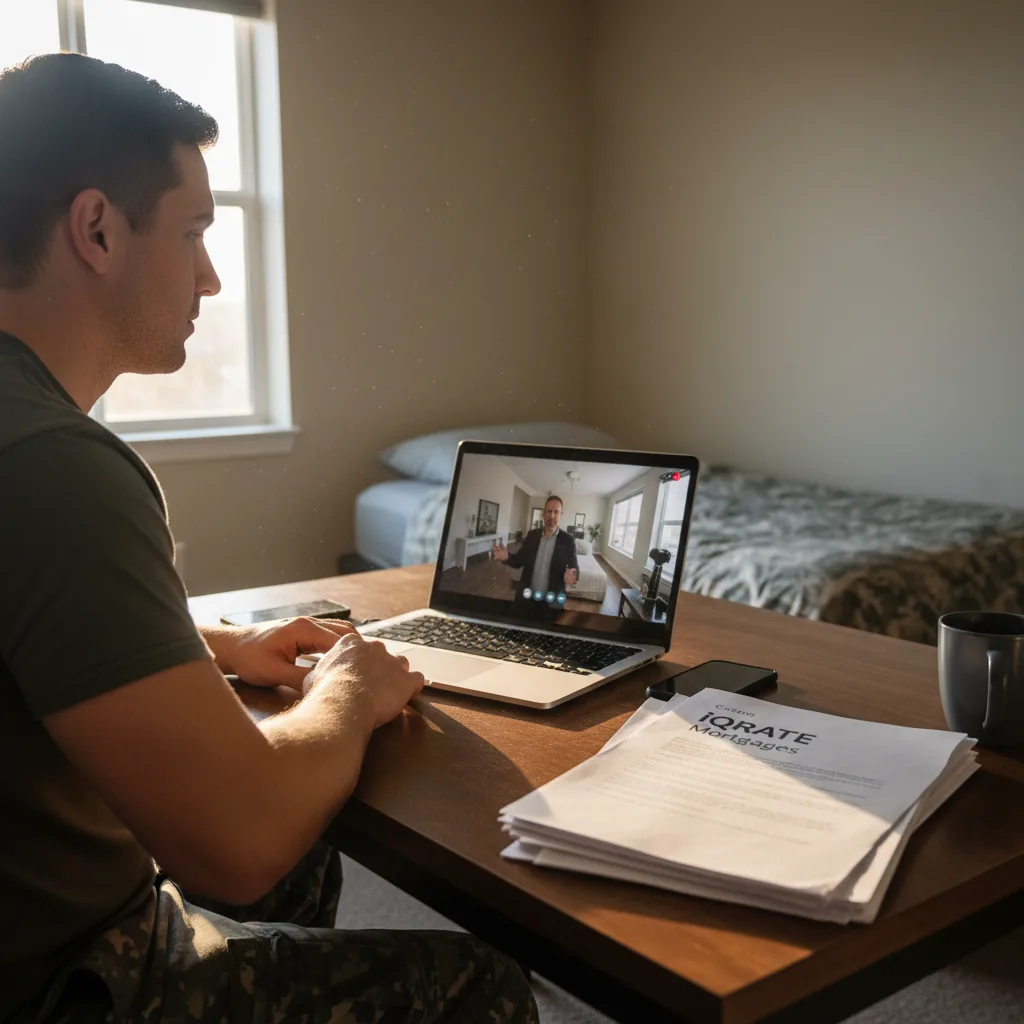
For instance, if you are moving from a lower-cost area to San Antonio, the lender will use the higher San Antonio BAH rate to calculate your debt-to-income ratio, which can help you qualify for a larger loan amount.
How Do I Coordinate the Closing Date with My Report Date?
Timing is everything during a PCS. The goal is to move into your new home as soon as possible after arriving to minimize time in temporary lodging and reduce stress. The VA requires that you, the veteran, intend to personally occupy the property as your primary residence within a reasonable time after closing, which is typically defined as 60 days.
Here’s a common strategy:
- Permissive TDY: Many commands grant up to 10 days of permissive temporary duty (TDY) for house hunting. (The data, information, or policy mentioned here may vary over time.) You can use this time either before or after your travel to find a home or attend the closing.
- Ideal Closing Window: Aim to schedule your closing date a few days before your official report date or within the first week of arriving. This gives you time to get your keys, do a final walkthrough, and be ready for your household goods delivery without interfering with your check-in process at your new unit.
- Communicate with Your Team: Keep your lender and real estate agent updated on your travel itinerary. They are accustomed to working with military timelines and can coordinate with the title company to ensure everything is ready for your arrival.
What is a Power of Attorney and Do I Need One for a Remote Closing?
A Power of Attorney (POA) is a legal document that grants a trusted person—known as your 'agent' or 'attorney-in-fact'—the authority to act on your behalf in specific matters. For a remote home closing, a POA is an indispensable tool.
Types of POAs
It's crucial to use the correct type of POA, as lenders and title companies have strict requirements.
- General Power of Attorney: This grants broad authority and is often not accepted for real estate transactions because it lacks specificity.
- Specific (or Special) Power of Attorney: This is the document you need. It grants your designated agent authority only for a particular transaction, such as 'the purchase of the property at 123 Main Street, San Antonio, TX 78201'.
Your lender or the title company will provide the exact POA document they require. You will then need to sign it in the presence of a notary public. Most military installations have a legal assistance office (JAG) that can provide notary services free of charge. Once notarized, you will need to mail the original 'wet-ink' document to the title company ahead of the closing date. Navigating a PCS move and a VA loan requires a lender who understands military timelines and documentation. If you're planning a move to Texas, connect with a mortgage strategist who specializes in stress-free military relocations to ensure a smooth transition into your new home.
Ready to make your PCS to San Antonio as smooth as possible? Starting your mortgage process early is the key. Our team specializes in VA loans and military relocations, ensuring you're ready to make a winning offer when you find the perfect home. Take the first step and Apply now to get a head start on your move.
Author Bio
David Ghazaryan is the expert mortgage strategist and founder behind iQRATE Mortgages. With a mission to fund home loans that traditional banks won't touch, David specializes in helping clients with unique financial situations, including those recovering from foreclosure or bankruptcy. He expertly crafts smart, strategic, and stress-free mortgages by leveraging a vast network of over 100 lenders to secure competitive rates for investors and homebuyers alike. Praised for exceptional customer service, David has helped hundreds of families with a 97% satisfaction rate, guiding them to the mortgage they deserve.
References
CFPB - What is a power of attorney?
U.S. Department of Veterans Affairs - Certificate of Eligibility
U.S. Department of Veterans Affairs - Home Loan Occupancy Requirements









