

What Is a Gift of Equity and How Does It Work?
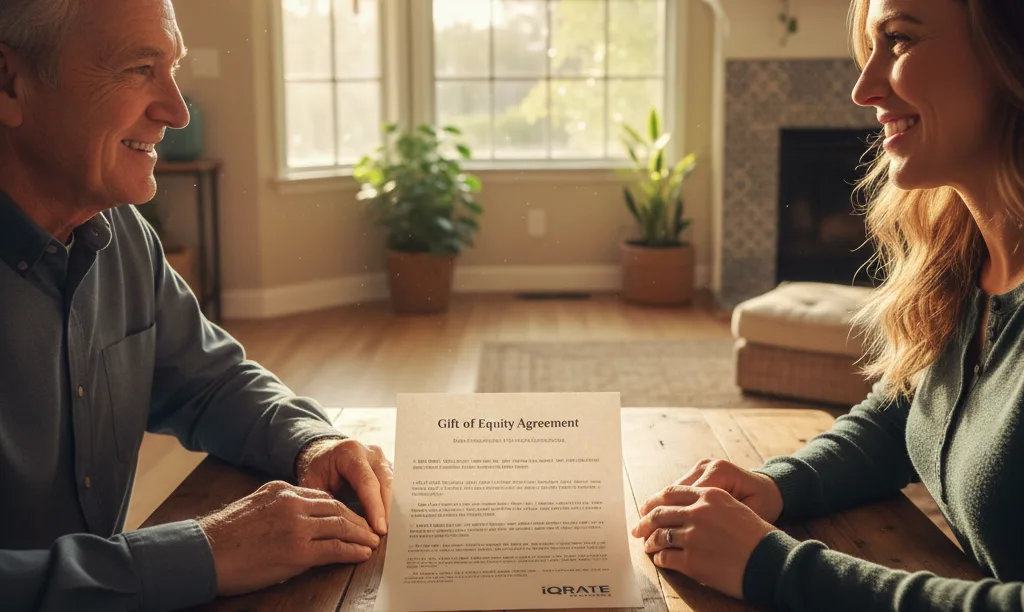
A gift of equity is a method for a home seller to provide a down payment to a buyer by selling the property for less than its current market value. The difference between the appraised value and the lower sales price becomes the 'gift'—a form of equity that the buyer can use to satisfy the lender's down payment and sometimes even closing cost requirements. This transaction is almost exclusively used between family members.
Here’s a practical example in the San Diego market:
- Market Value: Your parents own a home in Chula Vista that an independent appraiser values at $750,000.
- Agreed Sales Price: They agree to sell it to you for $675,000.
- Gift of Equity: The $75,000 difference is the gift of equity. ($750,000 - $675,000 = $75,000).
From a lender's perspective, you are essentially making a $75,000 down payment (10% of the $750,000 value) without having to bring any cash to the table for that portion. This equity is documented on the settlement statement, satisfying the lender's requirement and making homeownership accessible without years of saving.
Why Lenders Accept It
Lenders see this as a secure transaction because you, the buyer, start with immediate equity in the property. Unlike a cash gift, which involves transferring funds between bank accounts, a gift of equity is a paper transaction that is finalized at closing. It demonstrates a stable investment from day one, reducing the lender's risk. The key is proving that the transaction is legitimate and properly documented, which starts with an official letter.
The Essential Gift of Equity Letter
For a lender to accept a gift of equity, the donor (the seller) must write a formal gift letter. This document is a non-negotiable part of the mortgage underwriting process. It serves as legal proof that the equity is a genuine gift and not a loan that needs to be repaid. An improperly written letter can halt the entire loan process.
The letter must be clear, concise, and contain several specific pieces of information:
- Donor’s Information: The seller's full name, address, and phone number.
- Recipient’s Information: The buyer's full name.
- Relationship: The donor’s relationship to the buyer (e.g., 'parent', 'grandparent').
- Property Address: The full address of the property being sold in San Diego or Chula Vista.
- The Gift Amount: The exact dollar amount of the equity being gifted.
- The 'No Repayment' Clause: A clear and unambiguous statement that the funds are a gift and there is no expectation of repayment, ever. This is the most critical part of the letter.
- Date and Signatures: The letter must be dated and signed by both the donor(s) and the recipient(s).
Here’s a template sentence for the 'no repayment' clause: 'This is a bona fide gift, and there is no obligation, expressed or implied, of repayment. The funds are not being made available from any person or entity with an interest in the sale of the property.'
Your mortgage lender will typically provide a specific template they want you to use. It is crucial to use their format to avoid any back-and-forth with the underwriters.

Determining the Home's Value for the Loan
The entire gift of equity transaction hinges on the home's official market value, which is determined by a licensed, independent appraiser. The lender, not the buyer or seller, will order this appraisal to ensure an unbiased valuation.
The appraiser assesses the property based on its condition, features, and recent sales of comparable homes in the area, such as other properties in your specific San Diego neighborhood. The final appraised value establishes the basis for the loan and the gift.
It’s important to understand how lenders use this information. The loan-to-value (LTV) ratio is calculated based on the lesser of the home's appraised value or the sales price. However, with a gift of equity, the loan amount is based on the sales price, while the down payment credit comes from the appraised value.
- Example Continued:
- Appraised Value: $750,000
- Sales Price: $675,000
- Gift of Equity: $75,000
- Loan Amount: $675,000
The lender views this as a $750,000 property for which you've already 'paid' $75,000. Your loan of $675,000 against a $750,000 asset represents a 90% LTV, a strong position for a borrower.
Can a Gift of Equity Cover the Entire Down Payment?
Yes, in many cases, the gift of equity can cover the entire minimum down payment required for the loan. Whether this is possible depends on the loan program and the size of the gift.
FHA Loans
FHA loans are a popular choice for transactions involving gifts of equity. They require a minimum down payment of 3.5%. If the gift of equity is equal to or greater than 3.5% of the appraised value, it can cover the full down payment. If the gift is large enough, it can sometimes be used to cover closing costs as well, though specific lender rules apply.
Conventional Loans (Fannie Mae & Freddie Mac)
Conventional loans also permit gifts of equity. For a primary residence, a gift of equity can cover the entire minimum down payment, which can be as low as 3% or 5%, depending on the program. However, if the down payment is less than 20%, the buyer may still need to have some of their own funds to contribute toward closing costs or reserves, depending on the automated underwriting system's findings.
For example, if the gift of equity covers a 15% down payment on a home in San Diego, the lender may still require you to show you have funds for a few months of mortgage payments in a savings account (post-closing reserves).
Navigating Tax Implications for a Chula Vista Home Sale
Both the buyer and seller should be aware of potential tax implications, although they are often less severe than people fear. It is essential to consult a tax professional for advice specific to your situation.

For the Seller (Donor)
Selling a home for less than its market value means the gifted equity amount is subject to federal gift tax rules. However, most transactions do not result in an actual tax payment.
- Annual Gift Tax Exclusion: For 2024, an individual can give up to $18,000 to any other individual without having to file a gift tax return. If the sellers are a married couple, they can jointly give up to $36,000 to the buyer.
- Lifetime Gift Tax Exemption: If the gift amount exceeds the annual exclusion, the seller must file a gift tax return (Form 709). However, they will likely not owe any tax. The excess amount is simply deducted from their substantial lifetime gift and estate tax exemption, which is over $13 million per individual as of 2024.
For the Buyer (Recipient)
Receiving a gift, whether cash or equity, is not considered taxable income for the recipient. You will not have to pay income tax on the gifted equity.
However, the gift does affect your property's cost basis. Your cost basis will be the price your parents (the sellers) originally paid for the home, not the price you paid. This is important because when you eventually sell the home, your capital gains will be calculated based on this lower original basis, potentially leading to a higher tax liability down the road.
Loan Types Compatible With a Gift of Equity
A gift of equity is a widely accepted source of down payment across most major mortgage programs, as long as the donor is a family member as defined by the loan guidelines.
- FHA Loans: FHA guidelines are very accommodating of gifts of equity from family members. It's a common practice for FHA financing.
- VA Loans: VA loans technically require no down payment, but a gift of equity can be used to reduce the loan amount or pay down the VA funding fee.
- Conventional Loans: Both Fannie Mae and Freddie Mac permit gifts of equity from related persons. The documentation requirements are strict, but the process is well-established.
- Jumbo Loans: Some jumbo lenders may allow gifts of equity, but their rules are often more stringent. They may require the buyer to contribute a certain percentage of the down payment from their own funds. (The data, information, or policy mentioned here may vary over time.)
Structuring the Purchase Contract in San Diego
Properly documenting the gift of equity in the purchase contract is a critical step for homebuyers in California. The agreement must explicitly state the nature of the transaction to avoid confusion with the lender, escrow company, and title company.
When using the California Residential Purchase Agreement (RPA), the gift should be clearly noted. This is often done in the 'Terms of Purchase & Allocation of Costs' section or through an addendum.
A clear statement should be included, such as:
'Seller agrees to gift buyer a total of $[Amount] in equity at the close of escrow. This gift of equity represents the difference between the appraised value and the purchase price of $[Amount]. This amount is to be credited to the buyer and applied toward the down payment and/or closing costs.'
Working with a real estate agent and a mortgage advisor who are experienced with gift of equity transactions in San Diego is invaluable. They will ensure the language in the contract meets the specific requirements of California law and your lender's underwriting standards, preventing last-minute hurdles before closing. A gift of equity is a powerful tool for family homeownership, but it requires careful planning and precise execution. If you're considering this path for a home in California, discussing your scenario with a mortgage strategist can ensure your contract, gift letter, and loan application are structured correctly from the start.
Navigating a gift of equity transaction requires careful planning and expert guidance. If you're ready to see how this could work for your family's home purchase in California, take the first step by exploring your mortgage options. You can apply now to get a clear and personalized plan.
Author Bio
David Ghazaryan is the expert mortgage strategist and founder behind iQRATE Mortgages. With a mission to fund home loans that traditional banks won't touch, David specializes in helping clients with unique financial situations, including those recovering from foreclosure or bankruptcy. He expertly crafts smart, strategic, and stress-free mortgages by leveraging a vast network of over 100 lenders to secure competitive rates for investors and homebuyers alike. Praised for exceptional customer service, David has helped hundreds of families with a 97% satisfaction rate, guiding them to the mortgage they deserve.
References









