
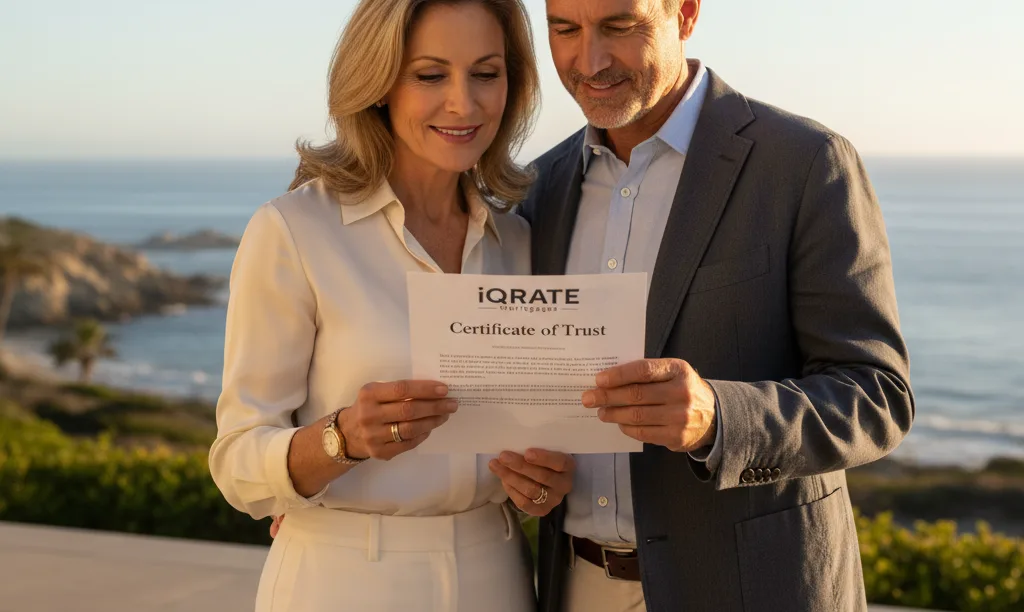

Why Buying a Home From a Trust is Different for a Mortgage Lender
When you purchase a property from an individual, the transaction is straightforward. The seller is a person with clear legal authority to sell. When you buy a home held in a trust, the 'seller' is not a person but a legal entity. This distinction is critical for a mortgage lender, especially on a jumbo loan where the financial risk is substantial. The lender’s primary concern is ensuring the property's title can be transferred cleanly and without any future legal challenges.
A trust introduces an extra layer of legal complexity. The lender must perform due diligence to answer several key questions:
- Is the trust valid? The lender needs confirmation that the trust was legally established and is currently in good standing.
- Who has the authority to sell? The lender must verify that the person signing the sales contract, known as the trustee, has the legal power granted by the trust documents to sell the real estate.
- Are there any restrictions? Some trusts contain specific clauses that may limit the sale price, the timing, or who the property can be sold to. The lender and title company need to confirm no such restrictions exist that could invalidate the sale.
This verification process protects both the lender and you, the buyer. It prevents a scenario where a disgruntled beneficiary challenges the sale later, creating a legal nightmare and a cloud on your property's title. For a high-value purchase in a market like La Jolla, lenders are exceptionally meticulous in reviewing every detail before funding a jumbo loan.
What Specific Trust Documents Will the Lender Require?
To underwrite a mortgage for a trust-owned property, the lender and title company need a specific set of documents from the seller's side. As the buyer, ensuring the seller can produce these documents promptly is key to a smooth transaction. Delays in receiving them are a common reason for extended closing periods.
Here is a breakdown of the essential paperwork:
Certificate of Trust (or Trust Certification): This is the single most important document. It's a summary of the trust that confirms its existence, identifies the trustees, and affirms their powers to sell or mortgage real estate. It provides the necessary information without disclosing private family details contained in the full trust agreement. Lenders prefer this because it is concise and directly addresses their concerns.
The Full Trust Agreement: While a Certificate of Trust is often sufficient, some lenders, particularly for complex trusts or very large jumbo loans, may request a copy of the complete trust agreement. (The data, information, or policy mentioned here may vary over time.) Their legal department will review it to ensure there are no hidden clauses that could affect the transfer of title.
Statement of Authority or Trustee's Affidavit: This is a sworn statement signed by the trustee confirming they have the authority to act on behalf of the trust. It often includes language indemnifying the lender and title company against any future claims from beneficiaries.
Tax Identification Number (TIN): The trust has its own TIN, similar to a Social Security number for an individual, which is required for tax and reporting purposes during the sale.
Death Certificate (if applicable): If the original grantor of the trust is deceased and a successor trustee is now in charge, a certified copy of the death certificate will be required to prove the transfer of authority to that successor trustee.

Who Has the Legal Authority to Sign the Purchase Contract?
The only individual with the legal authority to sign a purchase contract for a trust-owned property is the currently appointed trustee. The trustee is the person or institution designated to manage the trust's assets on behalf of the beneficiaries. It's crucial to identify this person correctly from the outset.
Here’s how to navigate this:
- Identify the Trustee: The trust documents will explicitly name the trustee(s). It could be one person, a married couple acting as co-trustees, an adult child named as a successor trustee, or a corporate entity like a bank.
- Co-Trustees: If there are co-trustees, the trust agreement will specify whether they must act jointly (all must sign) or if they can act independently. In a luxury market like Malibu, where properties can be held in complex family trusts, it's common to see two or more siblings as co-trustees. If joint action is required, coordinating all signatures can be a logistical challenge that adds time to the process.
- Successor Trustees: If the original trustee has passed away or become incapacitated, the successor trustee steps in. Their authority must be proven with documentation like a death certificate or a doctor's letter confirming incapacitation, as outlined in the trust agreement.
Before you write your offer, your real estate agent should request proof of trusteeship from the seller's agent to ensure you are negotiating with the person who has the legitimate power to sell the property.
How Can I Verify the Trust is in Good Standing?
Verifying a trust's 'good standing' means confirming its legal validity and ensuring there are no internal issues that could derail the sale. While your lender and the title company will conduct their own formal review, you can take proactive steps early on.
- Early Title Report: Request that the seller's agent open a preliminary title report as soon as possible. The title company will perform an initial review of the trust documents on file and identify any potential issues, such as an improperly recorded deed or an outstanding lien against a beneficiary.
- Review the Certificate of Trust: When you receive the Certificate of Trust, check that it clearly states the power to 'sell, convey, and encumber real property'. If this language is vague or missing, it's a red flag.
- Ask About Beneficiaries: While you are not entitled to know the private details of the trust, your agent can ask if all beneficiaries are in agreement with the sale. A dispute among beneficiaries is one of the most common and difficult obstacles to overcome in a trust sale.
For a multi-million dollar jumbo loan on a home in Beverly Hills, this preliminary diligence is not just recommended; it's essential to avoid wasting time and money on a transaction that is legally blocked from closing.
Do Jumbo Loan Appraisals Have Stricter Requirements?
The appraisal standards for a jumbo loan are already more rigorous than for a conventional loan, but the fact that the property is owned by a trust does not change the appraiser's methodology for determining value. The appraiser will still focus on comparable sales, property condition, location, and unique features.
However, the trust ownership introduces a critical administrative requirement for the appraisal. The appraiser must correctly identify the owner of record on the appraisal report. The report cannot list an individual's name; it must list the trust.
For example, the owner must be listed as: 'Jane Smith, as Trustee of the Smith Family Revocable Trust'.
If the appraisal report comes back with the wrong owner listed, the lender’s underwriter will reject it. This forces a correction and re-submission, causing a delay of several days. It's a small detail that can have a significant impact on your closing timeline.
How Do I Write an Offer to Purchase a Home in Malibu From a Trust?
Writing a clean, enforceable offer is crucial. A poorly written offer can lead to confusion or be rejected outright. Work with your real estate agent to ensure the purchase agreement is structured correctly.
Correctly Identify the Seller: The most critical step is to name the seller properly. Do not write the individual's name. The correct format is '[Trustee's Name], as Trustee of the [Full Name of the Trust]'. For example: 'Robert Jones, as Trustee of the Jones Family Living Trust dated March 15, 2012'. Your agent should get this exact legal name from the seller's agent.
Include a Document Review Contingency: Add a contingency to your offer that allows you a set period (e.g., 5-7 days) to review and approve the Certificate of Trust and confirm the trustee’s authority. This protects you if you discover a problem with the trust's legal standing.
Propose a Realistic Escrow Period: Do not propose a quick 21- or 30-day close. A trust sale in California realistically requires 45 to 60 days. (The data, information, or policy mentioned here may vary over time.) Acknowledge this upfront in your offer to show the seller you understand the process and are a serious, well-informed buyer.
Request Proof of Authority: Your offer can include a request for the seller to provide the Certificate of Trust and any other necessary documents (like a death certificate for a successor trustee) within a specific number of days after acceptance.
What Are the Common Title Issues That Arise with Trust Sales?
Title insurance is non-negotiable in any real estate transaction, but it's especially vital in a trust sale. The title company is responsible for uncovering any issues that could affect your ownership rights. Here are some common problems they find:

- Improperly Funded Trust: The original homeowners may have created a trust but failed to properly execute and record a new deed transferring the property from their individual names into the trust. If the property was never legally 'funded' into the trust, the trustee has no authority to sell it.
- Cloud on Title from a Deceased Trustee: If a co-trustee passed away, their death certificate must be recorded with the county. If this was not done, they technically remain on the title, creating a 'cloud' that must be cleared before the sale can proceed.
- Federal Tax Liens: If a beneficiary of the trust has an outstanding federal tax lien, it can sometimes attach to the trust's property, even if the beneficiary isn't the trustee. This must be paid off before the title can be cleared.
- Disputes Among Successor Trustees or Beneficiaries: Internal family conflicts can spill over into the sale. A beneficiary might object to the sales price or the distribution of funds, leading to legal challenges that can halt the closing process indefinitely.
How Long Does It Typically Take to Close on a Trust-Owned Property?
While a standard home purchase can often close in 30 days, you should budget more time for a trust-owned property. A realistic timeline for closing on a trust property with a jumbo loan is 45 to 60 days. (The data, information, or policy mentioned here may vary over time.)
Here is a potential breakdown of the timeline:
- Week 1: Offer accepted. Escrow is opened. Buyer's lender requests all trust documents from the seller.
- Week 2-3: Lender's legal department and the title company conduct a thorough review of the trust documents. The appraisal is ordered.
- Week 4: The underwriter reviews the appraisal and the trust documentation. They may issue a conditional loan approval with requests for additional clarification or paperwork (e.g., a statement from the trustee).
- Week 5-6: The trustee provides the requested information. The title company works to clear any identified title issues. The lender issues a final loan approval and 'clear to close'.
- Week 7-8: Loan documents are signed by you and the trustee. The loan funds, and the sale is recorded with the county.
This extended timeline accounts for the back-and-forth between the lender’s legal team, the title officer, and the trustee, which is a normal part of the process for a complex transaction in La Jolla or Malibu. Purchasing a property from a trust requires specialized knowledge. To ensure a smooth process for your jumbo loan, it's best to work with a mortgage advisor who has direct experience with the unique legal and financial requirements of trust sales.
The intricacies of purchasing a home from a trust demand specialized knowledge. If you are prepared to secure financing for a trust-owned property, take the next step and apply now with our team of jumbo loan experts.
Author Bio
David Ghazaryan is the expert mortgage strategist and founder behind iQRATE Mortgages. With a mission to fund home loans that traditional banks won't touch, David specializes in helping clients with unique financial situations, including those recovering from foreclosure or bankruptcy. He expertly crafts smart, strategic, and stress-free mortgages by leveraging a vast network of over 100 lenders to secure competitive rates for investors and homebuyers alike. Praised for exceptional customer service, David has helped hundreds of families with a 97% satisfaction rate, guiding them to the mortgage they deserve.
References
CFPB - What is a trust and can it hold title to real property?









