


The Fannie Mae Ten-Financed Property Limit Explained
For many real estate investors, securing the first few rental properties using conventional mortgages is a straightforward process. The rates are competitive, and the terms are familiar. However, a significant roadblock appears once you have financed ten properties. This is commonly known as the Fannie Mae and Freddie Mac ten-financed property limit. These government-sponsored enterprises (GSEs), which buy most of the residential mortgages in the U.S., impose this cap as a risk management measure.
From their perspective, an investor holding more than ten mortgages represents a higher concentration of risk. A downturn in the rental market or a personal financial setback could lead to a cascade of defaults. To protect their portfolio and the broader housing market, they limit their exposure to any single investor. This rule applies to the total number of financed 1-4 unit residential properties you own, not just the ones you are currently applying for a loan on. Once you hit this ceiling, most conventional lenders will be unable to offer you another mortgage, effectively pausing your expansion plans if you don't have an alternative strategy.
Best Investor Loan for Your Eleventh Dallas Property
When you are ready to purchase your eleventh rental property in a competitive market like Dallas, your best option is typically a Debt Service Coverage Ratio (DSCR) loan. This is a type of non-qualified mortgage (non-QM), meaning it doesn't have to follow the strict GSE guidelines. Instead of scrutinizing your personal income and debt-to-income ratio, DSCR lenders focus on one primary metric: the property's ability to generate enough income to cover its debt obligations.
How DSCR Works
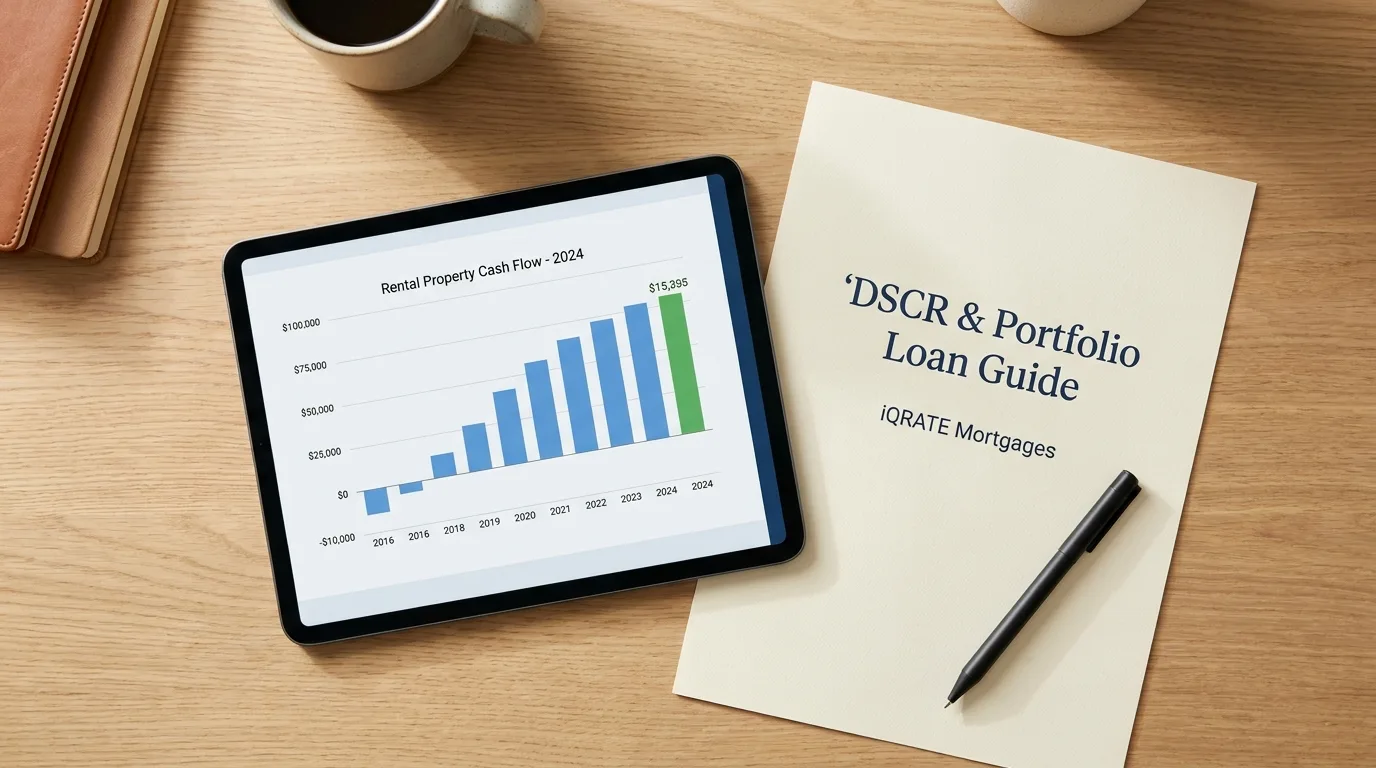
The formula is simple: DSCR = Gross Rental Income / Total Debt Service (Principal, Interest, Taxes, Insurance, and HOA dues).
Lenders want to see a ratio of 1.0 or higher, with most preferring 1.25 or more. A ratio of 1.25 means the property generates 25% more income than is needed to cover its expenses.
Example for a Dallas Property:
- You find a duplex in the Bishop Arts District in Dallas you want to buy.
- Projected monthly rental income: $4,000
- Estimated monthly mortgage payment (PITI): $2,800
- Estimated monthly HOA dues: $200
- Total Debt Service: $3,000
- DSCR Calculation: $4,000 / $3,000 = 1.33
Since the 1.33 DSCR is well above the typical 1.25 requirement, the property qualifies for the loan based on its own financial performance. The lender is not concerned with your W-2, tax returns, or the nine other mortgages on your credit report. This makes it the perfect tool for scaling indefinitely.
Consolidating Your Houston Rentals with Portfolio Loans
As your portfolio grows, managing numerous individual mortgages can become administratively complex. A portfolio loan offers a streamlined solution, particularly for investors with a collection of properties in a diverse market like Houston. A portfolio loan is a single mortgage that blankets multiple properties. Instead of making ten separate payments to potentially ten different lenders, you make one payment to one lender.
These loans are offered by portfolio lenders (often community banks, credit unions, or private lenders) who keep the loans on their own books rather than selling them to Fannie Mae or Freddie Mac. This gives them the flexibility to set their own underwriting criteria.
Benefits of a Portfolio Loan for a Houston Investor:
- Simplified Management: One loan, one monthly payment. This simplifies bookkeeping and reduces the chances of a missed payment.
- Access to Equity: You can often structure a portfolio loan as a cash-out refinance. By consolidating your existing Houston properties, you can pull out equity from all of them simultaneously to use as a down payment for your next acquisition.
- Flexible Terms: Because these are non-GSE loans, terms can be more negotiable. You might be able to get a loan that covers properties of different types (single-family, multifamily) or properties held within an LLC.
An investor with six single-family rentals in The Heights and four townhomes in Midtown Houston could consolidate all ten properties under a single portfolio loan, simplifying their finances and potentially unlocking significant equity to continue their expansion.
Do DSCR Loans Have the Same Property Limits?
No, and this is their most powerful feature for growth-oriented investors. DSCR loans are not subject to the ten-financed property limit. Because they are non-QM products, they exist entirely outside the world of Fannie Mae and Freddie Mac regulations. The underwriting is based on the asset's cash flow, not the borrower's personal financial picture or the number of other properties they own.
This means you can use DSCR loans to acquire your eleventh, twentieth, or fiftieth property. The primary limiting factor is not an arbitrary number set by a GSE, but your ability to find cash-flowing deals. As long as you can find properties in markets like Dallas or Houston where the rents support the mortgage payments, you can continue to get financing with DSCR loans.
Shifting to Commercial-Style Financing: Qualification Requirements
Transitioning from conventional loans to asset-based financing like DSCR and portfolio loans involves a shift in how lenders evaluate your application. The focus moves from you, the individual, to the property and your experience as an investor.
Conventional Loan Qualifications:
- Personal Income: Verified via W-2s, tax returns, and pay stubs.
- Debt-to-Income (DTI) Ratio: Strict limits, often capped between 43% to 50%. (The data, information, or policy mentioned here may vary over time.)
- Credit Score: Important, but part of a larger picture.
- Property Count: Capped at ten financed properties.
DSCR and Portfolio Loan Qualifications:
- Property Cash Flow: The primary factor, measured by the DSCR.
- Credit Score: Still crucial, with most lenders looking for a score of 680 or higher for the best terms. (The data, information, or policy mentioned here may vary over time.)
- Loan-to-Value (LTV): Down payments are typically larger, often 20-30%. (The data, information, or policy mentioned here may vary over time.)
- Liquidity: Lenders will want to see that you have cash reserves, often equivalent to 3-6 months of PITI payments for the subject property and sometimes for your other properties as well. (The data, information, or policy mentioned here may vary over time.)
- Experience: Some lenders may prefer borrowers who already have experience as landlords.
Comparing Interest Rates: Conventional vs. Investor Loans
It is important to set realistic expectations: interest rates for DSCR and portfolio loans are typically higher than those for a conventional, owner-occupied mortgage. They are often even slightly higher than a conventional investment property loan. You can generally expect rates to be 1% to 3% higher depending on the lender, your credit score, LTV, and the property's DSCR. (The data, information, or policy mentioned here may vary over time.)
This higher rate reflects the increased risk the lender is taking. Non-QM loans are not backed by the implicit guarantee of the GSEs, and they are underwriting an asset, not a person's entire income stream. However, sophisticated investors understand that the slightly higher interest rate is the cost of doing business at scale. The ability to acquire an unlimited number of cash-flowing properties and continue building wealth far outweighs the marginal increase in borrowing costs.
Using Equity to Fund New Purchases
One of the most effective strategies for scaling is using the equity you have already built in your portfolio. Both DSCR and portfolio loans are excellent tools for this.
- DSCR Cash-Out Refinance: You can do a cash-out refinance on an individual property using a DSCR loan. If you have a free-and-clear property in Dallas or one with significant equity, you can take out a new loan based on its rental income and pull cash out to use for your next down payment.
- Portfolio Loan Cash-Out Refinance: This is even more powerful. By refinancing multiple properties in your Houston portfolio at once, you can consolidate debt and access a much larger pool of equity in a single transaction. This can provide the capital needed to purchase several new properties at once.
This strategy, often called the BRRRR method (Buy, Rehab, Rent, Refinance, Repeat), is supercharged by these loan products, as the 'Refinance' step is not limited by property count.
Best Legal Structure for Scaling Your Portfolio
As you scale beyond a few properties, operating as a sole proprietor exposes your personal assets to significant liability. If a tenant sues, your personal home, savings, and other assets could be at risk. This is why most serious investors choose to hold their properties in a legal entity, most commonly a Limited Liability Company (LLC).
Advantages of an LLC:
- Liability Protection: An LLC creates a legal separation between your business and personal assets. Lawsuits or debts incurred by the LLC are generally limited to the assets owned by the LLC.
- Anonymity: Holding property in an LLC can provide a layer of privacy.
- Financing Flexibility: Crucially, most DSCR and portfolio lenders are not only comfortable lending to an LLC—they often prefer it. They view it as a sign of a professional and serious investor.
While you can get a conventional loan in your personal name and later transfer the property to an LLC (potentially triggering a 'due-on-sale' clause), it is far simpler to purchase the property directly in the LLC's name from the start using a DSCR or portfolio loan. This aligns your legal and financing strategies for clean, scalable growth. Hitting the ten-property limit is a sign of success, not a dead end. If you're ready to scale your real estate portfolio in Dallas, Houston, or anywhere in Texas, it's time to explore the financing solutions built for investors. Reach out to a mortgage strategist who specializes in non-QM loans to map out your next steps.
Ready to grow beyond your tenth property? When conventional financing is no longer an option, specialized investor loans open the door to limitless portfolio growth. Apply now to explore DSCR, portfolio, and other non-QM solutions tailored to your real estate investment goals.
Author Bio
David Ghazaryan is the expert mortgage strategist and founder behind iQRATE Mortgages. With a mission to fund home loans that traditional banks won't touch, David specializes in helping clients with unique financial situations, including those recovering from foreclosure or bankruptcy. He expertly crafts smart, strategic, and stress-free mortgages by leveraging a vast network of over 100 lenders to secure competitive rates for investors and homebuyers alike. Praised for exceptional customer service, David has helped hundreds of families with a 97% satisfaction rate, guiding them to the mortgage they deserve.
References
Fannie Mae Selling Guide: Multiple Financed Properties
Consumer Financial Protection Bureau (CFPB): What is a qualified mortgage?









