


How Should an Unmarried Couple in Las Vegas Take Title?
When you buy a home, you receive a legal document called a 'deed', which proves ownership. How your names are listed on this deed is known as taking 'title'. For unmarried couples in Nevada, the way you take title is a major decision with significant legal and financial consequences. It determines not only your ownership stake but also what happens to the property if one of you passes away or if you decide to part ways. It’s not just a formality; it's the legal foundation of your shared investment. The two most common methods for unmarried couples are 'Joint Tenancy with Right of Survivorship' and 'Tenants in Common'. (The data, information, or policy mentioned here may vary over time.)
Joint Tenancy vs. Tenants in Common: What's the Difference?
Choosing between these two options depends entirely on your long-term intentions and financial arrangement. They offer very different outcomes, especially regarding inheritance.
Joint Tenancy with Right of Survivorship
This is often the default choice for couples who view the property as a single, shared entity. Here’s what it means:
- Equal Ownership: Both partners own an equal, undivided 50/50 share of the property, regardless of who contributed more to the down payment or mortgage.
- Right of Survivorship: This is the key feature. If one partner passes away, their share of the property automatically transfers to the surviving partner. The property does not go through probate court or get passed to heirs listed in a will. This makes the transfer seamless.
- Selling: To sell or refinance the property, both partners must agree and sign the paperwork.
Example: Alex and Bailey buy a condo in Las Vegas for $400,000 as 'Joint Tenants'. Alex contributed $60,000 to the down payment and Bailey contributed $20,000. Despite the unequal contribution, they both own 50% of the property. If Bailey were to pass away, Alex would automatically become the sole owner of the entire condo.
Tenants in Common
This option provides far more flexibility and is ideal for couples who have made unequal financial contributions or wish to keep their assets separate.
- Unequal Ownership: You can specify ownership percentages on the title. For instance, Partner A can own 70% and Partner B can own 30%, reflecting their respective contributions to the down payment and ongoing payments.
- No Right of Survivorship: If one partner passes away, their ownership share does not automatically go to the other partner. Instead, it is passed on to the heirs named in their will or trust. This is critical if you have children from a previous relationship or want to leave your assets to family.
- Flexibility: Each partner can sell, mortgage, or transfer their individual share of the property independently of the other (though this can be complicated in practice).
Example: Chris and Dana buy a house in Henderson as 'Tenants in Common'. Chris put down 75% of the down payment, so they agree to a 75/25 ownership split on the deed. If Chris passes away, their 75% share will go to the person named in their will, not automatically to Dana.
Should Both Names Be on the Mortgage and Deed in Henderson?
Putting both names on the 'deed' (title) is essential for both partners to have legal ownership rights. The question of whose name goes on the 'mortgage' (the loan) is more strategic.

- Both on Mortgage and Deed: This is the most common scenario. Lenders will combine your incomes, which can help you qualify for a larger loan. Both partners build credit history, and both are legally responsible for the debt. The downside is that if one partner has a significantly lower credit score, it can negatively impact your interest rate and loan terms.
- One on Mortgage, Both on Deed: This can be a strategy if one partner has excellent credit and income to qualify alone, while the other has poor credit. The high-credit partner secures the loan, avoiding the negative impact of the other's score. However, adding the non-borrowing partner to the deed means they have ownership rights without being legally obligated to pay the debt. Lenders may have specific rules about this, and it requires a clear legal agreement between you. (The data, information, or policy mentioned here may vary over time.)
How Lenders Evaluate Unmarried Applicants' Credit
When two unmarried people apply for a mortgage together, lenders don't average your credit scores. Instead, they follow a specific process:
- Pull Scores: The lender pulls a credit report for each applicant from all three major bureaus: Equifax, Experian, and TransUnion.
- Identify the Median Score: For each applicant, the lender identifies their middle score. For example, if your scores are 720, 740, and 755, your median score is 740.
- Use the Lower Score: The lender then takes the lower of the two applicants' median scores to underwrite the loan. This single score, known as the 'representative' credit score, determines your eligibility and interest rate.
Example: Jamie's median score is 780. Taylor's median score is 690. The lender will use 690 to qualify them for their mortgage in Las Vegas. Even though Jamie's score is excellent, Taylor's score dictates the terms of the loan. (The data, information, or policy mentioned here may vary over time.)
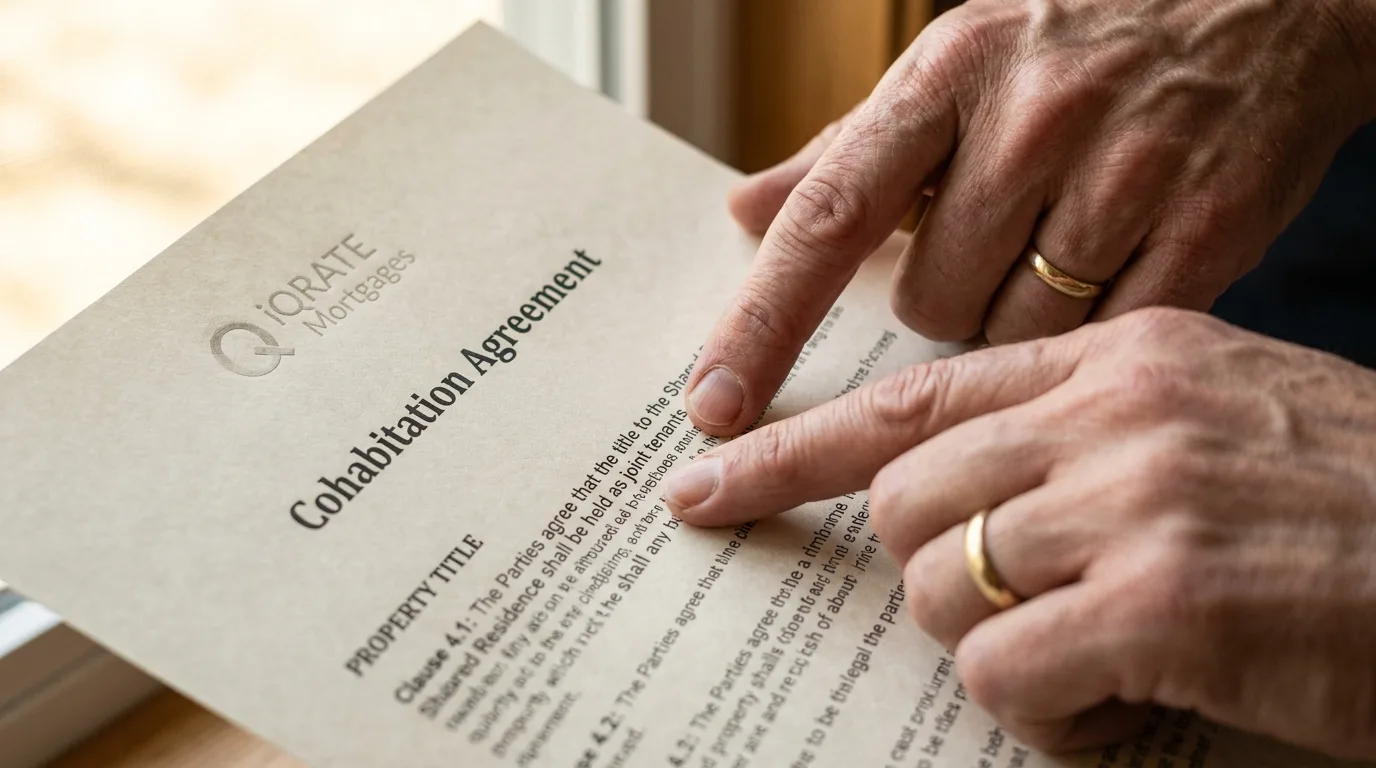
What is a Cohabitation Agreement and Why Do You Need One?
A cohabitation agreement is a legal contract for unmarried couples living together. It’s like a prenuptial agreement for homeowners. While it might feel unromantic, it is a crucial business decision that protects both of you by clearly defining your financial arrangement before any issues arise. It is far cheaper and less stressful than litigating a dispute later.
Your agreement should outline:
- Ownership Stakes: Specify if you are 50/50 owners or have different percentages based on contributions.
- Financial Responsibilities: Who pays what percentage of the mortgage, property taxes, insurance, utilities, and maintenance?
- Separation Plan: How will the property be handled if you break up? Will one person have the first option to buy the other out? How will the buyout price be determined? How long do they have to secure financing?
- Sale Proceeds: How will the profits (or loss) be divided upon selling the house? Will you first be reimbursed for your initial down payment contributions?
How Are Assets Divided if You Split Up?
Without a cohabitation agreement, asset division can become contentious. The default legal framework depends on how you took title.
- With Joint Tenancy: The law presumes a 50/50 split of the equity, regardless of who paid more. Arguing for a different split would require going to court, which is expensive and uncertain.
- With Tenants in Common: The division is based on the ownership percentages listed on the deed. If you are titled as 70/30 owners, the net proceeds from a sale will be split 70/30 after the mortgage and closing costs are paid.
A strong cohabitation agreement overrides these defaults and provides a clear, mutually agreed-upon roadmap, saving you from a costly legal battle.
Can We Use Gift Funds From Both Families for a Down Payment?
Yes, absolutely. Lenders allow down payment funds to come as gifts from family members, but they require strict documentation to ensure it's not a loan in disguise.
Here’s what you’ll need:
- A Mortgage Gift Letter: Each person providing a gift must sign a letter stating their name, relationship to you, the gift amount, and a clear declaration that the money is a gift with no expectation of repayment.
- Proof of Funds: You'll need to provide bank statements from the gift giver showing they have the funds, as well as a paper trail showing the money being transferred from their account into yours.
Lenders have no issue with gifts coming from both partners' families. As long as each gift is documented correctly, it can be combined and used toward your down payment and closing costs. (The data, information, or policy mentioned here may vary over time.) Planning your home purchase as an unmarried couple requires careful financial and legal strategy. Discuss your specific situation with a mortgage advisor to ensure your application is structured for success and both partners are protected from the outset.
Feeling prepared to move forward with your partner? A well-planned mortgage strategy is the key to a successful home purchase. Apply now to see what you qualify for and get expert guidance tailored to your unique financial situation as a couple.
Author Bio
David Ghazaryan is the expert mortgage strategist and founder behind iQRATE Mortgages. With a mission to fund home loans that traditional banks won't touch, David specializes in helping clients with unique financial situations, including those recovering from foreclosure or bankruptcy. He expertly crafts smart, strategic, and stress-free mortgages by leveraging a vast network of over 100 lenders to secure competitive rates for investors and homebuyers alike. Praised for exceptional customer service, David has helped hundreds of families with a 97% satisfaction rate, guiding them to the mortgage they deserve.
References









