

What Is a Construction-to-Permanent Home Loan?
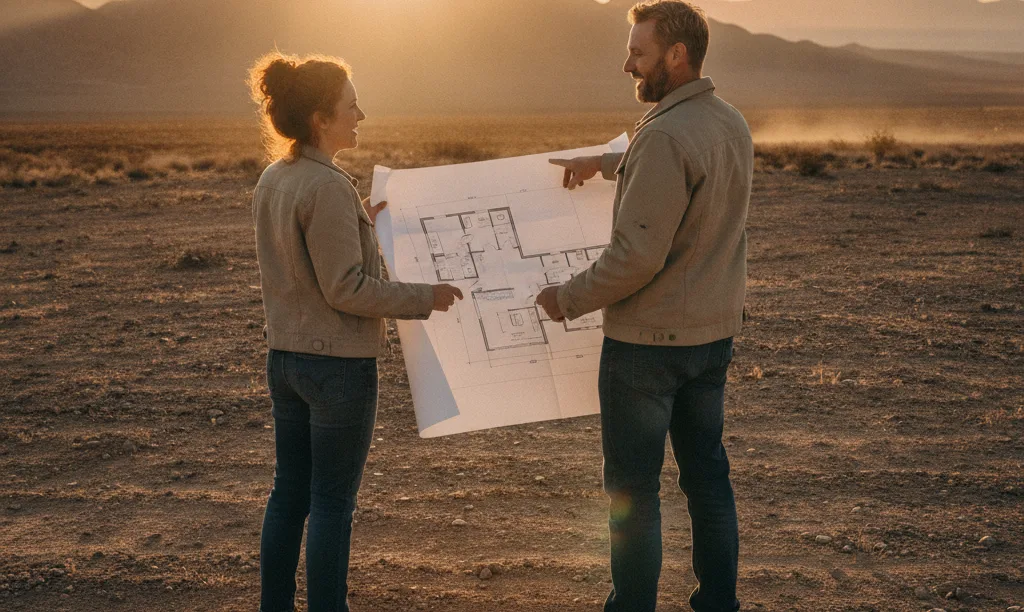
Finding the perfect pre-built home in the competitive Las Vegas market can be a challenge. For many, the solution is to build a custom home that meets their exact specifications. A construction-to-permanent loan, often called a 'one-time close' or 'single-close' loan, is a specialized financial product designed for this purpose. It combines financing for the land purchase, construction, and the final mortgage into one single transaction with one closing.
This is fundamentally different from a traditional 'two-time close' loan, which involves securing a short-term loan for construction and then refinancing into a permanent mortgage after the home is built. The one-time close loan offers significant advantages:
- One Set of Closing Costs: You only go through the underwriting and closing process once, saving you thousands in fees compared to two separate loan transactions.
- Rate Security: Your permanent mortgage interest rate is locked in before the first shovel hits the ground, protecting you from potential rate hikes during the 9-12 month construction period.
- Streamlined Process: You work with one lender from start to finish, which simplifies communication and paperwork.
This loan structure provides the capital needed to buy a lot in a community like Henderson, hire an architect, and fund the entire build until you receive the keys. Once construction is complete and the final inspection is passed, the loan automatically converts into a standard, permanent mortgage without any additional closing or re-qualification.
How Is Your Income Qualified for a Home That Isn't Built?
Qualifying for a construction-to-permanent loan is more complex than for a standard mortgage because the lender is underwriting a home that doesn't exist yet. The process is based on the projected value of the finished property, often called the 'as-completed' value.
Here’s how lenders assess your application:
- Future Appraised Value: A licensed appraiser evaluates your architectural plans, building material specifications, and the lot's value to determine what the home will be worth upon completion. The loan amount is based on a percentage of this future value, known as the loan-to-value (LTV) ratio.
- Standard Income and Credit Review: The lender verifies your financial stability just as they would for a regular mortgage. This includes reviewing your credit score, employment history, tax returns, W-2s, and bank statements. Your debt-to-income (DTI) ratio must meet the lender’s guidelines for the final mortgage payment.
- Cash Reserves: Lenders will want to see that you have sufficient cash reserves to cover potential cost overruns and to make interest-only payments during the construction phase.

Essentially, the lender qualifies you based on your ability to afford the final mortgage payment on the completed home, even though you will only be making smaller, interest-only payments during the build itself.
What Is the Typical Down Payment to Build a Home in Las Vegas?
The down payment for a construction loan is calculated based on the total project cost, which includes the price of the land plus the cost of construction. While requirements vary by lender and loan program, you can generally expect the following:
- Conventional Loans: Most conventional construction-to-permanent loans require a down payment between 10% and 20%. For a $800,000 project in a desirable North Las Vegas neighborhood, this would mean a down payment of $80,000 to $160,000.
- Government-Backed Loans: FHA and VA construction loans are also available. A VA construction loan may allow for 0% down for eligible veterans, while an FHA loan requires as little as 3.5% down. However, these programs often have stricter builder approval processes and lower loan limits, which may not be sufficient for a fully custom home in higher-cost areas. (The data, information, or policy mentioned here may vary over time.)
If you already own the land, you’re in a great position. The equity in your land can often be used to satisfy all or part of the down payment requirement. For example, if your land is valued at $150,000 and the down payment needed is $100,000, your land equity fully covers it.
How Does the Lender Pay the Builder During Construction?
A lender won’t simply give your builder a check for the full loan amount upfront. To protect their investment and ensure the project stays on track, funds are disbursed through a structured system called a draw schedule. This is a pre-determined payment plan tied to specific construction milestones.
Before construction begins, you, your builder, and the lender agree on this schedule. As the builder completes each phase, they request a 'draw'. The lender then sends an inspector to the site to verify the work is complete and meets quality standards. Once approved, the lender releases the funds for that phase directly to the builder.
Sample Draw Schedule Milestones
- Draw 1: Foundation poured and cured.
- Draw 2: Framing, sheathing, and roofing completed.
- Draw 3: Windows, doors, and exterior siding installed.
- Draw 4: Rough plumbing, electrical, and HVAC systems installed.
- Draw 5: Insulation and drywall completed.
- Draw 6: Interior finishes, flooring, cabinets, and fixtures installed.
- Final Draw: Final inspection passed and Certificate of Occupancy issued.

This system ensures that work is paid for only after it is properly completed, protecting both you and the lender from unfinished projects or misused funds.
Do You Make Payments While the House Is Being Built?
Yes, but you won’t be making full principal and interest payments from day one. During the construction phase, you are only required to make interest-only payments. Furthermore, you only pay interest on the funds that have been disbursed to the builder so far.
For example, imagine your total construction loan is $750,000. After the first draw of $100,000 for the foundation, your monthly payment is calculated based only on that $100,000. As the builder completes more work and takes more draws, your monthly interest-only payment will gradually increase. This structure keeps payments affordable while you may still be paying rent or a mortgage on your current home.
Once the home is finished and the loan converts to its permanent phase, your payments will switch to the standard principal and interest structure you agreed to at closing.
How Lenders Vet and Approve a Custom Home Builder in Henderson
The lender is just as invested in your builder's reliability as you are. A builder who is inexperienced or financially unstable poses a significant risk to the project's completion. To mitigate this risk, every lender has a thorough builder approval or vetting process. Before approving your loan, the lender will require your chosen builder in Henderson or Las Vegas to provide:
- License and Insurance: Proof of a valid contractor’s license in Nevada and sufficient general liability and workers' compensation insurance.
- Financial Stability: The lender may review the builder’s business financials or request bank references to ensure they are solvent.
- Proven Track Record: A portfolio of recently completed homes of a similar style, size, and price point to your project.
- Supplier and Subcontractor References: Contact information for past clients and partners who can vouch for their work quality and payment history.
- Detailed Project Plans: A complete set of architectural plans, a line-item budget, and a list of material specifications (specs).
It is critical to choose a builder who has experience specifically with financed custom home projects, as they will be familiar with the draw process and lender documentation requirements.
What Happens If Construction Costs Go Over Budget?
Cost overruns can happen due to rising material prices, unforeseen site issues, or changes you decide to make mid-project. To prepare for this, lenders require a contingency reserve to be built into the loan.
This reserve is typically 5% to 10% of the total construction cost. (The data, information, or policy mentioned here may vary over time.) For a $600,000 build, this would be an extra $30,000 to $60,000 held in reserve. These funds can be used to cover approved overages, ensuring the project can be completed without delays. If the contingency reserve is not used by the end of the build, the funds are applied directly to your loan's principal balance, reducing the total amount you owe.
Any costs that exceed the loan amount plus the contingency reserve become your responsibility to pay out-of-pocket. Careful planning and a detailed contract with your builder are the best ways to prevent significant budget issues.
Can You Lock Your Final Interest Rate Before the Build Begins?
Yes, and this is one of the most powerful benefits of a one-time close construction-to-permanent loan. Your interest rate for the permanent mortgage is locked in before construction starts. Given that building a custom home can take anywhere from 9 to 18 months, this feature provides crucial protection against a rising rate environment.
With a two-time close loan, you would have to re-qualify for a new mortgage after construction is finished, subjecting you to the interest rates available at that future time. Locking your rate upfront with a single-close loan provides peace of mind and budget certainty, allowing you to plan your long-term finances from day one. Building a home is a complex process, but financing it shouldn't be. If you're exploring a construction-to-permanent loan in Nevada, understanding your options and getting pre-qualified early is the best first step. Connect with a mortgage advisor who specializes in construction financing to review your project and create a clear financial blueprint.
If building a custom home in Nevada is your goal, securing the right financing is the foundational first step. Let our construction loan experts review your plans and provide a clear financial path forward. Feel free to Apply now and start the process.
Author Bio
David Ghazaryan is the expert mortgage strategist and founder behind iQRATE Mortgages. With a mission to fund home loans that traditional banks won't touch, David specializes in helping clients with unique financial situations, including those recovering from foreclosure or bankruptcy. He expertly crafts smart, strategic, and stress-free mortgages by leveraging a vast network of over 100 lenders to secure competitive rates for investors and homebuyers alike. Praised for exceptional customer service, David has helped hundreds of families with a 97% satisfaction rate, guiding them to the mortgage they deserve.
References









