
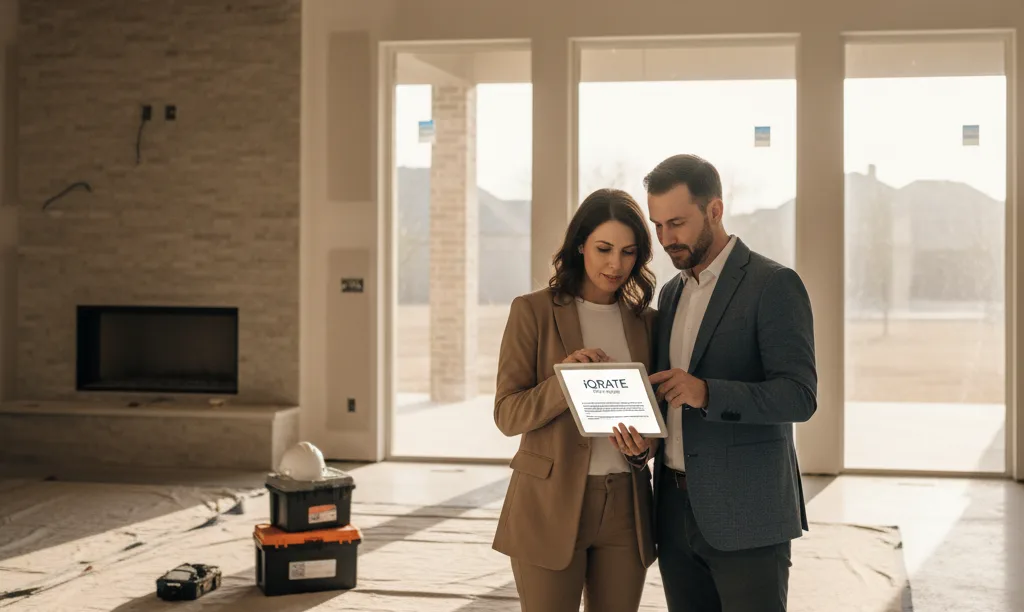

Why Appraisals for New Construction Homes in Dallas Are More Complex
When you finance a resale home, an appraiser's job is relatively straightforward. They find recent sales of comparable properties, known as 'comps', in the immediate area to determine your home's market value. However, for a new construction home in a developing Dallas subdivision, this process becomes significantly more complex for two primary reasons.
First, there is a severe lack of reliable comps. In a brand-new community, you might be one of the first buyers. There are no closed sales yet within the subdivision for an appraiser to use as a direct comparison. They are forced to look outside your community for homes that are 'similar', but these properties might be older, lack the same modern amenities, or belong to a neighborhood with a different market appeal. This introduces subjectivity and increases the risk of the valuation not aligning with your contract price.
Second, the appraisal is a 'subject-to-completion' valuation. The appraiser is valuing a home that doesn't fully exist yet. They must rely entirely on blueprints, plot maps, materials lists, and the builder's reputation. They are making an educated assessment of its future value upon completion. This differs from a resale home where they can physically walk through, touch the finishes, and see the final product. Any ambiguity in the plans or specifications can lead an appraiser to be more conservative in their valuation, which can be a major issue when securing a jumbo loan for a high-value property.
What Information Can I Get from the Builder to Help the Appraiser?
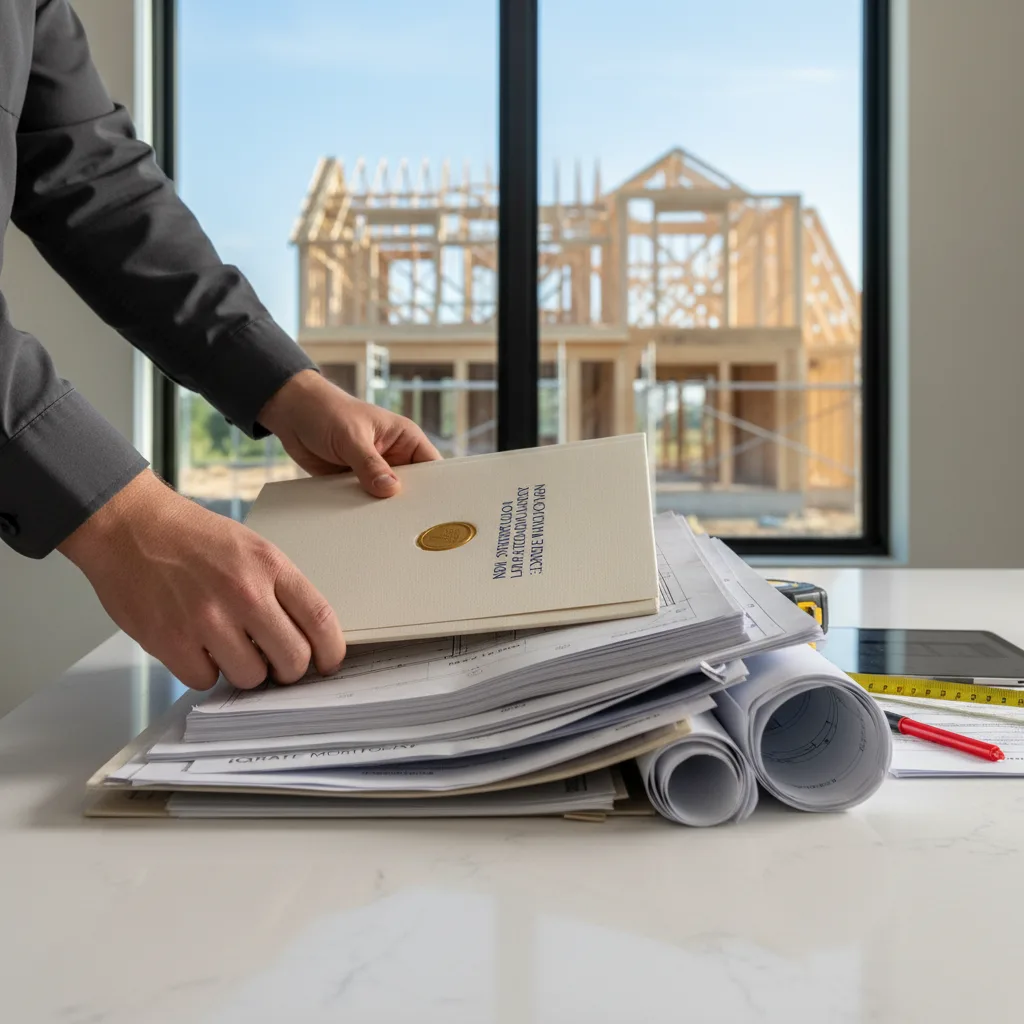
To bridge the information gap and support your contract price, you must act as the conduit between the builder and the lender's appraiser. Your goal is to provide a comprehensive package that leaves no room for doubt about the home's specifications, quality, and final value. Before the appraisal is even ordered, request the following documents from your builder:

- The Executed Sales Contract: This is the foundation, showing the agreed-upon base price, lot premium, and total purchase price.
- Complete Blueprints and Floor Plans: These provide the exact dimensions, room layouts, and square footage, which are critical valuation factors.
- A 'Specs' or 'Features' Sheet: This document itemizes all the standard features of the home model as well as every single upgrade you selected. It should detail everything from the grade of lumber and insulation R-value to the brand of appliances and type of flooring. The more detail, the better.
- Builder's Cost Breakdown: Ask for an itemized list of your upgrades and their associated costs. While cost doesn't equal value, it helps the appraiser understand the investment made in the property beyond the base model.
- Community Plat Map: This map shows your lot's specific location within the community. It can justify a lot premium if you have a corner lot, a view of a greenbelt, or are adjacent to community amenities.
- Builder's Sales Data: The most powerful tool. Ask the builder for a list of other homes currently under contract in the neighborhood, including their models, specs, and contract prices. Even though these sales haven't closed, they show market acceptance of the builder's pricing and are a strong indicator of value.
Presenting this full package to your lender to pass on to the appraiser is the single most effective step you can take to prevent a valuation issue.
How Do Builder Incentives and Upgrades Affect the Appraised Value?
Builders often offer incentives to attract buyers, especially in competitive markets like Houston. It is critical to understand how these are treated in an appraisal because they can directly create an appraisal gap if not properly accounted for.
Appraisers must differentiate between sales concessions and genuine contributions to real property value. A sales concession is anything the builder gives you to reduce your closing costs but that doesn't add to the physical value of the home.
Example of a Sales Concession: Your contract price for a new home in Houston is $1,100,000. The builder offers a $25,000 credit to be used for your closing costs and prepaid expenses. The appraiser will likely see the true sale price as $1,075,000 ($1,100,000 - $25,000). If they value the home at $1,075,000, it will appear to be a low appraisal, but they have simply adjusted for the concession. This is standard practice.
Upgrades, on the other hand, are physical improvements to the property. High-end countertops, premium flooring, an outdoor kitchen, or an upgraded appliance package all add tangible value. However, the value they add is determined by the market, not by what you paid the builder. You might pay $30,000 for a swimming pool, but an appraiser may determine it only adds $20,000 to the home's value in that specific market. The key is that upgrades contribute to the overall value, whereas concessions are deducted from it. Clearly distinguishing between the two on your contract addendums can prevent confusion.
What Steps Can I Take to Prevent a Low Appraisal on My Jumbo Loan?
Preventing a low appraisal is about proactive communication and preparation. Don't wait for a problem to arise; get ahead of it with these strategic steps:
- Assemble the 'Appraisal Package': As detailed earlier, gather all blueprints, spec sheets, upgrade lists, and builder sales data into a single, organized file. Submit this to your loan officer the moment you have it.
- Inform Your Lender: When you apply for your jumbo loan, explicitly state that it is for new construction and that you have a full documentation package from the builder. Ask them to ensure the appraiser receives this package along with the appraisal order.
- Offer to Meet the Appraiser: Coordinate with your real estate agent to be present when the appraiser visits the site. This is your chance to hand them the package personally, point out the specific lot location, and answer any questions about the community or the home's features. Be helpful, not pushy.
- Highlight Non-Obvious Value: If your home has features that aren't immediately apparent on a blueprint, make sure the appraiser knows. This could include superior energy-efficiency packages, smart home technology, or post-tension foundations common in Texas. This context can support a higher valuation.
What Are My Options if the Appraisal Comes in Low Anyway?
Even with perfect preparation, a low appraisal can happen. If your new home in Dallas appraises for less than your contract price, you have several options. Let's use an example: a contract price of $1.25 million and an appraised value of $1.2 million, creating a $50,000 gap.
- Bring More Cash to Closing: Your jumbo loan amount is based on the lesser of the purchase price or appraised value. To cover the $50,000 gap, you would need to pay it in cash at closing in addition to your original down payment and closing costs.
- Renegotiate with the Builder: Present the appraisal to the builder and ask them to reduce the sales price to $1.2 million. In a slower market, they may agree to avoid losing the sale. In a high-demand area, they are less likely to negotiate, as they may have backup offers.
- Request a Reconsideration of Value (ROV): This is the formal process for challenging an appraisal. You must provide evidence of factual errors in the report or new, more relevant comparable sales that the appraiser missed.
- Cancel the Contract: If your purchase agreement includes an appraisal contingency, you have the right to walk away from the deal and have your earnest money returned. This is a last resort but protects you from overpaying for a property.
Should I Get an Independent Appraisal Before the Lender Orders One?
Ordering your own appraisal before the lender does can seem like a smart way to get ahead of any issues. However, it's crucial to understand the limitations. The lender is legally required to order their own appraisal through an independent third-party known as an Appraisal Management Company (AMC). They cannot and will not use an appraisal that you provide.
So, what's the benefit? You are essentially paying for information. An independent appraisal can give you an early, unbiased opinion of value. If it comes in low, you have more time to gather documents for a rebuttal, attempt to renegotiate with the builder, or prepare financially to cover a potential gap. For a high-stakes jumbo loan on a new build in Dallas, paying an extra $700 to $1,000 for this strategic insight could be a worthwhile investment to avoid a last-minute crisis. (The data, information, or policy mentioned here may vary over time.)
How Do You Challenge a Low Appraisal on a New Build in Houston?
Challenging a low appraisal, known as a Reconsideration of Value (ROV), requires a fact-based argument, not an emotional one. Simply stating that the value is 'too low' will be dismissed. For a new build in a dynamic market like Houston, your challenge should focus on these key areas:
Step 1: Scrutinize the Report for Factual Errors
Read every line of the appraisal report. Look for simple mistakes that can have a big impact:
- Incorrect gross living area (square footage)
- Wrong number of bedrooms or bathrooms
- Failure to include major upgrades you paid for
- Inaccurate lot size or location
Step 2: Attack the Comparable Sales
The appraiser's choice of comps is the most common point of contention. Your rebuttal should demonstrate why their comps are inferior and provide better alternatives. Work with your builder to identify recent contracts within your own subdivision or a nearby new-build community with similar specs, amenities, and pricing. You need to prove that the appraiser's comps were too old, too far away, or significantly different in quality or features from your property.
Step 3: Formalize Your Request
Organize all your evidence—a list of factual errors, photos, better comparable properties with their addresses and sale prices, and a letter explaining your position—into a professional package. Submit this to your lender, who will then formally submit the ROV to the appraiser for review.
Does a Homeowners Association in a New Community Impact My Valuation?
Yes, an HOA can positively impact your home's valuation, particularly in the master-planned communities common around Dallas and Houston. Appraisers consider the entire package, and the amenities provided by an HOA contribute to the overall desirability and marketability of the property.
A well-managed HOA that maintains resort-style pools, fitness centers, parks, walking trails, and provides gated security makes the community more attractive to buyers. When an appraiser compares your home to one in a neighborhood without these features, they will make a positive adjustment to your property's value to account for the superior amenities. While the HOA fee itself is a liability used in calculating your debt-to-income ratio for loan qualification, the amenities it funds are an asset that helps support the property's appraised value.
Navigating a jumbo loan for new construction requires a mortgage strategy, not just a transaction. If you're planning a luxury home purchase in Texas, let's build a proactive financing plan that protects your investment. Apply now to get started.
Author Bio
David Ghazaryan is the expert mortgage strategist and founder behind iQRATE Mortgages. With a mission to fund home loans that traditional banks won't touch, David specializes in helping clients with unique financial situations, including those recovering from foreclosure or bankruptcy. He expertly crafts smart, strategic, and stress-free mortgages by leveraging a vast network of over 100 lenders to secure competitive rates for investors and homebuyers alike. Praised for exceptional customer service, David has helped hundreds of families with a 97% satisfaction rate, guiding them to the mortgage they deserve.
References









