


Can I get a VA loan if my spouse is not a citizen?
Yes, you absolutely can. The Department of Veterans Affairs (VA) loan program's primary eligibility requirement rests on the service member or veteran. Your marital status or your spouse's citizenship does not disqualify you from this benefit. However, the lender must verify your spouse's legal residency in the United States to proceed.
The key is demonstrating that your spouse has the legal right to live and, if applicable, work in the U.S. Lenders will categorize your spouse into one of two main groups: (The data, information, or policy mentioned here may vary over time.)
- Permanent Resident Alien: A spouse with a 'Green Card' (Form I-551) is treated almost identically to a U.S. citizen by mortgage underwriters. Their income and credit can be used to qualify for the loan with standard documentation.
- Non-Permanent Resident Alien: A spouse who is in the U.S. on a valid work visa (like an H-1B or L-1) can also be on the loan. Lenders will need to verify that their residency status is sound and that their employment is stable and likely to continue. (The data, information, or policy mentioned here may vary over time.)
What documents are required for my non-citizen spouse?
Documentation is the most critical part of the process. Lenders must create a clear paper trail proving your spouse's legal status to meet both internal underwriting and VA guidelines. Vague or expired paperwork will bring the process to a halt.
Be prepared to provide clear, unexpired copies of the following:
- For a Permanent Resident: A copy of their Permanent Resident Card (Form I-551), commonly known as a Green Card.
- For a Non-Permanent Resident:
- A valid, unexpired passport from their country of origin.
- A copy of their valid U.S. visa. The type of visa is important, as it indicates their right to reside in the country.
- An Employment Authorization Document (EAD) card if their visa requires it to work legally.

Underwriters in competitive markets like Houston or San Antonio will scrutinize these documents to ensure there is no question about your spouse's right to remain in the U.S. for the foreseeable future.
How will lenders view my spouse's lack of United States credit history?
This is a common hurdle. A non-citizen spouse who has only recently arrived in the U.S. will likely not have a FICO score. Without a credit score, it's difficult for lenders to assess their financial reliability.
Here's how lenders typically handle this:
- Sole Qualification: The easiest path is for the veteran to qualify for the mortgage using only their own income and credit. The non-citizen spouse can still be on the title to the home, but they will not be on the loan note itself.
- Non-Traditional Credit: Some lenders can build a 'non-traditional' credit history. This involves documenting a 12-month history of consistent payments for things like rent, utilities (electricity, water), car insurance, and cell phone bills. This process is manual and not all lenders offer it. (The data, information, or policy mentioned here may vary over time.)
- International Credit Reports: A few specialized lenders may have the ability to pull and analyze an international credit report, but this is rare for VA loans. (The data, information, or policy mentioned here may vary over time.)
If your goal is to buy a home in a military-focused community like Killeen, it's wise to speak with a mortgage advisor who has experience with these exact scenarios.
Can we use my spouse's income if it is from another country?
Using foreign income to qualify for a U.S. mortgage is complex and often not permitted by most lenders. (The data, information, or policy mentioned here may vary over time.) The primary challenge is verifying the income's stability and converting it properly.
For a lender to even consider foreign income, it must meet strict criteria:
- Stability and Continuance: The income must be stable and likely to continue for at least the next three years. This is difficult to prove from a foreign employer.
- U.S. Connection: The income is more likely to be accepted if it comes from a multinational corporation with a strong, verifiable presence in the United States.
- Conversion and Verification: All pay stubs and tax documents must be translated into English and converted to U.S. dollars. The lender must also account for different tax laws, which can be a major underwriting challenge.
In most cases, only income earned in the U.S. and paid by a U.S.-based employer will be eligible for qualifying.
Does my spouse need a Social Security Number or an ITIN?
Yes, for your spouse to be a borrower on the loan note, they will need a valid government-issued identification number. Lenders use this number to report mortgage interest and to track the loan.
- Social Security Number (SSN): This is the standard. If your spouse is authorized to work in the U.S., they will have an SSN. This is the simplest and most accepted form of identification.
- Individual Taxpayer Identification Number (ITIN): If your spouse does not have work authorization and therefore cannot get an SSN, they can apply for an ITIN from the IRS. An ITIN is used for filing taxes. Many, but not all, mortgage lenders will accept an ITIN for a mortgage application. It's crucial to confirm with your lender upfront if they work with ITIN borrowers. (The data, information, or policy mentioned here may vary over time.)
Will my VA funding fee be different in this scenario?
No, your spouse's citizenship status has absolutely no effect on the VA funding fee. This fee is a one-time charge paid directly to the Department of Veterans Affairs to help keep the program running for future generations.
The amount of your funding fee is determined by three factors only:
- Your type of military service (e.g., Regular Military, Reserves, National Guard).
- The size of your down payment (it's lower if you put 5% or 10% down).
- Whether this is your first time using your VA loan benefit or a subsequent use.
Veterans who receive VA disability compensation are exempt from paying the funding fee entirely, regardless of their spouse's status.
How Does My Spouse's Status Affect the VA Guaranty?
Your spouse's citizenship status does not negatively impact the VA's loan guaranty, which is a common misconception. As long as your spouse is a legal resident of the U.S. and is a co-borrower on the loan, the VA treats the loan the same as one for a veteran and a citizen spouse. The full guaranty entitlement available to the veteran can be applied to the entire loan amount.
This is different from a VA "joint loan," which involves a veteran and a non-veteran who is not their spouse (like a friend or other relative). In those specific cases, the VA only guarantees the veteran's portion of the loan, and a lender will almost always require a down payment to cover the non-guaranteed portion.
Fortunately, for a veteran and their non-citizen spouse, this complex down payment requirement does not apply. You can still take advantage of the VA's signature benefit: the potential for a zero-down-payment mortgage.
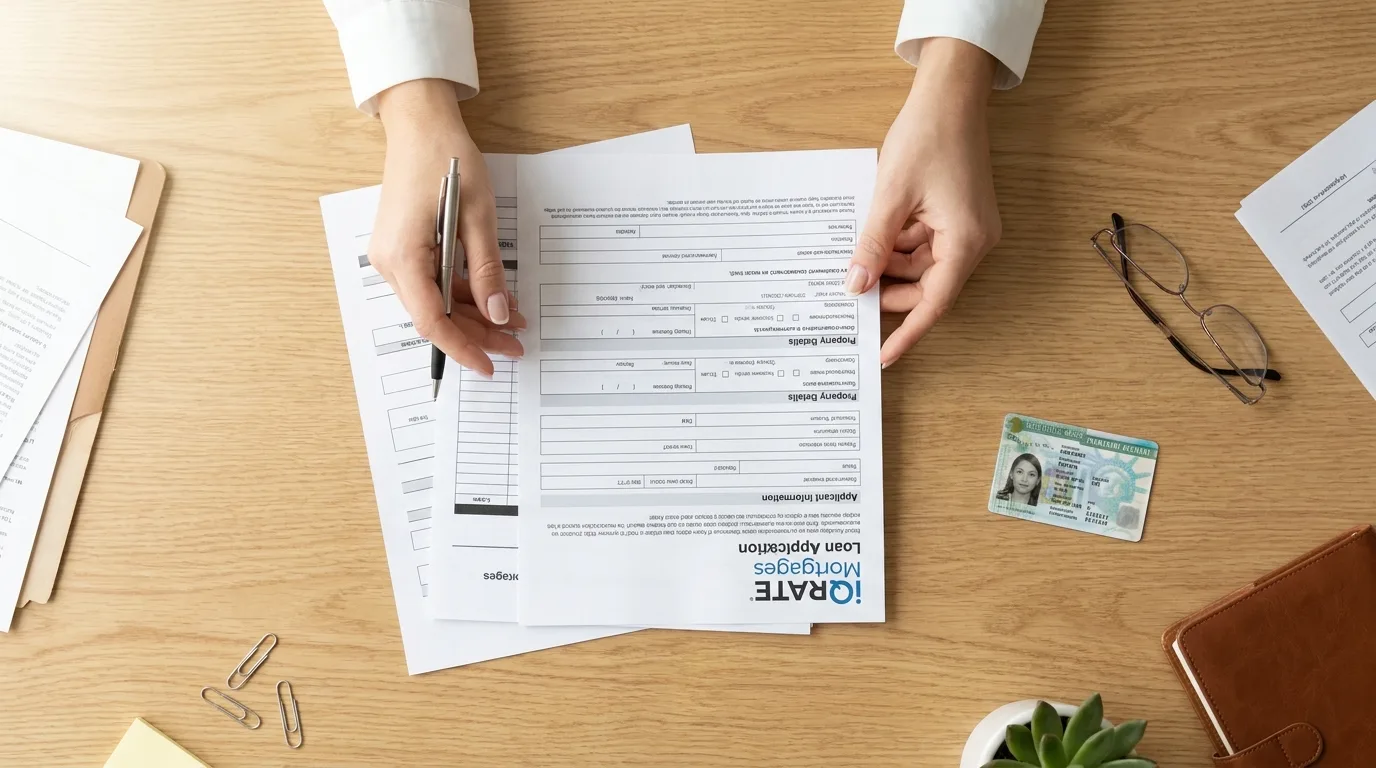
Navigating a VA loan with a non-citizen spouse has unique requirements. If you're preparing to buy a home in Texas, consulting with a mortgage strategist who understands these specific underwriting rules can ensure a clear and successful path to homeownership. When you're ready to take that next step, you can apply now to begin the process.
Navigating the VA loan process with a non-citizen spouse can feel complex, but you don't have to do it alone. If you're ready to explore your options and see what you qualify for, take the first step and apply for your mortgage pre-approval.
Author Bio
David Ghazaryan is the expert mortgage strategist and founder behind iQRATE Mortgages. With a mission to fund home loans that traditional banks won't touch, David specializes in helping clients with unique financial situations, including those recovering from foreclosure or bankruptcy. He expertly crafts smart, strategic, and stress-free mortgages by leveraging a vast network of over 100 lenders to secure competitive rates for investors and homebuyers alike. Praised for exceptional customer service, David has helped hundreds of families with a 97% satisfaction rate, guiding them to the mortgage they deserve.
References
VA Home Loan Eligibility Requirements
CFPB - What documents can I expect to provide for a mortgage application?









