


Using Child Support to Qualify for a Miami Mortgage
Yes, you can absolutely use child support payments as qualifying income for a mortgage in Miami. Lenders view any stable, predictable income as a positive factor in your application. However, unlike a W-2 from an employer, income from child support or alimony requires a higher level of documentation to satisfy underwriting guidelines set by entities like Fannie Mae and Freddie Mac. The lender’s primary concern is not just that you are receiving the income now, but that you have a documented history of receiving it consistently and that it is legally obligated to continue for a significant period into the future.
For a homebuyer in Miami, this means the underwriter will scrutinize the source and terms of the payment. They need to see a legal instrument, such as a court order or final divorce decree, that explicitly states the amount of the support, the frequency of payments, and the duration. This legal backing is what distinguishes acceptable income from a simple informal arrangement. Without it, the income is considered unstable and cannot be used to calculate your debt-to-income (DTI) ratio.
Required Documentation for Alimony Income in Boca Raton
When you apply for a mortgage in Boca Raton and want to include alimony as income, your lender will request a specific set of documents to verify its stability and continuance. Being prepared with this paperwork upfront can significantly speed up the underwriting process. The goal is to create a clear, unbroken paper trail that proves the income is reliable.

The Divorce Decree or Separation Agreement
This is the foundational document. Your lender will require a complete, executed copy of your final divorce decree, separation agreement, or any other court order that mandates the support payments. The underwriter will review this document for several key details:
- The specific dollar amount of the alimony or child support to be paid.
- The frequency of the payments (e.g., monthly, bi-weekly).
- The duration of the payment obligation. For alimony, this could be a set number of years. For child support, it is typically tied to the age of the minor child, usually 18 or 19 depending on state law and the specific agreement.
Proof of Receipt
Providing the legal agreement is only the first step. You must also prove that you have been receiving the payments consistently and on time. Lenders need to see that the payer is compliant with the court order. Acceptable forms of proof include:
- Bank Statements: Provide copies of bank statements for the most recent six to twelve months showing the direct deposit of the support payments. The deposits should match the amount and frequency specified in the legal agreement.
- Cancelled Checks: If payments are made by check, copies of the front and back of the cancelled checks serve as strong evidence.
- Payment History from a Court Registry: If payments are processed through a state disbursement unit or court registry, a printout of the payment history from that entity is considered excellent documentation.
An underwriter reviewing an application for a Boca Raton property will cross-reference your bank deposits with the amounts and dates stipulated in your divorce decree. Any inconsistencies, such as late or partial payments, could jeopardize the lender’s willingness to count the income.
How Many Months of Payment History Do Lenders Require?
Lenders need to see a pattern of stability. To establish this, most mortgage programs require you to document a minimum of six months of consecutive, timely payments. Some lenders or loan programs may be more conservative and ask for a full twelve months of payment history. (The data, information, or policy mentioned here may vary over time.)
This requirement is non-negotiable because it demonstrates the payer's ability and willingness to meet their legal obligation. A six-month history shows that the payments are not a new or temporary arrangement. For example, if your divorce was finalized just two months ago, you would likely need to wait another four months before applying for a mortgage if you need to use that support income to qualify.
Let's consider a practical scenario in Miami. Suppose you receive $2,500 in combined alimony and child support. To use this income, you must provide bank statements showing a deposit of $2,500 (or its weekly/bi-weekly equivalent) for at least the last six consecutive months. If the history shows payments of $2,500, then $1,800, then a late payment of $3,200 to catch up, the lender will view this income as unstable and will likely not allow it to be used for qualification, even with a court order in place.
Verifying Income Continuance for at least Three Years
This is one of the most critical and often misunderstood rules in mortgage underwriting. For any income to be counted toward your DTI ratio, the lender must have a reasonable expectation that it will continue for at least three years from the date of the mortgage closing. This rule applies to all income types, but it has specific implications for alimony and child support.
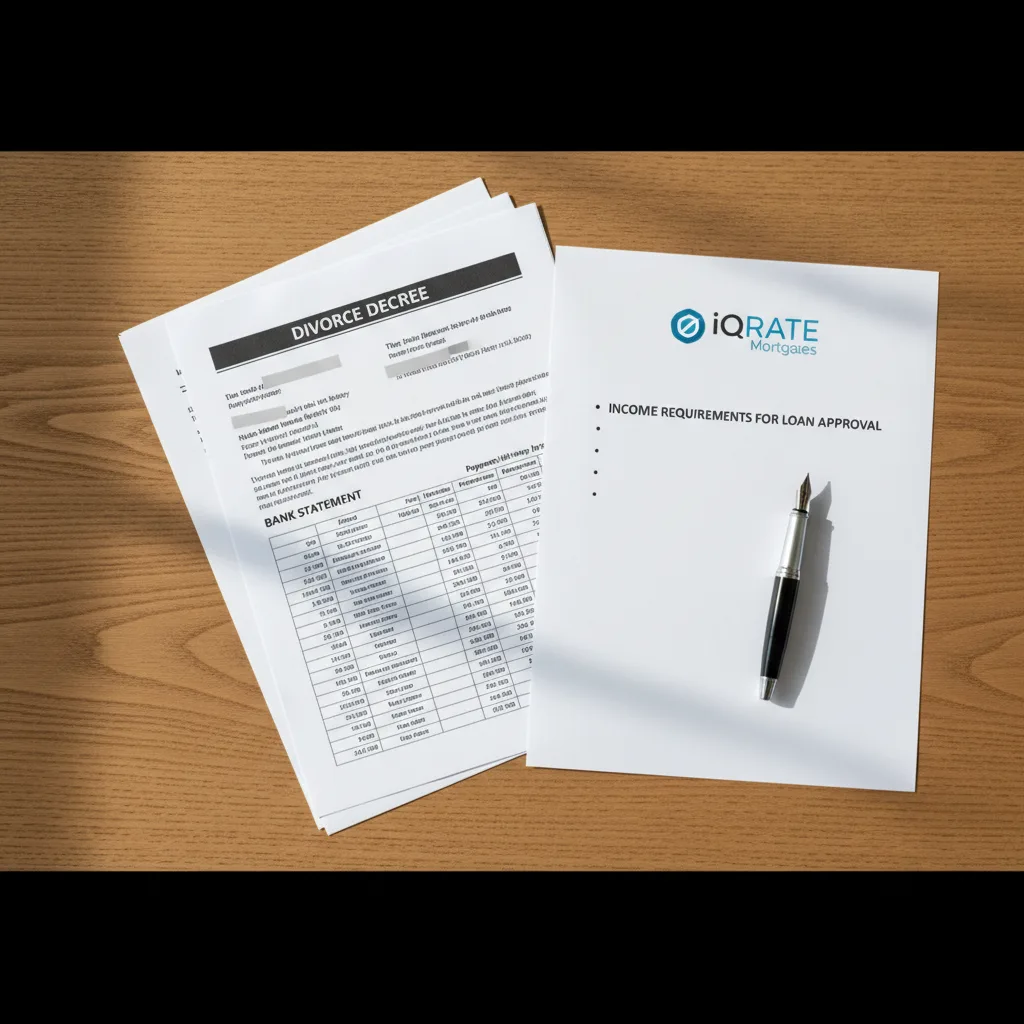
The lender verifies this by examining your legal agreements:
- For Child Support: The underwriter will look at the age of the youngest child covered by the support order. For instance, if you are applying for a loan today and your child is 16, and the support order terminates when the child turns 18, that income only has a two-year continuance. Therefore, it cannot be used to qualify for the loan. (The data, information, or policy mentioned here may vary over time.)
- For Alimony: The divorce decree will state the end date or duration of the alimony payments. If the agreement specifies alimony for a period of ten years and eight of those years have already passed, the income only has a two-year continuance and cannot be included in your DTI calculation.
Imagine a homebuyer in Boca Raton who receives $1,500 per month in child support for her 14-year-old son. Support ends at age 18. Since the child's 18th birthday is four years away, the income meets the three-year continuance rule and can be used for qualifying.
Voluntary vs. Court-Ordered Child Support
There is a clear and distinct line between voluntary and court-ordered support in the eyes of a mortgage lender. Only legally mandated, court-ordered support can be used as qualifying income.
Voluntary support refers to payments made without a formal legal agreement or court order. Even if your ex-partner has reliably paid you a set amount every month for years, this income cannot be used to qualify for a mortgage. The reason is simple: there is no legal recourse if the payments suddenly stop. A voluntary arrangement can be altered or terminated at any time by the payer without legal consequence. This makes the income inherently unstable and far too risky for a lender to rely on for a 30-year mortgage term.
If you are receiving voluntary payments and need them to qualify, the only solution is to go through the legal system to have the arrangement formalized in a court order. Once that order is in place and you have established the required six-month history of receiving payments under that new order, the income can then be considered for your mortgage application.
How Much of the Support Payment Counts as Income?
Generally, 100% of the consistently received, court-ordered support payment can be used as income. However, because child support and most modern alimony agreements are non-taxable, this income can be even more powerful than standard W-2 wages.
Lenders are often able to 'gross up' non-taxable income. This means they can increase the value of the income on your application to make it equivalent to what a gross, taxable income would be. The standard gross-up amount is typically 25%, though it can vary. (The data, information, or policy mentioned here may vary over time.) This is designed to create a fair comparison between taxable and non-taxable income streams when calculating your DTI.
Example:
- You receive $2,000 per month in non-taxable child support in Florida.
- The lender applies a 25% gross-up: $2,000 x 1.25 = $2,500.
- For qualification purposes, your income from child support is considered $2,500 per month.
This additional $500 in qualifying income can make a significant difference, potentially allowing you to qualify for a larger loan amount or bringing a high DTI ratio into an acceptable range.
What if Payments Stop After Closing on a Miami Home?
Once your mortgage has closed, you are solely responsible for making the full monthly payment to the lender. The lender's underwriting process is designed to verify the likelihood of income stability and continuance before they fund the loan. What happens to that income stream after closing is a risk the borrower assumes.
If the alimony or child support payments stop or become inconsistent after you have closed on your Miami home, it does not affect your mortgage agreement. You are still legally obligated to pay your mortgage on time every month. A default on support payments by the payer is a separate legal matter that you would need to address through the family court system, typically by filing a motion for enforcement or contempt.
Because of this risk, it is wise for anyone relying on support payments to maintain a healthy emergency fund. This financial cushion can help you cover your mortgage payments during any periods where the support income is delayed or disrupted, protecting your home and your credit score while you pursue legal remedies to have the payments reinstated. Navigating income documentation can be complex, especially with support payments. If you're planning your home purchase in Florida, discussing your specific financial documents with a mortgage strategist can clarify your path to pre-approval and homeownership.
Ready to see how your support payments can help you secure a home in Florida? Navigating the rules for income documentation can be complex, but our mortgage strategists are here to help. Take the next step toward homeownership—apply now to get a clear picture of what you qualify for.
Author Bio
David Ghazaryan is the expert mortgage strategist and founder behind iQRATE Mortgages. With a mission to fund home loans that traditional banks won't touch, David specializes in helping clients with unique financial situations, including those recovering from foreclosure or bankruptcy. He expertly crafts smart, strategic, and stress-free mortgages by leveraging a vast network of over 100 lenders to secure competitive rates for investors and homebuyers alike. Praised for exceptional customer service, David has helped hundreds of families with a 97% satisfaction rate, guiding them to the mortgage they deserve.
References
Fannie Mae Selling Guide: B3-3.1-09, Other Sources of Income
CFPB: What is a debt-to-income ratio? Why is the 43% DTI ratio important?









