


Veteran Affairs Occupancy Rules for Active-Duty Military
The cornerstone of the VA loan program is the occupancy requirement. The government guarantees these loans with the understanding that the veteran or service member intends to live in the property as their primary residence. For most borrowers, this means physically moving into the home within a 'reasonable time', typically 60 days after closing. (The data, information, or policy mentioned here may vary over time.) However, the Department of Veterans Affairs has specific exceptions designed for the realities of military life, especially for those with Permanent Change of Station (PCS) orders.
For active-duty service members, the occupancy rule is more flexible. You must intend to occupy the home upon closing, but the VA understands that your arrival may be delayed due to your military duties. If you receive PCS orders to a new duty station like Fort Cavazos in Killeen, you can start the homebuying process before you detach from your current station. The key is providing your lender with a copy of your official orders. These orders serve as proof of your impending arrival and your intent to occupy the home, satisfying the VA's primary requirement even if you won't be in Texas for several weeks or months.
What Constitutes 'Intent to Occupy'?
'Intent' is demonstrated through your actions. By starting the loan process, making an offer on a home in El Paso, and providing your PCS orders, you are clearly showing your plan to make that property your primary residence once your military obligations allow. This provision prevents service members from having to scramble for housing during the stressful and logistically complex process of a cross-country move.
Can My Spouse Satisfy the Move-In Requirement?
Yes, absolutely. This is one of the most significant advantages for military families using a VA loan during a PCS. The VA considers the service member's spouse to be a proxy for occupancy purposes. If your spouse moves into the new home in Killeen before you arrive, the occupancy requirement is officially met.
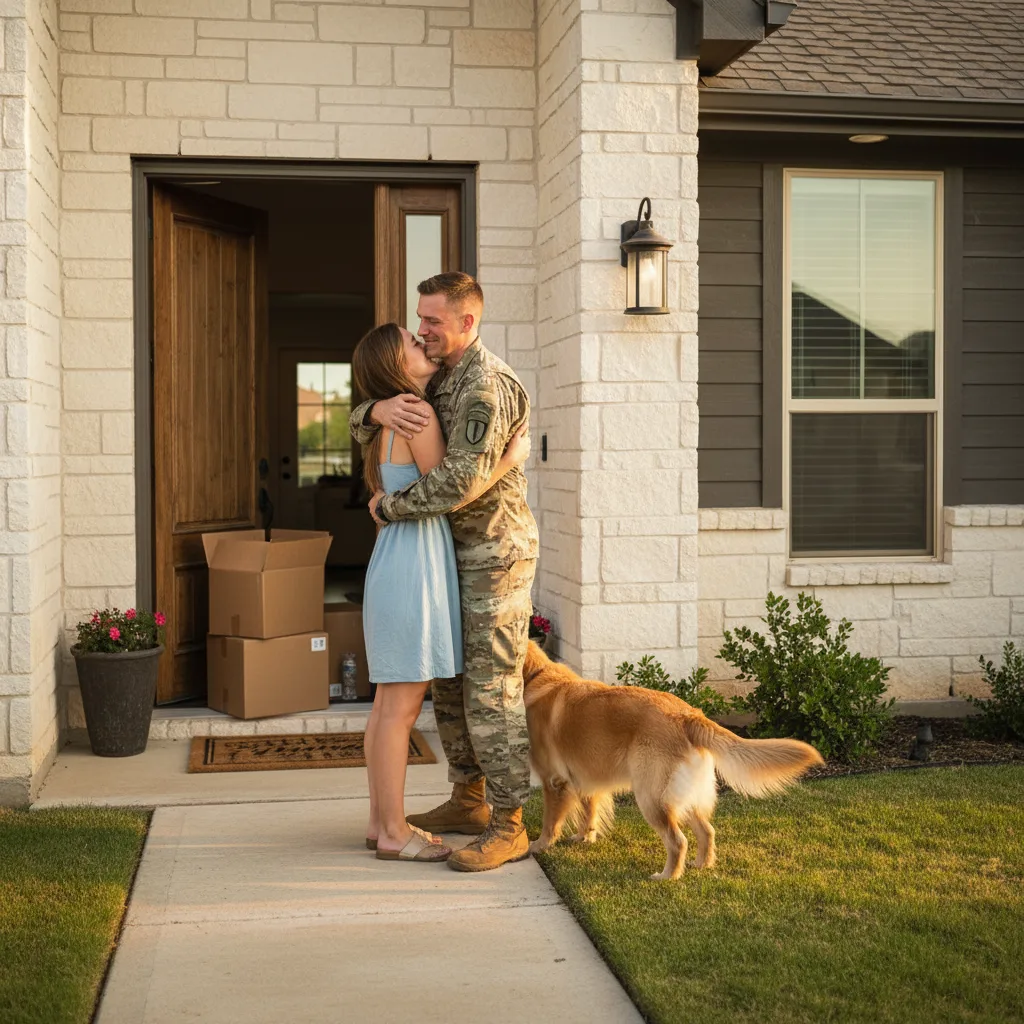
This rule provides incredible flexibility. It allows your family to get settled, enroll children in school, and set up the household while you complete your out-processing and travel to your new duty station. It transforms a chaotic transition into a more managed and stable process.
Example Scenario:
- You receive PCS orders to Fort Bliss in El Paso, Texas, with a report date in 90 days.
- You and your spouse find a home you love and go under contract.
- You close on the house 30 days before your report date.
- Your spouse and children can move into the El Paso home immediately after closing.
- Even if you don't arrive for another month, the VA occupancy rule has been satisfied the moment your spouse moved in. You are fully compliant with the terms of your loan.
How Soon After Closing Must Occupancy Occur?
The standard guideline for VA loans is that occupancy must occur within a 'reasonable time', which lenders typically interpret as 60 days. For a civilian buying a home in their current city, this is a straightforward timeline. For an active-duty service member with PCS orders, this timeline is officially extended.
As long as you can provide official orders, the VA and your lender will not hold you to a strict 60-day rule. Your move-in date should align with your report date. For instance, if you close on a home in Killeen on June 1st but your report date to Fort Cavazos isn't until August 15th, it is perfectly reasonable for you to occupy the property in August. The key is clear communication with your lender and providing the documentation to support your timeline.
If a spouse is moving in first, occupancy begins as soon as they are there. If you are single or moving ahead of your family, your move-in date can be deferred until you are released from your prior station without violating the loan terms.
Essential Documents for a Pre-Arrival VA Loan
To facilitate a smooth remote purchase, you need to provide your lender with specific documentation that proves your eligibility and your impending move. Being organized with these documents will prevent delays in the underwriting process.
- Official PCS Orders: This is the most critical document. It must be a complete copy showing your name, your new duty station (e.g., Fort Bliss, El Paso), and your report date. This confirms your need to relocate and justifies the remote purchase.
- Certificate of Eligibility (COE): This document proves to the lender that you have the required military service to qualify for the VA loan benefit. Your lender can typically pull this for you online in minutes with your service number and date of birth.
- Leave and Earnings Statement (LES): Your most recent LES is required to verify your income, pay grade, and years of service. Lenders will use this to calculate your debt-to-income ratio.
- Government-Issued Photo ID: A clear copy of your driver’s license or military ID.
- Bank Statements: Typically, two months of statements are needed to verify you have the funds for any closing costs or reserves, though VA loans famously allow for 100% financing. (The data, information, or policy mentioned here may vary over time.)
Using a Power of Attorney (POA) for Remote Closing
Closing on a home from another state is impossible without a Power of Attorney (POA). However, not just any POA will work. For a VA loan, you typically need a 'Specific' or 'Special' Power of Attorney. This document grants a designated person (known as the 'attorney-in-fact', often your spouse) the legal authority to perform very specific actions on your behalf, namely signing the closing documents for the property at a specific address.

A general POA that covers broad financial or medical decisions is often insufficient for a real estate transaction. The title company and lender will need to review and approve the POA document well in advance of the closing date. It must be drafted to meet Texas state law and the lender's specific requirements. (The data, information, or policy mentioned here may vary over time.) Many military legal assistance offices on base can help you draft a compliant POA for this purpose.
Steps for a Successful POA Closing:
- Inform Your Lender Early: Tell your loan officer you will need to close using a POA.
- Get a Compliant POA: Work with a legal professional to draft a 'Specific' POA for the real estate purchase.
- Submit for Review: Send the draft POA to your lender and the title company for approval at least one to two weeks before the scheduled closing.
- Execute and Notarize: Once approved, you will need to sign the POA in the presence of a notary public.
- Closing Day: Your designated attorney-in-fact will attend the closing appointment in Texas and sign the final documents on your behalf.
Managing Remote Inspections and Walkthroughs
Buying a home you haven't seen in person can be daunting, but technology and trusted professionals make it manageable. You are responsible for two key property reviews: the home inspection and the final walkthrough.
The Home Inspection
Hire a highly-rated, licensed home inspector in the Killeen or El Paso area. This person is your advocate. They will conduct a thorough examination of the property's structure, roof, HVAC, plumbing, and electrical systems. You will receive a comprehensive digital report, usually 30-50 pages long, filled with high-resolution photos, videos, and detailed notes on any issues found. You can then review this report from anywhere and discuss the findings with your real estate agent and the inspector over the phone.
The Final Walkthrough
The final walkthrough occurs 24-48 hours before closing to ensure the home is in the same condition as when you made the offer and that any negotiated repairs have been completed. Your real estate agent or the person holding your POA can conduct this for you. Use a video call (like FaceTime or Zoom) to have them walk you through the entire property.
Provide them a checklist:
- Test all appliances.
- Run the heating and air conditioning.
- Check for any new damage to walls or floors.
- Flush all toilets and run all faucets to check for leaks.
- Confirm all agreed-upon repairs are finished and that all personal property of the seller has been removed.
What If My PCS Orders Change After Closing?
This is a common fear among military homebuyers. The U.S. military can and does change orders, sometimes at the last minute. The VA is fully aware of this possibility. The key factor is your intent at the time of the loan application and closing.
If you closed on the home in good faith with valid orders to El Paso, and the military subsequently cancels or changes those orders, you have not committed occupancy fraud. You intended to live there, but circumstances beyond your control prevented it.
In this situation, you should immediately contact your VA loan servicer to explain the situation. You generally have a few options:
- Sell the Property: You can put the house on the market. Depending on market conditions, you may break even or even make a profit.
- Rent the Property: You can request permission from the loan servicer to rent out the home. This can be a great way to build equity and create a passive income stream. The servicer will likely approve, given the circumstances. (The data, information, or policy mentioned here may vary over time.)
- Spouse Occupancy: If your orders change but your spouse can still reside in the home, the occupancy requirement may still be considered met.
Calculating Your Basic Allowance for Housing (BAH) for a Killeen Loan
Your Basic Allowance for Housing (BAH) is a critical component of your income when qualifying for a mortgage. When you have PCS orders, lenders are permitted to use the BAH rate for your new duty station, not your current one. This is a huge advantage, especially if you are moving to a higher cost-of-living area like those in Texas.
Your PCS orders are the trigger that allows the lender to count this future income. They will use the official Department of Defense BAH calculator to determine the correct amount based on your pay grade, dependency status, and the zip code of your new duty station.
Example BAH Calculation:
- Service Member: E-7 with dependents.
- PCS Orders To: Fort Cavazos, Killeen (Zip Code 76542).
- 2024 BAH Rate: $1,770 per month.
- Loan Qualification: A lender can add this $1,770/month ($21,240/year) to your base pay and any other allowances when calculating your debt-to-income ratio, significantly increasing your purchasing power for a home in the Killeen area. Navigating a PCS move to Texas while buying a home requires expert coordination. If you have questions about using your VA loan benefit in Killeen or El Paso, a knowledgeable mortgage advisor can provide clarity on your specific timeline and documentation.
Ready to coordinate your home purchase with your PCS to Texas? Our VA loan specialists are standing by to help you navigate the process. Take the first step toward your new home and Apply now.
Author Bio
David Ghazaryan is the expert mortgage strategist and founder behind iQRATE Mortgages. With a mission to fund home loans that traditional banks won't touch, David specializes in helping clients with unique financial situations, including those recovering from foreclosure or bankruptcy. He expertly crafts smart, strategic, and stress-free mortgages by leveraging a vast network of over 100 lenders to secure competitive rates for investors and homebuyers alike. Praised for exceptional customer service, David has helped hundreds of families with a 97% satisfaction rate, guiding them to the mortgage they deserve.
References
VA Pamphlet 26-7, Chapter 3: The VA Loan Guaranty









