


What is the Veteran Affairs Occupancy Requirement for Active-Duty Military?
The cornerstone of the VA home loan benefit is that the property must be the borrower's primary residence. This is known as the occupancy requirement. The VA's intention is to help military members and veterans purchase homes to live in, not to acquire investment properties. Generally, the VA requires the veteran to certify that they intend to personally occupy the property as their home and to move in within a 'reasonable time', which is typically defined as 60 days from the date of closing.
This rule can cause significant stress for active-duty service members undergoing a Permanent Change of Station (PCS), especially to a high-demand area like San Diego County. It’s common for a spouse to travel ahead to secure housing while the service member is finishing a deployment, attending training, or out-processing from their previous duty station. The good news is that the VA has specific provisions for these exact situations. The key is understanding the concept of 'intent'. The VA loan is not based on who moves in first, but on the certified intent of the service member to make that home their primary residence as soon as their military duties permit.
Can My Non-Military Spouse Fulfill Occupancy if I Am Not Yet in San Diego?
Yes, absolutely. This is one of the most important and beneficial exceptions the VA provides for active-duty personnel. If you are an active-duty service member who cannot occupy the home within the standard 60-day window due to your military service, your spouse can satisfy the occupancy requirement on your behalf.
This provision is a lifesaver for military families. Imagine you receive PCS orders to Camp Pendleton, but you are currently deployed overseas. Your spouse can travel to Oceanside, find a home, go through the entire mortgage process, and move in after closing. Their physical presence in the home fulfills the immediate occupancy rule, allowing your family to secure a home without waiting for your return. The VA understands that military life is unpredictable and has built this flexibility into the program to prevent undue hardship on families during a move.
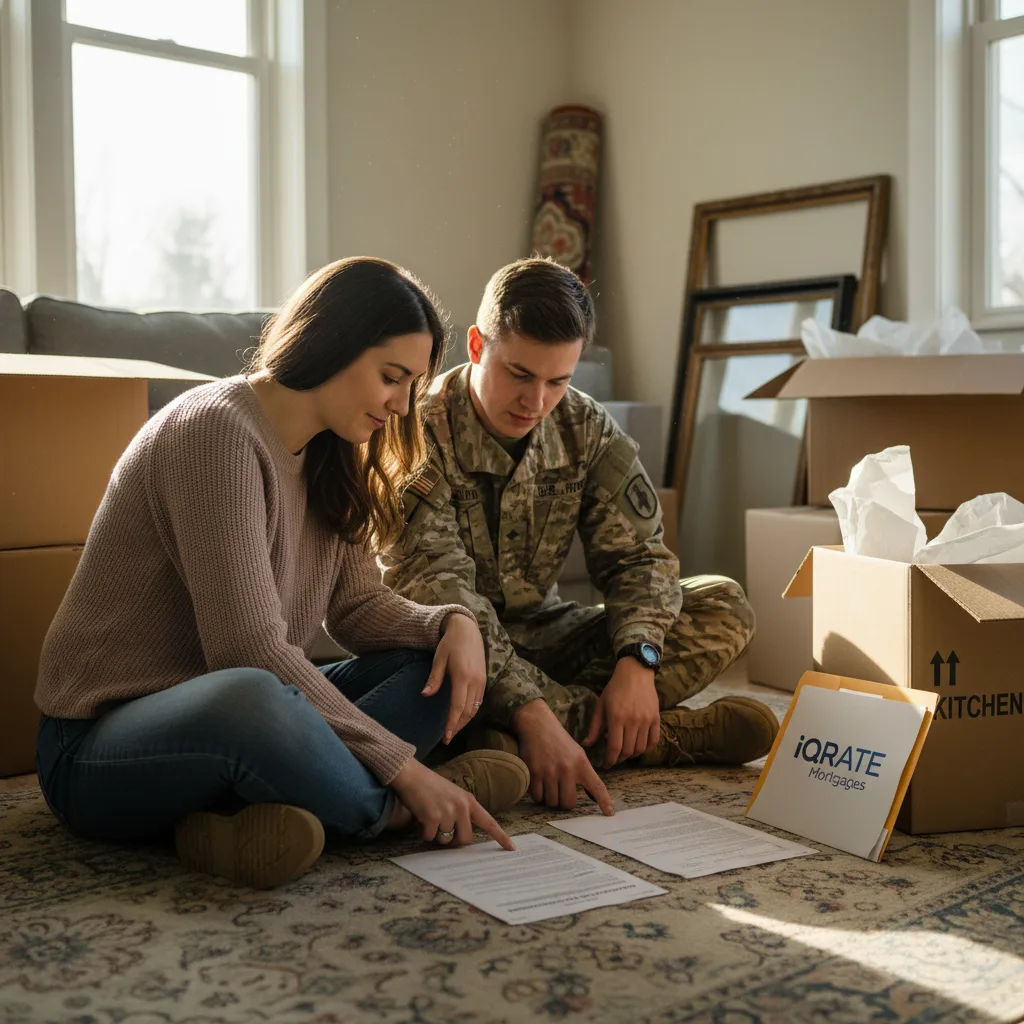
Key Conditions for Spousal Occupancy:
- Active-Duty Status: This exception applies specifically to service members on active duty who are away due to their service.
- Legal Spouse: The person occupying the home must be your legal spouse.
- Proof of Inability to Occupy: Your PCS orders or deployment papers serve as proof that your military duties are preventing your immediate occupancy.
Lenders will require clear documentation, but as long as the situation is legitimate and well-documented, using your spouse to satisfy occupancy is a standard and accepted practice for VA loans in military-heavy communities like San Diego and Oceanside.
What is a Power of Attorney and How is it Used for a VA Loan Closing?
A Power of Attorney (POA) is a legal document that allows you (the 'principal') to appoint a person you trust (the 'attorney-in-fact' or 'agent') to handle specific legal or financial matters on your behalf. When your spouse needs to sign closing documents for your VA loan because you cannot be physically present, a POA is not just helpful, it's essential.

However, not just any POA will work. Mortgage lenders and title companies have strict requirements. You will almost certainly need a Specific Power of Attorney (SPOA), also known as a Limited Power of Attorney. Unlike a General POA that grants broad authority, an SPOA grants your spouse authority only for a specific transaction—in this case, the purchase of your new home.
The SPOA must be meticulously detailed and meet all lender and state requirements. It should include:
- The full legal name of the principal (the service member) and the attorney-in-fact (the spouse).
- The full legal description and address of the property being purchased.
- The exact loan number and loan amount.
- Specific powers being granted, such as the ability to sign the promissory note, deed of trust, and all other documents required to close the loan.
Crucial Step: You must get the POA document approved by your lender and the title company well in advance of the closing date. Many lenders provide their own pre-approved POA template. Using their form is the safest way to avoid last-minute rejections that could delay your closing.
How Soon After Closing Must the Service Member Move into the Oceanside Home?
While the general VA guideline is 60 days, this timeline is flexible for active-duty service members on a PCS move. The official VA rule states that occupancy must occur within a 'reasonable time'. What constitutes 'reasonable' is not defined by a specific number of days but is determined by the circumstances of your military service.
Your PCS orders are the guiding document. If your orders state you must report to Naval Base San Diego in 90 days, then moving into your Oceanside home within that 90-day period is considered reasonable. If your return from a deployment is six months away, that can also be deemed reasonable, provided you have official documentation to support it.
The key is transparency with your lender. The underwriter's job is to verify that your delayed occupancy is a direct result of your military obligations. A delay of more than 12 months may be difficult to get approved, but situations are reviewed on a case-by-case basis. (The data, information, or policy mentioned here may vary over time.) Your loan officer should help you present a clear timeline to the underwriter, using your orders as evidence of your intent to occupy as soon as you arrive in California.
Do PCS Orders Help Prove Intent to Occupy for the Underwriter?
Yes, PCS orders are the single most important piece of evidence to prove your intent to occupy. For an underwriter, these official documents remove all ambiguity about why you are not present at closing and why your spouse is satisfying the initial occupancy.
When you provide your PCS orders, the underwriter will verify several key details:
- Your Name: It must match the name on the loan application.
- New Duty Station: It must correspond to the location of the home you are buying (e.g., Marine Corps Air Station Miramar, Naval Base Coronado, Camp Pendleton).
- Report-By Date: This date establishes the 'reasonable time' for your eventual occupancy.
Submitting your orders early in the process helps build a strong loan file. It demonstrates that your purchase is directly linked to your military career and validates your certification of intent to occupy. Without these orders, a lender would have no verifiable reason to approve a loan where the primary borrower won't be living in the home immediately after closing.
What Happens if My Arrival in San Diego is Delayed Past the Deadline?
Life in the military is full of uncertainties. Deployments can be extended, and report dates can change. If you find out that your arrival in San Diego will be delayed beyond the date specified in your original orders, the most important thing to do is communicate immediately with your mortgage lender.
Proactively providing your lender with amended orders or other official military documentation explaining the delay is critical. Lenders understand that these situations are beyond your control. In nearly all cases, as long as the delay is due to legitimate military service, they will work with you.
The consequences of failing to occupy without a valid, documented reason can be severe. This is considered a violation of the VA loan agreement. In a worst-case scenario, the lender could declare the loan in default and initiate foreclosure proceedings. However, this is extremely rare and typically only occurs in cases of fraud, where the borrower never had any intention of occupying the property. For a service member with a documented military delay, open communication is the key to avoiding any negative consequences.
Can We Use a VA Loan if My Spouse is Also Active-Duty Military?
Yes, and this scenario can often make the process even simpler. When both spouses are active-duty service members, you have a few powerful options for your VA loan.
- One Veteran, One Non-Veteran Spouse: If one military spouse is satisfying occupancy while the other is away on orders, the process works exactly as described above. The occupying spouse's presence fulfills the requirement for the loan.
- Joint VA Loan (Veteran + Veteran): You can apply for a joint loan where both of you use your VA loan entitlement. This can be beneficial for qualifying for a larger loan amount in a high-cost market like Southern California. In this case, only one of you needs to occupy the property to satisfy the requirement for both.
For example, if one spouse is stationed at Camp Pendleton and the other has orders to a different base but plans to join them later, the spouse who is already in Oceanside can satisfy occupancy for the joint loan. This flexibility makes the VA loan an incredibly powerful tool for dual-military couples managing separate duty stations or staggered PCS moves.
What Documents Does My Spouse Need to Handle the Closing Alone?
To ensure your spouse is fully prepared for a smooth closing day, they need to arrive with a specific set of documents. Being organized is key to preventing stress and delays. Here is a checklist of what your spouse will likely need to bring to the closing appointment:
- Original, Notarized Specific Power of Attorney: This is the most important document. It must be the original, not a copy, and it must have been pre-approved by the lender and title company.
- Valid Government-Issued Photo Identification: Your spouse will need their own valid ID, such as a driver's license or passport.
- Copy of Your PCS Orders: While the lender already has them, the title company or notary may want to see a copy for their records.
- Final Closing Disclosure (CD): You both should have reviewed and signed the final CD ahead of time, but your spouse should bring a copy.
- Proof of Funds for Closing: This will be either a cashier's check made out to the title company for the exact amount of closing costs or a confirmation of a completed wire transfer.
- The Service Member's Military ID: Your spouse may be asked to present the service member's military ID for verification purposes.
- Any Other Lender-Specific Documents: Double-check with your loan officer a few days before closing to see if there are any other specific items your lender or the title company requires. Navigating a PCS move and a VA loan requires a clear strategy. If you're preparing for a move to California and need guidance on your VA loan occupancy options, working with a specialist can ensure a smooth process from start to finish.
Navigating a PCS move and a VA loan can be complex, but you don't have to do it alone. If you're ready to secure your home in California, our specialists are here to guide you through every step. Apply for a Mortgage to start your journey.
Author Bio
David Ghazaryan is the expert mortgage strategist and founder behind iQRATE Mortgages. With a mission to fund home loans that traditional banks won't touch, David specializes in helping clients with unique financial situations, including those recovering from foreclosure or bankruptcy. He expertly crafts smart, strategic, and stress-free mortgages by leveraging a vast network of over 100 lenders to secure competitive rates for investors and homebuyers alike. Praised for exceptional customer service, David has helped hundreds of families with a 97% satisfaction rate, guiding them to the mortgage they deserve.
References
VA Lenders Handbook, Chapter 3, Topic 7: Occupancy Requirements
Consumer Financial Protection Bureau (CFPB): What is a power of attorney (POA)?
U.S. Department of Housing and Urban Development (HUD): Information for Military and Veterans









