


How Lenders Verify Occupancy for VA Loans in Austin
The cornerstone of the Veteran Affairs (VA) home loan program is that the property must be the veteran's primary residence. This is known as the occupancy requirement. For remote workers targeting a home in a bustling market like Austin, lenders have a structured process to verify your 'intent to occupy', even if your employer is hundreds of miles away. They aren't just taking your word for it; they need concrete evidence that you will physically live in the home.
Lenders will scrutinize your loan application package for clues and confirmations. Here’s what they typically review:
- Employment Verification: The lender will contact your employer's Human Resources department. They will confirm your employment status, income, and, most critically, your remote work status. They need to know if your remote arrangement is permanent and if you are authorized to perform your job from your new Austin address.
- Pay Stubs and Tax Documents: Your recent pay stubs and W-2s will be examined. While these may initially show your old address, they are used to establish a history of stable income. The lender will anticipate these documents being updated with your new Texas address shortly after you move.
- Commuting Distance Logic: Underwriters apply a 'common sense' test. If your employer is in another state and your job requires any physical presence (even once a quarter), they will question the feasibility of your commute from Austin. Your job must be documented as 100% remote or flexible enough to be performed from your new home.
- Signed Statements: You will almost certainly be required to sign a document stating your intent to occupy the property as your primary residence. Lying on this document constitutes mortgage fraud, a federal offense.
For a veteran planning to buy a home in a competitive area like the Zilker neighborhood in Austin, having all this documentation in order and presenting a clear, logical case for the move is non-negotiable.
Does My Remote Employer Need to Be Based Near Dallas?
This is a common point of confusion, but the answer is a clear no. Your employer does not need to be based in or near Dallas, Fort Worth, or anywhere else in Texas for you to secure a VA loan for a home there. The VA loan program is a national benefit, and it recognizes the modern, geographically flexible workforce.
What matters to the lender and the underwriter is not your employer's location, but the stability and viability of your employment from your new home. An underwriter’s primary concern is risk. They need to be confident that you can continue to earn your income from your new residence in Dallas to make your mortgage payments for the life of the loan.
For example, if you are a software developer for a tech company in California and want to buy a home in the Bishop Arts District of Dallas, an underwriter will see this as a logical move. The job is inherently remote, and the move to a lower cost-of-living area strengthens your financial position. Conversely, if your job is a 'regional sales manager' for the Northeast and you try to buy in Dallas, the underwriter will raise a red flag. They will question how you can perform your duties from Texas, and the loan will likely be denied without a clear explanation or a change in your job role.
The focus is always on your ability to perform your job duties from the new location without impacting your income.
What Documents Prove My Intent to Occupy for a Remote Work Loan?
To build a strong case for your VA loan application as a remote worker, you need to provide a comprehensive set of documents that leaves no room for doubt about your intentions. Simply stating you plan to move isn't enough. You must prove it.

Here are the essential documents you should prepare:
Remote Work Letter from Employer: This is the most crucial document. It should be on official company letterhead, signed by an HR representative or your direct supervisor. It must explicitly state:
- That you are a full-time employee.
- That you are permitted to work remotely on a permanent basis.
- That your employment and income will not be negatively affected by your move to the new property address in Austin or Dallas.
- Your start date and current salary or hourly rate.
Signed Statement of Intent (Letter of Explanation - LOX): You will need to write and sign a letter explaining your situation. This letter formally states your intention to occupy the new home as your primary residence within 60 days of closing. We’ll cover this in more detail below.
Evidence of Relocation: If you have already taken steps to move, provide proof. This could include:
- A signed job transfer letter (if applicable).
- A termination notice for your current rental property.
- Enrollment forms for your children in a local Dallas-area school district.
- Quotes from moving companies.
- Utility transfer or setup confirmations for your new address.
Can My Spouse's Local Job Satisfy the Occupancy Rule in Austin?
Yes, absolutely. This is a significant and often overlooked advantage of the VA loan program. The VA guidelines state that the occupancy requirement can be satisfied by the veteran's spouse, as long as the veteran and spouse are not legally separated.
This rule is incredibly helpful in several scenarios:
- Active-Duty Service Members: If the veteran is on active duty and receives orders that prevent them from occupying the home (e.g., deployed overseas or stationed elsewhere), the spouse's occupancy is sufficient. For instance, if a veteran is stationed at Fort Hood but their spouse has a great job offer in Austin, they can purchase a home in Austin for the spouse to live in.
- Remote Work Transitions: If your remote job requires you to travel frequently, having your spouse established in the Austin home with a local job provides a powerful anchor that satisfies the occupancy requirement without question.
- Future Retirement: A veteran planning to retire in a few years can buy their future retirement home now, and if their spouse occupies it, they meet the rule. The veteran must certify that they intend to occupy the home upon retirement.
The lender will verify the spouse's local employment in the same way they would for a primary borrower, confirming job stability and income. This provision adds a layer of flexibility that makes homeownership more accessible for military families with complex living and working situations.
How Soon Must I Occupy the Home After Closing in Dallas?
The VA requires veterans to occupy their new home within a 'reasonable time'. While the VA doesn't set a hard-and-fast deadline in days, the industry standard universally accepted by lenders is 60 days from the date of closing.(The data, information, or policy mentioned here may vary over time.) This means you, your spouse, or your dependent (in limited cases) must physically move into and begin living in the property within that two-month window.
For a remote worker buying a home in Dallas, this timeline is usually straightforward. You close on the house, pack your belongings, and move. However, there are legitimate exceptions to the 60-day rule that the VA may permit:
- Repairs or Improvements: If the home requires significant repairs or renovations to be livable, the occupancy can be delayed. The delay must be reasonable, and it’s wise to document the scope of work and timeline for the lender. A delay of up to one year may be considered acceptable in these cases.(The data, information, or policy mentioned here may vary over time.)
- Retirement: If the veteran is purchasing a home in anticipation of retirement, they can delay occupancy as long as they certify their intent to occupy the property upon retiring.
- Intermittent Occupancy: In some cases, due to the nature of employment (like a pilot or oil field worker), a veteran may not occupy the home continuously. As long as the property is their primary residence and not a vacation home or investment property, this can be acceptable.
It is vital to be upfront with your lender about your move-in timeline. Any planned delay beyond 60 days must be communicated and justified during the underwriting process.
What Is a Statement of Intent and When Is It Required?
A Statement of Intent, often called a Letter of Explanation (LOX), is a personal letter you write to the underwriter to clarify any unusual or complex aspects of your loan file. For a remote worker using a VA loan, a Statement of Intent regarding occupancy is almost always required.
This letter is your opportunity to connect the dots for the underwriter and present a clear, logical narrative. It should be concise, factual, and professional. It is not a place for emotional appeals, but for clear statements of fact and intent.
Key Elements to Include in Your Statement:
- Your Name and Loan Application Number.
- The Property Address of the home you are purchasing in Austin or Dallas.
- A Clear Declaration: Start with a straightforward sentence like, 'I am writing to confirm my intention to occupy the property at [Property Address] as my primary residence within 60 days of closing.'
- Explanation of Your Remote Work: Briefly explain your job and confirm that your employer has authorized you to work from your new Texas address permanently.
- Timeline for Your Move: Provide specific dates if you have them (e.g., 'My lease in my current city ends on [Date], and my movers are scheduled for [Date]').
- Reinforce Your Commitment: End with a concluding sentence that reaffirms your understanding of and commitment to fulfilling the VA's occupancy requirement.
- Your Signature and the Date.
This letter preemptively answers the questions the underwriter will have, smoothing the path to final loan approval.
Will Underwriters Question My Remote Work Setup for a Home in Austin?
Yes, an underwriter will absolutely question your remote work setup, but not out of suspicion. They do it as part of their due diligence to ensure the loan complies with VA guidelines and represents a sustainable risk. Their job is to verify that the story your application tells makes sense.
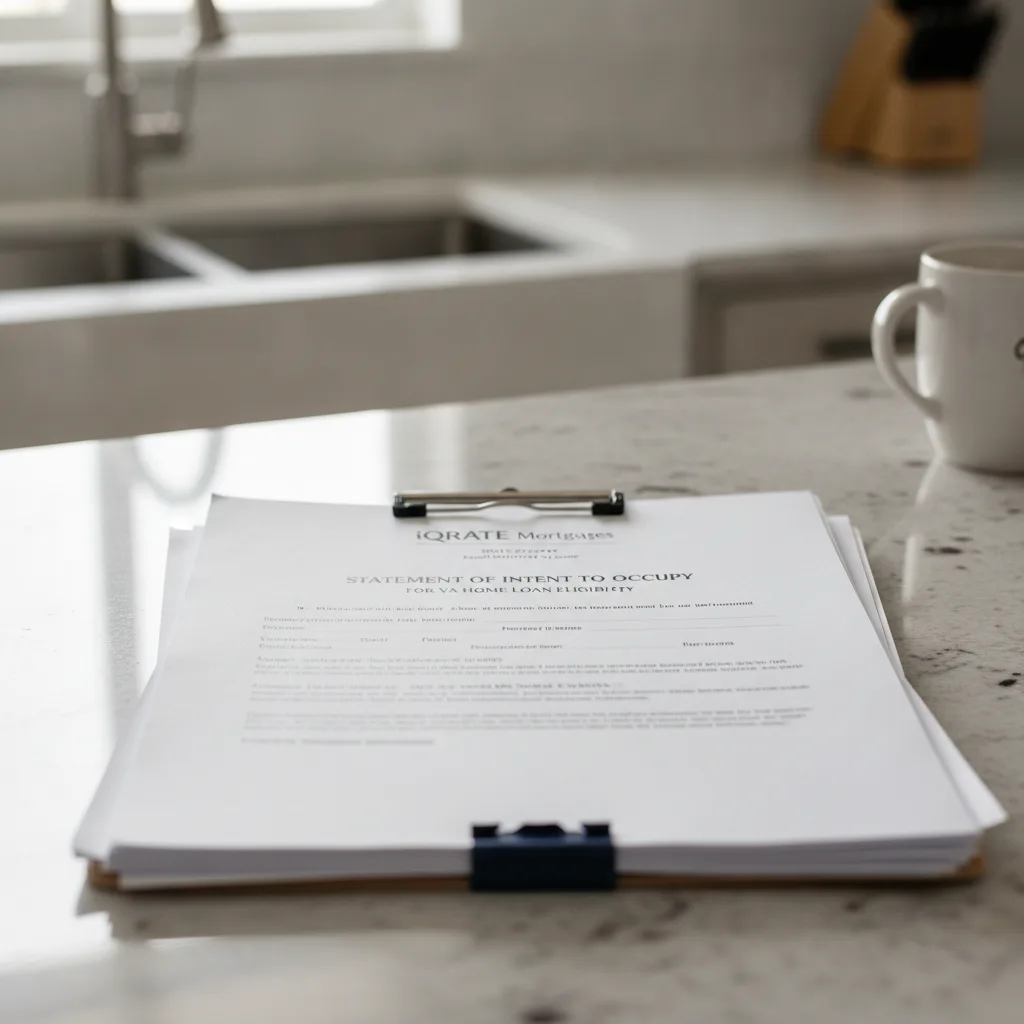
An underwriter reviewing a loan for a home in Austin will be looking for consistency and logic. They will ask:
- Is the job truly remote? They will confirm this with the 'Remote Work Letter' from your employer.
- Is the income stable? They will look for a two-year history of consistent employment, preferably in the same field.
- Does the move make sense? Moving from a high-cost area to Austin is a logical narrative. A move that seems arbitrary might invite more questions.
Think of it as building a case. Your loan application, employment verification, pay stubs, and Statement of Intent are all pieces of evidence. When they all point to the same conclusion—that you have a stable remote job and a genuine intent to live in the home you're buying in Austin—the underwriter can confidently sign off on your loan. Providing clear, comprehensive, and organized documentation is the best way to avoid delays and get a 'clear to close'. If you're a veteran working remotely and considering a home in Texas, understanding these occupancy rules is the first step. For a clear path to approval, discuss your specific situation with a mortgage expert who specializes in VA loans.
The path for remote-working veterans to own a home in Texas is clear with the right guidance. If your documents are in order and you're ready to proceed, our team excels in managing unique VA loan situations. Apply now to take the first confident step towards your new home.
Author Bio
David Ghazaryan is the expert mortgage strategist and founder behind iQRATE Mortgages. With a mission to fund home loans that traditional banks won't touch, David specializes in helping clients with unique financial situations, including those recovering from foreclosure or bankruptcy. He expertly crafts smart, strategic, and stress-free mortgages by leveraging a vast network of over 100 lenders to secure competitive rates for investors and homebuyers alike. Praised for exceptional customer service, David has helped hundreds of families with a 97% satisfaction rate, guiding them to the mortgage they deserve.
References
VA Lender's Handbook, Chapter 3: The VA Loan and Guaranty
CFPB: What documents can I expect to provide for a mortgage application?
U.S. Department of Veterans Affairs: VA Home Loan Occupancy Requirements









