


What Does It Mean to 'Lock' a Mortgage Interest Rate?
A mortgage rate lock, also known as a rate commitment, is a guarantee from a lender to honor a specific interest rate for your home loan for a predetermined period. This agreement protects you from market fluctuations that could cause interest rates to rise between the time you apply for the loan and when you close on your home. Once your rate is locked, it will not change as long as you close within the specified timeframe and there are no significant changes to your loan application, such as the loan amount, your credit score, or the appraised value of the property.
Think of it as reserving your rate. You've found a rate you're comfortable with, and you 'lock it in' to remove the risk of it increasing before your purchase is finalized. The opposite of locking your rate is to 'float' it, which means your interest rate is not guaranteed and can move up or down with daily market changes until you decide to lock.
What Market Signals Suggest It's a Good Time to Lock My Rate in Las Vegas?
Timing the market perfectly is impossible, but certain signals can help you make an informed decision for your Las Vegas home purchase. Trying to 'game' the market is often a losing proposition; a better strategy is to lock a rate that you are comfortable with and that fits your budget.
Key indicators to watch:
- Economic News and Fed Announcements: Pay close attention to reports on inflation (like the Consumer Price Index or CPI) and employment. Strong economic data often leads to the Federal Reserve raising its benchmark rate to cool the economy, which typically pushes mortgage rates higher. If reports signal rising inflation or a surprisingly strong job market, it's often a prudent time to lock.
- Market Volatility: When you see mortgage rates swinging wildly day to day, locking in a good rate provides stability and peace of mind. In a volatile market, the risk of rates jumping significantly higher often outweighs the potential reward of them dropping slightly.
- A Clear Upward Trend: If rates have been steadily climbing for several weeks, it's generally wise to lock rather than hope for a reversal. Waiting could cost you significantly over the life of the loan.
For a homebuyer in Las Vegas, if you find a home and get a rate quote that results in a monthly payment you can comfortably afford, locking it is a safe and logical move. Don't risk a comfortable payment for the small chance of a slightly better one.

How Does My Property Search Timeline Affect My Decision?
Your position in the homebuying journey is a critical factor in your rate lock strategy. Locking a rate only makes sense once you have a specific property in mind.
- Just Starting to Look: If you are in the early stages of browsing listings in Henderson or Las Vegas, you are not ready to lock a rate. Most rate locks require a signed purchase contract on a specific property. At this stage, your focus should be on getting pre-approved to understand your budget.
- Actively Making Offers: Once you begin submitting offers, it's time to watch rates closely. You can't lock yet, but you should be in constant communication with your mortgage advisor to be ready to act quickly.
- Under Contract: The moment your offer is accepted and you have a signed purchase agreement, the clock starts ticking. This is the ideal time to lock your rate. You have a clear closing date, and you can choose a lock period that provides a comfortable buffer.
Locking a rate too early in the process without a property under contract is not possible with most loan programs.
What are the Costs Associated with a Mortgage Rate Lock?
Lenders typically do not charge a separate, upfront fee for a standard 30- to 60-day rate lock. The cost is usually baked into the interest rate they offer you. A longer lock period, however, often comes at a price because it increases the lender's risk.
Here’s how it works:
- Standard Lock (30-60 days): Generally no direct fee. The lender prices the risk into the rate itself. (The data, information, or policy mentioned here may vary over time.)
- Extended Lock (90-180+ days): This is common for new construction homes in growing areas like Henderson. Because the lender is holding the rate for you for an extended period, they will typically charge an upfront fee, often a percentage of the loan amount (e.g., 0.25% to 1.0%), or they will offer a slightly higher interest rate. (The data, information, or policy mentioned here may vary over time.)
For example, on a $500,000 loan, a 0.5% fee for a 120-day lock would cost $2,500. This fee is often non-refundable if you decide not to proceed with the loan.
Can I Get a Lower Rate If They Drop After I Lock?
In a standard rate lock agreement, the answer is no. A lock works both ways: it protects you if rates go up, but it also means you are committed to that rate if they go down. You have traded the potential for a lower rate for security against a higher one.
If rates drop significantly after you've locked, you generally have two choices:
- Stick with your locked rate: You have a guaranteed rate and a predictable monthly payment.
- Break the lock and re-apply: This is a risky and often costly strategy. You may have to start the loan process over with the same or a different lender, potentially incurring new application fees and risking not being able to close on time. Most lenders also have policies that prevent you from simply relocking at a lower rate with them on the same property. (The data, information, or policy mentioned here may vary over time.)
This is where a special feature called a 'float down' option becomes valuable.
What is a 'Float Down' Option and is It Worth the Cost in Henderson?
A float-down option is an insurance policy for your interest rate. It's a feature you can add to your rate lock agreement that allows you to take advantage of a rate drop if one occurs before you close. If market rates decrease by a certain amount (e.g., 0.25% or more), you can request to have your locked rate lowered to the new, better rate.
- How It Works: You lock your initial rate, say 6.75%. You pay an upfront fee for the float-down provision. If, before closing, the lender's rates for your same loan program drop to 6.50%, you can exercise your option and lock in the lower rate.
- The Cost: Lenders charge a fee for this privilege because it exposes them to more risk. The cost is typically between 0.5% and 1.0% of the total loan amount, paid at closing. (The data, information, or policy mentioned here may vary over time.) For a $450,000 mortgage on a home in Henderson, this would be $2,250 to $4,500.
Is it worth it? This depends on your risk tolerance and the market environment. In a highly volatile market where rates could plausibly drop, it might provide valuable peace of mind. However, you are paying a definite cost for a potential, not guaranteed, benefit. You must weigh the upfront fee against the potential monthly savings. A 0.25% rate reduction on a $450,000 loan saves about $70 per month. It would take over two and a half years to recoup a $2,250 float-down fee.
How Long Should My Rate Lock Period Be?
Choosing the right lock period is crucial to avoid expensive extension fees. Your lock period should always be longer than your estimated closing date.
- 30-Day Lock: Ideal for a straightforward purchase with a quick, confirmed closing date. This often offers the most competitive rates.
- 45- to 60-Day Lock: This is the most common and recommended period. It provides a healthy buffer for potential underwriting delays, appraisal issues, or other common hiccups in the closing process.
- 90-Day or Longer Lock: Reserved almost exclusively for new construction or situations with known, lengthy delays. These locks come at a higher cost.
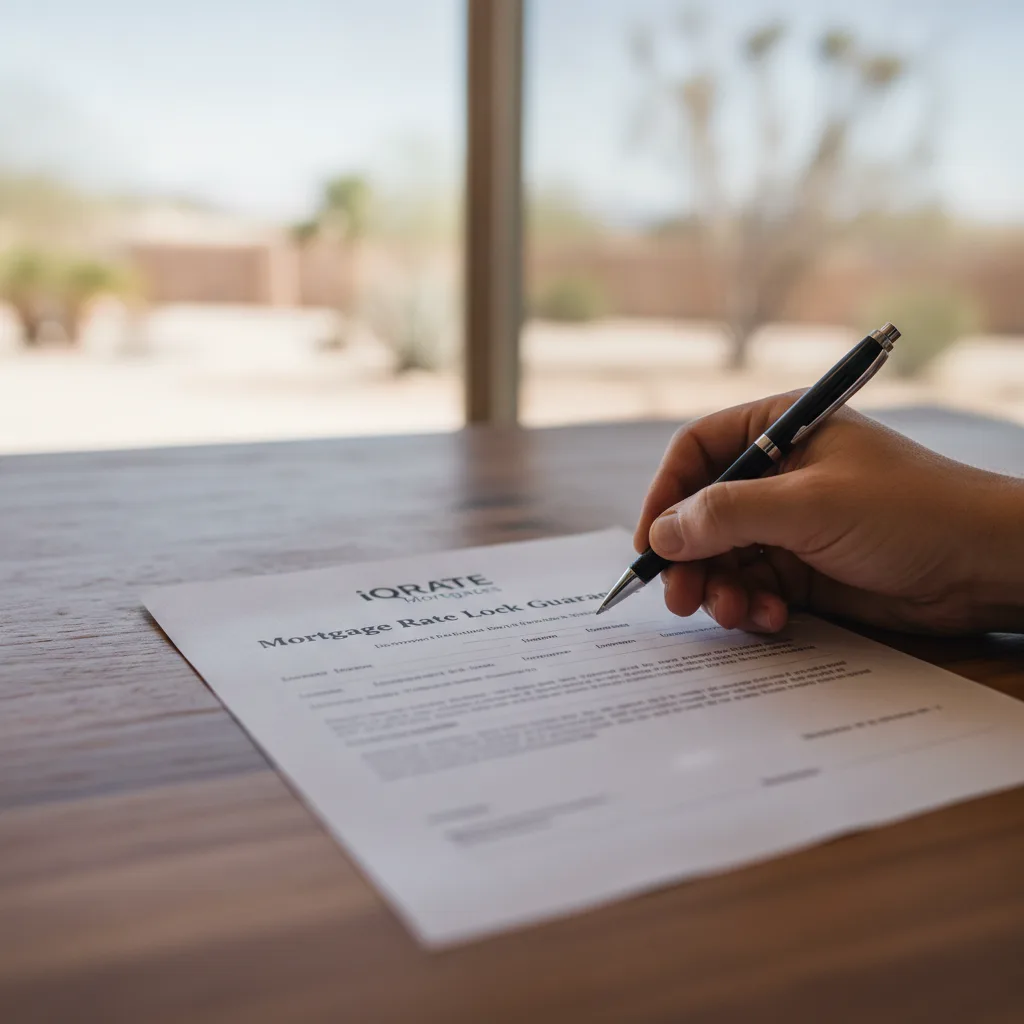
Always consult with your real estate agent and lender to establish a realistic closing timeline before you lock. It is always better to lock for a slightly longer period (e.g., 45 days instead of 30) than to risk an extension.
What Happens If My Home Closing in Las Vegas is Delayed Past My Lock Date?
If your closing is delayed and your rate lock is set to expire, you are at risk of losing your locked-in rate. This is a stressful situation, but you have options.
- Request a Lock Extension: Most lenders will allow you to extend your rate lock for a fee. The cost is typically priced on a per-day basis (e.g., 0.01% - 0.03% of the loan amount per day) or as a flat fee for a set number of days. (The data, information, or policy mentioned here may vary over time.) For example, extending a lock on a $500,000 loan might cost $50 per day. The party responsible for the delay (buyer or seller) is usually expected to cover this cost.
- Relock at Current Market Rates: If rates have not changed much or have gone down, you might be able to relock at the current rate. However, if rates have risen, you will be subject to the new, higher rate, which could significantly increase your monthly payment and overall interest paid.
This is why building a buffer into your initial lock period is so important. A 45-day lock for an expected 30-day close in Las Vegas provides a two-week cushion for unforeseen delays without incurring extra costs.
Understanding when to lock your rate is a pivotal step in the homebuying process. If you're ready to see what rates you qualify for in the Las Vegas market, take the next step and apply now to get a clear picture of your financial standing and personalized guidance.
Author Bio
David Ghazaryan is the expert mortgage strategist and founder behind iQRATE Mortgages. With a mission to fund home loans that traditional banks won't touch, David specializes in helping clients with unique financial situations, including those recovering from foreclosure or bankruptcy. He expertly crafts smart, strategic, and stress-free mortgages by leveraging a vast network of over 100 lenders to secure competitive rates for investors and homebuyers alike. Praised for exceptional customer service, David has helped hundreds of families with a 97% satisfaction rate, guiding them to the mortgage they deserve.
References









