


Understanding Portfolio Loans for Las Vegas Real Estate
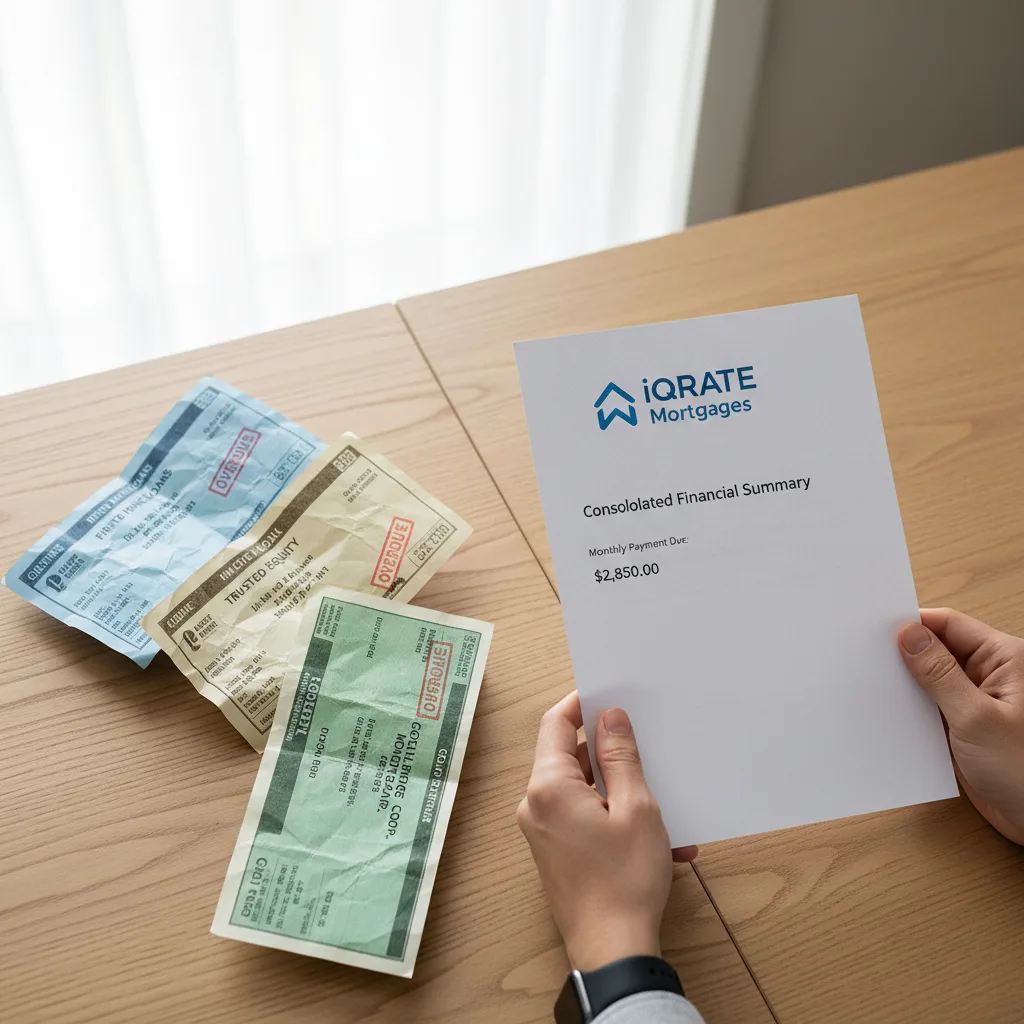
A portfolio loan, also known as a blanket mortgage, is a single loan that finances two or more properties. For a real estate investor with a growing collection of rentals in Las Vegas, managing multiple individual mortgages—each with its own payment date, interest rate, and escrow account—can become a significant administrative burden. A portfolio loan simplifies this by consolidating all that debt under one umbrella.
Instead of making separate payments for each property, you make one single monthly payment. This not only streamlines your bookkeeping but also creates a more predictable cash flow model for your entire investment portfolio. Lenders who offer these products are typically not bound by the strict guidelines of Fannie Mae or Freddie Mac, which gives them the flexibility to evaluate your portfolio based on its collective strength and income-generating potential rather than just your personal finances.
How It Works: A Practical Example
Imagine an investor owns four single-family rental properties scattered across Las Vegas.
- Property 1: Mortgage balance of $200,000, monthly PITI of $1,500
- Property 2: Mortgage balance of $225,000, monthly PITI of $1,650
- Property 3: Mortgage balance of $180,000, monthly PITI of $1,400
- Property 4: Mortgage balance of $250,000, monthly PITI of $1,850
This investor is managing four separate loans with a total debt of $855,000 and total monthly payments of $6,400. By securing a portfolio loan, they could consolidate this into a single $855,000 mortgage with one monthly payment. This simplifies financial management and can be structured to free up cash flow or access equity.
Combining Reno and Henderson Properties Under One Loan
Yes, you can absolutely combine properties from different Nevada cities like Reno and Henderson under a single portfolio loan. Lenders offering these products are more concerned with the overall quality and performance of the portfolio than the specific location of each property, as long as they are within a state or region they serve. In fact, having properties in diverse markets like the bustling tourist economy of Henderson and the growing tech hub of Reno can be seen as a strength.
This geographical diversification demonstrates to the lender that your rental income isn't dependent on a single local economy. A downturn in one market might be offset by stability or growth in another, reducing the overall risk profile of your portfolio. The key is that the combined rental income from all properties is sufficient to cover the single, consolidated mortgage payment by a healthy margin.

Portfolio Loan Eligibility: What Lenders Look For
Eligibility for a portfolio loan differs significantly from a conventional mortgage. The lender is primarily underwriting the investment, not just the borrower. The focus shifts from your personal salary to the portfolio’s ability to generate income.
Property and Portfolio Requirements
- Minimum Number of Properties: Lenders typically require a minimum of two to four properties to be included in the portfolio. (The data, information, or policy mentioned here may vary over time.)
- Loan-to-Value (LTV): The maximum LTV for a portfolio loan is often around 75%. This means you need to have at least 25% equity across your combined properties. For example, if your Reno and Las Vegas properties are collectively valued at $2 million, your total loan amount cannot exceed $1.5 million. (The data, information, or policy mentioned here may vary over time.)
- Debt Service Coverage Ratio (DSCR): This is the most critical metric. Debt Service Coverage Ratio (DSCR) measures the portfolio's ability to cover its debt payments. It's calculated as: Gross Rental Income / Total Mortgage Payment (PITI). Most lenders require a DSCR of 1.25 or higher. (The data, information, or policy mentioned here may vary over time.)
- Example: If your Henderson properties generate $10,000 in monthly rent, your total monthly mortgage payment for a new portfolio loan could not exceed $8,000 ($10,000 / $8,000 = 1.25 DSCR).
Borrower Requirements
- Credit Score: While more flexible than conventional loans, lenders still look for a good credit history, often with a minimum score in the mid-to-high 600s. (The data, information, or policy mentioned here may vary over time.)
- Experience: Lenders prefer to work with investors who have a proven track record of successfully managing rental properties.
- Liquidity: You will likely need to show you have sufficient cash reserves (post-closing) to cover several months of mortgage payments for the entire portfolio. This demonstrates you can handle vacancies or unexpected repairs. (The data, information, or policy mentioned here may vary over time.)
Accessing Equity from Your Rental Portfolio
One of the most powerful features of a portfolio loan is the ability to perform a cash-out refinance on your entire portfolio simultaneously. Instead of tapping into equity one property at a time, you can access the consolidated equity from all your properties in one transaction.
This strategy is ideal for investors looking to scale. The cash can be used for a down payment on a new property, to fund renovations on existing rentals, or to build up your capital reserves.
Cash-Out Example in Las Vegas
An investor owns five properties in Las Vegas and Henderson with a combined market value of $2,500,000. Their existing individual mortgages total $1,200,000, leaving them with $1,300,000 in equity.
- A portfolio lender agrees to a 75% LTV cash-out refinance.
- The new total loan amount is $1,875,000 ($2,500,000 x 0.75).
- From the new loan, $1,200,000 is used to pay off the old mortgages.
- The investor receives the remaining $675,000 in cash, which is not considered taxable income at the time of receipt.
This substantial injection of capital can be used to purchase several more properties, dramatically accelerating the growth of their real estate business.
Comparing Portfolio Loan Rates to Individual Mortgages
It's a common misconception that portfolio loans always come with better rates. Often, the interest rate on a portfolio loan may be slightly higher than the rate you could get on a single, conventional 30-year fixed mortgage for an investment property. However, this comparison misses the bigger picture.
Portfolio loans are non-conforming, meaning they don't have to meet the strict standards set by government-sponsored enterprises. This gives lenders the freedom to finance complex portfolios but also means they assume more risk. The slightly higher rate reflects this increased risk and the immense flexibility the product offers. The value isn't just in the rate—it's in the ability to:
- Consolidate debt and simplify management.
- Access large amounts of trapped equity in a single transaction.
- Qualify based on property performance (DSCR) instead of personal income.
- Avoid the limit on the number of financed properties that conventional lenders often impose.
For a serious investor in the competitive Reno market, the strategic advantages of scaling and cash access often far outweigh a marginal difference in interest rate.
Documentation for Your Nevada Rental Properties
Preparing your documentation is a critical step. Because the loan is based on the portfolio's performance, the paperwork is focused on verifying property value, income, and expenses. Expect to provide:
- Property Rent Roll: A detailed list of all properties, units, tenant names, lease start/end dates, and monthly rent amounts.
- Lease Agreements: Copies of current, signed lease agreements for all occupied units.
- Property Tax Statements: Recent statements for every property in the portfolio.
- Homeowners Insurance Declarations: Proof of insurance for each property.
- Entity Documents: If you own the properties in an LLC or corporation, you'll need your operating agreement, articles of organization, and other formation documents.
- Property Valuations: The lender will order appraisals for each property, but existing appraisals can be helpful.
- Personal Financial Statement: A summary of your personal assets and liabilities.
How Portfolio Loans Impact Your Personal DTI
This is a key benefit for active real estate investors. Most portfolio loans are considered business-purpose loans and are underwritten based on the property's cash flow (DSCR). When the loan is made to a business entity like an LLC, it typically does not appear on your personal credit report and is not factored into your personal debt-to-income (DTI) ratio.
This frees up your personal borrowing power. You could have a multi-million dollar portfolio loan for your rentals while still maintaining a low personal DTI, making it much easier to qualify for a mortgage on a new primary residence or finance a personal vehicle. It effectively separates your business and personal liabilities.
Using a Portfolio Loan for New Property Acquisitions
Absolutely. A portfolio loan is a fantastic tool for both refinancing existing properties and financing new purchases simultaneously. This is a common strategy for investors looking to expand efficiently.
For instance, if you're looking to acquire a new duplex in Reno, you can structure a portfolio loan that refinances your current properties in Las Vegas and Henderson and includes the funds to purchase the new duplex. The underwriting will be based on the pro-forma income of the entire portfolio, including the projected rent from the new property. This allows you to leverage the equity in your existing assets to fund the down payment and closing costs for the new one, all within a single, streamlined transaction.
If you're ready to simplify your finances and grow your Nevada real estate portfolio, understanding your options is the first step. Apply now to get a personalized analysis of your properties and unlock their full potential.
Author Bio
David Ghazaryan is the expert mortgage strategist and founder behind iQRATE Mortgages. With a mission to fund home loans that traditional banks won't touch, David specializes in helping clients with unique financial situations, including those recovering from foreclosure or bankruptcy. He expertly crafts smart, strategic, and stress-free mortgages by leveraging a vast network of over 100 lenders to secure competitive rates for investors and homebuyers alike. Praised for exceptional customer service, David has helped hundreds of families with a 97% satisfaction rate, guiding them to the mortgage they deserve.
References
Fannie Mae - Small Multifamily Loans









