


Interest Rate vs. Annual Percentage Rate (APR)
Many homebuyers in Dallas focus solely on the interest rate, but that number only tells part of the story. The interest rate is the percentage charged on the principal loan amount—it’s the basic cost of borrowing the money. The Annual Percentage Rate (APR), however, provides a more complete picture of your loan's cost.
The APR includes:
- The interest rate
- Lender origination fees
- Discount points
- Other loan-related charges

Think of the APR as the 'true cost' of your mortgage expressed as an annual rate. The federal Truth in Lending Act requires lenders to disclose the APR so you can compare offers from different lenders on an apples-to-apples basis. For example, a loan with a 6.5% interest rate but high fees could have a higher APR than a loan with a 6.75% rate and zero fees.
The Truth Behind Low Advertised Mortgage Rates
Lenders advertise astonishingly low rates online and in mailers for one reason: to get you to call. These 'teaser' rates are a marketing tool designed to attract the maximum number of applicants. In most cases, these advertised rates are based on a perfect scenario that few borrowers qualify for, such as:
- An exceptionally high credit score (often 780+) (The data, information, or policy mentioned here may vary over time.)
- A large down payment (typically 25% or more) (The data, information, or policy mentioned here may vary over time.)
- The purchase of discount points (prepaid interest)
- A specific loan type (like a 5/1 Adjustable-Rate Mortgage)
When you apply, you receive a Loan Estimate that reflects your actual financial profile, which is why the rate is almost always higher than the one you saw in the ad.
Using Discount Points to Lower Your Interest Rate
Discount points are a form of prepaid interest you can pay at closing to reduce your interest rate for the life of the loan. One point costs 1% of the total loan amount.
Example: On a $450,000 mortgage for a home in Dallas, one discount point would cost $4,500. This payment might lower your interest rate from 7.0% to 6.75%. (The data, information, or policy mentioned here may vary over time.)
Whether points are a good deal depends on how long you plan to stay in the home. You need to calculate the 'break-even point'—the point at which your monthly savings from the lower rate equal the upfront cost of the points. If you plan to sell or refinance before that point, buying points is not a financially sound decision.
Which Fees on the Loan Estimate Are Set by the Lender?
When reviewing your Loan Estimate, pay close attention to Section A: Origination Charges. These are the fees the lender charges for creating and processing your loan. You cannot shop for these fees elsewhere once you choose a lender, making them a crucial point of comparison.
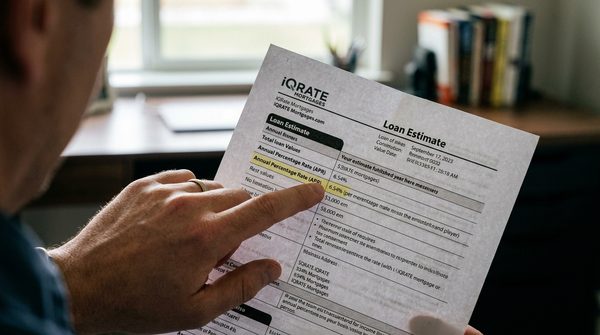
Common lender-controlled fees include: (The data, information, or policy mentioned here may vary over time.)
- Origination Fee: A charge to cover the lender's administrative costs. It's often expressed as a percentage of the loan amount.
- Underwriting Fee: The cost for the lender's underwriter to review your financial documents and approve the loan.
- Processing Fee: A fee to cover the cost of gathering and preparing all your loan documentation.
- Application Fee: An upfront charge some lenders require just to consider your application.
A lender with a low advertised rate might compensate by charging high origination fees, which is why comparing the full Loan Estimate is essential.
How Can I Compare Two Loan Estimates Accurately?
Comparing loan offers can feel overwhelming, but the standardized Loan Estimate form makes it straightforward if you know where to look. When you have two estimates for the same type of loan (e.g., two 30-year fixed-rate mortgages), focus on these two sections:
- Page 1, 'Loan Terms': Compare the interest rates and monthly payment amounts.
- Page 3, 'Comparisons': Look at the APR. The loan with the lower APR is generally the better long-term deal because it reflects a lower overall cost of borrowing.
Also, check Page 2, Section A ('Origination Charges'). A lender offering a slightly higher interest rate but $0 in origination charges may be a better value than a lender with a lower rate that charges thousands in fees. This is especially true if you don't plan to stay in the home for more than a few years.
Is the Rate on My Initial Estimate Guaranteed?
No. The interest rate on your initial Loan Estimate is not guaranteed until you and your lender agree to lock the rate. Mortgage rates can fluctuate daily, even hourly, with the market. An unlocked rate on your estimate is simply a snapshot of the available rate on the day it was issued.
A rate lock is a lender's guarantee to hold a specific interest rate for you for a set period, typically 30 to 60 days, while your loan is processed. Once your rate is locked, it will not change before closing, provided you don't make any changes to your application, such as altering the loan amount or your down payment.
What Are Common Third-Party Fees That Increase Closing Costs?
Beyond lender fees, your closing costs include services performed by other companies. Lenders are required to estimate these costs on your Loan Estimate, but they do not control the final price. These are listed in Section B: Services You Cannot Shop For and Section C: Services You Can Shop For.
Common third-party fees include: (The data, information, or policy mentioned here may vary over time.)
- Appraisal Fee: Paid to a licensed appraiser to determine the home's market value.
- Credit Report Fee: The cost for the lender to pull your credit history.
- Title Insurance: Protects you and the lender from claims against the property's title.
- Government Recording Charges: Fees paid to your county, like Dallas County or Collin County, to record the sale.
- Homeowner's Insurance Premium: Your first year's premium is often due at closing.
While a lender doesn't set these fees, an experienced local lender in Plano or Dallas often has relationships with reliable and cost-effective third-party service providers.
How Can I Get a Low Rate Without Paying Thousands in Points in Plano?
Securing a competitive rate without paying excessive fees is achievable. The key is to be a strong, well-prepared applicant.
Here are a few strategies:
- Improve Your Credit Score: A higher credit score directly translates to a lower interest rate. Pay down credit card balances and ensure all payments are on time in the months leading up to your application.
- Increase Your Down Payment: A down payment of 20% or more helps you avoid Private Mortgage Insurance (PMI) and demonstrates lower risk to the lender, often resulting in a better rate.
- Shop Multiple Lenders: Get Loan Estimates from at least three different lenders, including mortgage brokers, direct lenders, and credit unions. This is the single most effective way to ensure you are getting a competitive offer.
- Ask for Options: Ask your loan officer to show you rate options with zero points. This will reveal their true 'par rate' and give you a baseline for comparison. The advertised rate is just the beginning of the conversation. To understand the true cost of your mortgage, you need a transparent lender who can walk you through every line item on your Loan Estimate. A thorough comparison is the best way to secure a loan that aligns with your financial goals.
Ready to move beyond the advertised rates? Get a clear, personalized Loan Estimate to understand your true costs and find a mortgage that aligns perfectly with your financial goals. Apply now to get started.
Author Bio
David Ghazaryan is the expert mortgage strategist and founder behind iQRATE Mortgages. With a mission to fund home loans that traditional banks won't touch, David specializes in helping clients with unique financial situations, including those recovering from foreclosure or bankruptcy. He expertly crafts smart, strategic, and stress-free mortgages by leveraging a vast network of over 100 lenders to secure competitive rates for investors and homebuyers alike. Praised for exceptional customer service, David has helped hundreds of families with a 97% satisfaction rate, guiding them to the mortgage they deserve.
References
CFPB: What is a Loan Estimate?









