


Why High Business Revenue Isn't Qualifying Income in Austin
As a successful business owner in Austin, you might see hundreds of thousands of dollars in revenue, yet find yourself with a mortgage denial letter. The reason lies in the fundamental difference between gross business revenue and qualifying income. Traditional lenders don't look at the top-line number your business generates. They focus almost exclusively on the Adjusted Gross Income (AGI) shown on your tax returns after all deductions and expenses have been claimed.
This creates a conflict of interest for entrepreneurs. A savvy business owner works with their CPA to maximize tax deductions, legally lowering their tax burden. While this is a smart financial strategy for your business, it directly reduces the income a mortgage underwriter can use to qualify you for a home loan.
Example: An Austin-based marketing consultant generates $450,000 in annual revenue. After paying for software, contractors, marketing, and a home office, their net income on their Schedule C tax form is $95,000. It's this $95,000 figure, not the impressive $450,000, that lenders use for their debt-to-income (DTI) calculations. If their total proposed housing payment and other debts exceed roughly 45% of that lower figure, the loan will be denied. (The data, information, or policy mentioned here may vary over time.)
How Houston Business Tax Deductions Affect a Home Loan
For business owners in Houston, the very tax deductions that help your business thrive can sabotage your mortgage application. Underwriters following conventional loan guidelines must subtract every business expense listed on your tax returns. This includes both cash and non-cash expenses.
Common deductions that reduce qualifying income include:
- Vehicle Expenses: Writing off mileage or actual vehicle costs.
- Depreciation: Deducting the declining value of assets like computers or machinery.
- Home Office Deduction: Claiming a portion of your home's expenses for business use.
- Business Travel and Meals: Costs associated with running your business.
- Cost of Goods Sold (COGS): The direct costs of producing goods sold by a company.
While these are all legitimate and smart business practices, they systematically shrink the income available for mortgage qualification. Your tax return, designed to minimize tax liability, presents a picture of modest profitability that often fails to meet lender requirements, even if your business's cash flow is exceptionally strong.

What is a Bank Statement Mortgage for the Self-Employed?
A bank statement mortgage is a powerful financing tool designed specifically for self-employed borrowers. It is a type of non-qualified mortgage (Non-QM), meaning it doesn't have to adhere to the strict income verification rules set by government-sponsored entities like Fannie Mae and Freddie Mac. Instead of analyzing tax returns, lenders use your business or personal bank statements, typically over a 12 or 24-month period, to determine your qualifying income based on your actual cash flow.
This approach allows lenders to see the true financial health of your business. They look at the consistency of your deposits as a proxy for your real revenue, providing a more accurate and realistic picture of your ability to afford a mortgage payment.
How Lenders Calculate Income from Bank Statements
Lenders have a straightforward formula for calculating income from bank statements. They start by adding up all eligible deposits over the chosen period (e.g., 12 months). Then, they apply a standard 'expense factor' to account for business costs. This factor typically ranges from 30% to 50%, depending on the industry and the lender's guidelines. (The data, information, or policy mentioned here may vary over time.) The resulting figure is then divided by the number of months to arrive at your qualifying monthly income.
Calculation Example:
- Total Deposits over 12 Months: $600,000
- Assumed Expense Factor: 50% (meaning 50% of revenue is assumed to be profit)
- Total Qualifying Income: $600,000 x 0.50 = $300,000
- Qualifying Monthly Income: $300,000 / 12 = $25,000
In this scenario, the borrower qualifies with $25,000 a month in income, a figure far more representative of their success than what their tax returns might show.
Using a Profit and Loss Statement for a Loan
Another alternative to a traditional mortgage is a Profit and Loss (P&L) statement loan. This option is suitable for business owners who maintain immaculate financial records. For this loan, you provide a P&L statement, and sometimes a balance sheet, prepared and signed by a licensed Certified Public Accountant (CPA) or licensed tax preparer.
The lender uses the net income figure from the P&L as your qualifying income. This can be advantageous if your business has experienced recent, significant growth that isn't yet reflected in your last tax filing. The CPA's attestation provides the lender with the confidence they need to approve the loan based on current, real-time business performance.
Lender 'Add-Backs' That Increase Qualifying Income
Even if you are applying for a conventional loan, some lenders can manually increase your qualifying income by 'adding back' certain non-cash expenses that were deducted on your tax returns. This requires a more sophisticated underwriter, but it can make a significant difference. Common add-backs include:
- Depreciation: This is an accounting method to allocate the cost of a tangible asset over its useful life. It's a paper expense, not a cash outlay, so it can often be added back to your net income.
- Depletion: Similar to depreciation, but used for natural resources.
- Amortization: The practice of spreading an intangible asset's cost over its useful life.
- One-Time Major Purchases: If you had a significant, non-recurring business expense (like a major equipment purchase), a lender may be willing to add that cost back into your income since it won't be a future expense.
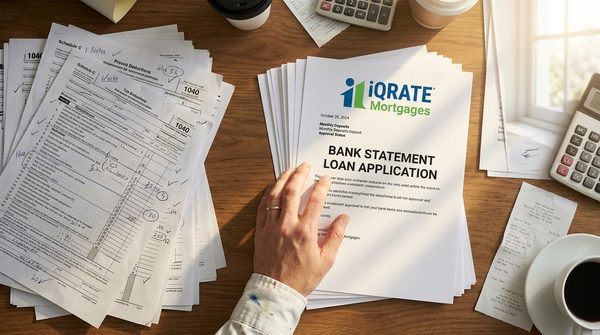
Verifying Income for a Bank Statement Loan in Texas
While you don't need tax returns, applying for a bank statement loan in Texas still requires thorough documentation to prove your business is stable and your income is consistent. Be prepared to provide:
- 12 or 24 Months of Bank Statements: These must be complete, consecutive statements for your primary business account.
- Business License or Registration: Proof that your business is legitimate and operational.
- CPA or Tax Preparer Letter: A letter from a licensed professional confirming you are self-employed and that they prepared your taxes.
- Business Narrative: A brief description of your business, what it does, and how long it has been in operation.
- Profit and Loss Statement: Some lenders may still request a P&L, even if it's not the primary document for income verification.
Bank Statement Loan vs. P&L Loan: Which is Better for a Paper Loss?
Choosing between a bank statement loan and a P&L loan depends entirely on your specific financial situation, particularly if your business shows a loss on paper.
Consider a bank statement loan if you have strong and consistent cash deposits but your tax returns show a net loss due to aggressive depreciation or other non-cash deductions. This loan is perfect for demonstrating that cash is flowing, regardless of what your tax strategy dictates. An entrepreneur in Houston with a logistics company might depreciate trucks heavily, showing a paper loss, but their bank statements reflect millions in cash deposits, making this the ideal loan product.
Opt for a P&L statement loan if your cash flow is less consistent, but a CPA can document and attest to recent profitability. This works well for businesses that are seasonal or have just landed major new contracts, where a CPA-verified P&L can show a profitable trend that a 12-month bank statement average might miss.
Preparing Your Business Financials for a Mortgage Application
To ensure a smooth process for a non-traditional mortgage, proactive preparation is key. Before you start looking at homes in Austin or Houston, take these steps:
- Consult a Mortgage Strategist First: Speak with a mortgage professional who specializes in self-employed loans before applying. They can analyze your financials and guide you to the right loan product.
- Organize Your Documents: Gather 24 months of bank statements, your business formation documents, and your most recent P&L statements.
- Clean Up Your Bank Statements: For at least three to six months before applying, avoid Non-Sufficient Funds (NSF) fees or overdrafts. Minimize large, unusual cash deposits that cannot be sourced to your business operations.
- Maintain Separation: Do not co-mingle personal and business funds in your business account. Lenders need to see clear, business-related deposits. If your business's tax returns don't reflect its true financial strength, don't let a denial discourage you. Contact a mortgage strategist to explore bank statement or P&L loans that qualify you based on your actual cash flow, not just your tax deductions.
Don't let tax deductions stand between you and your new home. See what you can qualify for based on your business's actual cash flow. Apply now to explore mortgage solutions built for entrepreneurs.
Author Bio
David Ghazaryan is the expert mortgage strategist and founder behind iQRATE Mortgages. With a mission to fund home loans that traditional banks won't touch, David specializes in helping clients with unique financial situations, including those recovering from foreclosure or bankruptcy. He expertly crafts smart, strategic, and stress-free mortgages by leveraging a vast network of over 100 lenders to secure competitive rates for investors and homebuyers alike. Praised for exceptional customer service, David has helped hundreds of families with a 97% satisfaction rate, guiding them to the mortgage they deserve.
References
Fannie Mae - Self-Employment Income
Consumer Financial Protection Bureau - What is a qualified mortgage?









