


What Is a Mortgage Escrow Account and What Does It Pay For?
Think of a mortgage escrow account as a dedicated savings account managed by your mortgage servicer. A portion of your total monthly mortgage payment is deposited into this account each month. The servicer then uses the funds in your escrow account to pay for two significant, recurring homeownership expenses on your behalf:
- Property Taxes: These are taxes levied by your local government, such as Clark County, to fund public services like schools, roads, and emergency services.
- Homeowners Insurance: This is the premium for your insurance policy, which protects your home against damage from events like fire, theft, or storms.
By collecting these funds monthly, the lender ensures that these critical bills are paid on time, protecting their financial interest in the property. For you, the homeowner, it simplifies budgeting by breaking down large, annual expenses into predictable monthly installments. Instead of facing a hefty property tax bill once or twice a year, you pay for it gradually.
Your servicer performs an annual escrow analysis to make sure enough money is being collected. They project how much your taxes and insurance will cost for the upcoming year and compare that to the funds in your account. If their projections were too low in the previous year, you'll have a shortage.

Why Did My Las Vegas Property Taxes Suddenly Go Up?
One of the most common reasons for a payment shock among homeowners in Las Vegas and North Las Vegas is a sudden increase in property taxes. This isn't arbitrary; it's directly tied to your home's assessed value. In Nevada, county assessors are responsible for determining the taxable value of your property.
Here's how it leads to a higher payment:
- Property Reassessment: Clark County periodically reassesses property values to align them with current market conditions. As home values in Southern Nevada have climbed, so have the assessed values used for tax calculations.
- Tax Rate Application: The local government applies a tax rate to this new, higher assessed value. Even if the tax rate itself doesn't change, a higher property value results in a larger overall tax bill.
- Escrow Impact: Your mortgage servicer receives the new, higher tax bill from the county. They pay it from your escrow account. During the next annual escrow analysis, they see that they paid out more for taxes than they collected from you throughout the year. This creates a shortage that needs to be replenished, and they must also adjust your future monthly escrow payment upwards to cover the higher tax bill going forward.
For example, if your home in Las Vegas was assessed at $350,000 last year but is now assessed at $400,000, your property tax bill could increase by several hundred dollars, triggering an escrow shortage and a permanently higher monthly payment until the next analysis.
How Does a Homeowners Insurance Rate Increase Affect My Henderson Payment?
Just like property taxes, your homeowners insurance premium is a key component of your escrowed expenses. If your insurance company raises your rates, your mortgage servicer has to pay the higher bill, leading to a potential escrow shortage.
Homeowners in Henderson might see their insurance premiums rise for several reasons:
- Inflation and Rebuilding Costs: The cost of labor and building materials like lumber and roofing has increased significantly. Insurance companies raise premiums to ensure they have enough funds to cover the higher cost of rebuilding a home after a total loss.
- Increased Claims in the Area: If there has been a regional increase in claims due to weather events, fire, or other risks, insurers may raise rates for everyone in that area to cover their increased payouts.
- Changes to Your Policy or Profile: Adding an expensive item to your policy, filing a claim, or even a decrease in your credit score can trigger a rate increase from your insurer.
When your insurance renewal comes up, the insurer sends the new, higher bill directly to your mortgage servicer. The servicer pays it. At your annual analysis, this unexpected expense contributes to a shortage. Your monthly payment then increases not only to cover that shortage over the next year but also to account for the new, higher annual premium.
Understanding Your Escrow Analysis: Shortage vs. Deficiency
When you receive your annual escrow analysis statement, you might see the terms shortage or deficiency. They sound similar but have distinct meanings.
Escrow Shortage: A shortage occurs when the amount of money in your escrow account drops below the required minimum balance. Most lenders require a cushion, typically equal to two months of escrow payments, to handle unexpected increases in taxes or insurance. (The data, information, or policy mentioned here may vary over time.) A shortage means your account is low, but still has a positive balance.
- Example: Your required cushion is $800. After paying your higher-than-expected property taxes, your account balance is only $300. You have an escrow shortage because your balance is below the required minimum.
Escrow Deficiency: A deficiency is more serious. This happens when your escrow account has a negative balance. Your servicer had to advance their own funds to cover your tax or insurance bill because there wasn't enough money in your account.
- Example: Your annual property tax bill of $3,000 was due, but your escrow account only had $2,500 in it. Your servicer paid the full $3,000, leaving your account with a negative balance of -$500. This is an escrow deficiency.
In both cases, you are responsible for repaying the amount needed to bring your account back to its required level.
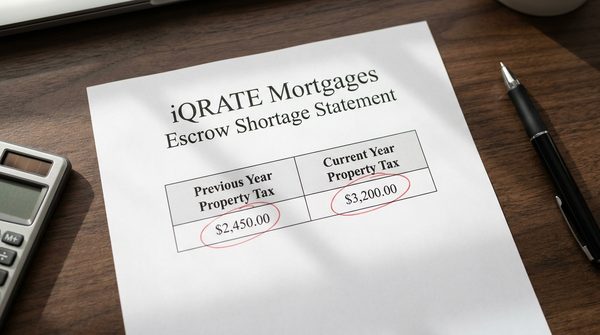
Reviewing Your Annual Escrow Statement: Can I Dispute It?
Yes, you can and should review your annual escrow statement carefully. If something seems incorrect, you have the right to question it. The statement should clearly show the payments made into your account, the funds paid out for taxes and insurance, and the projection for the upcoming year.
However, it’s important to understand what you are disputing. You can dispute the servicer's calculation. For example, if you believe they made a mathematical error or based their projections on an incorrect tax bill, you should contact them immediately. Provide any documentation you have, like a copy of your actual tax bill or insurance declaration page.
What you generally cannot dispute with your mortgage servicer is the amount of the property tax or insurance bill itself. Your servicer simply pays the bills they receive.
- If you believe your property taxes are too high, you must contact the Clark County Assessor's office to appeal your property's assessed value.
- If you believe your homeowners insurance premium is too high, you need to contact your insurance agent to discuss your policy or shop around for a new provider.
Your Options: Pay the Escrow Shortage in a Lump Sum or Over Time?
When your escrow analysis reveals a shortage, your mortgage servicer will typically give you two options to resolve it. The choice depends entirely on your personal financial situation.
Choosing to Pay in a Lump Sum
You can write a check for the entire shortage amount and send it to your servicer.
- Pros: By replenishing the account immediately, your new monthly mortgage payment will only increase to reflect the new, higher annual tax and insurance costs. It will not include an extra amount to catch up on the shortage, resulting in a lower monthly payment compared to the alternative.
- Cons: This requires having a significant amount of cash available upfront. A shortage can often be several hundred or even over a thousand dollars.
Spreading the Repayment Over the Next Year
If you don't pay a lump sum, the servicer will automatically divide the shortage amount by 12 and add that figure to your monthly mortgage payment for the next year. (The data, information, or policy mentioned here may vary over time.)
- Pros: This avoids a large, immediate out-of-pocket expense, making it more manageable for many household budgets.
- Cons: Your monthly mortgage payment will be noticeably higher for the next 12 months. It will include your principal and interest, the new higher amount for taxes and insurance, and the portion of the shortage you're repaying.
Let’s say your escrow shortage is $600. You can either pay $600 now, or your monthly payment will increase by $50 ($600 / 12 months) for the next year, on top of the regular adjustment for the higher tax/insurance costs.
How to Budget for Future Property Tax Increases in Nevada
Instead of being surprised by a payment increase, you can be proactive. To budget for future property tax hikes in the Las Vegas or Henderson area:
- Monitor Your Property's Value: Keep an eye on home sales in your neighborhood. You can also check the Clark County Assessor's website annually for updates on your property's assessed value.
- Create a 'Shadow' Savings Fund: Even though you have an escrow account, consider setting aside an extra $25-$50 per month in a separate savings account. If your escrow payment increases, you can use this fund to pay the shortage as a lump sum or to help absorb the higher monthly payments.
- Shop for Homeowners Insurance: Don't just accept the renewal premium from your current insurer. Every year or two, get quotes from other insurance companies. You may find comparable coverage for a lower price, which will lower the amount your servicer needs to collect for escrow.
Is It Possible to Remove My Escrow Account Entirely?
For some homeowners, managing their own tax and insurance payments is preferable. This is known as an 'escrow waiver'. Whether you can remove your escrow account depends on your loan type and your lender's policies.
- Eligibility Requirements: Typically, lenders require you to have a significant amount of equity in your home, usually at least 20% (meaning a loan-to-value ratio of 80% or less). (The data, information, or policy mentioned here may vary over time.) You must also have a history of on-time mortgage payments.
- Loan Type Restrictions: Some government-backed loans, like FHA loans, require an escrow account for the life of the loan. (The data, information, or policy mentioned here may vary over time.) It cannot be removed.
- Pros of Removing Escrow: You have more control over your money. You can earn interest on the funds you set aside for taxes and insurance until the bills are due.
- Cons of Removing Escrow: You are fully responsible for saving and making very large tax and insurance payments on time. Forgetting or failing to budget properly can lead to late fees, a lapse in insurance coverage, or even a tax lien on your property. This requires serious financial discipline. Understanding your mortgage payment is key to financial peace of mind. If you've received an escrow analysis that's confusing or raises questions, review it carefully and contact your mortgage servicer for clarification. A clear understanding of these details empowers you to budget effectively and stay in control of your homeownership costs.
Grasping the details of an escrow account is a significant step in managing your home finances. If this article has helped clarify your path to homeownership and you're ready to see what your mortgage options look like, you can Apply now to get a personalized assessment.
Author Bio
David Ghazaryan is the expert mortgage strategist and founder behind iQRATE Mortgages. With a mission to fund home loans that traditional banks won't touch, David specializes in helping clients with unique financial situations, including those recovering from foreclosure or bankruptcy. He expertly crafts smart, strategic, and stress-free mortgages by leveraging a vast network of over 100 lenders to secure competitive rates for investors and homebuyers alike. Praised for exceptional customer service, David has helped hundreds of families with a 97% satisfaction rate, guiding them to the mortgage they deserve.
References
CFPB - What is an escrow or impound account?









