


What is an Escrow Account and What Does It Include?
Many homebuyers focus on the principal and interest portion of their mortgage payment, but that's only part of the story. Most lenders require you to pay into an escrow account, which is essentially a savings account they manage on your behalf. This account is used to pay for two critical, recurring homeownership costs: property taxes and homeowners insurance.
Your total monthly mortgage payment is often referred to by the acronym PITI:
- Principal: The portion of your payment that goes toward paying down the loan balance.
- Interest: The cost of borrowing the money, paid to the lender.
- Taxes: Your local property taxes, which fund schools, roads, and public services.
- Insurance: Your homeowners insurance premium, which protects your property against damage or theft.
Each month, a portion of your total payment is diverted into this escrow account. For example, if your total monthly payment is $2,800, it might be broken down like this:
- Principal & Interest: $1,900
- Escrow Deposit: $900 (This covers your estimated annual tax and insurance bills, divided by 12)
When your property tax bill and homeowners insurance premium are due, your lender pays them for you directly from the funds in your escrow account. This process ensures these critical bills are paid on time, protecting both you and the lender's investment in the property.
Why Was My Initial Mortgage Payment Estimate Lower?
This is the question that shocks many new homeowners in Houston and Austin about 12 to 18 months after closing. You budgeted for one number, but now your lender is telling you that your payment is increasing by several hundred dollars per month. This happens because the initial escrow calculation is just an estimate, and it’s often based on incomplete or outdated information.
Here are the primary reasons for that initial low estimate:
New Construction Tax Bills: If you bought a newly built home, the first year's property tax bill was likely calculated based on the value of the vacant land before your house was constructed. The following year, the county appraisal district reassesses the property with the completed home, causing the taxable value—and your tax bill—to skyrocket.
Seller’s Tax Information: For an existing home, lenders often base the initial escrow amount on the previous owner's tax bill. The seller may have had exemptions, like a homestead or senior exemption, that you don't qualify for or haven't applied for yet. This results in their tax bill being significantly lower than what yours will be.
General Market Estimates: Sometimes, particularly in fast-moving markets, lenders use a general percentage based on the sales price to estimate taxes. This can be inaccurate if local tax rates or property values are increasing faster than the estimation models predict.
How Texas Property Tax Reassessments Cause an Escrow Shortage
Texas has no state income tax, meaning local governments rely heavily on property taxes. County appraisal districts, like the Harris County Appraisal District (HCAD) for Houston and the Travis Central Appraisal District (TCAD) for Austin, are responsible for assessing property values annually. In a rapidly growing state, these values almost always go up.
This annual reassessment is the primary driver of escrow shortages. Let’s walk through a realistic Houston example:
- Purchase Price: You buy a home for $450,000.
- Initial Escrow Calculation: The lender bases your initial escrow payments on the previous year's tax bill, when the home was valued at $400,000. With a 2.5% tax rate, the annual tax bill was $10,000. Your monthly escrow collection for taxes is $833 ($10,000 / 12). (The data, information, or policy mentioned here may vary over time.)
- The Reassessment: After your first year, HCAD reassesses your home at its new market value of $450,000. Your new annual tax bill is now $11,250 ($450,000 x 2.5%).

- The Shortage: Your lender collected $10,000 for taxes over the year but had to pay a bill for $11,250. This creates a $1,250 escrow shortage.
Your lender must now adjust your monthly payment to prevent this from happening again. Not only do they need to collect enough for the new tax bill, but they also have to recover the $1,250 shortage from the previous year.
Can My Homeowners Insurance Premium Go Up Without My Approval in Houston?
Yes, it can. While you choose your insurance provider and policy, the insurance company sets the annual premium. They can—and often do—increase this premium at renewal time. Lenders are notified of the new premium and are required to pay it from your escrow account to ensure the property remains insured.
In Texas, several factors contribute to rising insurance costs:
- Severe Weather: The frequency of events like hurricanes, hail storms, and flooding in areas like Houston leads to more claims and higher rebuilding costs, which insurers pass on to customers.
- Inflation: The cost of labor and building materials has risen sharply, meaning it costs more to repair or rebuilding a damaged home.
- Reinsurance Costs: The insurance that insurance companies buy to protect themselves has also become more expensive.
You typically receive a renewal notice from your insurance company, but it's easy to miss or disregard. The financial impact often isn't felt until your lender performs their escrow analysis and adjusts your mortgage payment to cover the higher premium.
What Is an Escrow Analysis and When Will My Lender Perform One?
An escrow analysis is an annual audit of your escrow account performed by your mortgage servicer. The purpose is to ensure enough funds are being collected to cover your property tax and homeowners insurance obligations for the upcoming year. Lenders are legally required by the Real Estate Settlement Procedures Act (RESPA) to perform this analysis once every 12 months.
During the analysis, your servicer does three things:
- Reviews the Past Year: They compare the amount of money they collected from you for escrow with the actual bills they paid for taxes and insurance.
- Identifies a Shortage or Surplus: If they paid out more than they collected, you have a shortage. If they collected more than they paid, you have a surplus (which is usually refunded to you or credited to your account).
- Projects the Next Year: They estimate your tax and insurance costs for the next 12 months based on the most recent bills. They then calculate a new monthly escrow payment based on this projection.
RESPA also permits lenders to maintain a cushion in your escrow account, typically equal to two months of escrow payments. (The data, information, or policy mentioned here may vary over time.) This buffer protects against unexpected increases in your tax or insurance bills.
What Are My Options if I Have a Large Escrow Shortage in Austin?
Receiving a notice of a significant escrow shortage can be stressful. Let's use an Austin homeowner as an example. Imagine they have a $1,800 shortage, and their projected annual escrow needs have increased by $1,200 (or $100 per month).
Here's how the new payment is calculated:
- New Annual Escrow Need: $9,600 ($800/month)
- Shortage from Last Year: $1,800
Lenders typically give you two options to handle the shortage: (The data, information, or policy mentioned here may vary over time.)
Spread the Shortage Over 12 Months (Default Option): The lender will divide the shortage by 12 and add it to your monthly payment.
- New monthly escrow payment: $800
- Monthly shortage payment: $150 ($1,800 / 12)
- Total New Escrow Payment: $950 per month
Pay the Shortage in a Lump Sum: You can write a check to the lender for the full $1,800. If you do this, your new escrow payment will only reflect the updated tax and insurance costs.
- Total New Escrow Payment: $800 per month
While paying the lump sum results in a lower monthly payment, it requires having the cash available. Most homeowners choose to spread the cost over the following year, even though it results in a temporary but significant payment shock.
How Can I Budget for Future Property Tax Increases?
While you can't stop property taxes from rising, you can be proactive to manage and prepare for the increases. Being an informed homeowner is your best defense against payment shock.
Protest Your Property Tax Appraisal: Every Texas homeowner has the right to protest their property's appraised value. If you believe the county's valuation is too high compared to similar properties, you can file a protest. A successful protest can lower your taxable value and save you hundreds or even thousands of dollars. Check your county appraisal district's website (HCAD or TCAD) for deadlines and procedures.
Apply for All Eligible Exemptions: The Texas Homestead Exemption is the most common, and it can significantly reduce your property's taxable value. There are also exemptions for seniors, disabled persons, and veterans. (The data, information, or policy mentioned here may vary over time.) Ensure you have applied for every exemption for which you are eligible.
Shop for Homeowners Insurance Annually: Don't just auto-renew your policy. Get quotes from at least three different insurance carriers each year. Rates can vary widely, and you may find a better deal for the same or better coverage. This is one of the few costs you have direct control over.
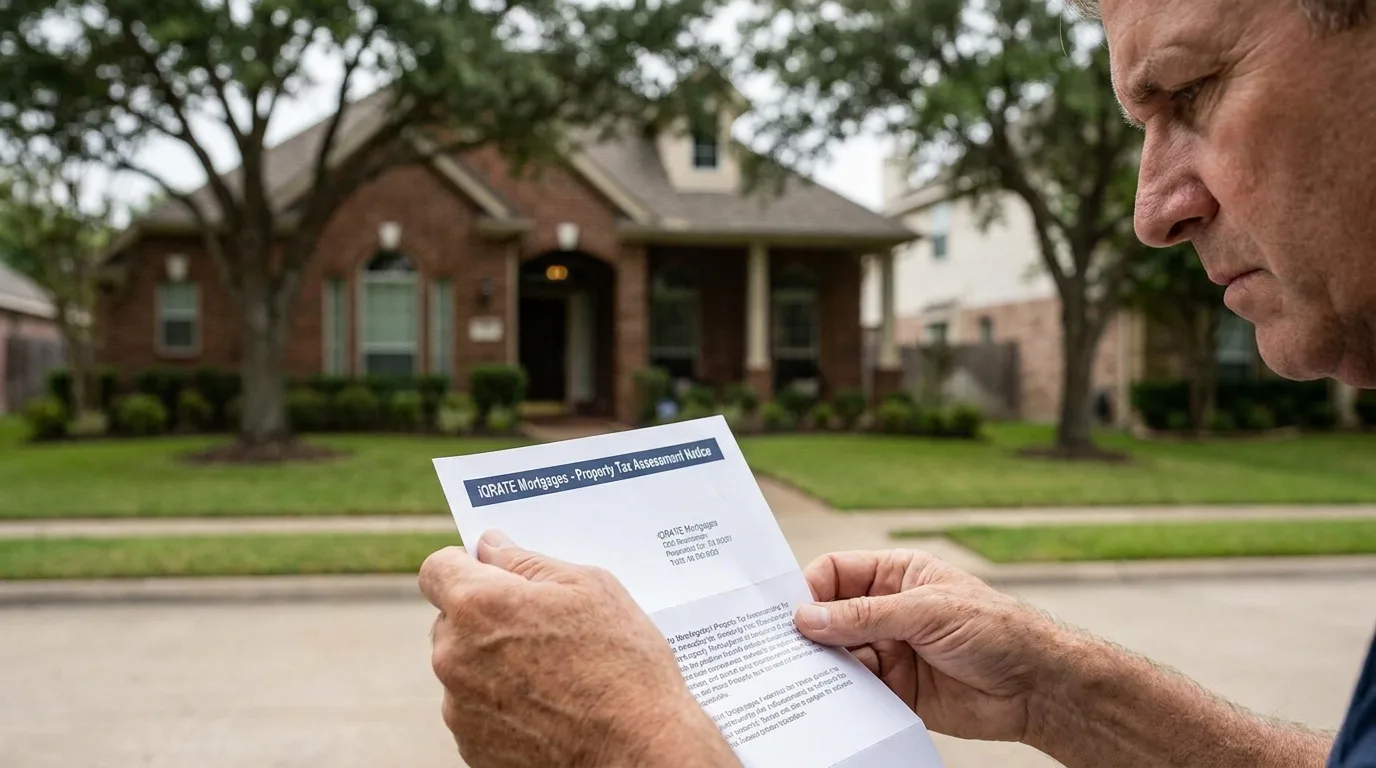
- Create a Personal Savings Buffer: Get ahead of the next escrow analysis. If your property value is rising, it's safe to assume your payment will increase. Start setting aside an extra $50 to $100 each month in a separate savings account. When you get the escrow shortage notice, you'll have the funds ready to pay it as a lump sum, keeping your next year's monthly payment more manageable.
Ready to plan your next move with a clear understanding of the costs? Apply now to speak with a mortgage strategist and find a loan that fits your financial future.
Author Bio
David Ghazaryan is the expert mortgage strategist and founder behind iQRATE Mortgages. With a mission to fund home loans that traditional banks won't touch, David specializes in helping clients with unique financial situations, including those recovering from foreclosure or bankruptcy. He expertly crafts smart, strategic, and stress-free mortgages by leveraging a vast network of over 100 lenders to secure competitive rates for investors and homebuyers alike. Praised for exceptional customer service, David has helped hundreds of families with a 97% satisfaction rate, guiding them to the mortgage they deserve.
References
CFPB - What is an escrow account?









