


Lender Scrutiny for H-1B Visa Applicants
Legally, under the Equal Credit Opportunity Act (ECOA), lenders cannot discriminate against applicants based on their national origin. This means you should be evaluated on the same financial criteria as a U.S. citizen: your credit score, income, debt-to-income ratio, and assets. However, lenders must also assess risk, and your temporary residency status is a key factor. Lenders are not denying you based on where you are from, but on the potential impermanence of your right to live and work in the U.S.
So, while the core financial evaluation is the same, H-1B visa holders face an additional layer of scrutiny. The lender’s primary concern is simple: will you be able to remain in the country for a significant portion of the loan term, which is typically 30 years? They need assurance that your income stream is stable and likely to continue within the United States. This is where demonstrating long-term intent and stability becomes critical to securing a mortgage in competitive markets like Plano and Frisco, Texas.
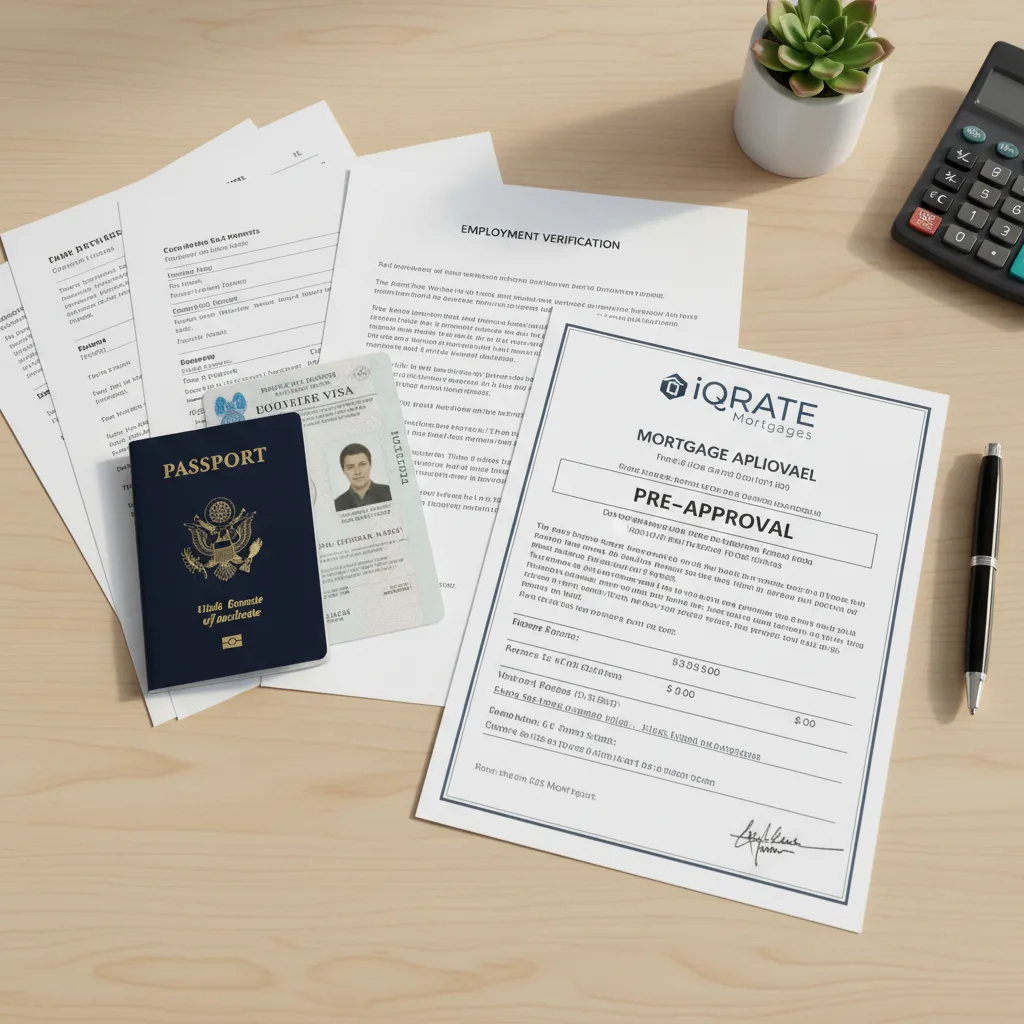
Essential Documents for Your H-1B Mortgage Application
Beyond the standard mortgage application documents like pay stubs, W-2s, and bank statements, you will need to provide a specific set of immigration and employment records. Having these ready will streamline the process significantly.
- Valid Passport and H-1B Visa: A copy of your passport and the H-1B visa stamp.
- I-797 Approval Notice: This is the official document from USCIS showing your H-1B status has been approved or extended. You should provide all historical I-797 forms to show a consistent history of employment status.
- Employment Authorization Document (EAD): While the H-1B visa itself provides work authorization, if you have a separate EAD card, you must provide it. This is particularly relevant for FHA loans.
- Social Security Number (SSN): A valid SSN is required for the lender to pull your credit history. An Individual Taxpayer Identification Number (ITIN) is generally not sufficient for most mortgage programs.
- Employment Verification Letter: This letter from your employer is crucial. It should confirm your job title, salary, start date, and, most importantly, state that your employment is stable and of an indefinite duration, contingent on your continued work authorization. A phrase like 'the position is of a permanent nature' can be very powerful.

How Your Visa's Expiration Date Impacts the Loan
This is the most common hurdle for H-1B applicants. Lenders get nervous when they see a visa expiring in 6, 12, or even 18 months. However, the rules from Fannie Mae and Freddie Mac, which set the standards for most conventional loans, are more flexible than many people think. They do not require the visa to be valid for a specific number of years.
Instead, they require the lender to determine if your income is likely to continue. You can demonstrate this in several ways:
- History of Renewals: If you have been in the U.S. for several years and have successfully renewed your H-1B status at least once, it shows a pattern of stability.
- Employer Strength: Your employer's reputation matters. A large, established company in Plano with a history of sponsoring foreign workers is viewed more favorably than a small, unknown startup.
- In-Demand Profession: Working in a high-demand field like technology, healthcare, or engineering suggests that you will likely maintain employment and have your visa extended.
Some lenders may have an 'overlay', which is an internal rule stricter than Fannie Mae or Freddie Mac guidelines, requiring at least one year remaining on your visa. (The data, information, or policy mentioned here may vary over time.) This is why shopping around or working with a broker is essential.
Can an Approved I-140 Petition Help My Application?
Absolutely. An approved I-140 Immigrant Petition for Alien Worker is a game-changer for your mortgage application. This document signifies that you have been approved for a green card and are merely waiting for one to become available. It is the strongest possible evidence you can present to a lender that you intend to remain in the U.S. permanently. It effectively removes the lender's concern about your visa expiring, making your application as strong as a permanent resident's from a residency-status perspective.
Loan Programs Available to H-1B Visa Holders
Contrary to popular belief, you are not limited to special, high-interest 'foreign national' loans. H-1B visa holders with established U.S. credit and a stable job can qualify for the same primary mortgage products as U.S. citizens.
- Conventional Loans: This is the most common path. As long as you meet the credit and income requirements set by Fannie Mae and Freddie Mac, your visa status is simply another verification point. You can secure a conventional loan with as little as 3% to 5% down.
- FHA Loans: The Federal Housing Administration also lends to non-permanent residents. FHA guidelines state that a borrower with 'lawful residency' is eligible. They must have a valid SSN and an EAD, and the property must be their primary residence. FHA loans are known for their lenient credit requirements and a low down payment of just 3.5%.
- Jumbo Loans: For high-cost areas like Frisco, you might need a jumbo loan (a loan that exceeds conforming limits). These loans do not have to follow Fannie Mae or Freddie Mac rules, so eligibility is entirely up to the individual lender. (The data, information, or policy mentioned here may vary over time.) Many lenders who offer jumbo loans are comfortable with H-1B applicants, especially those with high incomes, significant assets, and an approved I-140.
Finding a Lender in Texas for H-1B Mortgages
While any lender can theoretically provide a mortgage to an H-1B holder, many loan officers are unfamiliar with the process and may give you incorrect information or deny you outright. Your best strategy is to work with a mortgage broker or a lender who explicitly states they have experience with non-permanent resident financing. These professionals understand the specific documentation required and know which wholesale lenders have favorable guidelines for visa holders. They can navigate the complexities and avoid underwriters who are overly cautious due to a lack of experience with immigration paperwork.
Can My Spouse on an H4 Visa Be a Co-Borrower?
Yes, but with an important condition. An H4 spouse can be a co-borrower and have their income included in the mortgage application only if they possess a valid Employment Authorization Document (EAD). If your H4 spouse does not have an EAD, they cannot be a co-borrower whose income is used to qualify. However, they can still be on the property title. In this scenario, you would be the sole borrower qualifying based on your income alone.
Understanding Down Payment Requirements
A common myth is that non-permanent residents must put 20-30% down. This is false. For most loan programs, the down payment requirements are the same for H-1B visa holders as they are for U.S. citizens.
- Conventional Loan: Minimum down payment can be as low as 3% or 5%, depending on the program and your credit score.
- FHA Loan: The minimum down payment is 3.5%.
Of course, a larger down payment strengthens your application and helps you avoid Private Mortgage Insurance (PMI) on a conventional loan if you put down 20% or more. But it is not a requirement for eligibility. Navigating a mortgage application on an H-1B visa involves unique challenges. If you're planning to buy a home in Texas, consulting with a mortgage professional who is experienced with non-permanent resident financing can provide clarity and connect you with the right loan program for your situation.
Ready to explore your homeownership options in Texas? Understanding your specific financial picture is the first step. Apply now to get a clear assessment from a professional experienced with H-1B financing.
Author Bio
David Ghazaryan is the expert mortgage strategist and founder behind iQRATE Mortgages. With a mission to fund home loans that traditional banks won't touch, David specializes in helping clients with unique financial situations, including those recovering from foreclosure or bankruptcy. He expertly crafts smart, strategic, and stress-free mortgages by leveraging a vast network of over 100 lenders to secure competitive rates for investors and homebuyers alike. Praised for exceptional customer service, David has helped hundreds of families with a 97% satisfaction rate, guiding them to the mortgage they deserve.
References
Fannie Mae Selling Guide: B2-2-02, Non-U.S. Citizen Borrower Eligibility









