


Securing a jumbo loan for a luxury property in Texas is a significant financial step, especially for non-U.S. citizens or residents using funds from overseas. Lenders in competitive markets like Houston and Dallas must adhere to stringent federal regulations designed to prevent money laundering. This means every dollar used for your down payment and closing costs must have a clear, documented paper trail. If your assets are in a foreign bank, the verification process requires meticulous preparation. Understanding these requirements beforehand is the key to a smooth and successful home purchase, ensuring your international assets are properly sourced and seasoned to meet underwriter approval.
Preparing Your Foreign Bank Statements
The first step in the process is gathering complete and legible copies of your foreign bank statements. Lenders need to see a history of the funds to ensure they are legitimately yours and haven't suddenly appeared from an unverified source. This process is known as 'sourcing and seasoning'.
Gather Complete Statements: You will typically need to provide the most recent 60 days of statements for any account holding funds you plan to use. Don't submit screenshots or transaction summaries. Lenders require the full, official statements that include your name, the bank's name, the account number, and a detailed list of all transactions for the period.
Ensure Clarity: Every page of the statement must be included, even blank pages or pages with only legal disclaimers. If the statements are in a language other than English, they must be translated. Each translated page must be accompanied by the original.
Explain Large Deposits: Any large, unusual deposits that are not part of your regular income (like a payroll deposit) must be explained. For example, if you sold a property overseas and deposited the proceeds, you will need to provide the sales contract and other closing documents for that transaction.
Professional Translation Requirements for Loan Documents
Clarity is non-negotiable for mortgage underwriters. If any of your financial documents, including bank statements, tax returns, or employment verification letters, are in a language other than English, they must be professionally translated. A casual translation from a friend or family member will not be accepted.
What Lenders Require for Translations
Lenders require a certified translation. This means the translation must be accompanied by a signed statement from the translator or a representative of the translation company. This certification attests that the translation is a complete and accurate rendering of the original document. The certification should also include the translator's credentials and contact information.
Never attempt to alter or translate the documents yourself. Submitting inaccurate or uncertified translations can lead to an immediate loan denial and may even be flagged as potential fraud. It is crucial to budget for professional translation services early in your homebuying journey in Dallas, as this can take time and add to your upfront costs.
Documenting Wire Transfers from Overseas Banks
Once your funds are verified, you'll need to transfer them to a U.S. bank account. This transfer itself creates a new piece of the paper trail that the lender will scrutinize. A simple line item on your U.S. bank statement showing an incoming wire is not sufficient.
To properly document the transfer, you must provide:
A copy of the wire transfer receipt or confirmation from the sending foreign bank. This document should clearly show the sending bank's name, your name as the sender, the account number the funds came from, the date, and the exact amount sent in the original currency.
Evidence of the funds leaving the foreign account. This is usually shown in the final bank statement from that account, which should list the outgoing wire as a debit.
Proof of the funds arriving in your U.S. account. This will be your U.S. bank statement showing the corresponding incoming wire. The amount received in U.S. dollars should align with the exchange rate on the day of the transfer.
For example, imagine you are buying a home in Houston for $1.5 million and are making a 25% down payment ($375,000). You wire the equivalent of $380,000 from your bank in the United Kingdom. You must provide the SWIFT confirmation from your UK bank and the corresponding U.S. bank statement showing the deposit. The names on both the sending and receiving accounts must match perfectly.
Crafting a 'Source of Funds' Letter
A 'source of funds' letter is a formal statement written by you that explains the origin of the money you are using for the down payment. It serves as a narrative that connects all the dots for the underwriter, clarifying where the money came from and how it got into your U.S. bank account. A well-written letter can prevent unnecessary questions and delays.
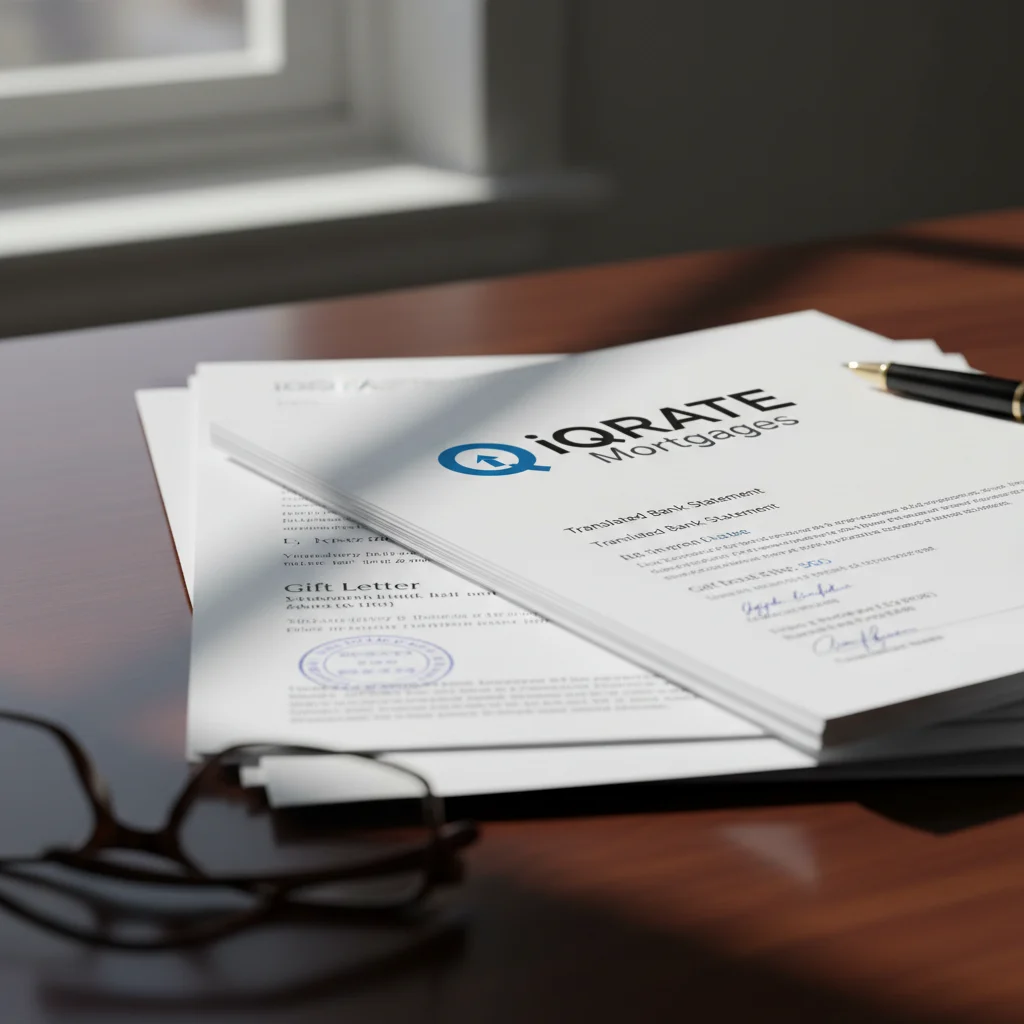
Your letter should be concise and factual, including the following details:
- Your full name and the address of the property you are purchasing.
- A clear statement that the funds are from your own savings and are not a loan.
- The name and location of the foreign bank(s) where the funds were held.
- The account numbers for the foreign accounts.
- An explanation of how the funds were accumulated (e.g., 'from regular salary savings over the past 10 years', 'from the sale of stocks', 'from an inheritance').
- If applicable, a brief explanation of any large deposits, referencing the supporting documentation you have provided.
- The date and amount of the wire transfer to your U.S. account.
Sign and date the letter. It is a formal part of your loan application, so it should be treated with professional care.
The Lender's Look-Back Period for Asset Tracing in Houston
Lenders in Houston, and across the U.S., typically require a 60-day history of your assets. (The data, information, or policy mentioned here may vary over time.) This is why they ask for the two most recent monthly bank statements for any account you use for the down payment or closing costs. They want to see that the funds have been 'seasoned'—meaning they have been in your account for a reasonable period.
However, the 60-day rule isn't absolute. If your statements show a very large deposit within that 60-day window, the underwriter will trace that deposit back to its source, no matter how far back they need to go. For instance, if you deposited $200,000 into your account 45 days ago, you must source where that $200,000 came from. If it came from another account, you will need to provide statements for that account as well. The paper trail must continue until the ultimate source of the funds is clear and documented.
Using Gifted Funds from a Non-U.S. Citizen Relative
It's common for family members to help with a down payment. If you are receiving a gift from a non-U.S. citizen relative living abroad, the documentation requirements are even more rigorous. The lender needs to verify not only that the money is a true gift—with no expectation of repayment—but also that the donor had the financial ability to provide the gift.
Here’s the required documentation:
- A Signed Gift Letter: This is a formal letter from the donor stating their name, address, relationship to you, the exact dollar amount of the gift, and a clear declaration that the funds are a gift and not a loan.
- Proof of Donor's Ability to Give: The donor must provide their own bank statements to prove they had the funds available to give. These statements must also be translated if not in English.
- Paper Trail of the Transfer: You will need to show the funds leaving the donor's foreign account and arriving in your U.S. account via a wire transfer receipt and corresponding bank statements.
Managing Exchange Rate Fluctuations and Your Down Payment
When dealing with foreign currencies, the final U.S. dollar amount you receive can change daily. This poses a risk to your transaction. If the exchange rate shifts unfavorably after you initiate the wire, you could end up with less money than you need for your down payment and closing costs.
To mitigate this risk, it is wise to transfer more funds than the exact amount required. For example, if you need $400,000 for a down payment on a home in Dallas, consider transferring the equivalent of $410,000 or $415,000. This buffer will cover:
- Exchange Rate Fluctuations: Protects you if the dollar strengthens against your home currency before the transfer is complete.
- Bank Fees: Both the sending and receiving banks will likely charge fees for an international wire transfer.
Any excess funds can be kept in your U.S. account as reserves, which lenders view favorably, or used for post-closing expenses like furniture or renovations.
Common Mistakes to Avoid with Foreign Funds
Navigating the process of using foreign funds can be complex, and several common mistakes can cause significant delays or even lead to loan denial.
- Incomplete Bank Statements: Submitting statements with missing pages or transaction histories is a major red flag.
- Untranslated Documents: Failing to have all non-English documents professionally and certifiably translated will halt your application.
- Unexplained Deposits: Any large deposit without a clear paper trail and written explanation will be questioned.
- Moving Money Too Often: Shifting funds between multiple accounts right before applying for a loan creates a complicated paper trail that is difficult for underwriters to follow.
- Miscalculating Exchange Rates: Not accounting for currency fluctuations and wire fees can leave you short on funds at closing.
By anticipating these requirements and preparing your documentation meticulously, you can ensure a much smoother path to securing a jumbo loan for your Texas home. Sourcing foreign funds for a jumbo loan requires careful planning and expert guidance. If you're preparing to buy a home in Texas and need assistance navigating the documentation process, consult with a mortgage strategist who specializes in complex financial profiles to ensure a seamless and successful transaction.
Ready to navigate the complexities of a jumbo loan with confidence? If your financial situation is unique, our mortgage experts are here to provide the specialized guidance you need. Take the first step toward your Texas home and Apply for a Mortgage to get started.
Author Bio
David Ghazaryan is the expert mortgage strategist and founder behind iQRATE Mortgages. With a mission to fund home loans that traditional banks won't touch, David specializes in helping clients with unique financial situations, including those recovering from foreclosure or bankruptcy. He expertly crafts smart, strategic, and stress-free mortgages by leveraging a vast network of over 100 lenders to secure competitive rates for investors and homebuyers alike. Praised for exceptional customer service, David has helped hundreds of families with a 97% satisfaction rate, guiding them to the mortgage they deserve.
References









