


Why Do United States Lenders Scrutinize Foreign Funds So Heavily?
When you apply for a mortgage in the United States, especially in a global hub like Miami, lenders aren't just assessing your creditworthiness. They are legally obligated to act as gatekeepers against financial crime. The primary drivers behind this intense scrutiny are federal laws designed to prevent money laundering and the financing of terrorism. The most significant of these is the Bank Secrecy Act (BSA) and provisions of the USA PATRIOT Act.
These regulations require financial institutions, including mortgage lenders, to establish rigorous Anti-Money Laundering (AML) programs. A core component of these programs is verifying the source of large sums of money, particularly those used for down payments and closing costs. For an underwriter, an unexplained wire transfer of $200,000 from a foreign account is a major red flag. They must be able to trace the funds to a legitimate, documented source to ensure the money wasn't derived from illegal activities. It’s not a matter of trust; it’s a matter of federal compliance. Failure to properly source and document these funds can result in severe penalties for the lender, which is why they will not approve a loan until every dollar is accounted for.
What Is the Required Seasoning Period for Funds in a Miami Bank Account?
'Seasoning' is a term used in the mortgage industry to describe the length of time money has been sitting in a bank account. For funds originating from overseas, lenders typically require them to be seasoned in a U.S. bank account for at least 60 days. (The data, information, or policy mentioned here may vary over time.) Some lenders or specific loan programs may even require 90 days.
Why is this period necessary? The 60-day window usually corresponds with the two months of bank statements you are required to provide with your mortgage application. If the funds appear in your U.S. account within those two months, the lender must trace them back to their origin. However, if the funds were deposited before that 60-day period, they are considered 'seasoned' and are treated as your own assets, often requiring no further sourcing documentation.
Pro Tip: To avoid delays, transfer your down payment and closing cost funds into your U.S. bank account at least three months before you plan to apply for a mortgage in Aventura or Miami. This allows the money to become fully seasoned, simplifying the underwriting process significantly. An underwriter will see the funds on your statements and won't need to unravel a complex international paper trail, leading to a much smoother and faster approval.
What Specific Documents Are Needed to Trace Money from a Foreign Bank?
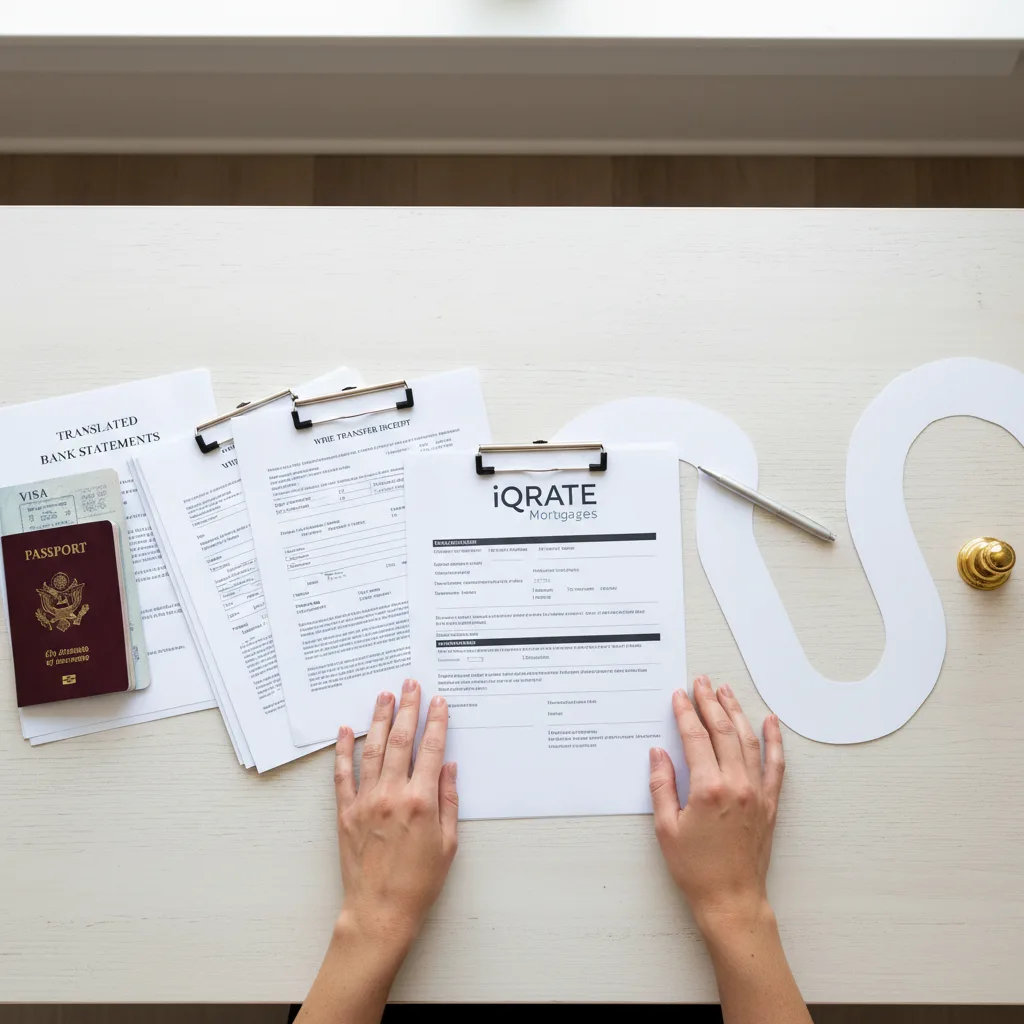
If your funds are not yet seasoned, you must be prepared to create a complete and transparent paper trail. The goal is to show the underwriter the entire journey of the money, from its original source to your U.S. account. Think of it as connecting the dots. Here is a specific checklist of documents you will almost certainly need:

- Foreign Bank Statements: You will need to provide statements for the account where the funds originated. The number of months required will be enough to demonstrate the funds accumulating over time or arriving from a legitimate source (like salary or the sale of an asset), typically covering at least the most recent 60-90 days.
- Proof of Foreign Account Ownership: A letter from the foreign bank or a statement clearly showing your name as the account holder.
- Wire Transfer Receipts: A copy of the receipt for every wire transfer, showing the sending bank, the receiving bank, the date, and the exact amount.
- U.S. Bank Statements: Your U.S. bank statements showing the incoming wire transfers. The amounts must match the transfer receipts perfectly.
- A Clear Letter of Explanation (LOE): A brief, signed letter explaining the purpose of the transfer. For example: 'I, [Your Name], transferred $150,000 on [Date] from my [Foreign Bank Name] savings account to my [U.S. Bank Name] checking account to be used for the down payment on the property at 123 Main Street, Miami, FL.'
Gathering these documents early is essential. Delays in obtaining records from overseas banks are a common reason for closing date postponements.
How Should I Document a Large Gift from a Non-US Relative?
Using a financial gift from a relative living outside the U.S. is a common way to fund a down payment, but it adds another layer of documentation. Lenders need to verify that the money is a true gift and not a disguised loan, and they also must source the gifter's funds.
Here’s the required documentation:
- A Signed Gift Letter: This is a non-negotiable document. The letter must be written in English (or translated) and contain specific information:
- The donor's full name, address, and relationship to you.
- The exact dollar amount of the gift.
- The date the funds were transferred.
- A clear statement that the funds are a gift and that no repayment is expected or required.
- The address of the property you are purchasing in Miami.
- The donor's signature.
- Proof of the Donor's Ability to Give: The donor must provide their own bank statements showing they had the funds available to give the gift. The source of those funds must be clear and not from a large, recent, undocumented deposit.
- The Paper Trail of the Transfer: You will need to show the money leaving the donor's foreign account (wire receipt) and arriving in your U.S. account (deposit record). The amounts must match the gift letter exactly.
For example, if your aunt in Brazil is gifting you $50,000 for a condo in Aventura, she will need to sign the gift letter, provide her Brazilian bank statements showing she has the $50,000, and give you a copy of the wire transfer receipt. You will then provide your U.S. statement showing the $50,000 deposit.
Do I Need to Provide Translated Bank Statements and Letters?
Yes, absolutely. Any document that is not originally in English must be accompanied by a complete and accurate English translation. You cannot translate the documents yourself, nor can a friend or family member. The translation must be performed by an independent, professional translation service.
The translator must also provide a certification letter. This letter states that they are fluent in both languages, that the translation is a true and accurate representation of the original document, and it includes their name, signature, and contact information. Submitting untranslated documents or using an uncertified translation will cause an immediate halt in the underwriting process until the requirement is met.
Are There Restrictions on Which Countries Funds Can Originate From?
Yes, there are strict and absolute restrictions. The U.S. Department of the Treasury’s Office of Foreign Assets Control (OFAC) maintains a list of sanctioned countries, entities, and individuals. U.S. financial institutions are prohibited from engaging in transactions with anyone on this list.
Lenders will not accept funds, directly or indirectly, from countries on the OFAC sanctions list. These typically include nations like Iran, North Korea, Cuba, Syria, and certain regions of Ukraine. The list can change, so it's critical to verify the current status. Attempting to use funds from a sanctioned country will result in an automatic loan denial and could trigger a federal investigation. There is no flexibility on this rule.
How Do I Properly Document the Sale of a Foreign Asset for My Down Payment?
Using the proceeds from selling a foreign asset, such as real estate or a business, is an excellent source for a down payment. However, it requires a comprehensive paper trail to satisfy underwriters. Imagine you sold an apartment in Colombia to buy a new home in Miami. You would need to provide a complete narrative of the transaction through documentation.
Here is the step-by-step documentation you'll need:
- Proof of Ownership: A deed, title, or business registration showing you were the legal owner of the asset.
- The Sales Contract: A fully executed copy of the final sales agreement, showing the sale price, buyer, and seller.
- The Closing Statement: The foreign equivalent of a HUD-1 or Closing Disclosure. This document breaks down the financials of the sale, showing the final sale price and the net proceeds you received after fees and taxes.
- Proof of Proceeds Deposited: A bank statement from your foreign account showing the deposit of the net proceeds from the sale. The amount should match the closing statement.
- The Transfer Trail: The wire transfer receipt showing the funds moving from your foreign account to your U.S. account, and the corresponding U.S. bank statement showing the deposit.
By providing this complete chain of evidence, you leave no questions for the underwriter. They can clearly see that the $250,000 in your account came directly from the legitimate sale of your overseas property.
What Are Common Mistakes That Create Red Flags for Aventura Underwriters?
Navigating this process can be complex, and certain mistakes can create major red flags for underwriters, leading to stressful delays or even denials. Here are the most common pitfalls to avoid when securing a mortgage in Aventura or greater Miami:
- Last-Minute Fund Transfers: Moving money just before or during the mortgage process without seasoning it first. This forces a complex documentation process under a tight deadline.
- Commingling Funds: Depositing the foreign funds into an account with many other transactions. It’s cleaner to use a dedicated account for the down payment funds to make the paper trail easy to follow.
- Using a Third-Party Exchanger: Using an unofficial money transfer service instead of a direct bank-to-bank wire. These services often don't provide the documentation lenders require.
- Incomplete or Vague Gift Letters: A gift letter that is missing key details, like the 'no repayment required' clause, will be rejected immediately.
- Large Cash Deposits: Any large cash deposits in the foreign bank account before the transfer will be questioned. All funds must come from a verifiable source, and cash is nearly impossible to trace.
- Discrepancies in Amounts: Mismatched amounts between the wire transfer receipt and the deposit record. Even small differences due to fees must be explained.
The journey of purchasing a home in Miami with international funds is complex, but with careful planning, it's achievable. If you're ready to move forward and want expert guidance to ensure a smooth underwriting process, take the first step and Apply now.
Author Bio
David Ghazaryan is the expert mortgage strategist and founder behind iQRATE Mortgages. With a mission to fund home loans that traditional banks won't touch, David specializes in helping clients with unique financial situations, including those recovering from foreclosure or bankruptcy. He expertly crafts smart, strategic, and stress-free mortgages by leveraging a vast network of over 100 lenders to secure competitive rates for investors and homebuyers alike. Praised for exceptional customer service, David has helped hundreds of families with a 97% satisfaction rate, guiding them to the mortgage they deserve.
References
Fannie Mae Selling Guide: Asset Documentation









