


How Lenders Evaluate a Multi-Partner LLC for a DSCR Loan in Miami
When you apply for a Debt Service Coverage Ratio (DSCR) loan for a property owned by a multi-partner LLC, lenders shift their focus from personal income to the property's ability to generate cash flow. However, for a partnership in a competitive market like Miami, the evaluation is more nuanced than for a solo investor. Lenders are underwriting the risk of the entire business entity, not just the real estate asset.
Here’s what they scrutinize:
- The LLC’s Track Record: Lenders prefer to see an established LLC with a history of owning and managing rental properties. A brand-new LLC formed just to purchase a property can be a red flag, though it's not an automatic denial. They want to see that the partnership structure is stable.
- Experience of the Managing Members: The lender will vet the real estate experience of the key partners, often called 'managing members'. If the managing members have a successful portfolio of other rental properties, it significantly strengthens the application. They want to ensure the people in charge know how to manage a Miami rental effectively.
- The Operating Agreement: This is arguably the most critical document. Lenders dissect the operating agreement to understand the rights, responsibilities, and financial structure of the partnership. They need to see a clear, professional agreement that outlines how decisions are made and how profits and losses are distributed.
- Liquidity of the LLC and Partners: While DSCR loans don't require personal income verification, lenders will verify that the LLC or its principal partners have sufficient liquid assets for a down payment, closing costs, and cash reserves. Typically, they require six months of principal, interest, taxes, and insurance (PITI) in reserves. (The data, information, or policy mentioned here may vary over time.)
What Parts of the Operating Agreement Are Most Important for Mortgage Underwriting?
Your LLC's operating agreement is the rulebook for your business, and mortgage underwriters read it carefully to assess risk. Vague or poorly drafted agreements are a common reason for denial. Pay close attention to these sections:
- Management Structure: The agreement must clearly state who has the authority to manage the property and enter into binding contracts, like a mortgage. It should specify if the LLC is 'member-managed' (all partners have a say) or 'manager-managed' (a designated person or group makes decisions). Lenders prefer a clear line of authority.
- Member Contributions and Ownership Percentages: This section outlines who contributed what to the LLC and their corresponding ownership stake. This is crucial for determining who the key principals of the loan are.
- Distribution of Profits and Losses: Lenders want to see a logical and clearly defined method for how rental income is distributed among partners. This helps them understand the financial incentives and potential conflicts within the partnership.
- Guarantor Provisions: The agreement should identify who is authorized to personally guarantee the loan if required. In many partnership DSCR loans, members with a significant ownership stake (often 20-25% or more) will be required to be guarantors on the loan. (The data, information, or policy mentioned here may vary over time.)

Does My Business Partner's Credit Affect My DSCR Loan Application in Orlando?
Yes, but not in the way it does for a conventional loan. The core of a DSCR loan is the property's cash flow, not the borrowers' personal income. The lender's primary concern is whether the rent covers the mortgage payment. However, the credit history of key partners is still a vital part of the risk assessment, especially for properties in a dynamic market like Orlando.
Here’s how partner credit comes into play:
- Major Derogatory Events: Lenders will perform a credit check on all principal members of the LLC (typically those with 25% or more ownership). They aren't looking at your debt-to-income ratio, but they are screening for major financial red flags. A recent bankruptcy, foreclosure, or a pattern of late payments on other mortgages can disqualify the entire application. These events suggest a higher risk of default, regardless of how well the Orlando property performs.
- Minimum Credit Score: Most DSCR lenders have a minimum credit score requirement, often around 640-680, for the principal partners. (The data, information, or policy mentioned here may vary over time.) If one key partner falls below this threshold, it may lead to a denial or, in some cases, a higher interest rate and larger down payment requirement.
- Not an Average Score: Unlike conventional loans where a lower-scoring co-borrower can drag down the application, lenders here evaluate each principal partner individually. A single partner with a challenged credit history can jeopardize the deal for everyone involved. It's crucial to have open conversations about credit with your partners before applying.
How Is the Debt Service Coverage Ratio Calculated with Partner Distributions?
The Debt Service Coverage Ratio formula itself is straightforward: DSCR = Net Operating Income (NOI) / Total Debt Service. A ratio of 1.0 or higher is required, with many lenders preferring 1.20 or 1.25. When a partnership is involved, the calculation of NOI can get more complex.
Net Operating Income (NOI) is the property's gross rental income minus operating expenses like property taxes, insurance, maintenance, and property management fees. Partner distributions or 'draws' are typically not considered an operating expense of the property. They are a distribution of profit after all expenses, including the mortgage, have been paid.
However, underwriters will review the LLC's financial statements to ensure the property's cash flow is calculated correctly. If the partnership's accounting practices incorrectly list partner draws as a property expense, it will artificially lower the NOI and could cause the DSCR to fall below the lender's minimum requirement.
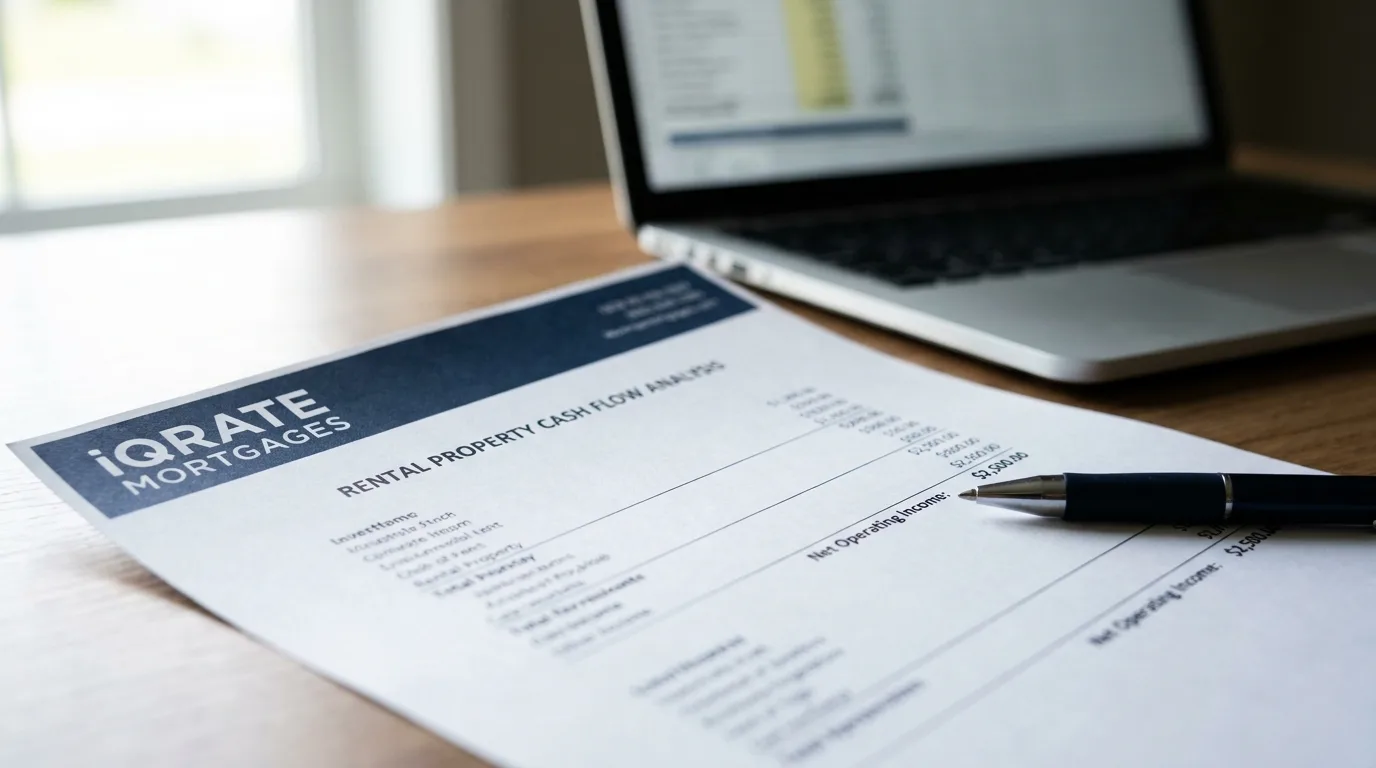
Example Calculation:
- A duplex in Miami generates $6,000/month in gross rent.
- Monthly operating expenses (taxes, insurance, 10% for maintenance/vacancy, 8% for property management) total $1,880.
- NOI = $6,000 - $1,880 = $4,120
- The proposed new mortgage payment (PITI) is $3,200.
- DSCR = $4,120 / $3,200 = 1.2875
This property qualifies because the 1.29 DSCR is above the lender's likely threshold (often 1.20-1.25). Any money distributed to partners comes from the $920 monthly profit and does not impact the DSCR calculation.
What Are the Title and Insurance Requirements for a Partnership-Held Property?
For a property owned by an LLC, the legal and insurance paperwork must be precise. Any discrepancies can halt the closing process.
- Title: The property title must be held in the exact legal name of the LLC as registered with the state of Florida. For example, if your company is 'Orlando Sunshine Rentals, LLC', the title cannot be in the name of 'Orlando Sunshine Rentals'. The lender will conduct a title search to ensure there are no liens or ownership claims against the property and that the LLC is the sole owner.
- Insurance: A hazard insurance policy (and flood insurance, if applicable) must be obtained. The 'named insured' on the policy must be the LLC's exact legal name. Furthermore, the lender must be listed as the 'mortgagee' or 'lender's loss payee'. This ensures that in the event of a total loss, the insurance proceeds go to the lender first to pay off the mortgage.
Can I Get a Cash-Out Refinance DSCR Loan on a Property Owned by Partners?
Absolutely. A cash-out refinance is a popular strategy for real estate partnerships looking to access equity to purchase more properties or renovate existing ones. The process is very similar to a purchase DSCR loan, with a few key differences.
Lenders will evaluate the same core criteria: the property's DSCR, the condition of the property via a new appraisal, and the strength of the LLC and its partners. The amount of cash you can take out is determined by the lender's Loan-to-Value (LTV) limit. For a DSCR cash-out refinance, this is typically 70-75% of the property's appraised value. (The data, information, or policy mentioned here may vary over time.) For instance, if your Orlando rental appraises for $500,000 and you have an existing mortgage of $200,000, a lender with a 75% LTV limit may allow you to borrow up to $375,000. This would pay off the old loan and provide you with $175,000 in cash.
What Are the Common Reasons DSCR Loans Are Denied for Partnerships?
Partnership applications have more moving parts, which means more potential points of failure. Here are the most common denial reasons:
- Insufficient DSCR: The property's income simply doesn't cover the proposed mortgage payment by a wide enough margin.
- Incomplete or Flawed Operating Agreement: The legal document is vague, contradictory, or does not clearly define management authority and financial distributions.
- Poor Partner Credit: A key principal has a recent bankruptcy, foreclosure, or very low credit score.
- Lack of Liquidity: The partnership and its principals cannot demonstrate sufficient funds for the down payment, closing costs, and required cash reserves.
- Property Condition: The appraisal reveals significant deferred maintenance or habitability issues that increase the lender's risk.
- Title Issues: The title search uncovers outstanding liens, judgments, or ownership disputes related to the property or the LLC members.
How Do I Prove Cash Flow for a Rental Property in a New Partnership?
If your LLC is newly formed or has just acquired a vacant property, there's no history of rental income to show a lender. In this common scenario, lenders rely on an independent, forward-looking assessment of the property's income potential.
The key document is the Appraisal Report, which will include a Comparable Rent Schedule (Fannie Mae Form 1007). The appraiser analyzes recent rental listings and leased properties in the immediate vicinity that are similar in size, condition, and amenities. Based on this market data, the appraiser provides a professional opinion of the property's fair market rent. Lenders will then use this projected rental income figure to calculate the DSCR. This allows new partnerships to secure financing for properties in growing markets like Miami or Orlando before they even have a tenant in place. Navigating the complexities of DSCR loans for a real estate partnership requires a clear strategy. To ensure your LLC's operating agreement and financial structure are positioned for approval, speak with a mortgage expert who specializes in investor financing.
Ready to put your partnership's real estate strategy into action? If your LLC is prepared and your property's numbers make sense, take the next step. Apply now for a DSCR loan and let our investor financing experts guide you through the process.
Author Bio
David Ghazaryan is the expert mortgage strategist and founder behind iQRATE Mortgages. With a mission to fund home loans that traditional banks won't touch, David specializes in helping clients with unique financial situations, including those recovering from foreclosure or bankruptcy. He expertly crafts smart, strategic, and stress-free mortgages by leveraging a vast network of over 100 lenders to secure competitive rates for investors and homebuyers alike. Praised for exceptional customer service, David has helped hundreds of families with a 97% satisfaction rate, guiding them to the mortgage they deserve.
References
CFPB - What is a debt-to-income ratio?
Fannie Mae - Form 1007, Single-Family Comparable Rent Schedule









