


E-2 Visa Jumbo Mortgages in Beverly Hills: A Clear Path to Ownership
Purchasing a luxury property in Beverly Hills presents a unique set of challenges, especially for E-2 treaty investors. While your visa signifies a substantial investment in the U.S. economy, traditional lenders often view non-permanent residents as high-risk borrowers. They struggle with verifying foreign income streams, a lack of U.S. credit history, and the perceived impermanence of your residency. This combination often leads to a quick denial for a jumbo loan, which is necessary for most properties in this high-cost market. However, a 'no' from a big bank is not the end of the road. Specialized lenders and mortgage programs are designed specifically for individuals in your exact situation, offering a clear and accessible path to financing your high-end Los Angeles home.
Mortgage Programs for E-2 Visa Holders in Beverly Hills
For an E-2 visa holder, standard conventional or FHA loans are generally not an option for a jumbo purchase. Instead, you must look toward niche products designed for international buyers. The primary and most effective solution is a Foreign National Loan Program.
These are not government-backed loans. They are portfolio loans, meaning the lender who originates the loan also services it and keeps it on their own books. This gives them the flexibility to create their own underwriting guidelines, which are often tailored to the unique financial profiles of international investors and business owners.
Key features of Foreign National loans include:
- Flexible Income Verification: They have established processes for verifying income from foreign sources.
- No U.S. Credit Required: Lenders often do not require a FICO score, relying instead on other financial indicators.
- Higher Loan Amounts: These programs are built to accommodate jumbo and super-jumbo loan amounts common in markets like Beverly Hills and Santa Monica.
- Interest-Only Options: Some programs offer interest-only payment structures for a set period, which can be advantageous for investors looking to manage cash flow.
It is critical to work with a mortgage broker who has direct access to these portfolio lenders, as they are not typically available through mainstream banking channels.
Verifying Foreign Income and Assets for a Jumbo Loan
This is the most crucial part of the loan application. Lenders need irrefutable proof of your ability to service the debt. Since your income and assets are likely held in another country and possibly in a different currency, the documentation requirements are extensive. Expect to provide a combination of the following:
- Letter from a Certified Public Accountant (CPA): A letter from a CPA in your home country (or a U.S. CPA familiar with international business) verifying your business ownership, income for the past two years, and the stability of the business. The letter must be translated into English.
- Translated Business Financials: Profit and loss statements and balance sheets for your primary business for the past two years.
- Translated Personal Bank Statements: At least 12 months of personal bank statements to show consistent income deposits and sufficient liquid assets for the down payment and reserves.
- Proof of Liquid Assets: Statements from investment, savings, or checking accounts showing the funds for the down payment, closing costs, and required post-closing reserves. Lenders typically want to see 12 to 24 months of mortgage payments held in reserve. (The data, information, or policy mentioned here may vary over time.) For a $3 million loan with a monthly payment of $20,000, that could mean proving you have an additional $240,000 to $480,000 in liquid assets after your down payment.
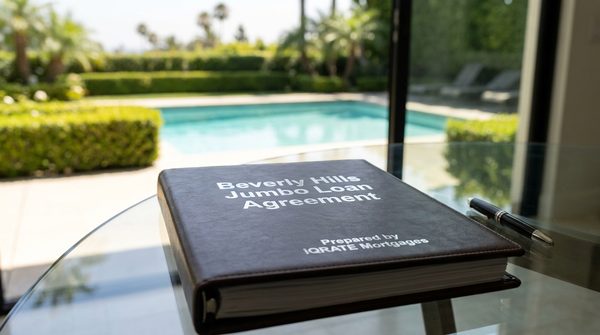
Example: An E-2 investor from France wants to buy a $4 million home in Beverly Hills. Their primary business in Paris generates the equivalent of $800,000 USD annually. To qualify, they would need their French accountant to draft a letter confirming this income. They would also provide 24 months of translated bank statements from their Crédit Agricole accounts showing these earnings and evidence of at least $2.2 million in liquid assets to cover a 40% down payment ($1,600,000) and required reserves ($600,000).
The Role of U.S. Credit History in Qualification
Do you need a United States credit history? For a Foreign National loan, the answer is often no. Lenders specializing in these mortgages understand that as a recent arrival, you have not had the opportunity to build a FICO score. Instead of a credit score, they focus on the overall strength of your financial profile, including:
- Your Down Payment: A larger down payment (30% or more) significantly reduces the lender's risk and is the most powerful compensating factor.
- Liquid Reserves: Ample post-closing reserves demonstrate financial stability.
- International Credit Report: Some lenders can pull an international credit report to show your history of managing debt in your home country.
- Alternative Credit: Providing evidence of consistent payments for rent, utilities, or insurance in the U.S. can also be helpful, though it is not always required.
If you do have some U.S. credit, such as a credit card you have been using, it can be a positive factor, but a lack of it will not automatically disqualify you from a Foreign National loan program.
Down Payment Requirements for Non-Permanent Residents
For a U.S. citizen buying a jumbo property, a 20-25% down payment is standard. For an E-2 visa holder, the requirement is significantly higher. You should expect to make a down payment of at least 30% to 40% of the purchase price. (The data, information, or policy mentioned here may vary over time.) In some cases, for super-jumbo loans (over $5 million), the requirement could be as high as 50%. (The data, information, or policy mentioned here may vary over time.)
Why the large down payment?
- Risk Mitigation: It provides the lender with a substantial equity cushion from day one.
- Financial Strength: It serves as a powerful indicator of your financial capacity.
- Commitment: It shows a serious commitment to the property and investment, assuring the lender you are less likely to default.

On a $3.5 million property in the Los Angeles area, a 35% down payment would be $1,225,000. It is essential that these funds are seasoned, meaning they have been in your account for at least 60-90 days and you can show a clear paper trail for their origin.
Using a Foreign National Loan Program for Your Purchase
As established, the Foreign National loan is your primary tool. This program is specifically designed to overcome the hurdles E-2 visa holders face. The process involves finding a lender or broker who offers these portfolio products. Underwriting is done manually, meaning a person, not an algorithm, will review your entire financial picture. This allows for a common-sense approach to approving your loan. The interest rates on these loans may be slightly higher than conventional jumbo loans to compensate for the lender's increased risk, but they are still competitive and provide the key to homeownership. (The data, information, or policy mentioned here may vary over time.)
Finding Lenders Who Specialize in Mortgages for Visa Holders
Your best ally in this process is an independent mortgage strategist or broker. Unlike a loan officer at a major bank who is limited to their institution's products, a broker has a network of dozens or even hundreds of lenders. They will know exactly which portfolio lenders have an appetite for Foreign National loans and understand the specific documentation requirements for E-2 visa holders.
A specialized broker can:
- Identify lenders who regularly work with non-permanent residents.
- Help you package your financial documentation for a successful underwriting review.
- Negotiate terms on your behalf.
- Save you from the frustration of applying with lenders who will ultimately say no.
Holding Property Title in a Corporation or an LLC
Yes, it is possible for an E-2 visa holder to hold the title to their property in a legal entity like a Limited Liability Company (LLC) or corporation. This is a common strategy for liability protection and estate planning. However, it adds another layer of complexity to the mortgage process.
If you plan to vest the title in an LLC, the lender will require:
- A Personal Guarantee: You will have to personally guarantee the loan, meaning you are still personally responsible if the LLC defaults.
- LLC Documentation: You must provide all formation documents for the LLC, including the operating agreement and articles of organization.
- Single-Purpose Entity: The lender may require that the LLC is a single-purpose entity, meaning its only activity is owning that specific property.
This is a detail you must discuss with your mortgage broker and a real estate attorney early in the process to ensure it is structured correctly to meet both your legal needs and the lender's requirements.
Essential Documents to Prove Your Visa Status
Finally, alongside your financial documentation, you will need to provide clear proof of your legal status to be in the United States. This is a non-negotiable part of the process.
Be prepared to provide clear, unexpired copies of:
- Your E-2 Visa: A copy of the E-2 visa stamp in your passport.
- Your Passport: A copy of the identification page of your passport.
- Form I-94 Arrival/Departure Record: This is a critical document that shows your class of admission (E-2) and the date your authorized stay expires. You can retrieve the most current version from the U.S. Customs and Border Protection website.
- Form I-797, Notice of Action (if applicable): If your status was changed or extended while in the U.S., you would have this approval notice from USCIS.
Navigating the complexities of a jumbo loan as an E-2 visa holder is challenging, but very achievable with specialized guidance. If you're ready to take the next step toward securing your Beverly Hills property, Apply now to explore your unique financing options with an expert.
Author Bio
David Ghazaryan is the expert mortgage strategist and founder behind iQRATE Mortgages. With a mission to fund home loans that traditional banks won't touch, David specializes in helping clients with unique financial situations, including those recovering from foreclosure or bankruptcy. He expertly crafts smart, strategic, and stress-free mortgages by leveraging a vast network of over 100 lenders to secure competitive rates for investors and homebuyers alike. Praised for exceptional customer service, David has helped hundreds of families with a 97% satisfaction rate, guiding them to the mortgage they deserve.
References









