


What are lender overlays on conventional home loans?
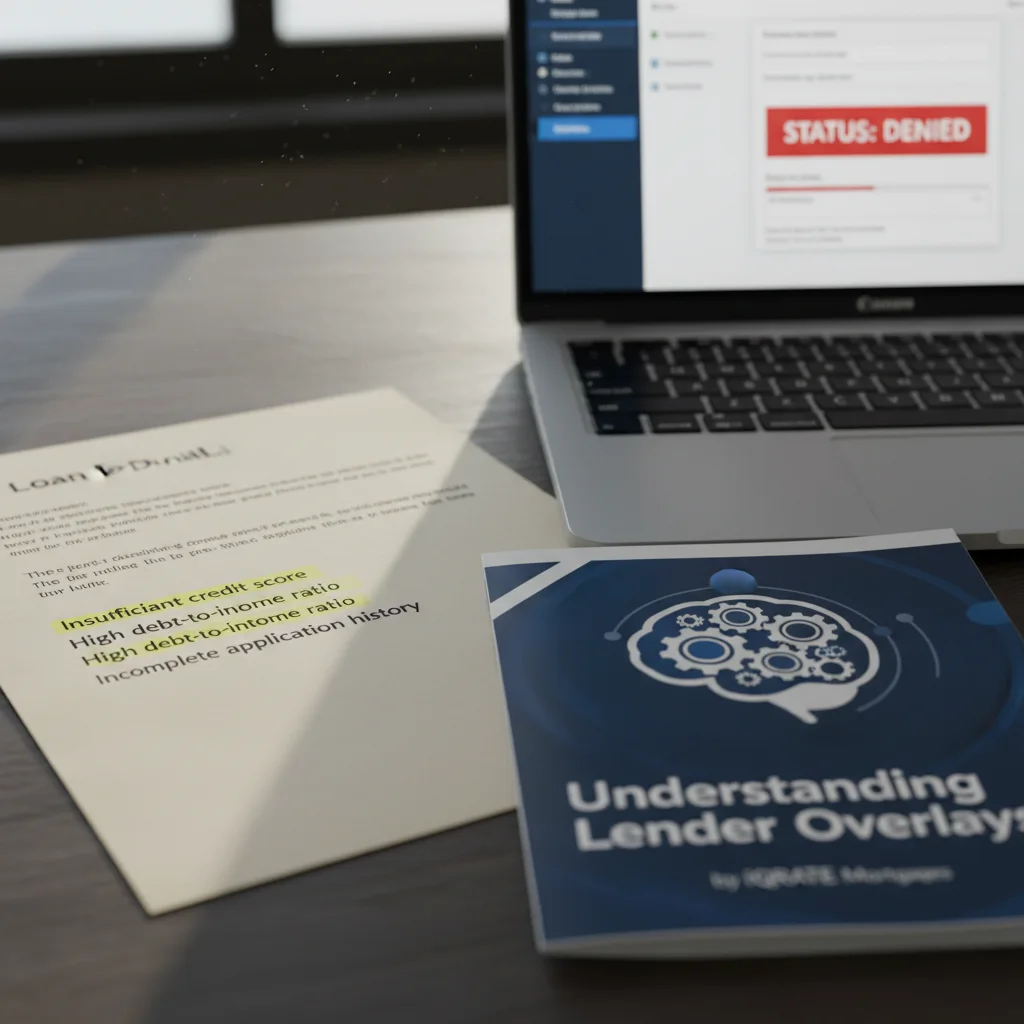
Lender overlays are a primary reason why a homebuyer in Houston who meets the minimum qualifications for a conventional loan can still face denial. In simple terms, overlays are a lender's own set of internal guidelines that are stricter than the baseline requirements set by Fannie Mae and Freddie Mac, the agencies that back most conventional loans.
Fannie Mae might state that a borrower is eligible for a loan with a 620 credit score. However, a specific lender might impose an overlay requiring a minimum score of 640 or even 660 to reduce their own risk. They are not breaking any rules; they are simply adding a layer of security for their investment.
Overlays can apply to more than just credit scores. A lender might require:
- A lower Debt-to-Income (DTI) ratio: While Fannie Mae might allow a DTI up to 50% in some cases, a lender's overlay could cap it at 43%. (The data, information, or policy mentioned here may vary over time.)
- Larger cash reserves: The standard might be two months of mortgage payments in reserve, but an overlay could demand six months, especially for investment properties.
- Stricter employment history: A lender might require a full two-year history with the same employer, even if official guidelines are more flexible.
Why was my 620 credit score not enough for a mortgage in Plano?
Getting denied for a mortgage in a competitive market like Plano, Texas, with a 620 credit score can be frustrating, especially since it's the widely cited minimum. (The data, information, or policy mentioned here may vary over time.) The issue is that your credit score is just one piece of a much larger puzzle evaluated by an Automated Underwriting System (AUS). The AUS analyzes your entire financial profile to assess its overall risk.
Think of it as a balancing act. A low credit score is a significant risk factor. To offset that risk, other parts of your application must be very strong. If you have a 620 score and other borderline factors, the AUS will likely issue a denial.

For example, a Plano homebuyer with the following profile might be denied:
- Credit Score: 620
- Down Payment: 3%
- Debt-to-Income Ratio: 48%
- Cash Reserves: Two months
Individually, each of these numbers might technically meet the minimum guideline. But when combined, the AUS sees a high-risk scenario: a borrower with minimal equity, high existing debt, little safety net, and a history of credit challenges. To approve this loan, a lender would prefer to see compensating factors like a 10% down payment or a DTI below 40%.
How does a thin credit file cause a conventional loan denial?
A thin credit file means you have a limited credit history. This could mean you have very few credit accounts (fewer than three or four), or the accounts you have are very new (less than two years old). Even if you've never missed a payment, a thin file makes it difficult for lenders and their underwriting systems to predict your future behavior as a borrower.
Lenders want to see a consistent, long-term pattern of responsible credit management across different types of accounts, such as:
- Revolving Credit: Credit cards
- Installment Loans: Auto loans, student loans, or personal loans
Without this data, the AUS may not be able to generate a confident risk assessment, leading to a denial. For a homebuyer in Dallas, this means that having just one student loan and a single, six-month-old credit card is often insufficient to demonstrate creditworthiness for a large debt like a mortgage.
Can my student loan debt block an otherwise good application?
Yes, student loan debt is a common roadblock for conventional loan applicants, primarily because of its impact on your DTI ratio. Even if your loans are in deferment or on an income-based repayment plan with a $0 monthly payment, lenders must still account for a potential payment.
For conventional loans, lenders typically must calculate a monthly payment using one of these methods:
- 0.5% of the outstanding loan balance: If you have a $120,000 student loan balance, the lender will add $600 to your monthly debt obligations for qualification purposes, even if your actual payment is lower. (The data, information, or policy mentioned here may vary over time.)
- The actual documented payment: If you can provide documentation of a fixed, amortizing payment that will fully pay off the loan, the lender can use that figure.
Let's say a Houston applicant earns $6,000 per month. A $600 calculated student loan payment consumes 10% of their gross income before a mortgage, car payment, or credit card debt is even considered. This can easily push an applicant's DTI over the approvable threshold, leading to a denial on an otherwise strong application.
What is an automated underwriting system denial message?
An automated underwriting system (AUS) is a software program, like Fannie Mae's Desktop Underwriter (DU) or Freddie Mac's Loan Product Advisor (LPA), that provides an initial credit decision on a loan application. It analyzes all the data you provide—income, assets, debts, and credit history—in a matter of minutes.
An AUS denial, often labeled as 'Refer/Ineligible' or 'Refer with Caution', is not a final judgment from a person. It is the system's conclusion that the application, as submitted, does not meet the required risk parameters. The denial message comes with a 'findings report' that details the specific reasons for the decision. This report is invaluable and will highlight the exact risk factors that triggered the denial, such as:
- 'Excessive obligations in relation to income' (DTI is too high)
- 'Limited cash reserves'
- 'Derogatory credit history'
Understanding these findings is the first step toward fixing the application.
How can manual underwriting save my denied conventional loan?
When an AUS denies an application, some lenders have the ability to switch the file to manual underwriting. This means an experienced human underwriter will personally review your entire financial story, looking for 'compensating factors' that the computer algorithm may have overlooked. This is your opportunity to add context to the numbers.
Compensating factors that can help overturn a denial during manual underwriting include:
- Significant Cash Reserves: Having 12+ months of mortgage payments saved shows financial stability.
- Long-Term, Stable Employment: A consistent job history in the same field demonstrates reliable income.
- Minimal Payment Shock: If your new proposed mortgage payment is similar to or only slightly higher than your current rent, it shows you can handle the expense.
- A Large Down Payment: Putting down 10% or more significantly reduces the lender's risk.
A skilled loan officer can package your file for manual review, highlighting these strengths to build a compelling case for approval.
Is an FHA loan a better option after a conventional denial?
For many homebuyers, especially those with lower credit scores or higher DTI ratios, an FHA loan is an excellent alternative after a conventional loan denial. Insured by the Federal Housing Administration, FHA loans are designed to make homeownership more accessible and have more lenient qualification standards.
Comparing FHA and Conventional Loan Standards
- Minimum Credit Score: Conventional loans typically require a 620 score or higher, while FHA loans can be approved with a score as low as 580, or even 500 with a 10% down payment. (The data, information, or policy mentioned here may vary over time.)
- Minimum Down Payment: The minimum down payment for a conventional loan is 3%, compared to 3.5% for an FHA loan.
- Max DTI Ratio: Conventional loans often have DTI limits around 45%-50%, whereas FHA guidelines can be more flexible, sometimes allowing a DTI up to 57%. (The data, information, or policy mentioned here may vary over time.)
- Mortgage Insurance: Conventional loans use Private Mortgage Insurance (PMI), which can be canceled once you reach 20% equity. FHA loans require a Mortgage Insurance Premium (MIP), which often lasts for the entire loan term unless you put down 10% or more.
The main drawback of an FHA loan is its Mortgage Insurance Premium (MIP). Unlike the Private Mortgage Insurance (PMI) on a conventional loan, the FHA's annual MIP typically cannot be canceled and must be paid for the entire loan term unless you put down 10% or more. However, the ability to secure a home loan in Plano or Dallas often makes this a worthwhile trade-off.
What steps can I take to get approved on my next application?
Receiving a loan denial is a setback, not a permanent stop. Use it as a roadmap to strengthen your financial profile. Here are actionable steps to take:
- Analyze the Denial Letter: The lender is required to provide a reason for the denial. Use this information to pinpoint the exact weakness in your application.
- Reduce Your Debt-to-Income Ratio: Focus on paying down high-interest revolving debt like credit cards. Lowering your balances is the fastest way to improve your DTI and potentially your credit score.
- Build a Stronger Credit History: If you have a thin file, consider opening a secured credit card or becoming an authorized user on a family member's established account. Make small purchases and pay them off in full every month.
- Save for a Larger Down Payment and Reserves: Increasing your down payment from 3% to 5% or 10% shows financial commitment and reduces the lender's risk. Bolstering your savings account also helps.
- Wait and Avoid New Credit: Sometimes, time is the best remedy. Let your accounts age, establish a longer history of on-time payments, and avoid applying for any new credit, which can cause a temporary dip in your score. If you've been denied a conventional loan in Texas, don't give up. A detailed review of your denial notice and a strategic plan can pave the way to approval. Reach out to a mortgage expert who specializes in complex scenarios to explore manual underwriting, FHA loans, or other solutions that fit your situation.
Facing a loan denial can be discouraging, but it's not the end of the road. Our team specializes in finding solutions for complex financial situations. Let us review your case and find the right loan for you. Apply now for a clear path to homeownership.
Author Bio
David Ghazaryan is the expert mortgage strategist and founder behind iQRATE Mortgages. With a mission to fund home loans that traditional banks won't touch, David specializes in helping clients with unique financial situations, including those recovering from foreclosure or bankruptcy. He expertly crafts smart, strategic, and stress-free mortgages by leveraging a vast network of over 100 lenders to secure competitive rates for investors and homebuyers alike. Praised for exceptional customer service, David has helped hundreds of families with a 97% satisfaction rate, guiding them to the mortgage they deserve.
References









