


FHA MIP vs. Conventional PMI in Orlando: What's the Real Difference?
When buying a home in competitive markets like Orlando with less than 20% down, you'll encounter mortgage insurance. It’s a fee that protects the lender, not you, if you default on the loan. While both Federal Housing Administration (FHA) and conventional loans require it, the structure and cost are vastly different. Understanding this distinction is key to avoiding a costly long-term mistake.
Understanding FHA Mortgage Insurance Premium (MIP)
FHA loans, insured by the government, are popular due to their flexible credit requirements and low 3.5% minimum down payment. However, they come with a mandatory Mortgage Insurance Premium (MIP) that has two parts:
- Upfront Mortgage Insurance Premium (UFMIP): This is a one-time fee, currently 1.75% of your base loan amount. It's typically rolled into your total mortgage balance, meaning you pay interest on it for the life of the loan. For a $350,000 loan, this adds an immediate $6,125 to your principal.
- Annual MIP: This is an ongoing fee, paid in monthly installments as part of your mortgage payment. For most borrowers putting down less than 5%, the annual rate is 0.55% of the average outstanding loan balance for the year. (The data, information, or policy mentioned here may vary over time.) This rate is fixed and does not change based on your credit score.
How Conventional Private Mortgage Insurance (PMI) Works
Conventional loans are not government-insured. When you put down less than 20%, private lenders require Private Mortgage Insurance (PMI). Unlike the FHA's one-size-fits-all approach, PMI rates are highly personalized and based on your credit score and risk factors.
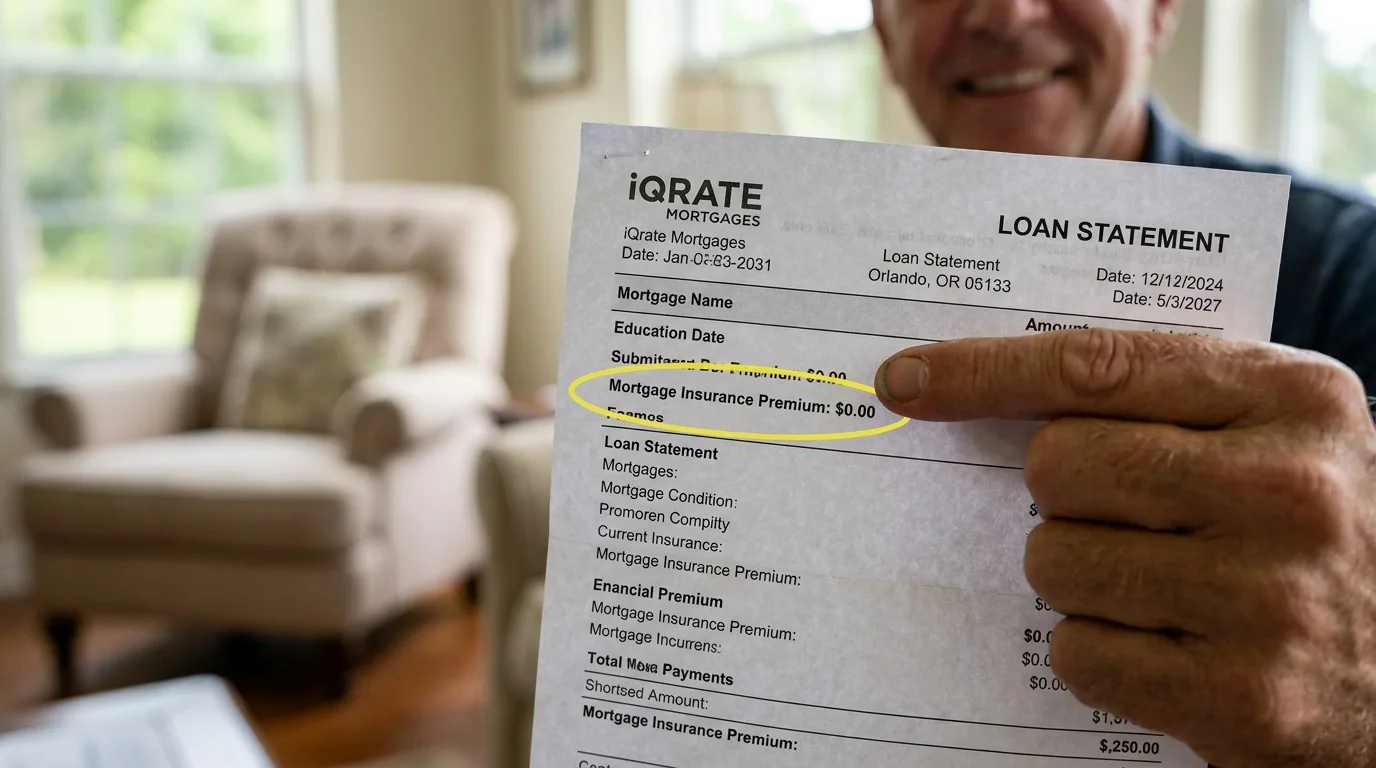
- Risk-Based Pricing: Your PMI rate is determined primarily by your credit score and your loan-to-value (LTV) ratio. A borrower with a 760 credit score and 10% down will pay significantly less in PMI than a borrower with a 660 score and 3% down.
- No Upfront Fee: Conventional loans do not have an equivalent to the FHA's UFMIP. This means your starting loan balance is lower, saving you on interest payments over time.
- Cancellable: This is the most significant advantage. PMI on a conventional loan is temporary and can be removed once you build sufficient equity in your home.
The FHA Mortgage Insurance Trap: Can You Ever Cancel MIP in Miami?
This is where many first-time homebuyers in Miami get caught in a financial trap. The ability to cancel FHA MIP depends entirely on your original down payment, and for most FHA borrowers, the answer is frustrating.
FHA MIP Cancellation Rules
The rules are set by the FHA and are not negotiable with your lender:
- Down Payment of 10% or More: If you make a down payment of at least 10%, you will pay the annual MIP for 11 years.
- Down Payment of Less Than 10%: If you make a down payment of less than 10% (which includes the vast majority of FHA borrowers using the 3.5% minimum), you will pay the annual MIP for the entire life of the loan. The only way to remove it is to sell the property or refinance into a different loan type, like a conventional loan.
This 'life of the loan' rule means a homebuyer in Miami could pay tens of thousands of dollars in unnecessary insurance premiums over 30 years. It’s a permanent cost attached to the loan unless you take proactive steps to refinance later, which comes with its own costs and depends on future interest rates.
How Your Credit Score Dictates Conventional PMI Rates
With conventional loans, your credit score is the single most important factor in determining your PMI cost. Lenders use it to assess the risk of your loan. A higher score signals lower risk, which translates directly to a lower monthly PMI payment.
Let's look at an example for a home in Orlando with a purchase price of $400,000 and a 5% down payment ($20,000), resulting in a $380,000 loan.
Borrower A (Excellent Credit):
- Credit Score: 760
- Estimated PMI Rate: 0.35%
- Annual PMI Cost: $380,000 x 0.0035 = $1,330
- Monthly PMI Payment: ~$111 (The data, information, or policy mentioned here may vary over time.)
Borrower B (Fair Credit):
- Credit Score: 670
- Estimated PMI Rate: 0.95%
- Annual PMI Cost: $380,000 x 0.0095 = $3,610
- Monthly PMI Payment: ~$301 (The data, information, or policy mentioned here may vary over time.)
As you can see, Borrower A saves nearly $200 every single month simply due to their stronger credit profile. This contrasts sharply with an FHA loan, where both Borrower A and Borrower B would pay the same MIP rate (0.55% in this case), which would amount to approximately $174 per month, regardless of their excellent or fair credit scores. For the high-credit borrower, the conventional loan offers substantial monthly savings.
Comparing Monthly Payments: FHA vs. Conventional in Miami
Let's run the numbers for a realistic scenario in the Miami market to see how the total monthly payment stacks up. We'll assume a buyer with a common credit profile often seen with FHA loans.
Scenario: Miami Condo Purchase
- Purchase Price: $450,000
- Down Payment: 5% ($22,500)
- Credit Score: 680
- Interest Rate (Example): 6.5% for FHA, 7.0% for Conventional (rates are illustrative) (The data, information, or policy mentioned here may vary over time.)
FHA Loan Calculation
- Base Loan Amount: $450,000 - $22,500 = $427,500
- Upfront MIP (1.75%): $427,500 x 0.0175 = $7,481.25
- Total Loan Amount (Financed): $427,500 + $7,481.25 = $434,981.25
- Principal & Interest (P&I) at 6.5%: $2,749
- Annual MIP (0.55%): ($427,500 x 0.0055) / 12 = $196
- Total P&I + MIP: ~$2,945 (Excluding taxes and homeowners insurance)
Conventional Loan Calculation
- Total Loan Amount: $427,500 (No upfront fee)
- Principal & Interest (P&I) at 7.0%: $2,844
- PMI Rate (for 680 score, 95% LTV): Approx. 0.85%
- Monthly PMI: ($427,500 x 0.0085) / 12 = $303 (The data, information, or policy mentioned here may vary over time.)
- Total P&I + PMI: ~$3,147 (Excluding taxes and homeowners insurance)
In this specific scenario, the FHA loan has a lower monthly payment by about $200, mainly due to the lower illustrative interest rate. However, remember the FHA's MIP is permanent, while the conventional loan's PMI of $303 is temporary. The borrower must weigh the immediate monthly savings against the long-term cost of non-cancellable insurance.
The Path to No PMI: Removing Insurance on a Conventional Loan
One of the most compelling reasons to choose a conventional loan is the clear exit strategy from mortgage insurance. The Homeowners Protection Act gives you the right to get rid of PMI once you've built enough equity.

There are two main ways this happens:
- Borrower-Requested Cancellation: You can formally request that your lender cancel PMI once your mortgage balance reaches 80% of the original property value. You must have a good payment history and may need to get a new appraisal to prove the home's value hasn't declined.
- Automatic Termination: The lender is legally required to automatically terminate your PMI once your mortgage balance is scheduled to reach 78% of the original property value. This happens even if you don't request it, provided you are current on your payments.
Furthermore, significant home appreciation, common in markets like Orlando, can accelerate this timeline. If your home's value increases substantially, you may be able to reach the 20% equity threshold much faster than scheduled through principal payments alone. You can then request PMI cancellation based on the home's new, higher value, often requiring a new appraisal.
Short-Term Plans: The Best Loan for an Orlando Home You'll Sell in 5 Years
If you anticipate selling your Orlando property within a few years, the calculation changes. The long-term 'MIP trap' of an FHA loan is less of a concern, but the upfront cost becomes more significant.
With an FHA loan, the 1.75% Upfront MIP is rolled into your loan. If you sell in five years, you won't have paid off much of that added principal, making it a sunk cost that reduces your net proceeds from the sale. You will have also paid 60 months of annual MIP.
With a conventional loan, you avoid the upfront fee entirely. Even if your monthly PMI payment is higher, the total cost of PMI over five years could be less than the combined cost of the FHA's UFMIP and 60 months of annual MIP. For a borrower who qualifies for both, the conventional loan often makes more financial sense for a short-term hold because it avoids the hefty, non-refundable upfront premium.
Is Refinancing the Only Way Out of FHA MIP in Miami?
For the majority of FHA borrowers in Miami who put down less than 10%, the answer is a clear and simple yes. Refinancing from your FHA loan into a conventional loan is the only viable strategy to eliminate the lifetime MIP payments.
Here’s the typical game plan:
- Build Equity: Pay down your mortgage and wait for your property value to appreciate until you have at least 20% equity.
- Meet Conventional Guidelines: Ensure your credit score and debt-to-income ratio meet the standards for a conventional refinance.
- Apply for a Refinance: Shop for a conventional loan. If your new loan amount is 80% or less of the home's appraised value, your new loan will not have any PMI.
While effective, this strategy is not free. Refinancing involves closing costs, and you will be subject to the interest rates available at the time you refinance, which could be higher than your original FHA rate. (The data, information, or policy mentioned here may vary over time.) It requires a careful calculation to ensure the long-term savings from eliminating MIP outweigh the costs of the new loan. The choice between an FHA and conventional loan isn't just about qualifying; it's about your long-term financial health. The impact of mortgage insurance can be thousands of dollars. To see a personalized breakdown of which loan saves you more for your Florida home, it’s best to consult with a strategist who understands the nuances of both options.
Ready to see how these numbers apply to your specific situation in Florida? A personalized mortgage analysis can clarify which loan is the smarter choice for your financial future. Apply now to get expert guidance and a clear path forward.
Author Bio
David Ghazaryan is the expert mortgage strategist and founder behind iQRATE Mortgages. With a mission to fund home loans that traditional banks won't touch, David specializes in helping clients with unique financial situations, including those recovering from foreclosure or bankruptcy. He expertly crafts smart, strategic, and stress-free mortgages by leveraging a vast network of over 100 lenders to secure competitive rates for investors and homebuyers alike. Praised for exceptional customer service, David has helped hundreds of families with a 97% satisfaction rate, guiding them to the mortgage they deserve.
References
Consumer Financial Protection Bureau - What is private mortgage insurance?
U.S. Department of Housing and Urban Development - FHA Mortgage Insurance









