


FHA Appraisal vs. a Home Inspection in Nevada
Many homebuyers in Reno and Sparks use the terms 'appraisal' and 'inspection' interchangeably, but for an FHA loan, they are two distinct and critical processes. Understanding the difference is the first step to a smooth closing on an older home.
An FHA appraisal is a report required by the lender. Its primary goals are to:
- Determine the property's market value to ensure the loan amount is justified.
- Verify that the home meets the Department of Housing and Urban Development's (HUD) Minimum Property Requirements (MPRs).
The appraiser is an impartial professional who looks for specific issues related to safety, security, and soundness. They are not there to give you a detailed list of every flaw in the house. Their job is to protect the lender's investment and ensure the property is a safe place to live from day one.
A home inspection, on the other hand, is for the buyer's benefit. You hire and pay the inspector directly. Their job is to conduct a thorough, top-to-bottom review of the home's condition. They will examine hundreds of items, from the foundation to the shingles, and provide you with a comprehensive report detailing:
- The condition of major systems (HVAC, plumbing, electrical).
- The estimated age and remaining lifespan of key components like the roof and water heater.
- Minor defects, cosmetic issues, and potential future problems.
Example: An FHA appraiser in Carson City might note a broken window lock as a required repair because it's a security issue. A home inspector will note the same broken lock but also report that the window seals are failing and that three other windows are difficult to open, providing a more complete picture of the home's overall condition.

Does All Peeling Paint Need Fixing for a Reno FHA Loan?
Yes, absolutely. This is one of the most common and non-negotiable FHA repair requirements, especially for homes built before 1978. The reason is the potential presence of lead-based paint, which poses a serious health hazard.
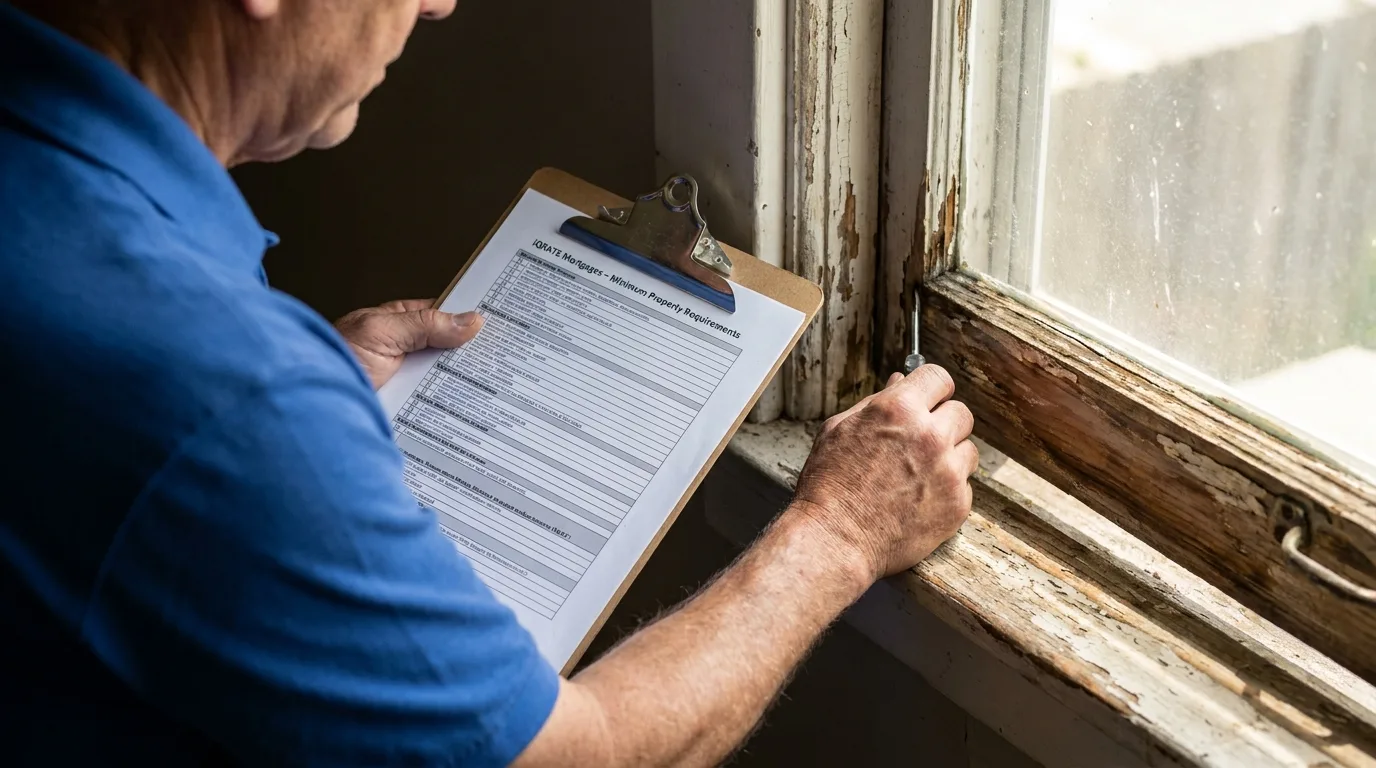
HUD guidelines are extremely strict on this point. The FHA appraiser must report any instance of chipping, peeling, or flaking paint on both the interior and exterior surfaces of the home. This includes:
- Walls and ceilings
- Doors and window frames
- Sheds, detached garages, and fences
- Porches and decks
Any surface with deteriorated paint must be properly prepared and repainted before the loan can close. The process involves scraping off the loose paint and applying a new coat of non-leaded paint. This is not a suggestion; it is a condition of the loan approval. If the seller refuses to fix the peeling paint, the FHA loan cannot be finalized for that property until the issue is resolved.
What Are the Safety Requirements for Handrails and Stairs?
Safety is a core pillar of the FHA's MPRs, and stairways are a major focus. The rules are designed to prevent falls and ensure safe access throughout the property.
An FHA appraiser will require that any stairway with three or more risers must have a secure handrail. This applies to both interior and exterior stairs.
Key requirements the appraiser will check for:
- Presence: If a qualifying stairway lacks a handrail, one must be installed.
- Stability: Existing handrails must be securely fastened to the wall. Any loose or wobbly handrails will be flagged for repair.
- Condition: The handrail must be free of splinters or other hazards that could cause injury.
This rule also extends to unprotected drops. For example, a raised porch or deck in an older Sparks home that is 30 inches or higher above the ground will require a protective railing to meet FHA standards. The appraiser is not measuring with a tape measure down to the millimeter, but they will use their professional judgment to identify any obvious fall hazards that need to be addressed before closing.
Are Outdated Electrical Panels an Automatic FHA Loan Denial?
Not automatically, but it's a significant red flag that requires close scrutiny. The FHA does not mandate that a home's electrical system be updated to the latest modern code. However, the system must be functional and free of safety hazards.
An appraiser reviewing a home in Reno will look for specific electrical safety issues, including:
- Frayed or Exposed Wiring: Any visible 'knob-and-tube' wiring or damaged wiring is an immediate required repair.
- Missing Outlets/Switches: Every room must have a functioning light source (either a permanent fixture or a switch-operated outlet) and adequate electrical outlets.
- Safety Hazards: The appraiser will look for missing cover plates on outlets and junction boxes, which are simple but mandatory fixes.
Certain types of older electrical panels are known for being problematic and may be flagged. Federal Pacific and Zinsco panels, for instance, have a history of failing to trip during an overcurrent, creating a fire risk. While their presence isn't an automatic denial, the appraiser will likely recommend a licensed electrician inspect the system. If the electrician deems it unsafe, it will become a required repair. (The data, information, or policy mentioned here may vary over time.)
How Can I Finance the Cost of Required Repairs?
Finding your dream fixer-upper in Nevada is exciting, but facing a list of mandatory FHA repairs can be daunting. Fortunately, the FHA offers a powerful tool specifically for this situation: the FHA 203(k) Renovation Loan.
This loan program allows you to roll the cost of repairs and improvements into your primary mortgage. Instead of paying for repairs out of pocket, you finance them over the life of the loan. There are two types:
- Limited 203(k): For non-structural repairs up to $35,000. This is perfect for common FHA requirements like painting, new flooring, roof repairs, or replacing an HVAC system.
- Standard 203(k): For major renovations exceeding $35,000, including structural work like adding a room or moving walls. This requires a HUD consultant to oversee the project. (The data, information, or policy mentioned here may vary over time.)
Example: You want to buy a home in Sparks for $400,000, but the FHA appraisal calls for $15,000 in repairs (a new roof and electrical panel update). With a Limited 203(k) loan, your total loan amount would be based on the home's after-repaired value, and you'd finance the $415,000 purchase and repair cost in a single mortgage with one monthly payment.
What Are My Options if the Seller Refuses to Make FHA Repairs?
This is a common scenario, especially in a competitive market. If the seller is unwilling to perform the repairs identified by the FHA appraiser, you have a few strategic options:
- Negotiate a Price Reduction: Ask the seller to lower the purchase price by an amount that would cover the cost of repairs. You would then need to handle the repairs yourself after closing, possibly using a renovation loan like the FHA 203(k).
- Pay for the Repairs Yourself: This is risky. Paying for repairs on a home you don't yet own is generally not advised. If the sale falls through for another reason, you could lose that money. Lenders typically discourage or prohibit this.
- Find a Different Loan Program: You could switch to a conventional loan, which may not have the same strict property requirements. However, you might need a higher credit score or down payment, and you'd be accepting the property with its known defects.
- Cancel the Contract: If your purchase agreement includes an appraisal contingency, you can walk away from the deal and get your earnest money deposit back. This is often the safest choice if a reasonable solution cannot be reached.
How Does an 'As-Is' Sale Work with FHA Requirements?
The term 'as-is' in a real estate listing simply means the seller does not want to make any repairs or offer any credits. However, an 'as-is' sale does not override FHA Minimum Property Requirements.
The property must still pass the FHA appraisal and meet all safety, security, and soundness standards for the loan to be approved. If the appraiser calls for mandatory repairs on an 'as-is' property in Reno, the deal hits a critical juncture. The 'as-is' clause and the FHA requirements are now in conflict.
At this point, one of two things must happen:
- The seller must agree to make the repairs, despite their initial 'as-is' stance.
- The buyer must find a way to finance the repairs, typically through an FHA 203(k) loan.
If neither party can or will address the required repairs, the FHA loan cannot proceed, and the transaction will likely be canceled.
Will a Home with an Old Roof Pass the FHA Appraisal?
It depends on its condition. The FHA doesn't have a specific age limit for roofs, but it does have a durability requirement. The appraiser must certify that the roof is in good condition and has a remaining economic life of at least two years.
To make this determination, the appraiser will visually inspect the roof for:
- Missing, broken, or curled shingles.
- Signs of active leaks or water damage in the attic or on ceilings.
- Multiple layers of shingles (more than two layers is often a red flag).
If the roof shows significant wear and the appraiser believes it will not last another two years, they will make its repair or replacement a condition of the loan. For a home in the varied climate of Northern Nevada, a solid roof is a non-negotiable component for an FHA-insured loan. If you're considering an older home in Nevada and have questions about the FHA appraisal process or 203(k) renovation loans, contact a mortgage professional to explore your options and get pre-approved.
Navigating the FHA requirements for an older Nevada home can seem daunting. If you're ready to explore your mortgage options and see what you qualify for, take the first step and apply now.
Author Bio
David Ghazaryan is the expert mortgage strategist and founder behind iQRATE Mortgages. With a mission to fund home loans that traditional banks won't touch, David specializes in helping clients with unique financial situations, including those recovering from foreclosure or bankruptcy. He expertly crafts smart, strategic, and stress-free mortgages by leveraging a vast network of over 100 lenders to secure competitive rates for investors and homebuyers alike. Praised for exceptional customer service, David has helped hundreds of families with a 97% satisfaction rate, guiding them to the mortgage they deserve.
References









