


What is the difference between an appraisal and a home inspection in Tampa?
When you're buying a home in Tampa, you'll encounter two key property evaluations: the appraisal and the home inspection. While they might seem similar, they serve entirely different purposes and are performed for different stakeholders.
An appraisal is required by the lender. Its primary goals are to determine the home's fair market value and, for an FHA loan, to ensure the property meets the Department of Housing and Urban Development's (HUD) Minimum Property Standards (MPS). The appraiser is the lender's eyes and ears, protecting their investment by confirming the house is worth the loan amount and is safe, secure, and sound. An FHA appraiser will specifically look for issues that violate these standards, such as a leaky roof, peeling paint, or a lack of handrails on stairs. The appraisal report goes directly to the lender.
A home inspection, on the other hand, is for you, the buyer. You hire and pay for a licensed home inspector to conduct a thorough, top-to-bottom examination of the property. They will check hundreds of components, from the foundation to the attic, including plumbing, electrical systems, HVAC, appliances, and more. The inspector provides you with a detailed report outlining the home's current condition, identifying existing problems, and highlighting potential future issues. This report empowers you to make an informed decision about your purchase and can be used as a tool to negotiate repairs or credits with the seller. A home inspector in Tampa might find a water heater nearing the end of its life or minor electrical issues that an FHA appraiser might not flag unless they pose an immediate safety risk.
Here’s a simple breakdown:
- Appraisal: For the lender. Focuses on value and FHA safety standards.
- Home Inspection: For the buyer. Focuses on the overall condition and functionality of the home.
Why does peeling paint have to be repaired for a Federal Housing Administration loan?
One of the most common and often surprising FHA-mandated repairs is peeling or chipping paint. To many buyers, it seems like a minor cosmetic issue, but for the FHA, it's a significant health and safety concern. This rule is primarily in place to protect against the dangers of lead-based paint.
Homes built before 1978 are presumed to contain lead-based paint. When this paint chips or peels, it creates dust and flakes that can be ingested or inhaled, leading to serious health problems, especially in children and pregnant women. Because the FHA is a government-backed program, it has a responsibility to ensure the homes it finances are safe for occupants.

An FHA appraiser is required to flag any surface, both interior and exterior, with peeling, chipping, or cracking paint on homes built prior to 1978. This includes:
- Walls and ceilings
- Window sills and door frames
- Porches, decks, and railings
- Fascia boards and eaves
- Detached garages and sheds
The required fix is specific: all loose paint must be scraped off, the surface must be prepared (sanded and primed), and then it must be repainted. Simply painting over the peeling paint is not acceptable. The goal is to create a stable, non-hazardous surface. This rule applies regardless of whether the presence of lead has been confirmed; the FHA operates on the assumption of risk for older homes.
What are the specific safety requirements for stairs and handrails?
The FHA's focus on safety is crystal clear when it comes to stairs, steps, and porches. Slips and falls are a leading cause of home injuries, and proper handrails are a simple and effective preventative measure. An FHA appraiser will carefully inspect all stairways to ensure they are safe for use.
The general rule is that any set of stairs with three or more risers must have a continuously graspable handrail that is securely installed. This applies to both interior and exterior staircases, including those leading to a basement, an attic, or an elevated porch in an Orlando home.
Here are the specifics an appraiser will look for:
- Presence and Condition: The handrail must be present and in good condition. A loose, wobbly, or broken handrail is a safety hazard and will be flagged for repair.
- Secure Installation: It must be properly attached to the wall or balusters to support a person's weight if they were to stumble.
- Height and Graspability: While the FHA doesn't cite an exact height down to the inch, it must be at a reasonable height for an average adult to grasp comfortably and securely.
- Stairs Condition: The stairs themselves must be in good repair. Any broken, rotted, or missing steps are an obvious safety issue and must be fixed before the loan can close.
For elevated porches, decks, or patios that are 30 inches or more above the ground, a protective railing system is also required to prevent falls. An appraiser will check that these railings are also secure and in good condition.
Will an old or damaged roof cause my Orlando Federal Housing Administration loan to be denied?
Yes, an old or damaged roof is one of the most significant issues that can lead to an FHA loan being denied or delayed in Orlando. The roof is a home's primary defense against the elements, and its integrity is critical to the 'soundness' component of FHA's Minimum Property Standards.
The FHA requires that a roof must be in good condition and have a remaining economic life of at least two years. The appraiser is not a roofing expert, but they are trained to spot visual signs of a failing roof. If they have any concerns, they may call for a professional roof inspection by a licensed contractor.
Here's what an appraiser looks for when evaluating a roof:
- Missing or Damaged Shingles: Gaps in the roof covering can lead to water intrusion.
- Curling or Cupping Shingles: This is a sign that the shingles are old and losing their protective granules.
- Active Leaks: The appraiser will check ceilings and attic spaces for any signs of water stains or active moisture, which are immediate red flags.
- Multiple Layers: While not an automatic rejection, having more than two layers of roofing can be a concern for weight and proper installation.
- Deterioration: The appraiser will assess the overall condition. A roof that is clearly worn out, even without an active leak, may not meet the two-year life expectancy rule.
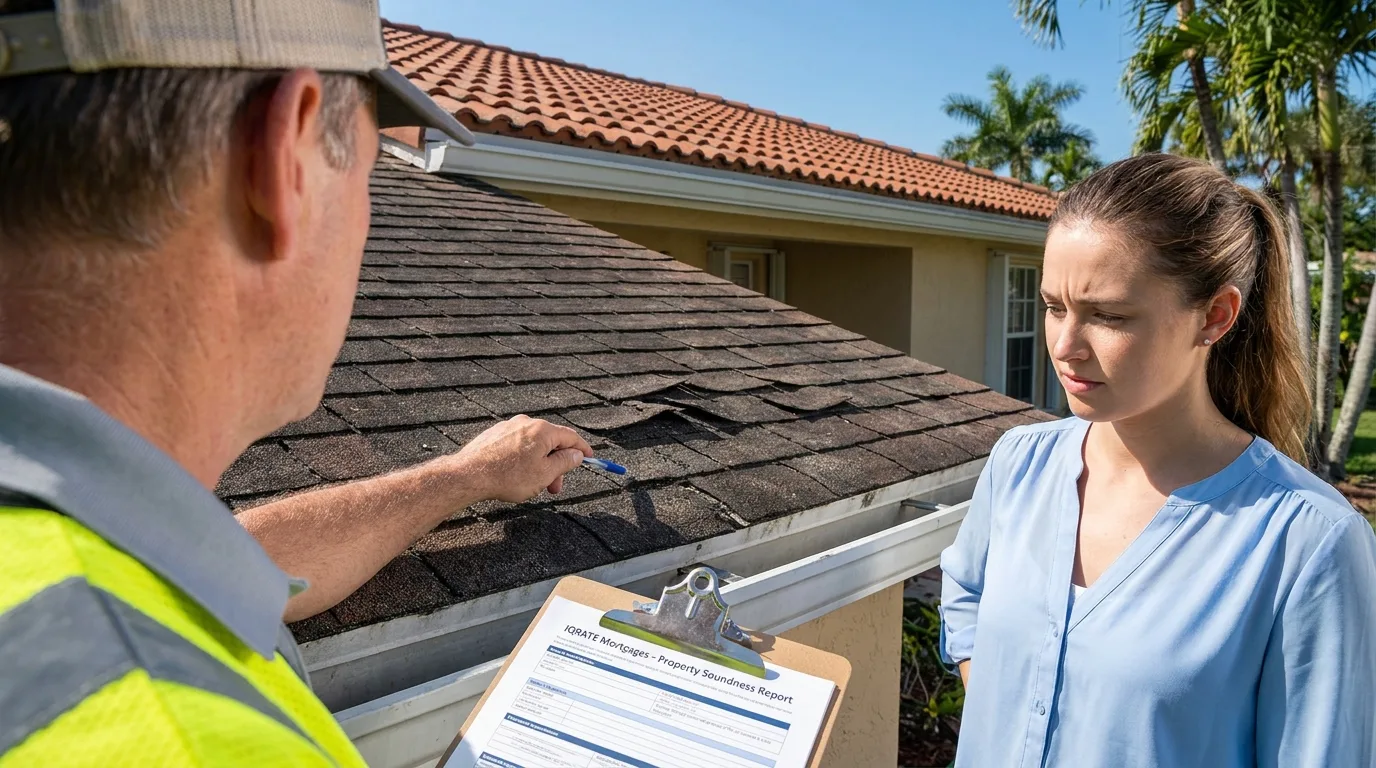
If the appraiser determines the roof needs repair or replacement, the work must be completed before the loan can be funded. This often becomes a major point of negotiation between the buyer and seller.
Who is responsible for paying for the FHA-required repairs?
This is a critical question and the answer is: it's negotiable. There is no hard-and-fast rule that dictates whether the buyer or seller must pay for FHA-required repairs. After the appraisal report comes back with a list of mandatory fixes, the responsibility for payment becomes a part of the contract negotiation process.
Here are the most common scenarios:
- The Seller Pays: This is the most frequent and often expected outcome. The seller agrees to hire professionals to complete all the repairs identified by the appraiser before the closing date. From a buyer's perspective, this is the ideal situation.
- The Price is Renegotiated: The seller may be unwilling or unable to pay for the repairs out-of-pocket. Instead, they might agree to lower the sale price of the home by an amount that covers the estimated cost of repairs. The buyer would then be responsible for managing and paying for the work after closing, but this option is only viable if the lender allows it, often through a repair escrow account.
- The Buyer Pays (Rare): In a competitive market, a buyer might agree to pay for the repairs to make their offer more attractive. However, this is risky. You would be spending money on a house you don't yet own. Most real estate professionals advise against this.
- A Shared Cost: Buyer and seller can agree to split the cost of repairs in a way that is mutually agreeable.
The negotiation is handled by the real estate agents for both parties. It's crucial to have any agreement regarding repairs put in writing as an addendum to the purchase contract. (The data, information, or policy mentioned here may vary over time.)
Can I do the repairs myself or does it have to be a professional?
Whether you can perform the FHA-required repairs yourself depends on the nature and complexity of the work. The FHA's primary concern is that the repairs are completed in a 'workmanlike manner', meaning they are done correctly and to a professional standard.
For minor, non-structural, and non-safety-related issues, you might be able to do the work yourself. A prime example is fixing the peeling paint issue. If you are skilled and can properly scrape, prepare, and repaint the surface to meet the appraiser's requirements, this is often acceptable. The appraiser will verify the quality of the finished work during the final inspection.
However, for more significant repairs, the lender will almost always require the work to be completed by a licensed and insured professional. This includes:
- Roofing repairs or replacement
- Electrical work
- Plumbing repairs
- Foundation or structural issues
- HVAC system repairs
For these types of jobs, the lender and appraiser will want to see paid invoices and receipts from qualified contractors as proof that the work was done correctly and up to local building codes. Using professionals protects all parties and ensures the home is genuinely safe and sound. (The data, information, or policy mentioned here may vary over time.)
What happens if the seller refuses to make the necessary repairs?
If you've received the appraisal report with a list of required repairs and the seller flatly refuses to pay for them or negotiate, you have a few options. The path you choose will depend on your contract, your financial situation, and how much you want the home.
- Walk Away from the Deal: Most real estate contracts have an 'FHA Finance Addendum' or similar contingency that allows the buyer to cancel the contract and have their earnest money deposit returned if the property does not appraise or meet FHA standards and a resolution cannot be reached with the seller. This is your safest option.
- Pay for the Repairs Yourself: As mentioned, this is a risky choice. You would need to get the seller's permission to perform work on their property before closing. You would also need approval from your lender, who may or may not allow this. You risk losing the money you spend if the deal falls through for another reason.
- Use an FHA 203(k) Loan: If the home is perfect for you but needs significant repairs, you may be able to switch your financing to an FHA 203(k) 'Rehab' Loan. This type of loan allows you to roll the cost of the home purchase and the necessary renovations into a single mortgage. The repairs are then completed after you close on the house. This is a more complex loan product, but it can be an excellent solution for fixing up a property in Tampa or Orlando.
It's essential to discuss these options with your loan officer and real estate agent to determine the best course of action for your specific circumstances. (The data, information, or policy mentioned here may vary over time.)
How does an appraiser verify that the repairs have been completed correctly?
Once the required repairs have been finished, the work isn't just taken on good faith. The lender will order a final inspection or an Appraisal Update and/or Completion Report (Form 1004D).
The original appraiser will revisit the property for the sole purpose of verifying that the specific items listed on the initial appraisal report have been completed satisfactorily. They will bring a copy of the original report and go through the list, item by item.
For example, they will:
- Check that the peeling paint has been scraped and repainted properly.
- Tug on the newly installed handrail to ensure it is secure.
- Visually inspect the new roof or roof patch.
They may also ask for documentation, such as paid invoices from contractors for any major work. The appraiser will take new photographs of the completed repairs to include in their final report to the lender. If all the work is done to the required standard, the appraiser will sign off, clearing the property condition for the lender. If any of the repairs are incomplete or not done correctly, the appraiser will note this, and the lender will not fund the loan until the issues are resolved. This final verification is a critical step in protecting both the borrower and the lender's investment.
Navigating FHA repair requirements can be complex, but you don't have to do it alone. If you're ready to move forward with confidence on your Florida home purchase, our team of mortgage experts is here to guide you. Apply now to get started and ensure a smooth path to the closing table.
Author Bio
David Ghazaryan is the expert mortgage strategist and founder behind iQRATE Mortgages. With a mission to fund home loans that traditional banks won't touch, David specializes in helping clients with unique financial situations, including those recovering from foreclosure or bankruptcy. He expertly crafts smart, strategic, and stress-free mortgages by leveraging a vast network of over 100 lenders to secure competitive rates for investors and homebuyers alike. Praised for exceptional customer service, David has helped hundreds of families with a 97% satisfaction rate, guiding them to the mortgage they deserve.
References









