


What Are the Federal Housing Administration's Minimum Property Standards?
When you apply for a loan insured by the Federal Housing Administration (FHA), the property you want to buy must meet a specific set of criteria known as the Minimum Property Standards (MPS). These standards are not designed to ensure the home is perfect or cosmetically flawless. Instead, their purpose is to verify that the home is safe, secure, and structurally sound. The FHA wants to ensure its investment is protected and that the homebuyer is moving into a property that is habitable and free from major defects that could compromise their well-being or the home's value.
The guiding principles of MPS, detailed in the HUD Handbook 4000.1, can be broken down into three core categories:
- Safety: The property must protect the health and safety of the occupants. This includes addressing hazards like broken stairs, missing handrails, exposed electrical wiring, and evidence of lead-based paint.
- Security: The property must be secure enough to protect its value as collateral for the mortgage. This relates to issues that could devalue the home over time, such as a failing roof, significant water damage, or pest infestations.
- Soundness: The property must be structurally sound, with no defects that could compromise its structural integrity. This involves checking the foundation, load-bearing walls, and overall construction to ensure the home is stable.
An FHA appraiser acts as the eyes and ears for the lender and HUD. They perform a standard appraisal to determine the home's market value and conduct a basic property inspection to ensure it meets these MPS. If any issues are found, they must be repaired before the loan can close.
How Do Conventional Appraisal Standards Differ in Tampa?
Conventional loans, which are not government-insured, follow a different set of appraisal guidelines established by entities like Fannie Mae and Freddie Mac. The primary objective of a conventional appraisal is to determine the fair market value of the property. The lender’s main concern is ensuring that if you default on the loan, they can sell the home and recoup their investment.
While conventional appraisers also report on the property's condition, their standards for 'health and safety' are generally less rigid than the FHA's MPS. They look for issues that significantly impact the property's value, marketability, and structural integrity, but they have more discretion.
In a competitive housing market like Tampa, this difference is crucial. An older home in a neighborhood like Seminole Heights might have minor, age-related imperfections. A conventional appraiser might note these issues in their report but conclude they don't negatively affect the value enough to hold up the loan. An FHA appraiser, however, would be bound by the stricter MPS and would likely require those same imperfections, such as chipped exterior paint or a missing handrail on a short staircase, to be corrected before closing. The conventional appraisal focuses on value, while the FHA appraisal focuses on compliance.
What Specific Issues Will an FHA Appraiser Flag That a Conventional One Might Not?
The distinction between the two appraisal types becomes clearest when looking at specific property conditions. Certain issues are automatic red flags for an FHA appraiser but may be acceptable for a conventional loan, provided they are reflected in the property's overall value.
Here are some of the most common discrepancies:
- Peeling or Chipping Paint: This is arguably the most famous FHA sticking point. For any home built before 1978, the FHA assumes that peeling, chipping, or cracking paint could be lead-based. The appraiser will require all such surfaces (interior and exterior) to be scraped and repainted. A conventional appraiser will only flag severe paint issues if they detract from the home's marketability.
- Handrails and Guardrails: FHA guidelines mandate handrails on all staircases and guardrails on elevated porches or decks for safety. A conventional appraiser may note the absence of a handrail on a small set of steps but is unlikely to make its installation a condition of the loan unless it violates local building code or presents an obvious danger.
- Remaining Roof Life: An FHA appraiser will verify that the roof has a remaining physical life of at least two years. (The data, information, or policy mentioned here may vary over time.) If it's failing, covered with moss, or has multiple missing shingles, it will need to be repaired or replaced. A conventional loan may be approved for a home with an older roof, with the condition factored into the appraised value.
- Attic and Crawl Space Inspection: FHA appraisers must have clear, safe access to inspect the attic and crawl space for signs of water damage, inadequate ventilation, or structural problems. If an area is inaccessible, it must be made accessible. Conventional appraisers have more leeway if access is difficult.
- Functioning Utilities: For an FHA appraisal, all utilities (water, electricity, heat) must be turned on and operational so the appraiser can test plumbing, appliances, and HVAC systems. This is not always a strict requirement for a conventional appraisal.

Is a Fixer-Upper Home in Orlando Better Suited for a Conventional Loan?
Yes, almost without exception. If you're looking to buy a 'fixer-upper' in Orlando or any other area, a conventional loan offers a significantly more straightforward path to closing. A home that needs substantial work will almost certainly fail to meet the FHA's Minimum Property Standards.
The primary advantage of a conventional loan for a fixer-upper is flexibility. You can purchase the property 'as-is' and handle the renovations on your own timeline after the sale is complete. The appraisal will reflect the home's current condition, and as long as the sale price aligns with that value, the loan can proceed.
With an FHA loan, any repairs required by the appraiser must be completed and re-inspected before the loan can be funded. This creates a major hurdle. Most sellers of fixer-upper properties are selling 'as-is' and are unwilling or financially unable to perform extensive repairs. This disagreement often leads to the deal falling apart.
For buyers committed to using FHA financing for a home that needs work, the FHA 203(k) loan is an option. This specialized loan bundles the purchase price and renovation costs into a single mortgage. However, it involves a more complex application and appraisal process, including contractor bids and a plan of work, making it a different product entirely from a standard FHA loan.
What Happens if the Home Fails the FHA Appraisal Inspection?
Receiving an FHA appraisal report with required repairs can be stressful, but it doesn't automatically mean the deal is dead. Here’s the typical process that follows:
- The Appraisal Report is Issued: The appraiser submits a report to the lender, which will be 'subject to' the completion of specific repairs. The report will list every item that violates FHA's Minimum Property Standards.
- Negotiation Begins: The buyer and seller must negotiate who will pay for and manage the repairs. This is a critical step and depends on the terms of the purchase contract and the motivation of both parties.
- Repairs are Completed: Once an agreement is reached, the repairs must be completed in a 'workmanlike manner'.
- Re-Inspection is Ordered: The lender will order a re-inspection (often called a 'Final Inspection') by the original appraiser. The appraiser visits the property again to verify that all required repairs have been satisfactorily completed and documented with photos.
- Clear to Close: Once the appraiser confirms compliance, they issue a final report, and the lender can give the 'clear to close'.
If the seller refuses to make the repairs, the buyer has a few options: they can terminate the contract (if their financing contingency allows it), pay for the repairs themselves (which is risky before owning the property), or try to switch to a conventional loan if they qualify and still want the home in its current condition.
Are Peeling Paint and Broken Handrails an Issue for Both Loan Types?
While both FHA and conventional appraisers look at the overall condition of a home, their approach to minor safety and cosmetic issues like peeling paint and broken handrails differs significantly.
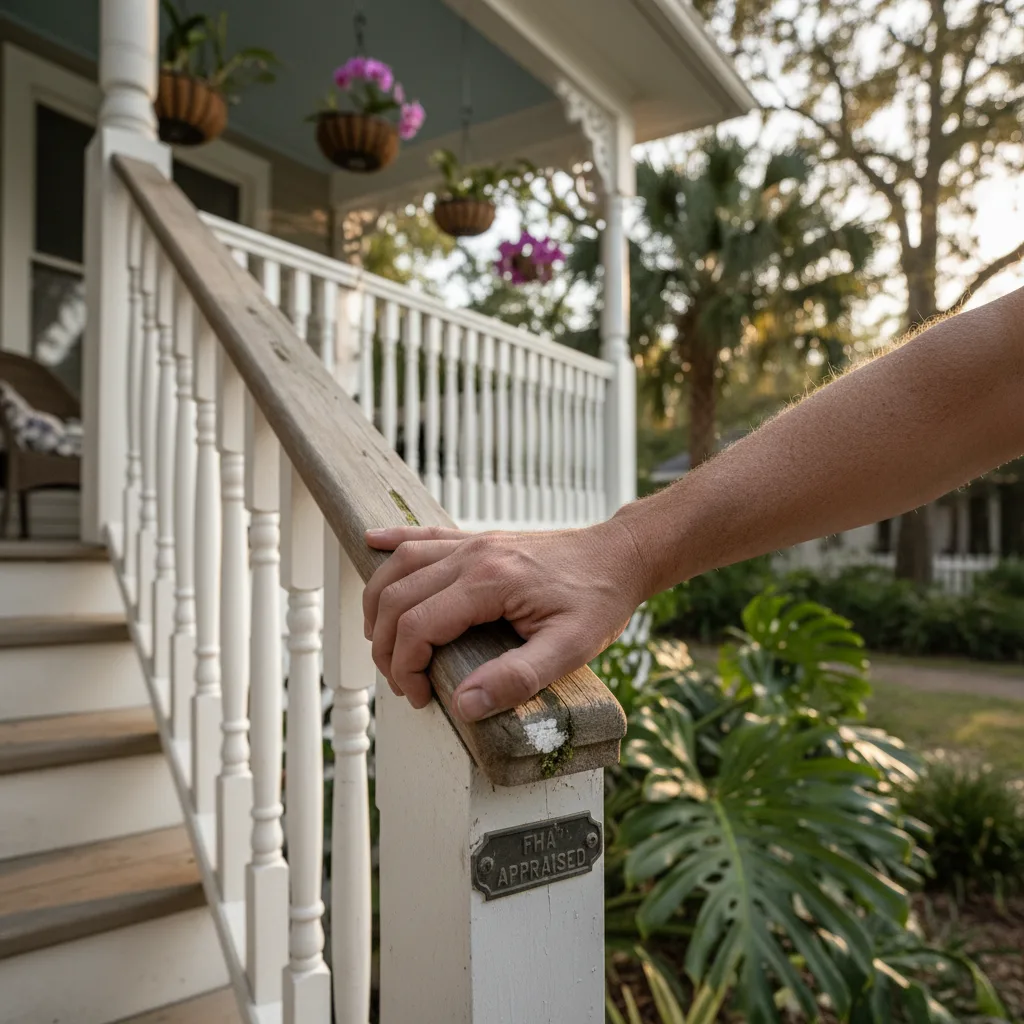
- Peeling Paint: For an FHA loan, this is a non-negotiable issue on homes built before 1978 due to the potential for lead-based paint. It must be corrected. For a conventional loan, minor peeling paint is rarely a deal-breaker. An appraiser will only flag it if it's so extensive that it affects the home's marketability and value, but it's not an automatic repair requirement.
- Broken or Missing Handrails: This is a clear safety hazard that an FHA appraiser will always require to be fixed to comply with MPS. A conventional appraiser will also note it as a safety concern, but the lender has more discretion. If the property's value is otherwise strong, the lender might not require the repair, though they often do as a matter of liability.
The core difference is that FHA has a strict, uniform checklist, while conventional lenders can assess risk on a case-by-case basis.
Can a Seller Refuse to Make FHA-Required Repairs in Tampa?
Yes, a seller can absolutely refuse to make FHA-required repairs. A seller is not legally obligated to perform any repairs unless they have specifically agreed to do so in the signed purchase contract.
In a hot real estate market like Tampa, sellers often receive multiple offers. Given a choice, many sellers will favor a conventional or cash offer over an FHA offer precisely to avoid the risk of a mandatory repair list from the appraiser. They see FHA offers as potentially more complicated and carrying a higher risk of not closing. Some credit mistakes can also complicate FHA approvals.
As a buyer using an FHA loan, it's a smart strategy to have your real estate agent communicate this possibility with the seller's agent upfront. In some cases, buyers may offer to cover the cost of potential FHA repairs up to a certain dollar amount to make their offer more competitive.
Which Loan Type Offers a Smoother Process for Older Homes?
For most older homes, a conventional loan will offer a smoother and more predictable appraisal and closing process. Older homes, by their nature, are more likely to have quirks and imperfections that can conflict with the FHA's rigid Minimum Property Standards.
Whether you're considering a 1960s ranch in an established Orlando suburb or a historic 1920s bungalow in Tampa, these properties may have outdated (but functional) systems, cosmetic blemishes, or features that don't meet modern standards. A conventional appraisal, with its primary focus on market value, can accommodate these characteristics. The appraiser simply values the home 'as is'.
An FHA appraisal, on the other hand, can turn these charming quirks into a checklist of required repairs, potentially delaying or derailing the closing. If you love the character of older homes and are prepared to do some updating yourself, a conventional loan provides the freedom and flexibility to do so on your own terms. A late payment on your credit report can make qualifying for any loan more difficult, so it's best to be prepared. Navigating appraisal requirements can be complex. If you're unsure whether an FHA or conventional loan is the right fit for the Florida home you want to buy, a knowledgeable mortgage strategist can clarify your options and guide you toward a smooth closing.
Understanding the nuances between FHA and conventional appraisals is key to a successful home purchase in Florida. If you're ready to explore your options and find the right loan for your dream home, take the next step and apply for a mortgage today.
Author Bio
David Ghazaryan is the expert mortgage strategist and founder behind iQRATE Mortgages. With a mission to fund home loans that traditional banks won't touch, David specializes in helping clients with unique financial situations, including those recovering from foreclosure or bankruptcy. He expertly crafts smart, strategic, and stress-free mortgages by leveraging a vast network of over 100 lenders to secure competitive rates for investors and homebuyers alike. Praised for exceptional customer service, David has helped hundreds of families with a 97% satisfaction rate, guiding them to the mortgage they deserve.
References
HUD Handbook 4000.1 - FHA Single Family Housing Policy Handbook









