


The 'Non-Warrantable' Hurdle for Miami Condo Investors
For real estate investors scouting deals in Florida's vibrant condominium market, the term 'non-warrantable' can bring a promising opportunity to a dead halt. A non-warrantable condo is a unit within a building or project that does not meet the strict and extensive guidelines set by government-sponsored enterprises like Fannie Mae and Freddie Mac. Since most conventional lenders sell their loans to these entities, they are forced to deny financing for properties that don't fit the mold.
In a competitive market like Miami, many desirable condo buildings fall into this category for reasons that have nothing to do with the quality of the individual unit. A project can be classified as non-warrantable due to several common factors:
- High Investor Concentration: The project has too many non-owner-occupied units. Conventional guidelines often cap this at 50%. (The data, information, or policy mentioned here may vary over time.)
- Single Entity Ownership: One person or entity owns more than a specified percentage of the total units (e.g., more than 10%). (The data, information, or policy mentioned here may vary over time.)
- Pending Litigation: The homeowners association (HOA) is involved in active litigation, which introduces risk.
- Inadequate Budget Reserves: The HOA's budget lacks sufficient funds for future repairs and capital improvements, or an excessive percentage of owners are delinquent on their dues.
- Commercial Space: The project has a significant amount of commercial or non-residential space, blurring the lines between a residential and commercial property.
- New Construction Issues: The project is new and has not yet met pre-sale requirements for conventional financing.
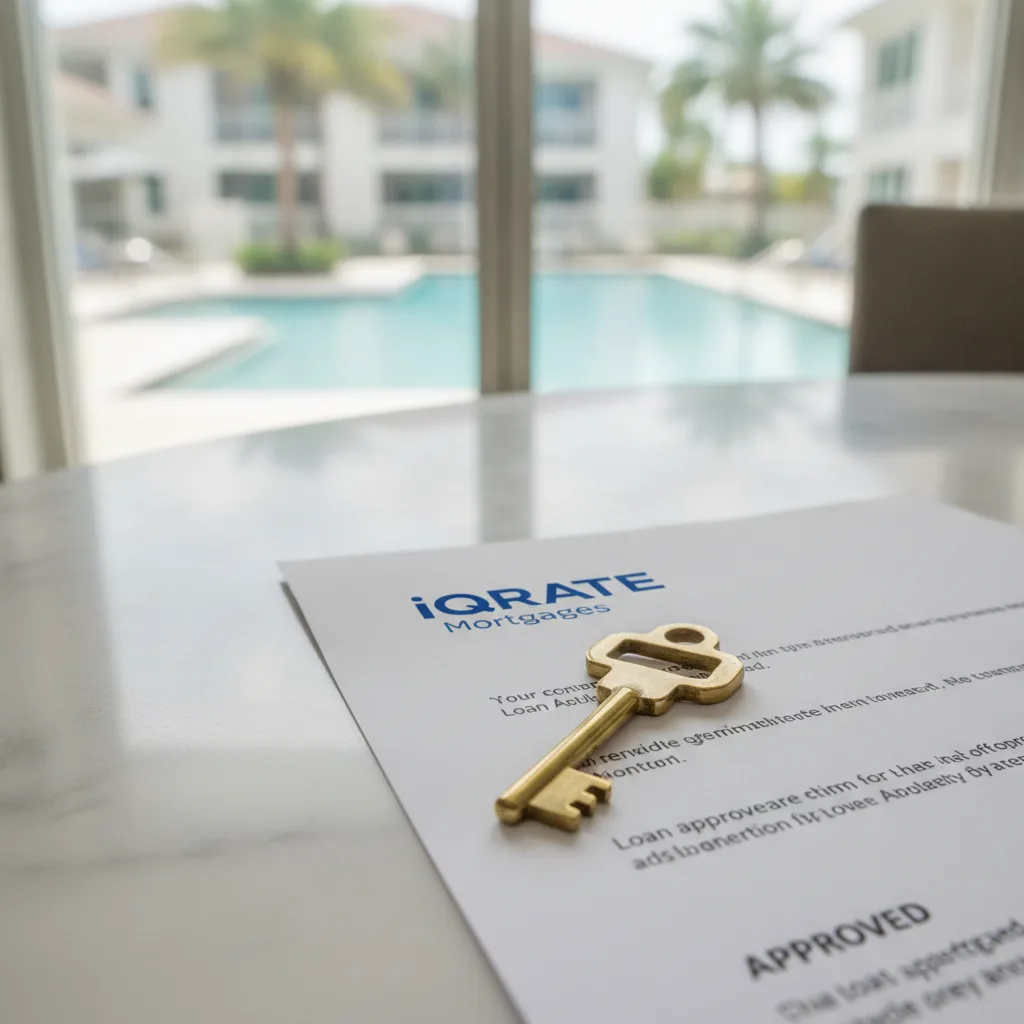
When a property is flagged for any of these reasons, investors using conventional financing are simply out of luck, regardless of their personal creditworthiness or income.
How a DSCR Loan Sidesteps Conventional Condo Rules
The solution for financing a non-warrantable condo is a Debt Service Coverage Ratio (DSCR) loan. This is a type of non-qualified mortgage (Non-QM) designed specifically for real estate investors. Its core difference is its underwriting philosophy: a DSCR loan qualifies the property, not the borrower.
Here’s how it works: Lenders offering DSCR loans are not planning to sell them to Fannie Mae or Freddie Mac. They are portfolio loans, meaning the lender keeps them on their own books. This freedom allows them to set their own underwriting guidelines, completely bypassing the rigid condo project requirements of conventional loans.
The approval for a DSCR loan hinges on a single metric: the property's ability to generate enough rental income to cover its mortgage payment. The formula is:
DSCR = Gross Monthly Rental Income / Total Monthly Mortgage Payment (PITI)
PITI stands for principal, interest, taxes, and insurance. Most lenders look for a DSCR of 1.0 or higher. (The data, information, or policy mentioned here may vary over time.) A ratio of 1.0 means the rent exactly covers the mortgage payment. A ratio of 1.25 means the property generates 25% more income than its expenses. Because the loan's approval is based on this simple calculation, factors like HOA litigation or the percentage of renters in the building become irrelevant to the lender.
Unlocking Orlando's Condo-Hotel Market
A prime example of a non-warrantable property that is perfect for a DSCR loan is a condo-hotel unit, a popular investment in tourist hubs like Orlando. A condo-hotel is a condominium project that is operated like a hotel, offering short-term rentals and amenities like a front desk and cleaning services.

These properties are almost universally classified as non-warrantable because they function as commercial enterprises. They have an on-site rental program, high turnover of occupants, and a significant commercial element. Conventional lenders will not finance them. A DSCR loan, however, is the ideal tool for this scenario. The lender assesses the unit's potential for short-term rental income, and if the numbers produce a strong DSCR, the loan can be approved. This opens up a whole category of high-yield investment properties in Orlando that are inaccessible with traditional financing.
Down Payment Requirements for Florida DSCR Condo Loans
Because DSCR lenders are taking on risk that conventional lenders avoid, they typically require a larger down payment. While a conventional investment property loan might be possible with 15-20% down, a DSCR loan for a non-warrantable condo usually requires a minimum down payment of 20% to 25%. (The data, information, or policy mentioned here may vary over time.)
The exact amount can fluctuate based on several factors:
- The DSCR Itself: A higher, more favorable ratio (e.g., 1.50) may allow for a lower down payment.
- Credit Score: Borrowers with higher credit scores (e.g., 720+) often receive better terms, including a lower down payment requirement.
- Property Type: A standard condo may require 20% down, while a more complex property like a condo-hotel unit might require 30% or more.
- Cash-Out Refinance: If you're refinancing to pull cash out, the maximum loan-to-value (LTV) is typically lower, effectively requiring you to have more equity.
Are Homeowners Association Documents Still Required?
Yes, the lender will still request documents from the HOA, but the review process is fundamentally different and far less stringent. A conventional lender performs a full condo project review to ensure compliance with Fannie Mae or Freddie Mac standards. A DSCR lender is not concerned with those rules.
Instead, they perform what is often called a 'limited review'. They primarily want to verify a few key items to protect their investment:
- Master Insurance Policy: To ensure the building itself is adequately insured against hazards.
- Basic Financial Health: They may glance at the HOA budget to check for major red flags like extreme levels of deferred maintenance or a high percentage of owners in default on dues, which could threaten the building's stability.
- No Active Litigation Over Structural Integrity: While some litigation might be acceptable, they want to ensure the building isn't being sued over significant safety or structural defects.
The key takeaway is that the DSCR lender is not looking for reasons to deny the loan based on a checklist. They are simply conducting basic due diligence to avoid financing a property with catastrophic underlying issues.
Will a High Renter Percentage in the Building Block Approval?
Absolutely not. This is one of the most significant advantages of using a DSCR loan for a condo investment in a city like Miami. Many of the most sought-after buildings have a high concentration of investors and, therefore, renters. This is an immediate deal-killer for conventional financing, which often requires a minimum of 50% of the units to be owner-occupied.
A DSCR loan is specifically designed for investors. The lender not only understands but expects the property to be a rental. Therefore, the owner-occupancy ratio of the building is not a factor in the underwriting decision. This single distinction opens the door to purchasing units in countless buildings that are off-limits to other buyers.
Calculating the Property's Potential Rental Income
The lender's calculation of the 'Gross Monthly Rental Income' is critical to the DSCR equation. They will use one of two methods to determine this figure:
- Using an Existing Lease: If the property is already occupied by a tenant with an active lease agreement, the lender will typically use the monthly rent specified in that lease.
- Using an Appraiser's Opinion of Market Rent: If the unit is vacant, or if the lender's guidelines require it, they will order a standard appraisal that includes a Comparable Rent Schedule (Form 1007). The appraiser analyzes recent rental prices of similar units in the immediate vicinity to determine a fair market rent for the subject property. This is an objective, data-driven figure.
Example Calculation: An investor wants to buy a non-warrantable condo in Miami. The total monthly mortgage payment (PITI) is calculated to be $4,000. The unit is vacant. The appraiser completes a rent schedule and determines the fair market rent is $5,200 per month.
- DSCR = $5,200 / $4,000 = 1.30
Since the 1.30 DSCR is above the lender's minimum requirement (e.g., 1.0 or 1.15), the income component of the loan is approved, with no need to verify the borrower's personal salary or tax returns.
DSCR Loan Interest Rates vs. Conventional Investor Loans
It is important for investors to understand the trade-offs. The flexibility and accessibility of a DSCR loan come at a cost. Interest rates on DSCR loans are generally higher than those for a conventional, conforming loan on a warrantable investment property.
The rate premium can range from 1% to 3% higher, depending on the specifics of the deal. (The data, information, or policy mentioned here may vary over time.) The lender is taking on additional risk by forgoing personal income verification and financing a property that the broader market has deemed 'unfinanceable'. The higher interest rate compensates the lender for this increased risk.
However, for a savvy investor, this higher rate is often just part of the cost of acquiring a valuable asset. The alternative isn't a lower rate; it's no financing at all. The ability to secure a non-warrantable condo in a high-demand area like Miami or Orlando can provide returns that far outweigh the slightly higher interest expense. If you're an investor eyeing a non-warrantable condo in Florida, conventional roadblocks don't have to be the end of the road. Explore how a DSCR loan can turn a complex deal into a simple, income-based approval and unlock your next investment opportunity.
Navigating the world of non-warrantable condos can be complex, but financing them doesn't have to be. If you're ready to turn a seemingly blocked deal into your next successful investment, Apply now to explore your DSCR loan options.
Author Bio
David Ghazaryan is the expert mortgage strategist and founder behind iQRATE Mortgages. With a mission to fund home loans that traditional banks won't touch, David specializes in helping clients with unique financial situations, including those recovering from foreclosure or bankruptcy. He expertly crafts smart, strategic, and stress-free mortgages by leveraging a vast network of over 100 lenders to secure competitive rates for investors and homebuyers alike. Praised for exceptional customer service, David has helped hundreds of families with a 97% satisfaction rate, guiding them to the mortgage they deserve.
References
Fannie Mae Selling Guide: B4-2.1-01, General Information on Project Standards
Freddie Mac Seller/Servicer Guide: Chapter 5701, Condominium Projects
Consumer Financial Protection Bureau (CFPB): What is a non-qualified mortgage?









