

Why Getting a Miami Mortgage for a Foreign Trust is Difficult
Securing a mortgage in the United States for a property held in a foreign trust presents significant hurdles for lenders. Their reluctance is not arbitrary; it is rooted in legal, financial, and regulatory compliance concerns. For a lender, a foreign trust introduces multiple layers of risk that a standard loan to an individual simply does not have.
First and foremost are the stringent anti-money laundering (AML) and Bank Secrecy Act (BSA) regulations. United States financial institutions are legally obligated to know their customers and the ultimate source of their funds. A foreign trust, particularly one from a jurisdiction with strong privacy laws, can obscure the identities of the true beneficiaries and the origin of the assets. Underwriters must perform enhanced due diligence to ensure the transaction is not a channel for illicit funds, a process that is both time-consuming and expensive.
Second, lenders worry about legal recourse. If the loan defaults, foreclosing on a property owned by a foreign entity is far more complicated than foreclosing on a local resident. The lender must navigate international law to enforce the lien against the trust, which could be a costly and uncertain legal battle. They need absolute certainty that the trust has the legal authority to borrow money and pledge the Miami property as collateral.
Required Trust Documents for a United States Lender
To overcome these hurdles, you must provide a comprehensive package of documents that gives the lender a transparent view of the trust's structure, legality, and financial standing. Vague or incomplete paperwork is the fastest path to a loan denial. Be prepared to supply the following:
- The Complete Trust Agreement: This is the foundational legal document. Lenders will not accept a summary or an abstract. They need the full, unabridged agreement to review the powers granted to the trustee, identify all beneficiaries, and understand any clauses that could impact their collateral.
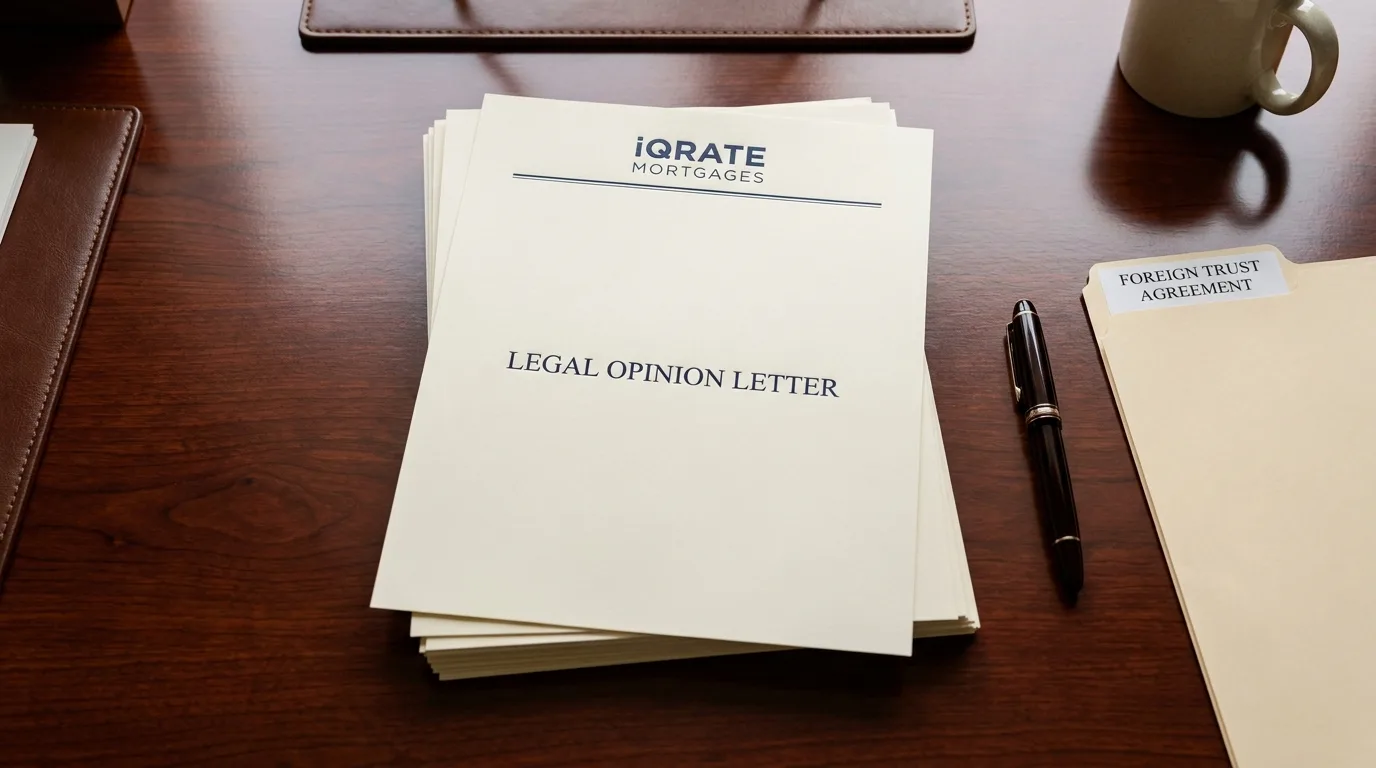
- A Legal Opinion Letter: This is a non-negotiable requirement. A qualified, U.S.-based attorney must provide a formal letter stating that the trust is validly formed under its home country's laws, has the legal capacity to purchase and encumber real estate in Florida, and that the trustee has the authority to sign the mortgage documents.
- Identification of All Parties: The lender must verify the identity of every individual associated with the trust. This includes the grantor(s) who created the trust, the trustee(s) who manage it, and all beneficiaries. Expect to provide copies of valid passports and potentially other forms of identification.
- Proof of the Trust's Existence: This may include a Certificate of Good Standing or a similar document from the trust's country of registration, confirming it is active and compliant with local laws.
All documents not originally in English must be translated by a certified translator.
How to Prove the Source of Funds from an International Trust
Proving the source of the down payment and closing costs is arguably the most scrutinized part of the underwriting process. Lenders need to see a clear, logical paper trail for every dollar being used in the transaction. Simply showing the money in a bank account is not sufficient.
Here’s the kind of evidence you will need to provide:
- Detailed Bank Statements: Provide at least six to twelve months of statements for the trust’s primary bank accounts. The underwriter will look for large, unusual deposits and will require a written explanation and supporting documentation for each one.
- Documentation for Large Deposits: If a large sum of money entered the account recently, you must prove its origin. For example, if it came from the sale of another property, provide the settlement statement. If it was from business income, provide corporate financial statements or invoices.
- Asset Verification: If funds came from the liquidation of other assets (like stocks or bonds), you must provide the corresponding brokerage statements showing the sale of those assets and the subsequent transfer of funds.

To streamline the process, it is highly recommended to transfer the full amount needed for the down payment and closing costs into a single, U.S.-based bank account at least two to three months before applying for the loan. This allows the funds to become 'seasoned', making the underwriter's job easier.
Lenders in Aventura and Miami That Work with Foreign Trusts
When seeking a mortgage for a property in Aventura or Miami held in a foreign trust, you will quickly discover that major national banks are often not the right fit. Their rigid, automated underwriting systems are not designed for such complexity. Instead, you should focus on these types of lenders:
- Portfolio Lenders: These are often community banks or credit unions that keep the loans they originate on their own books instead of selling them to Fannie Mae or Freddie Mac. This gives them the flexibility to set their own underwriting guidelines and evaluate unique situations, like a loan to a foreign trust, on a case-by-case basis.
- Private Money Lenders: Private lending institutions and individuals specialize in asset-based loans. They are less concerned with the borrower's personal income and more focused on the value of the property itself. While their interest rates and fees are significantly higher, they offer speed and flexibility that traditional lenders cannot match.
- Specialized Mortgage Brokers: An experienced mortgage broker who specializes in foreign national and complex financing is your most valuable ally. They have established relationships with a network of niche lenders, including portfolio and private money lenders, who understand and are willing to consider these types of loans.
Does the Trust's Domicile Country Affect Loan Eligibility?
Yes, absolutely. The country where the trust is legally established, or domiciled, is a critical factor for lenders. Lenders maintain internal lists of approved and prohibited countries based on geopolitical risk, financial transparency, and tax treaties with the United States.
A trust based in a country with a stable government, a well-regulated financial system, and a tax information exchange agreement with the U.S. (e.g., the United Kingdom, Canada, Germany) will be viewed far more favorably. Conversely, a trust domiciled in a country known for being a tax haven or having lax financial oversight will face extreme scrutiny or outright rejection. Any country on the Office of Foreign Assets Control (OFAC) sanctions list is an automatic denial.
Expect Higher Interest Rates for a Loan to a Foreign Trust
The increased risk and manual labor involved in underwriting a loan to a foreign trust translate directly into higher costs for the borrower. You should expect both a higher interest rate and a larger down payment requirement.
- Interest Rates: A loan to a foreign trust is considered a higher-risk product. If a prime U.S. borrower might qualify for a 6.75% interest rate, a loan for a property in a foreign trust could easily be in the 8.5% to 10% range, depending on the specifics of the deal. (The data, information, or policy mentioned here may vary over time.)
- Down Payment: Lenders will require more 'skin in the game' to mitigate their risk. While a U.S. buyer might purchase an investment property with 25% down, a foreign trust will likely be required to make a down payment of at least 40% to 50%. (The data, information, or policy mentioned here may vary over time.)
Impact on Your Property and Income Taxes
Disclaimer: This information is for educational purposes only. You must consult with a qualified international tax advisor and a real estate attorney.
The use of a foreign trust to own U.S. real estate has significant tax implications that you must understand.
- FIRPTA: The Foreign Investment in Real Property Tax Act of 1980 (FIRPTA) requires that upon the sale of the property, a percentage of the gross sales price (typically 15%) is withheld and sent to the IRS. You may be able to file a U.S. tax return to claim a refund if the actual tax liability is lower.
- Income Tax: If the Miami property generates rental income, that income is subject to U.S. income tax. The trust will need to file an annual tax return with the IRS to report this income.
- Estate Tax: For non-resident aliens, the U.S. estate tax exemption is much lower than for U.S. citizens. Holding property in a properly structured foreign trust can be a strategy to mitigate exposure to this tax, but it requires expert legal planning.
Key Differences: Revocable vs. Irrevocable Trusts
The type of trust you use has a major impact on how a lender will underwrite the loan. The distinction between revocable and irrevocable is critical.
Revocable Trusts
A revocable trust, often called a 'living trust', is one where the grantor (the person who created it) retains control over the assets and can amend or dissolve the trust at any time. From a lender's perspective, this structure is often simpler to finance. They typically 'look through' the trust and underwrite the loan based on the personal financial strength of the grantor. The grantor’s income, assets, and credit history are the primary qualifying factors.
Irrevocable Trusts
An irrevocable trust is a separate legal entity that cannot be easily changed or dissolved once created. The assets are legally owned by the trust itself, not the grantor. This structure provides stronger asset protection but is far more complex to finance. The lender must qualify the loan based on the trust's own assets and its ability to make payments as dictated by the trust agreement. The underwriter will carefully analyze the distribution terms to ensure the trustee can use the trust's assets to service the mortgage debt. The legal opinion letter is especially critical for loans involving irrevocable trusts. Navigating the complexities of financing a property held in a foreign trust requires expert guidance. If you're considering a purchase in Miami or Aventura, working with a mortgage professional who specializes in these niche transactions can make the difference between denial and approval.
Navigating the complexities of a foreign trust mortgage requires expert guidance. When you're ready to move forward, our specialists are here to help. Start your application to see how we can assist with your unique financing needs.
Author Bio
David Ghazaryan is the expert mortgage strategist and founder behind iQRATE Mortgages. With a mission to fund home loans that traditional banks won't touch, David specializes in helping clients with unique financial situations, including those recovering from foreclosure or bankruptcy. He expertly crafts smart, strategic, and stress-free mortgages by leveraging a vast network of over 100 lenders to secure competitive rates for investors and homebuyers alike. Praised for exceptional customer service, David has helped hundreds of families with a 97% satisfaction rate, guiding them to the mortgage they deserve.
References
Consumer Financial Protection Bureau (CFPB) - Mortgages
IRS - Foreign Trust Reporting Requirements and Tax Consequences









