


What Visa and Residency Documents Are Required for the Application?
When applying for a jumbo mortgage as a foreign national, lenders need to understand your legal status for being in the United States. While you don't need to be a permanent resident, you must provide clear documentation. Lenders in Miami are accustomed to these scenarios and have specific requirements.
First and foremost, you will need a copy of your valid, unexpired passport from your country of origin. This is a non-negotiable piece of identification. Beyond the passport, the required visa documentation depends on your situation:
- B-1/B-2 Tourist Visas: Many foreign buyers purchase property while on a visitor visa. Lenders have specific 'foreign national' programs designed for these individuals. The focus will be less on the visa and more on the strength of your global financial profile.
- Work Visas (H-1B, L-1, E-2): If you are residing and working in the U.S. on a valid work visa, this can be beneficial. It helps establish a U.S. presence, though the lender will still heavily scrutinize your foreign assets and income history. You will need to provide a copy of your visa and any related employment authorization documents.
- No Visa: Some specialized lender programs for buyers in high-demand markets like Miami and Doral do not require a visa at all. These programs are asset-based, meaning the lender is primarily concerned with your global wealth and the size of your down payment, often requiring 30-50% down. (The data, information, or policy mentioned here may vary over time.)
Key takeaway: Your ability to secure financing is not solely tied to a specific visa type. It's about presenting a complete and verifiable financial picture to a lender experienced in foreign national loans.
How Do I Properly Document Foreign Sources of Income and Assets?
This is the most detailed part of the application process. U.S. lenders must comply with strict anti-money laundering (AML) regulations, so they will meticulously verify the source of every dollar you use. Your documentation must be clear, professionally translated if not in English, and paint a comprehensive picture of your financial stability.

Verifying Your Employment and Income
Lenders need to see a stable, reliable income stream. How you prove this depends on whether you are employed or self-employed.
For Salaried Employees:
- Letter of Employment: A letter from your foreign employer on company letterhead. It should state your position, your salary (converted to USD), your start date, and the likelihood of continued employment.
- Recent Pay Stubs: Typically for the last 30-60 days.
- Tax Returns: Two years of tax returns from your home country. These must be complete returns, not just a summary.
For Self-Employed Individuals or Business Owners:
- Letter from Your Accountant: A letter from a certified public accountant (or equivalent in your country) verifying your business ownership, its stability, and your income for the past two years. This is a crucial document.
- Business Registration and Financials: Documents proving your business is legally registered, along with two years of profit and loss statements and balance sheets.
- Example: A business owner from Colombia looking to buy a $2.5 million home in Doral would need their Colombian accountant to write a detailed letter confirming the business's revenue and the owner's personal income, supported by two years of company financial statements.
Proving Your Assets
Lenders need to verify you have sufficient liquid assets for the down payment, closing costs, and required reserves. Reserves are funds left over after closing, typically equal to 6-12 months of the total monthly mortgage payment (principal, interest, taxes, and insurance). (The data, information, or policy mentioned here may vary over time.)
- Bank Statements: Two to three months of statements for all checking and savings accounts, both foreign and domestic.
- Investment/Brokerage Statements: Two to three months of statements for any stock portfolios or other investment accounts.
- Retirement Accounts: Statements for any retirement funds, though using these for the transaction may have tax implications.
Every statement must clearly show the name of the financial institution, your name, the account number, and a full transaction history for the period.
What Are the Requirements for Verifying My Down Payment Funds?
Verifying the down payment is about two things: sourcing and seasoning. 'Sourcing' means proving where the money came from legally. 'Seasoning' means showing the money has been in your account for a period, typically at least 60-90 days.
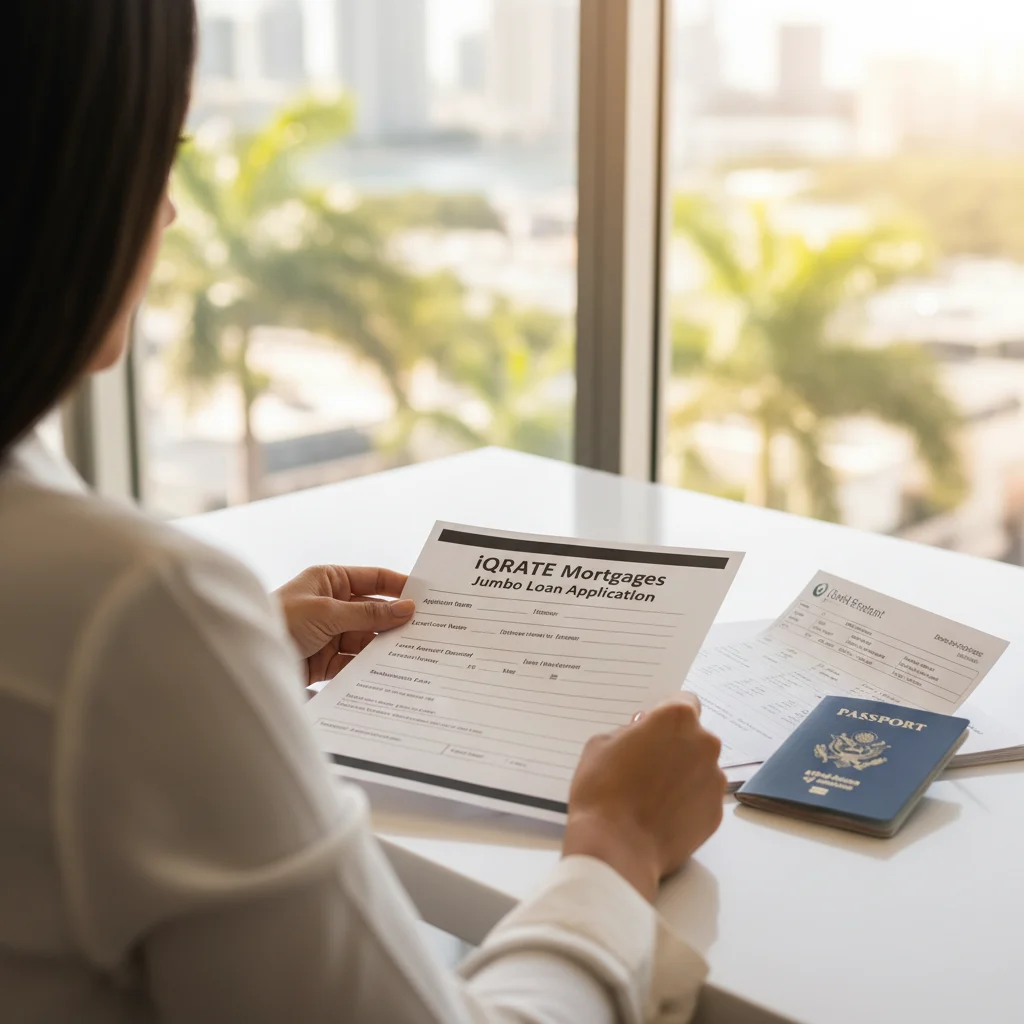
Lenders will look at your bank statements to ensure the funds for the down payment didn't suddenly appear. If there are any large, unusual deposits, you must provide a Letter of Explanation (LOX) and supporting documentation. For example, if you sold another property to fund your Miami purchase, you would need to provide the closing statement from that sale.
Example: You are buying a $3 million luxury condo in Miami and plan to make a 40% down payment of $1.2 million. The lender will require bank statements going back at least 60 days showing that the $1.2 million (plus funds for closing costs and reserves) has been in your account. If $500,000 of that was deposited last week from the sale of stocks, you must provide the brokerage statement showing the sale transaction.
Do I Need a United States Bank Account and Credit History to Apply in Miami?
This is a common point of confusion. The answer is yes for the bank account, and not necessarily for the credit history.
U.S. Bank Account: You will almost certainly need to open a U.S. bank account. This is a practical requirement. The funds for your down payment and closing costs must be wired into the U.S. title company's escrow account from a U.S. institution. It is also where you will make your monthly mortgage payments from. Most major banks in Miami have international client divisions that make this process straightforward.
U.S. Credit History: You do not need a traditional U.S. credit score (FICO score). Lenders specializing in foreign national loans have alternative ways to assess your creditworthiness. This can include:
- International Credit Reports: Some services can pull credit histories from other countries.
- Letters of Reference: Letters from your primary banking institution or creditors in your home country stating your history of timely payments.
- Proof of Rental/Mortgage History: Documentation showing on-time payments for your current housing.
The lack of a FICO score will not prevent you from getting a jumbo loan in Doral, but having a strong, documented history of managing credit abroad is essential.
What Kind of Letter of Explanation Is Needed for My Financial History?
A Letter of Explanation, or LOX, is a simple, signed letter you write to the underwriter to clarify anything in your financial documents that might be unclear. It should be concise and factual. Common reasons you might need a LOX include:
- Explaining a large, recent deposit into your bank account.
- Clarifying a gap in employment.
- Detailing the corporate structure of your foreign business if it's complex.
- Explaining the source of gift funds from a family member.
Always provide supporting documents with your LOX. If you are explaining a large deposit from the sale of an asset, attach the sales contract and proof of funds transfer.
Are Translated Financial Documents Required by Doral Lenders?
Yes, absolutely. Any document that is not originally in English must be accompanied by a complete, certified translation. A 'certified translation' means the translator provides a signed statement declaring that the translation is a complete and accurate rendering of the original document. You cannot translate the documents yourself. This must be done by a professional, independent translation service. This applies to everything: bank statements, tax returns, employment letters, and legal documents.
What Property-Specific Documents Will the Lender Ask For?
Once your personal finances are being reviewed, the lender will simultaneously analyze the property you intend to buy in Miami or Doral.
- Fully Executed Purchase Agreement: The signed contract between you and the seller, detailing the price and terms.
- Appraisal Report: The lender will order an appraisal from a licensed appraiser to confirm the property's market value.
- Title Search and Insurance: A title company will research the property's history to ensure there are no liens or ownership disputes.
- Condominium Documents (If Applicable): For condo purchases, which are very common in Miami, the lender will conduct a detailed 'condo review'. They will request the condo association's budget, bylaws, and a 'condo questionnaire' to ensure the project is financially stable and meets their guidelines.
What Is the Foreign Investment in Real Property Tax Act (FIRPTA) Holdback?
FIRPTA is a U.S. federal tax law that imposes a tax on foreign persons when they sell U.S. real estate. While this is technically a seller's tax, it is the buyer's responsibility to withhold the funds. By default, the buyer or their closing agent must withhold 15% of the gross sales price and send it to the IRS. (The data, information, or policy mentioned here may vary over time.) For a $2 million sale, that's a $300,000 holdback. The foreign seller can then file a U.S. tax return to claim a refund if the actual tax owed is less. There are some exemptions and reduced withholding rates, but you must work with a knowledgeable real estate attorney and title company in Miami to ensure you comply correctly.
Does the Property Type, Such as a Condo-Hotel, Change the Requirements?
Yes, the property type significantly impacts financing requirements. A standard single-family home or a 'warrantable' condo (one that meets standard Fannie Mae/Freddie Mac guidelines) is the most straightforward.
However, markets like Miami have many unique properties, such as condo-hotels. A condo-hotel is a condominium project that is operated as a hotel, with a registration desk and rental program. These are considered higher risk by lenders.
- Financing a Condo-Hotel: Expect a much higher down payment, often 40-50%. (The data, information, or policy mentioned here may vary over time.) The interest rate will also be higher. Only a limited number of specialized portfolio lenders will finance these properties. The lender's review of the project's financials and rental program will be extremely thorough.
Always inform your mortgage advisor upfront about the exact type of property you are considering, as it will determine which lenders are even an option for your jumbo loan. Navigating the documentation for a foreign national jumbo loan can be complex. Partnering with a mortgage strategist who specializes in these unique loans can streamline the process and connect you with the right lenders for your situation in Miami or Doral.
Ready to navigate the jumbo loan process for your Miami property with confidence? Our team specializes in the unique documentation and financial requirements for foreign nationals. Apply now to partner with an expert who can streamline your application.
Author Bio
David Ghazaryan is the expert mortgage strategist and founder behind iQRATE Mortgages. With a mission to fund home loans that traditional banks won't touch, David specializes in helping clients with unique financial situations, including those recovering from foreclosure or bankruptcy. He expertly crafts smart, strategic, and stress-free mortgages by leveraging a vast network of over 100 lenders to secure competitive rates for investors and homebuyers alike. Praised for exceptional customer service, David has helped hundreds of families with a 97% satisfaction rate, guiding them to the mortgage they deserve.
References









