


Why Your Initial New Tampa Home Mortgage Payment is Deceptively Low
When you close on a new construction home in Tampa, your lender calculates your initial monthly mortgage payment, known as PITI (Principal, Interest, Taxes, and Insurance). The principal and interest are fixed based on your loan amount and interest rate. The 'T' for taxes, however, is based on the most recent property tax assessment on record with the county.
For a new build, that record reflects the property's state before your home existed: a vacant lot. This creates a temporary, and misleadingly low, tax liability.
Let's look at a realistic example:
- A developer owns a parcel of land in Hillsborough County (where Tampa is located) valued at $60,000.
- The annual property tax on this vacant land might be around $1,200.
- When your lender sets up your initial escrow account, they base the tax portion on this figure: $1,200 per year, or just $100 per month.
This $100 monthly tax payment is what gets factored into your initial PITI, making your total mortgage payment seem very affordable. However, this is only a temporary situation that will change dramatically once the property is reassessed with a completed home on it.
How Tax Assessors Value New Construction Homes in Orlando
County property appraisers, like the one in Orange County for Orlando, are responsible for determining the 'just value' (or market value) of every property as of January 1st each year. For existing homes, this involves analyzing recent sales of similar properties. For new construction, the process is slightly different but follows the same principles.
Here’s how an assessor determines the value of your newly built Orlando home:

- Building Permits: The appraiser's office tracks all building permits issued. This alerts them that a new structure is being built or an existing one is being improved.
- On-Site Inspections: An appraiser may visit the property to record key details about the home.
- Property Characteristics: They assess everything that contributes to market value, including:
- The square footage of living area
- Quality of construction materials
- Number of bedrooms and bathrooms
- Features like a pool, multi-car garage, or premium finishes
- Comparable Sales: They analyze the sale prices of other newly built homes in your subdivision and surrounding areas to establish a fair market value for your property.
Once they determine the home's just value, they apply the local millage rate to calculate your new, much higher, tax bill.
The Timeline for Property Tax Reassessment on a New Build
The timing of your home's completion and closing date is critical to understanding when you'll feel the financial impact. The key date for property assessment in Florida is January 1st.
Here’s a typical timeline:
- You close on your new home on March 15, 2024.
- For the entire 2024 tax year, your property is assessed based on its status as of January 1, 2024. At that time, it was likely still just a vacant lot or a home under construction.
- You will pay property taxes for all of 2024 based on this lower value. Your lender will disburse funds from your escrow account accordingly.
- On January 1, 2025, the property appraiser will assess the property in its now-completed state.
- In the fall of 2025, you will receive a new tax bill reflecting the full value of your home.
- When your mortgage servicer pays this higher tax bill, your escrow account will fall significantly short.
- In early 2026, your servicer will conduct an annual escrow analysis, discover the massive shortage, and adjust your monthly mortgage payment upward to compensate.
This one-to-two-year delay is what catches so many new homeowners by surprise.
Calculating the Mortgage Payment Increase After Reassessment
The payment increase isn't just about covering the new, higher tax bill. It also includes a portion to repay the escrow shortage created in the previous year. This is what makes the jump so significant.
Let's use a detailed example for a new $500,000 home in Orlando.
Year 1: The Initial Low Payment
- Assessed Value: Vacant lot at $70,000.
- Sample Millage Rate: 20 mills (or 2.0%), which is written as 0.020.(The data, information, or policy mentioned here may vary over time.)
- Initial Annual Tax: $70,000 x 0.020 = $1,400.
- Monthly Escrow Payment: $1,400 / 12 = $117.
Year 2: The Reassessment and Escrow Shortage
- New Assessed Value: Completed home at $500,000.
- New Annual Tax: $500,000 x 0.020 = $10,000.
- New Monthly Escrow Needed: $10,000 / 12 = $833.
Now, let's calculate the shortage. Your lender collected $1,400 from you over the year, but they had to pay a $10,000 tax bill.
- Escrow Shortage: $10,000 (Taxes Owed) - $1,400 (Escrow Collected) = $8,600.
Your mortgage servicer will typically spread this shortage over the next 12 months to help you catch up.(The data, information, or policy mentioned here may vary over time.)
- Monthly Shortage Repayment: $8,600 / 12 = $717.
The New Total Monthly Payment
Your new payment will be a combination of the properly funded escrow and the shortage repayment.
- New Total Monthly Tax Portion: $833 (for future taxes) + $717 (to cover the shortage) = $1,550.
Your monthly payment for property taxes alone just jumped from $117 to $1,550. This is the payment shock that can disrupt a family's budget if they aren't prepared.
Protesting a New Property Tax Assessment in Orlando
If you believe the county's assessment of your new Orlando home is higher than its actual market value, you have the right to appeal. Simply feeling the taxes are too high is not grounds for an appeal; you must provide evidence that the valuation is incorrect.
Step 1: Informal Review with the Property Appraiser
Your first step should be to contact the Orange County Property Appraiser's office. You can discuss the valuation with an appraiser and present your evidence. Often, discrepancies can be resolved at this stage if you can provide compelling information.
Step 2: Filing a Formal Petition
If you cannot reach an agreement, you can file a formal petition with the Value Adjustment Board (VAB). This must be done within the deadline specified on your TRIM (Truth in Millage) notice, which is typically mailed in August.
Essential Evidence for an Appeal
- An Independent Appraisal: A recent appraisal of your home can be powerful evidence.
- Comparable Sales Data: Provide sales data for at least three homes that are very similar to yours in size, age, and location that have sold for less than your assessed value.
- Photos and Documentation: Document any issues with the home or property that could negatively impact its value which the appraiser may have missed.
Proactively Managing Your Escrow to Avoid a Shortage
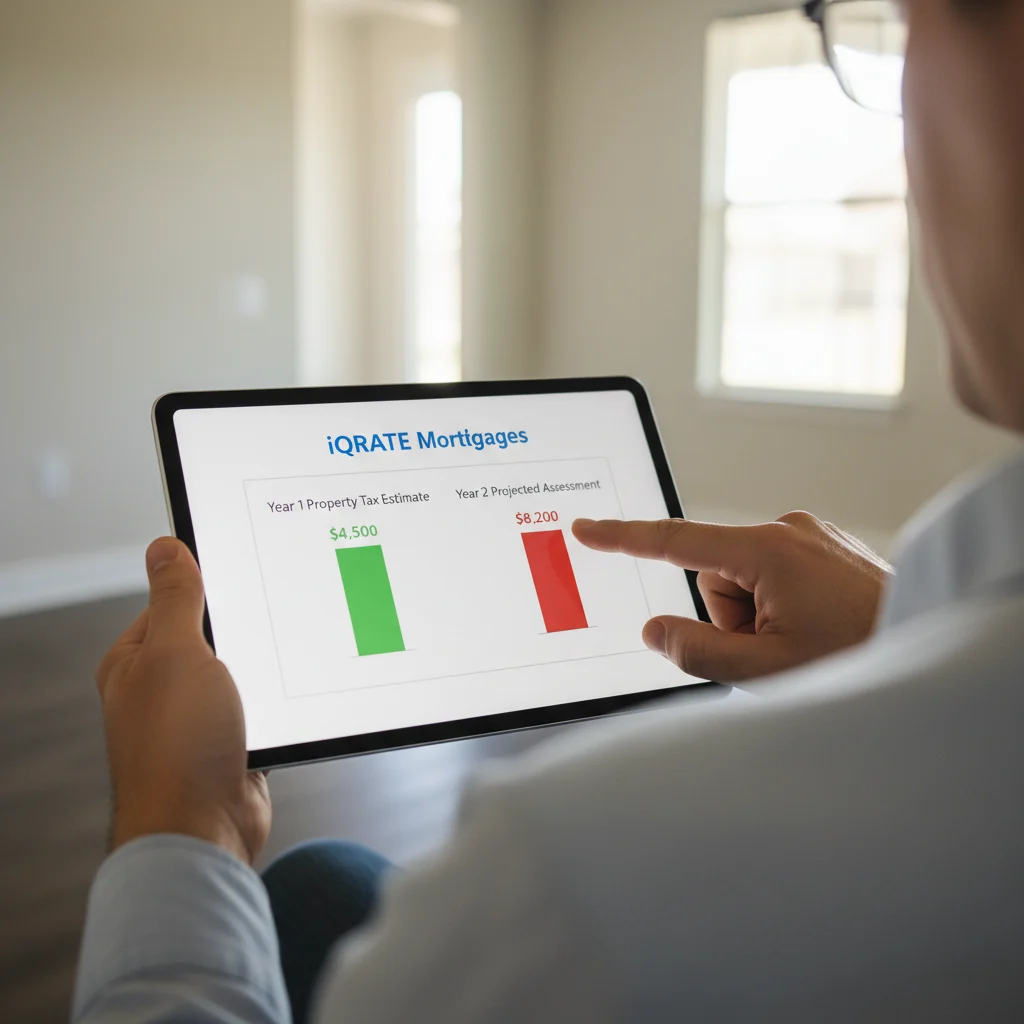
Instead of waiting for the payment shock, you can take control of your budget from day one. The key is to act as if you're already paying the full tax amount.
Estimate Your Future Tax Bill
Don't rely on the builder's or lender's initial figures. Do your own research. Find the current millage rate for your specific location in Tampa or Orlando. A conservative and simple way to estimate is to multiply your home's purchase price by that rate.
Example: $500,000 (Purchase Price) x 0.020 (Millage Rate) = $10,000 estimated annual tax, or $833 per month.
Set Up a Dedicated Savings Fund
Calculate the difference between your estimated real monthly tax payment and the low amount your lender is currently collecting.
- Calculation: $833 (Estimated Real Tax) - $117 (Current Escrow Payment) = $716.
Open a separate high-yield savings account and automatically deposit this difference ($716) into it every month. By the time your escrow is re-analyzed, you will have the entire shortage amount ($8,600) saved and ready. You can pay it off in a lump sum to avoid having your monthly payment inflated for the following year.
Inquire About Voluntary Escrow Payments
Some mortgage servicers allow you to make additional, voluntary payments directly to your escrow account.(The data, information, or policy mentioned here may vary over time.) Contact your servicer to see if this is an option. By overfunding your escrow account from the beginning, you can prevent a shortage from ever occurring.
The Impact of Community Development District (CDD) Fees in Tampa
Many new construction communities, particularly in the Tampa area, are located within a Community Development District (CDD). A CDD is a special-purpose government entity that finances and manages the infrastructure and amenities for a specific community, such as roads, water systems, parks, and pools.
This financing is paid for by homeowners through an annual assessment, which is completely separate from your regular property taxes. However, it is included on your annual tax bill as a non-ad valorem assessment. This means:
- CDD fees are a fixed cost, often lasting 20 to 30 years, to pay off the bonds that funded the community's development.
- These fees can add thousands of dollars to your total annual tax bill.
- Unlike property taxes, CDD fees are not based on your home's value. Everyone in the community typically pays a similar amount.
When buying in a new Tampa community, it's crucial to ask your builder or realtor for the exact annual CDD fee. This amount must be factored into your budget on top of your estimated ad valorem property taxes. Understanding the nuances of new construction financing is key to a smooth homeownership journey. If you're planning to buy a new home in Orlando, Tampa, or anywhere in Florida, let's create a strategic plan to ensure your mortgage payment is predictable and stress-free from day one.
Ready to build a smart financial strategy for your new Florida home? Let's ensure your mortgage is predictable and stress-free from the start. Apply now to explore your financing options.
Author Bio
David Ghazaryan is the expert mortgage strategist and founder behind iQRATE Mortgages. With a mission to fund home loans that traditional banks won't touch, David specializes in helping clients with unique financial situations, including those recovering from foreclosure or bankruptcy. He expertly crafts smart, strategic, and stress-free mortgages by leveraging a vast network of over 100 lenders to secure competitive rates for investors and homebuyers alike. Praised for exceptional customer service, David has helped hundreds of families with a 97% satisfaction rate, guiding them to the mortgage they deserve.
References
Consumer Financial Protection Bureau - What is an escrow or impound account?
Florida Department of Revenue - Property Tax Information for Taxpayers









