


The Standard Inspection Negotiation Problem in California
In competitive real estate markets like San Diego, the home inspection phase is where many promising deals falter. You find your dream home, make a strong offer, and it gets accepted. Then, the inspection report comes back revealing a handful of necessary repairs—a leaky roof, an outdated electrical panel, or plumbing issues. The logical next step is to negotiate with the seller for repairs or credits. But this is often where the power dynamic shifts against you.
Sellers, particularly in high-demand areas, know that most buyers are financially stretched. They assume you've put everything into your down payment and closing costs, leaving little flexibility for unexpected repairs. When you ask for a $15,000 credit, they see it not as a reasonable request based on the property's condition, but as a sign of financial weakness. They might counter with a trivial amount or simply refuse, betting that you're too invested to walk away and will absorb the costs yourself. Your financing, instead of being a tool to acquire the home, becomes a perceived liability in the negotiation.
A Common La Jolla Negotiation Scenario
Imagine you're under contract for a home in La Jolla. The inspection uncovers that the HVAC system is at the end of its life, and two separate contractors quote $12,000 for a full replacement. You present these bids to the seller and request a $12,000 credit at closing. The seller's agent responds with a firm 'no'. Their calculation is simple: you've already spent money on the inspection and appraisal, and backing out now means starting your home search all over again. They assume your lender won't approve a higher loan amount to cover the repair, so they call your bluff, leaving you to either accept the faulty HVAC or terminate the contract.

What is a Leveraged Approval Certificate?
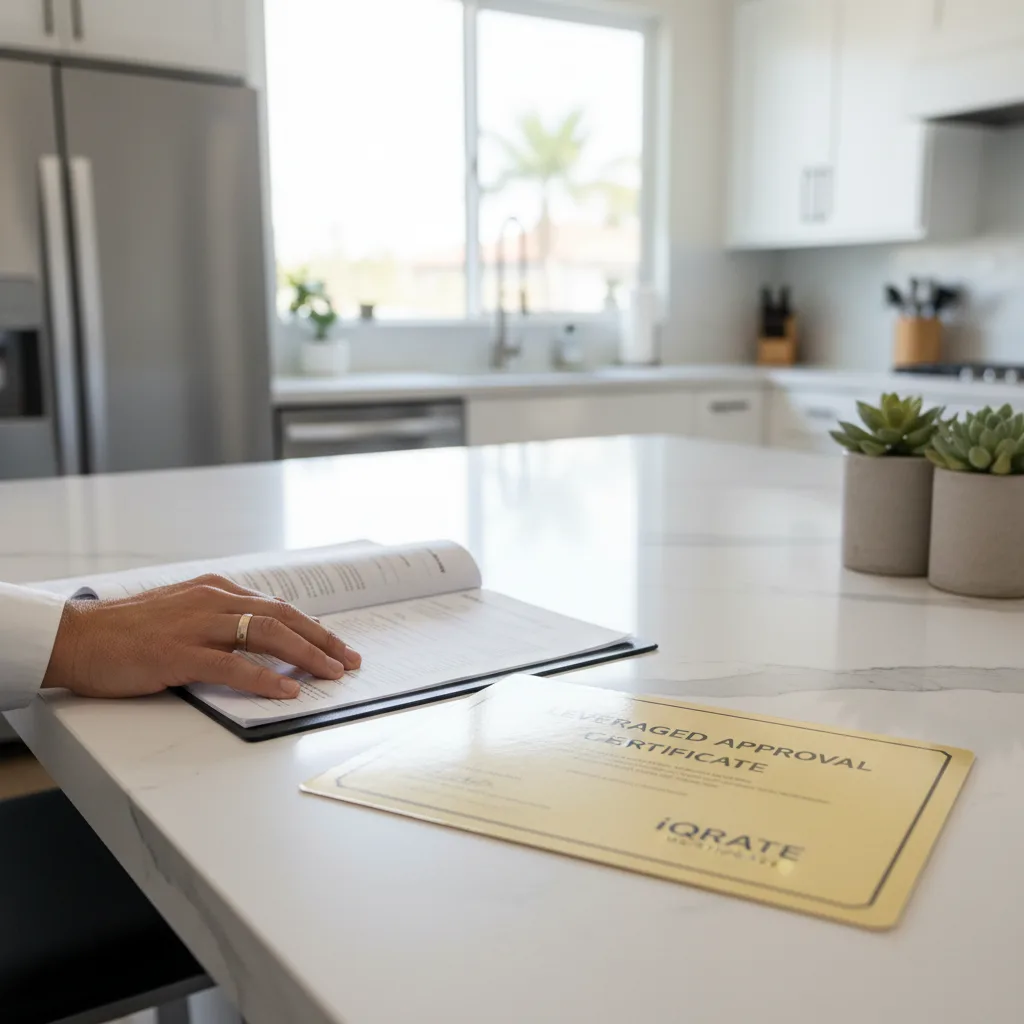
This is where a strategic approach to financing completely changes the game. A Leveraged Approval Certificate is not a standard pre-qualification or even a typical pre-approval. It is a full, upfront underwriting approval of your mortgage application. An underwriter has meticulously reviewed and verified all your income, assets, and credit information before you even make an offer. The only conditions remaining are a satisfactory property appraisal and a clear title report. This level of verification puts your offer on nearly equal footing with a cash offer in the seller's eyes.
However, the true power comes from a specific component built into this approval.
The Key Component: The Pre-Vetted Repair Escrow Capacity
The most critical element of a Leveraged Approval is its pre-vetted repair escrow capacity. This means the lender has not only approved you for the purchase price but has also analyzed your financial profile and determined that you qualify for an additional, specified amount of financing earmarked exclusively for post-closing repairs. For example, you might be approved for a $900,000 home purchase plus a pre-approved capacity for a $30,000 repair escrow.
This isn't a guess. It’s a firm, underwritten commitment from the lender. It signals that your ability to finance necessary repairs is not an unknown variable but a settled fact.
How This Differs from a Standard Pre-Approval
It’s crucial to understand the distinction between this and other mortgage letters.
- Pre-Qualification: A basic estimate of borrowing power based on self-reported information. It holds very little weight.
- Standard Pre-Approval: A lender has pulled your credit and reviewed some basic documents, but an underwriter has not verified anything. It's a stronger signal than a pre-qualification but is still conditional and can fall through.
- Leveraged Approval: A fully vetted and verified loan commitment from an underwriter. It represents the highest level of certainty a financed buyer can offer. The inclusion of a repair escrow capacity takes it one step further, turning it into a strategic asset.
Turning Your Financing into a Negotiation Weapon in San Diego
With a Leveraged Approval Certificate in hand, your approach to repair negotiations is completely transformed. Your financing is no longer a liability; it's your primary piece of leverage.
The Post-Inspection Pivot: Making Your Request Irrefutable
Let's return to the La Jolla home with the $12,000 HVAC issue. After receiving the contractor bids, your real estate agent submits them to the seller's agent. But this time, they also include the Leveraged Approval Certificate, which clearly shows your lender has approved a repair escrow capacity of up to $30,000.
The conversation is now entirely different. The message is no longer, 'Please help us, we can't afford this repair'. Instead, it becomes:
'My client's financing is fully underwritten and guaranteed. As you can see, their lender has already approved the funds to cover this exact type of repair through an escrow holdback. We are not asking for a credit due to a lack of funds; we are requesting it because the property's condition justifies this adjustment to reflect its fair market value. We are fully prepared to close with or without the credit, but our request is based on the material facts of the property.'
This approach systematically dismantles the seller's negotiating position. They can no longer use your perceived financial fragility against you. The focus is forced back onto the core issue: the property's condition and price. Faced with a buyer who has a guaranteed solution, the seller is far more likely to agree to the credit to ensure a smooth and certain closing.
The Mechanics of a Repair Escrow Holdback
A repair escrow, sometimes called a repair holdback, is a straightforward mechanism. It’s a formal account established at closing to hold funds dedicated to completing specific repairs after you take possession of the home.
Step 1: Getting the Leveraged Approval
The process begins before you even find a property. You work with a lender who offers upfront underwriting. You submit all your financial documentation—tax returns, pay stubs, bank statements—and an underwriter performs a complete review, issuing the Leveraged Approval with a specified repair escrow capacity.
Step 2: Submitting Contractor Bids
Once you are in contract on a home in a neighborhood like Pacific Beach in San Diego and the inspection reveals defects, you must obtain at least one (though two is better) detailed bid from a licensed and insured contractor. The bid must outline the scope of work and the total cost. These documents are then sent to your lender.
Step 3: The Lender's Approval and Closing
The underwriter reviews the contractor bids to ensure they are reasonable and cover the necessary work. The lender then gives final approval for the escrow amount. At the closing table, the funds for the repair (whether financed or covered by a seller credit) are transferred into the escrow account managed by the title company. The seller receives their proceeds, and you get the keys to your new home.
Step 4: Completing the Repairs and Releasing Funds
After closing, you have a contractually obligated timeframe, typically 30 to 60 days, to have the contractor complete the work. (The data, information, or policy mentioned here may vary over time.) Once the repairs are finished, a final inspection is usually required—often conducted by the original appraiser or a qualified inspector—to verify the work has been completed according to the bid. Upon receipt of this confirmation, the lender authorizes the title company to release the funds from escrow and pay the contractor in full.
Benefits for Buyers and Real Estate Agents
Adopting this strategy provides distinct advantages for everyone involved in the transaction.
For Homebuyers:
- Exceptional Negotiating Power: You can negotiate from a position of strength, making it much more likely you'll receive credits for legitimate repair issues.
- Access to More Homes: You can confidently consider homes that may need some work, knowing you have a mechanism to finance the improvements.
- Financial Security: You avoid draining your cash reserves on immediate post-closing repairs, preserving your liquidity for other needs.
For Real Estate Agents:
- Save Your Deals: This strategy prevents deals from collapsing over repair disputes, a common pitfall in real estate transactions.
- Enhance Your Value Proposition: You become known as a strategic, savvy agent who can solve complex problems and secure better outcomes for clients.
- Create Smoother Closings: By resolving repair issues with a clear, lender-approved plan, you reduce last-minute drama and increase the certainty of a successful closing. Navigating repair negotiations requires more than just a good inspection report; it requires financial leverage. If you're buying in California and want to ensure your offer is taken seriously, let's discuss how a Leveraged Approval can secure your position and your home.
Don't let repair negotiations derail your dream of homeownership. Secure your negotiating power with a Leveraged Approval and approach the closing table with confidence. Apply for a Mortgage today to get started.
Author Bio
David Ghazaryan is the expert mortgage strategist and founder behind iQRATE Mortgages. With a mission to fund home loans that traditional banks won't touch, David specializes in helping clients with unique financial situations, including those recovering from foreclosure or bankruptcy. He expertly crafts smart, strategic, and stress-free mortgages by leveraging a vast network of over 100 lenders to secure competitive rates for investors and homebuyers alike. Praised for exceptional customer service, David has helped hundreds of families with a 97% satisfaction rate, guiding them to the mortgage they deserve.
References









