

Understanding Your VA Loan Entitlement
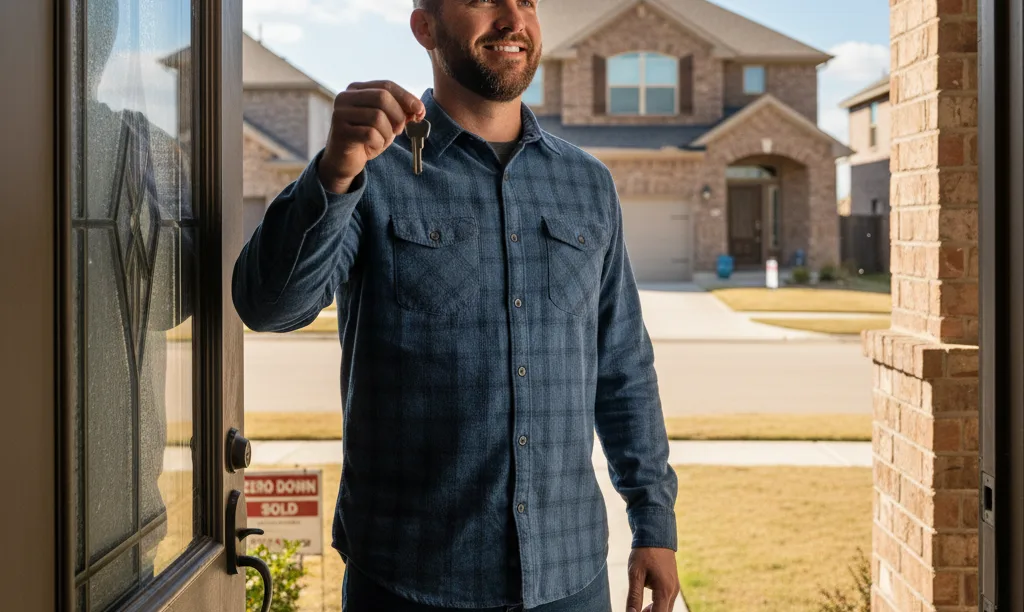
A common misconception among veterans is that the VA home loan benefit is a one-time deal. The truth is far more flexible. The foundation of this benefit is your VA loan entitlement, which is the specific dollar amount the Department of Veterans Affairs guarantees to a lender on your behalf. This guarantee reduces the lender's risk, allowing them to offer incredible terms like zero down payment and no private mortgage insurance (PMI).
Every eligible veteran starts with a 'basic entitlement' of $36,000. However, for loans over $144,000, you can access your 'bonus entitlement'. In practice, the VA guarantees up to 25% of your total loan amount. This 25% guarantee is what allows most veterans to purchase a home with no money down, provided the sales price is at or below the county's conforming loan limit.
Think of entitlement not as a loan itself, but as a voucher you present to a lender that says the VA has your back for a quarter of the loan's value.
Can You Hold Two VA Home Loans Simultaneously?
Yes, you absolutely can have two VA loans at the same time. This is one of the most powerful and underutilized features of the VA loan program. The ability to do this hinges on your remaining entitlement.
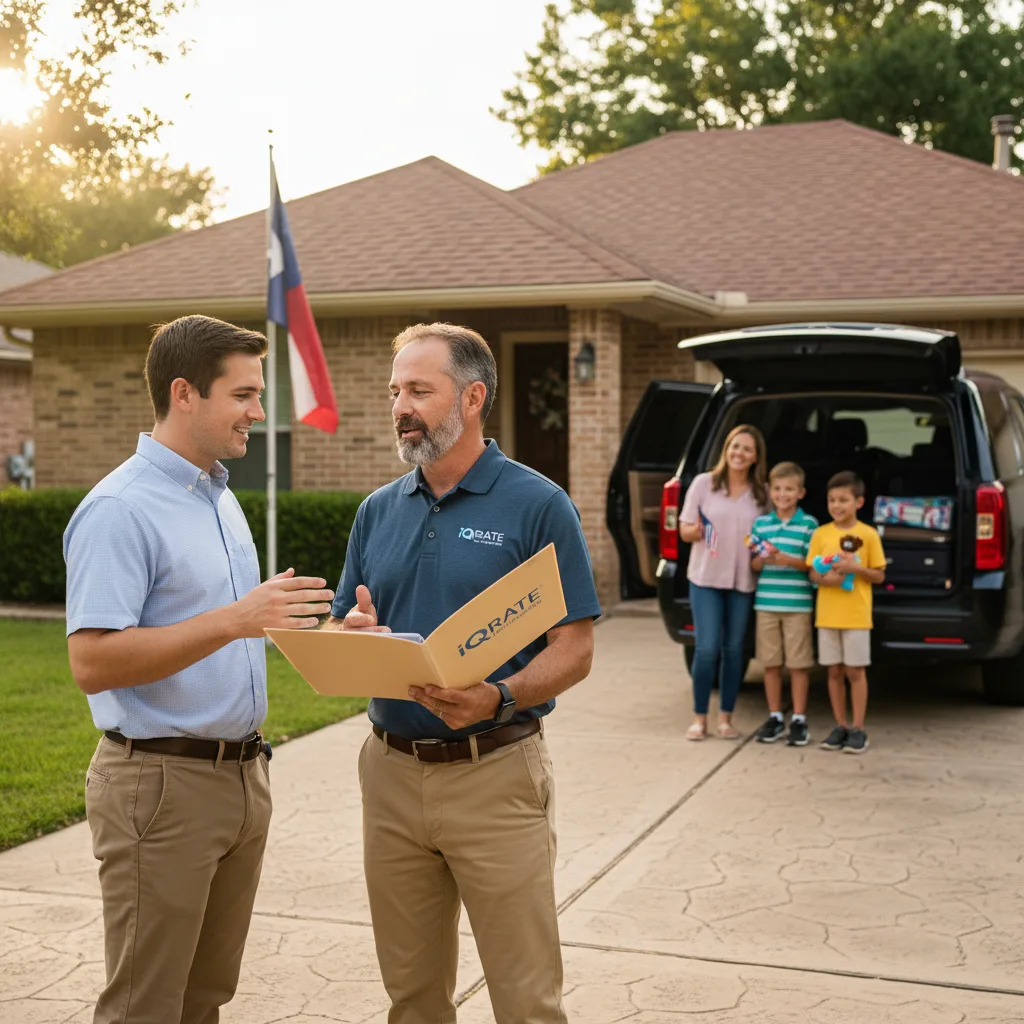
When you buy your first home, you use a portion of your total entitlement. For example, if you buy a home for $200,000, you use $50,000 of your entitlement (25% of $200,000). The amount of entitlement you didn't use on that first purchase is your remaining or 'bonus' entitlement. This leftover portion can be applied toward the purchase of a second home, enabling you to secure another VA loan—often with no down payment.
This is a perfect scenario for a service member who bought a home near their first duty station, like Fort Cavazos in Killeen, and now has orders to Joint Base San Antonio and needs a new primary residence in San Antonio.
Calculating Your Bonus Entitlement for a Home in Austin
Calculating your bonus entitlement is a straightforward process, but it requires knowing a few key numbers. Let's break down the math for purchasing a second home in a city like Austin, located in Travis County.
Step-by-Step Calculation
- Find the County Conforming Loan Limit: First, identify the current conforming loan limit for the county where you plan to buy. For most counties in Texas in 2024, including Travis (Austin), Bexar (San Antonio), and Harris (Houston), this limit is $766,550. (The data, information, or policy mentioned here may vary over time.)
- Determine the VA's Maximum Guaranty: The VA guarantees 25% of this limit. So, you'd calculate $766,550 * 0.25 = $191,637.50. This is your total potential entitlement in that county.
- Subtract the Entitlement Already Used: Find the loan amount on your first home and calculate the 25% that was used. For instance, if your first loan was $300,000, you used $75,000 in entitlement.
- Calculate Your Remaining Entitlement: Subtract the used amount from the maximum guaranty. Using our example: $191,637.50 - $75,000 = $116,637.50. This is your remaining entitlement for the second home.
- Determine Your Maximum Zero-Down Loan: To find out the maximum loan you can get with no money down, multiply your remaining entitlement by four. In this case: $116,637.50 * 4 = $466,550. You could buy a home in Austin for up to $466,550 with $0 down.
Note: You can still purchase a home above this amount, but you will need to provide a down payment equal to 25% of the difference between the purchase price and your maximum zero-down loan amount.
Real-World Example: Buying in San Antonio
Let's imagine a veteran bought a home in Killeen (Bell County) five years ago for $220,000. They have orders to move to San Antonio (Bexar County) and want to buy a new home for $380,000 while keeping the Killeen property as a rental.
- Entitlement Used in Killeen: $220,000 * 0.25 = $55,000
- Maximum Guaranty in San Antonio (Bexar County): $766,550 * 0.25 = $191,637.50
- Remaining Entitlement: $191,637.50 - $55,000 = $136,637.50
- Maximum Zero-Down Loan Power in San Antonio: $136,637.50 * 4 = $546,550
Since the target purchase price of $380,000 is well below their maximum zero-down loan amount of $546,550, this veteran can purchase their new home in San Antonio with no down payment.
How County Loan Limits Impact Your Second VA Loan
As mentioned, the VA itself does not set loan limits. However, lenders use the conforming loan limits established by the Federal Housing Finance Agency (FHFA) to determine the maximum amount they can lend with a 25% guaranty, which translates to a zero-down payment loan. For most of Texas in 2024, that limit is $766,550. (The data, information, or policy mentioned here may vary over time.) Any loan amount up to this figure is considered a 'conforming' VA loan.

If you have your full entitlement available (meaning you've sold a previous VA-financed home and restored it), you are not subject to these limits for a zero-down purchase. But when you are using bonus entitlement for a second loan, these county limits are critical for calculating your maximum purchasing power without a down payment.
Is the VA Funding Fee Different for a Second Use?
Yes, the VA Funding Fee is typically higher for subsequent uses of the VA loan benefit. This fee is paid directly to the VA to help keep the program running for future generations of service members and veterans. It can be paid in cash at closing or rolled into the total loan amount.
The fee is a percentage of the loan amount and varies based on your down payment and whether it's your first or subsequent time using the benefit.
VA Funding Fees for Subsequent Use (for regular military): (The data, information, or policy mentioned here may vary over time.)
- 0% Down Payment: 3.3%
- 5% to 9.9% Down Payment: 1.5%
- 10% or More Down Payment: 1.25%
Important: Veterans receiving VA disability compensation are exempt from paying the VA Funding Fee. This exemption can save you thousands of dollars at closing.
Occupancy Rules for a Second VA Home Loan in Houston
One of the non-negotiable rules of a VA loan is the occupancy requirement. The veteran obtaining the loan must certify that they intend to occupy the property as their primary residence. When you buy a second home with your VA benefit, this rule applies to the new property.
For example, if you are moving from your first VA-financed home in Killeen to a new job in Houston, you must intend to live in the Houston home. Your first home in Killeen can then be converted into a rental property or used as a second home. You generally have a reasonable time, typically within 60 days of closing, to move into the new home. (The data, information, or policy mentioned here may vary over time.) This requirement ensures the benefit is used for primary housing, not purely for investment properties from the outset.
How Your First VA Loan's Status Affects a New Application
When you apply for a second VA loan, your lender will scrutinize the status of your first mortgage. Your ability to qualify depends heavily on your financial capacity to handle both payments.
- Keeping the First Home: If you plan to rent out your first home, the lender will need to see a signed lease agreement to consider that rental income when calculating your debt-to-income (DTI) ratio. (The data, information, or policy mentioned here may vary over time.) Lenders want to see that you can comfortably afford both mortgage payments, plus taxes, insurance, and maintenance on both properties. A strong income and solid credit history are essential.
- Selling the First Home: If you sell your first home and pay off the VA loan in full, you can apply for a Restoration of Entitlement. This process fully restores your VA loan benefit back to its original state, allowing you to purchase your next home with your full entitlement intact, free from the constraints of bonus entitlement calculations.
Documents Needed to Prove Your Remaining Entitlement
The most important document for any VA loan application is your Certificate of Eligibility (COE). This official form from the VA confirms to the lender that you meet the minimum service requirements for the benefit. Your COE will also state your entitlement code and show how much, if any, of your basic entitlement has been used.
An experienced mortgage lender can typically pull your COE for you in minutes. In addition to the COE, your lender will need the Closing Disclosure (CD) or Settlement Statement from your first VA loan. This document shows the original loan amount, which is necessary to perform the precise bonus entitlement calculation for your second purchase. Navigating bonus entitlement can be complex, and every veteran's situation is unique. If you're a Texas veteran considering a second home in Killeen, San Antonio, or beyond, let's calculate your exact purchasing power and map out a clear path to your next property. A strategic plan ensures you maximize the incredible benefit you've earned.
Ready to explore your options for a second VA home loan? Our experts can help calculate your exact purchasing power and guide you through the process. Apply now to see what you qualify for.
Author Bio
David Ghazaryan is the expert mortgage strategist and founder behind iQRATE Mortgages. With a mission to fund home loans that traditional banks won't touch, David specializes in helping clients with unique financial situations, including those recovering from foreclosure or bankruptcy. He expertly crafts smart, strategic, and stress-free mortgages by leveraging a vast network of over 100 lenders to secure competitive rates for investors and homebuyers alike. Praised for exceptional customer service, David has helped hundreds of families with a 97% satisfaction rate, guiding them to the mortgage they deserve.
References









