


What 'Pending HOA Litigation' Means for a Condominium
Finding the perfect condominium in Tampa, only to have your mortgage application denied at the last minute, is a uniquely frustrating experience. Often, the culprit is a single phrase: 'pending HOA litigation'. This term simply means the Homeowners Association (HOA) is actively involved in a lawsuit. The litigation can be initiated by the HOA, for instance, against the original developer for construction defects. Or, it can be filed against the HOA, perhaps by a resident claiming the association was negligent in maintaining a common area.
For a potential buyer and their lender, the key issue is uncertainty. A pending lawsuit represents an unknown future liability. If the HOA loses the case, it could face a massive financial judgment. This financial blow could bankrupt the association, leading to deferred maintenance, skyrocketing dues, and a sharp decline in property values for every unit owner. It’s this unquantifiable risk that makes conventional mortgage lenders pause and, in most cases, refuse to proceed.
Why Conventional Lenders Deny Loans for Condos in Tampa with Litigation
The vast majority of conventional home loans in the U.S. are underwritten to standards set by government-sponsored enterprises like Fannie Mae and Freddie Mac. This allows lenders to sell the loans on the secondary market, freeing up capital to issue more mortgages. To be eligible for sale, a condominium project must be deemed 'warrantable', meaning it meets a long list of strict criteria related to financial health, owner-occupancy rates, and legal status.
Pending litigation is one of the biggest factors that can render a condo project 'non-warrantable'. Lenders see a lawsuit not just as a legal issue but as a direct threat to their collateral—your condo unit.

Consider this realistic Tampa scenario:
- A 150-unit high-rise condominium is suing its developer over water intrusion issues, seeking $10 million in damages.
- The lawsuit has been ongoing for two years with no resolution in sight.
- If the HOA loses or settles for a small amount, it may need to levy a special assessment to fund the necessary repairs.
- If the repairs cost $7.5 million, each of the 150 unit owners would be responsible for a one-time payment of $50,000.
A lender providing a 95% loan-to-value mortgage will not take the risk that their borrower could suddenly be hit with a massive, un-budgeted expense. This could lead to default, foreclosure, and a loss for the lender, especially if property values in the building decline due to the unresolved structural issues. For this reason, the answer from a conventional underwriter is almost always a swift 'no'.
High-Risk Lawsuits That Concern Lenders
Not all litigation carries the same weight. Lenders and their underwriters categorize lawsuits based on the level of risk they pose to the project's stability. While a minor 'slip-and-fall' claim that is fully covered by the HOA's insurance policy might be acceptable, other types of legal action are immediate red flags.
Structural Integrity and Construction Defect Lawsuits
These are the most serious and the most likely to cause a loan denial. Lawsuits involving the building's fundamental components—such as the foundation, roof, exterior cladding, or balconies—are viewed as a direct threat to the property's value and habitability. The potential cost of remediation is often enormous and unpredictable, making the investment too risky for a conventional lender.
Financial Disputes
Lawsuits alleging financial mismanagement, fraud, or embezzlement by the HOA board or management company also raise significant concerns. This type of litigation calls into question the financial solvency and operational integrity of the entire association. Lenders need to be confident that the HOA is managing its funds responsibly to maintain the property and protect its value.
Disputes Between Unit Owners and the HOA
While less critical than structural lawsuits, legal action brought by unit owners against the HOA can still be problematic. If the lawsuit concerns issues like the enforcement of rules, property damage from common elements, or unfulfilled maintenance obligations, it can signal a poorly run or dysfunctional association. Lenders are wary of projects with significant internal conflict.
How to Discover if a St. Petersburg Building Has Pending Litigation
As a homebuyer, you need to be proactive in uncovering potential issues before you are too far into the loan process. Waiting for the lender's underwriter to discover litigation can cost you appraisal fees and wasted time.
- Direct Inquiry: Ask the seller and the listing agent directly if there is any pending or anticipated litigation. In Florida, sellers are required to disclose facts that materially affect the value of the property.
- Review HOA Documents: Once your offer is accepted, you will receive an HOA resale package. This includes the association's budget, bylaws, meeting minutes, and financial statements. Scrutinize the meeting minutes for any mention of 'legal counsel', 'special assessments', or discussions about construction or financial issues.
- The Lender's Condominium Questionnaire: This is the formal verification step. Your lender will send a detailed form to the HOA management company. One of the most important questions on this form is, 'Is the association party to any pending litigation?' The HOA's official, written response is what underwriters rely on to make their final decision.
Navigating Non-Warrantable Condominium Loan Programs
If your dream condo in St. Petersburg is deemed non-warrantable due to litigation, a conventional loan is off the table. However, this is not always the end of the road. Your financing options shift from the mainstream market to a niche category of products known as Non-Qualified Mortgages (Non-QM) or portfolio loans.
These loans are offered by portfolio lenders—banks, credit unions, or private funds that intend to keep the loan on their own books rather than selling it. Because they are not bound by Fannie Mae or Freddie Mac rules, they can create their own guidelines.
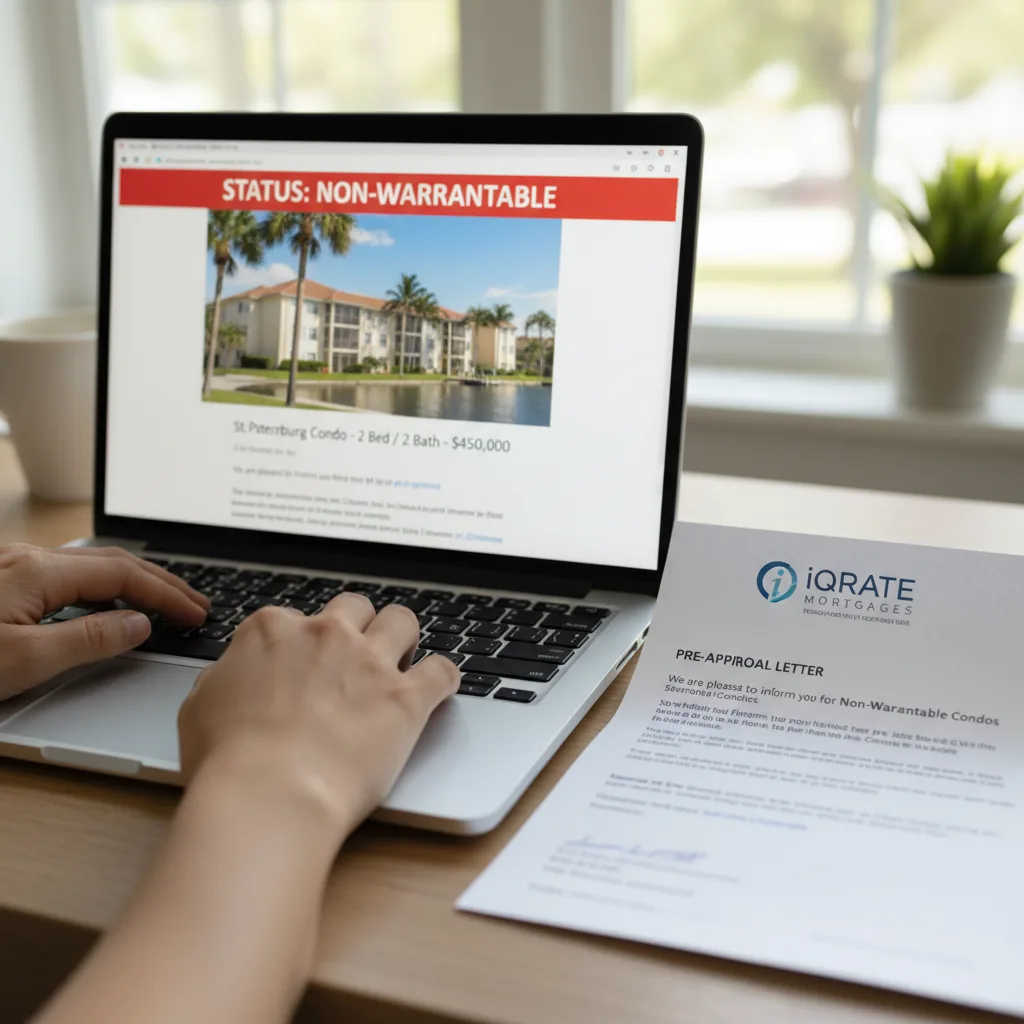
A portfolio lender might be willing to finance a condo with pending litigation if the borrower's financial profile is strong and the specifics of the lawsuit are deemed an acceptable risk. Be prepared for different terms, such as:
- Higher Down Payment: Typically a minimum of 20-25%. (The data, information, or policy mentioned here may vary over time.)
- Higher Interest Rate: The rate will be higher to compensate the lender for the increased risk. (The data, information, or policy mentioned here may vary over time.)
- Stricter Underwriting: The lender will do a deep dive into the nature of the lawsuit, the HOA's finances, and the potential outcomes.
The Role of the Condominium Questionnaire in Your Loan Approval
The condominium questionnaire is the linchpin of the condo approval process. This multi-page document is the lender's primary tool for conducting due diligence on the entire project, not just your individual unit. It asks for precise data on things like:
- The total number of units and the percentage of owner-occupants versus renters.
- Whether any single entity owns more than 10% of the units. (The data, information, or policy mentioned here may vary over time.)
- The amount of money held in the HOA's reserve fund.
- The adequacy of the HOA's insurance coverage.
- The status of any pending litigation.
A 'yes' answer to the litigation question triggers a manual review and, for conventional loans, almost certain rejection unless the lawsuit is of a very minor nature. For a portfolio lender, it’s the start of a deeper investigation.
Can a Larger Down Payment Secure an Approval?
This is a common question with a nuanced answer. For a conventional loan that must meet Fannie Mae or Freddie Mac standards, a larger down payment will not overcome the ineligibility caused by litigation. The project itself is deemed unacceptable, regardless of how financially strong the borrower is. You cannot get an FHA or VA loan in a non-approved project, and you can’t get a conventional loan in a non-warrantable one.
However, for a non-warrantable or portfolio loan, a larger down payment is often the key to getting an approval. By putting down 25%, 30%, or even 40%, you significantly reduce the lender's risk. This equity stake demonstrates your commitment and provides the lender with a substantial cushion against potential declines in the property's value.
Red Flags to Spot in HOA Documents
Before you even get to the lender's review, you can protect yourself by carefully analyzing the HOA documents. Look for these warning signs:
- Low Reserve Funds: An underfunded reserve account means the HOA cannot cover unexpected major repairs without levying a special assessment. A healthy reserve fund is a sign of good financial management.
- Vague Meeting Minutes: If minutes from HOA board meetings reference ongoing 'discussions with legal counsel' or 'structural engineering reports' without providing clear details, it could be a sign that a significant issue is being concealed or managed.
- History of Special Assessments: A pattern of frequent special assessments indicates that regular HOA dues are insufficient to cover the building's operating and maintenance costs, a sign of poor budgeting.
- High Delinquency Rate: The HOA budget should show the percentage of owners who are behind on their dues. A rate higher than 15% is a red flag for lenders, as it can strain the association's cash flow. (The data, information, or policy mentioned here may vary over time.) If you're facing a loan denial for a Tampa condo due to HOA litigation, don't give up. Specialized financing may be available. Contact a mortgage expert who understands the complexities of non-warrantable properties to explore your options and find a path to ownership.
If you've encountered a roadblock with a Tampa or St. Petersburg condo because of HOA issues, don't lose hope. Our team specializes in finding solutions for non-warrantable properties. To see what financing options are available for your situation, Apply now and let our experts guide you.
Author Bio
David Ghazaryan is the expert mortgage strategist and founder behind iQRATE Mortgages. With a mission to fund home loans that traditional banks won't touch, David specializes in helping clients with unique financial situations, including those recovering from foreclosure or bankruptcy. He expertly crafts smart, strategic, and stress-free mortgages by leveraging a vast network of over 100 lenders to secure competitive rates for investors and homebuyers alike. Praised for exceptional customer service, David has helped hundreds of families with a 97% satisfaction rate, guiding them to the mortgage they deserve.
References
Fannie Mae: Condo, Co-op, and PUD Eligibility
CFPB: What are homeowners' association (HOA) dues and condominium fees?









