
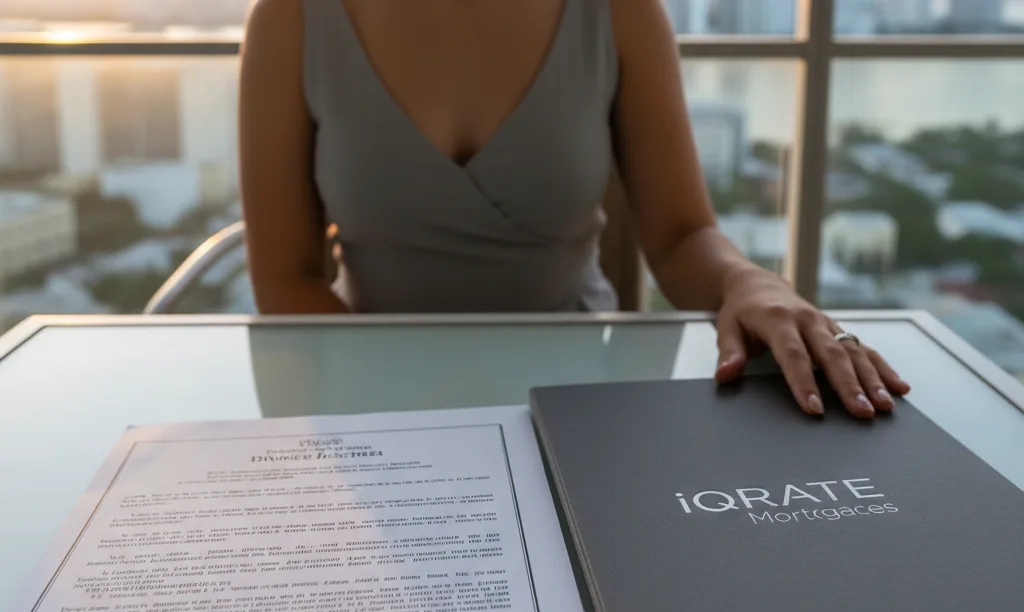

Why does a United States mortgage lender need to see my foreign divorce decree?
When you apply for a mortgage in the United States, the lender’s underwriter performs a deep financial analysis to assess risk. Your marital status is a critical piece of this puzzle because it directly impacts your legal and financial obligations. For a lender in Miami, a foreign divorce decree is not a procedural formality; it is a foundational document needed to verify several key details.
First and foremost, the decree legally establishes your status as 'single' or 'unmarried'. Without this proof, a lender cannot be certain that an ex-spouse does not have a claim to the property you intend to buy. This prevents future legal challenges that could jeopardize the lender's collateral—the house itself.
Second, the decree outlines any ongoing financial responsibilities. Mortgage lenders must calculate your 'debt-to-income ratio' (DTI), which compares your gross monthly income to your monthly debt payments. A foreign divorce decree will specify any court-ordered alimony (spousal support) or child support payments you are required to make. These payments are considered a recurring monthly debt and must be included in your DTI calculation.
- Example: Imagine you are buying a condo in Orlando and have a monthly income of $10,000. Your foreign divorce decree, issued in Brazil, stipulates that you must pay $2,000 per month in alimony. The U.S. lender will add that $2,000 to your other monthly debts (like car payments or credit card bills) to determine if your DTI falls within their acceptable limits, which is often capped around 43-50%. (The data, information, or policy mentioned here may vary over time.) Without viewing the official, translated decree, the lender would be working with incomplete data, leading to a likely loan denial during the final underwriting stage.
Finally, if you are receiving support payments, the decree is necessary to document this as a source of qualifying income. The lender needs to see the official terms to confirm the amount, frequency, and duration of the payments to ensure they meet guidelines for stable and reliable income.
What are the requirements for translating a legal document for a Miami mortgage?
Mortgage underwriters in the U.S. operate under strict compliance rules and cannot interpret documents in a foreign language. Therefore, any legal document not issued in English, such as a divorce decree, must be accompanied by a complete and certified English translation. The requirements are precise and non-negotiable.
The translation cannot be a summary or an approximation; it must be a 'literal', word-for-word translation of the entire original document. This includes translating every single component on the page:
- All text, including clauses, articles, and addendums.
- Any stamps, seals, or official markings from the foreign court or government body.
- Signatures and handwritten notes, with a note indicating they were present on the original.
- Dates, titles, and any other official information.
Crucially, you are not permitted to translate the document yourself, even if you are perfectly fluent in both languages. Lenders view this as a conflict of interest and will reject a self-translated document immediately. The translation must be performed by a disinterested, professional third party. Choosing a reputable translation service, particularly one experienced with legal and financial documents for U.S. institutions, is essential for a smooth process when applying for a mortgage in a competitive market like Miami.
Who is authorized to certify that my translated documents are accurate?
A translated document is only as good as its certification. A 'certified translation' for a U.S. mortgage application requires more than just the translated text. It must be accompanied by a signed statement from the translator or a representative of the translation company. This statement is often called a 'Certificate of Accuracy' or 'Translator's Affidavit'.
This certification must explicitly state that:
- The translation is a complete and accurate rendition of the original document.
- The translator is competent to translate from the original language into English.

This certificate must be printed on the official letterhead of the translation company and include the company's name, address, and contact information. The date of the translation and the signature of the responsible party are also required. This process adds a layer of accountability, assuring the mortgage underwriter that the document has been handled professionally and can be trusted as a reliable source of information.
It is important to distinguish this from a 'notarized translation'. While some services offer notarization, the core requirement for most mortgage lenders is the certification from the translator or translation agency. The certification speaks to the accuracy of the work, which is the underwriter's primary concern.
How do lenders in Orlando verify alimony or child support from another country?
Verifying financial obligations from another country requires clear and consistent documentation. For a lender in Orlando, the process for verifying alimony or child support outlined in a foreign decree involves two main steps: reviewing the legal document and substantiating the payment history.
Step 1: The Translated Divorce Decree The certified translation of your divorce decree is the primary source of information. The underwriter will look for specific language that details:
- The Amount: The exact amount of each payment (e.g., $1,500 USD or the equivalent in foreign currency).
- The Frequency: How often payments are due (e.g., monthly, bi-weekly).
- The Duration: When the payments are scheduled to end. This is critical. For example, child support may end when a child turns 18, or alimony may end after a specific number of years.
Step 2: Proof of Payment The lender needs to see that you have been consistently meeting this obligation. You will be required to provide documentation proving a stable payment history, typically for the most recent 6 to 12 months. Acceptable proof includes:
- Bank Statements: Copies of your bank statements showing the funds regularly leaving your account.
- Canceled Checks: If you pay by check, copies of the front and back of the canceled checks.
- Wire Transfer Receipts: Documentation for each international wire transfer made for the support payments.
If you are receiving support and want to use it as qualifying income for your mortgage, the requirements are even stricter. In addition to the translated decree, you must provide proof of consistent receipt for at least the past six months. (The data, information, or policy mentioned here may vary over time.) Furthermore, the lender must be able to determine that the payments are likely to continue for at least three years from the mortgage closing date. (The data, information, or policy mentioned here may vary over time.) If the decree states that the payments end in two years, the lender cannot count it as stable, qualifying income.
Will this documentation requirement delay my home loan closing timeline?
Yes, failing to prepare your foreign divorce decree documentation in advance can absolutely cause significant delays in your home loan closing timeline. The mortgage process operates on a strict schedule, and unexpected documentation issues are the most common reason for missing a closing date. In competitive Florida real estate markets like Orlando and Miami, a delay could even cause your purchase contract to be voided.

Here’s a breakdown of the potential delays:
- Finding a Reputable Translator: Researching and vetting a professional translation service takes time.
- Translation Turnaround: While some services are fast, a complex legal document can take several business days or even a week to translate and certify properly.
- Underwriter Review: The underwriter must review the original document, the translation, and the certification. If they find any discrepancies or if the certification is incomplete, they will issue a condition, and the file goes back into the queue. This can add days to the process.
- Corrections and Re-submissions: If the initial translation is rejected for any reason, you must have it corrected and resubmitted, restarting the review clock.
A typical 30-day closing can easily stretch to 45 or 60 days if these documents are not prepared correctly from the start. (The data, information, or policy mentioned here may vary over time.) This can be incredibly stressful and may come with financial penalties, such as rate lock extension fees. (The data, information, or policy mentioned here may vary over time.)
What happens if my ex-spouse is also a non-United States citizen?
The citizenship or residency status of your ex-spouse is generally not a primary factor for the U.S. mortgage lender. The underwriter's focus remains squarely on the legal and financial terms outlined in the divorce decree and your documented compliance with them.
Whether your ex-spouse lives in another country or is a non-U.S. citizen living locally, the core requirements are the same:
- The Decree Governs: The translated divorce decree is the controlling document.
- Proof of Payment is Key: You must provide clear evidence that you are making any required payments, regardless of where your ex-spouse banks or resides.
- Severance of Joint Debt: The decree should clearly state that all joint financial liabilities have been resolved. If you and your ex-spouse still have joint debts (e.g., a foreign mortgage or loan) that were not addressed in the decree, this could complicate your DTI calculation and loan approval.
The lender's main concern is ensuring that the financial obligation is stable, documented, and properly accounted for in your DTI ratio. The logistics of where the money is sent are secondary to the fact that it is being sent consistently as legally required.
Can I start this process before I find a home in Miami Beach?
Yes, and you absolutely should. Being proactive is the single best strategy for ensuring a smooth mortgage process when foreign legal documents are involved. You should get your divorce decree translated and certified before you even start your property search or apply for a mortgage pre-approval.
Taking this step early offers several powerful advantages:
- A Stronger Pre-Approval: When you provide the lender with the complete, translated, and certified decree upfront, they can issue a much more reliable and thoroughly vetted pre-approval. This shows sellers in competitive markets like Miami Beach that you are a serious and well-prepared buyer.
- No Underwriting Surprises: It eliminates the risk of the document causing a major issue halfway through the loan process. Any potential problems can be identified and resolved early on.
- Faster Closing Time: With the documentation already in hand and approved, the underwriting process will be significantly faster once you have an accepted purchase contract. You will be able to close on time without the stress of last-minute document requests.
Think of it as part of your initial financial preparation. Just as you gather your tax returns and bank statements, securing the certified translation of your foreign divorce decree is a critical preliminary step toward successfully purchasing your home in Florida.
Navigating a mortgage with international documents can be complex, but our team specializes in these scenarios to ensure a clear path to approval. If you're ready to purchase a home in Florida, start your journey with confidence. Apply now to partner with an expert who understands your unique situation.
Author Bio
David Ghazaryan is the expert mortgage strategist and founder behind iQRATE Mortgages. With a mission to fund home loans that traditional banks won't touch, David specializes in helping clients with unique financial situations, including those recovering from foreclosure or bankruptcy. He expertly crafts smart, strategic, and stress-free mortgages by leveraging a vast network of over 100 lenders to secure competitive rates for investors and homebuyers alike. Praised for exceptional customer service, David has helped hundreds of families with a 97% satisfaction rate, guiding them to the mortgage they deserve.
References
CFPB - Documents you need to apply for a mortgage
Fannie Mae - Alimony, Child Support, and Separate Maintenance









