


Who is Responsible for Paying for FHA-Mandated Repairs?
An FHA appraisal report citing 'mandatory repairs' can bring a smooth home purchase to a screeching halt. The first question that arises is always, 'Who pays for this?' The answer is simple but often unsatisfying: it's negotiable. There is no federal rule stating the seller must pay for FHA-required repairs. However, in practice, the seller is typically expected to cover the costs.
The FHA's goal is to ensure the home they are insuring meets minimum property standards for health, safety, and structural soundness. If the property fails, it’s because it doesn't meet these basic livability standards. The seller is trying to sell a property that, in the FHA's view, isn't in a condition to be insured. This gives the buyer significant leverage.
Here’s how the responsibility usually breaks down:
- Seller Pays: This is the most common outcome. The seller agrees to complete and pay for all repairs before the closing date to ensure the sale proceeds.
- Buyer Pays: In a competitive market, a buyer might agree to cover the repair costs to make their offer more attractive or to save a deal they are passionate about. This is less common but a valid option.
- Split Costs: Both parties agree to share the financial burden. This can be a good compromise if both the buyer and seller are motivated to close the deal.
- Seller Credits: The seller provides a credit to the buyer at closing to cover the cost of repairs. The lender must approve this, and the repairs must still be completed. An escrow holdback is often used in this scenario.
Ultimately, the responsibility is determined by the negotiation that follows the appraisal report. It's a matter of who is more motivated to keep the transaction alive.
What Are Your Options if the Seller Refuses Repairs?
If you're buying a home and the seller flatly refuses to make or pay for the FHA-mandated repairs, don't panic. You have several strategic options to keep your homeownership dream on track. The path you choose depends on your financial situation, the extent of the repairs, and your willingness to negotiate.
Pay for the Repairs Yourself: If the repairs are minor and you have the available cash, you can offer to pay for them. This can be the fastest way to resolve the issue, but it means a higher out-of-pocket expense. Your lender will require proof that the work was completed by a qualified professional before closing.
Negotiate a Lower Sale Price: You can ask the seller to lower the purchase price by the estimated cost of the repairs. For example, if the home is appraised at $310,000 but needs $7,000 in repairs, you could renegotiate the price to $303,000. You would then be responsible for the repairs after closing. The challenge here is that you need cash on hand to complete the work immediately after you take possession. This option isn't always viable for last-minute FHA repairs, as the FHA requires the property to meet standards before the loan closes, unless a specific program is used.
Utilize an Escrow Holdback: This is a powerful tool where a portion of the seller's proceeds is held in an escrow account at closing to cover the cost of repairs. This ensures the funds are available and allows the work to be completed after closing. We'll detail this further down.
Walk Away From the Deal: Your purchase agreement should include an appraisal contingency and a financing contingency. If the property doesn't appraise correctly due to required repairs and you cannot reach an agreement with the seller, these contingencies allow you to cancel the contract and get your earnest money deposit back. While this is a last resort, it protects you from being forced into a bad deal.
Can You Finance FHA Repairs into Your Mortgage?
Yes, financing the cost of repairs directly into your home loan is an excellent solution, especially when cash is tight. The primary vehicle for this is the FHA 203(k) Rehabilitation Mortgage. This program allows you to borrow money for both the purchase of a home and the cost of the necessary repairs or renovations in a single loan.
There are two main types of FHA 203(k) loans:
The FHA 203(k) Limited Loan
The Limited 203(k), sometimes called the 'streamline' 203(k), is designed for homes that need minor, non-structural repairs. It allows you to finance up to $35,000 for improvements. (The data, information, or policy mentioned here may vary over time.)
- Eligible Repairs: This includes things like repairing or replacing roofs, gutters, HVAC systems, plumbing, electrical systems, flooring, and painting. It's perfect for fixing the common issues an FHA appraiser flags.
- Process: The process is less complex than the Standard 203(k). You'll need bids from contractors, and the funds are typically disbursed in two phases: half at closing and the other half upon completion of the work.
The FHA 203(k) Standard Loan
The Standard 203(k) is for properties requiring more extensive work, including structural repairs. The minimum repair cost is $5,000, and there is no maximum beyond the FHA mortgage limits for the area.
- Eligible Repairs: This covers major projects like moving walls, repairing foundations, or adding rooms—anything that would be flagged on an FHA appraisal.
- Process: This loan is more complex and requires you to hire a HUD-approved 203(k) consultant. The consultant inspects the property, prepares a detailed work write-up, and oversees the repair process. Funds are placed in an escrow account and released to the contractor as work is completed and inspected.
Switching to a 203(k) loan mid-process can cause delays, as it requires new paperwork and coordination. However, if the seller won't pay and you lack the cash, it's often the best way to save the purchase.
How an Escrow Holdback Saves Your Closing
An escrow holdback is a formal agreement that allows your loan to close before all FHA-mandated repairs are finished. It's a common-sense solution when factors like weather, contractor availability, or scheduling conflicts make pre-closing repairs impossible.
Here’s how it works step-by-step:
- Get Contractor Bids: You must obtain written bids from qualified, licensed contractors for the exact repairs cited by the FHA appraiser. Lenders typically require at least two bids.
- Determine the Holdback Amount: The lender will require a holdback amount larger than the actual repair cost to create a buffer. The standard is usually 1.5 times the highest bid. So, if the repairs cost $6,000, the lender will require a $9,000 holdback ($6,000 x 1.5). (The data, information, or policy mentioned here may vary over time.)
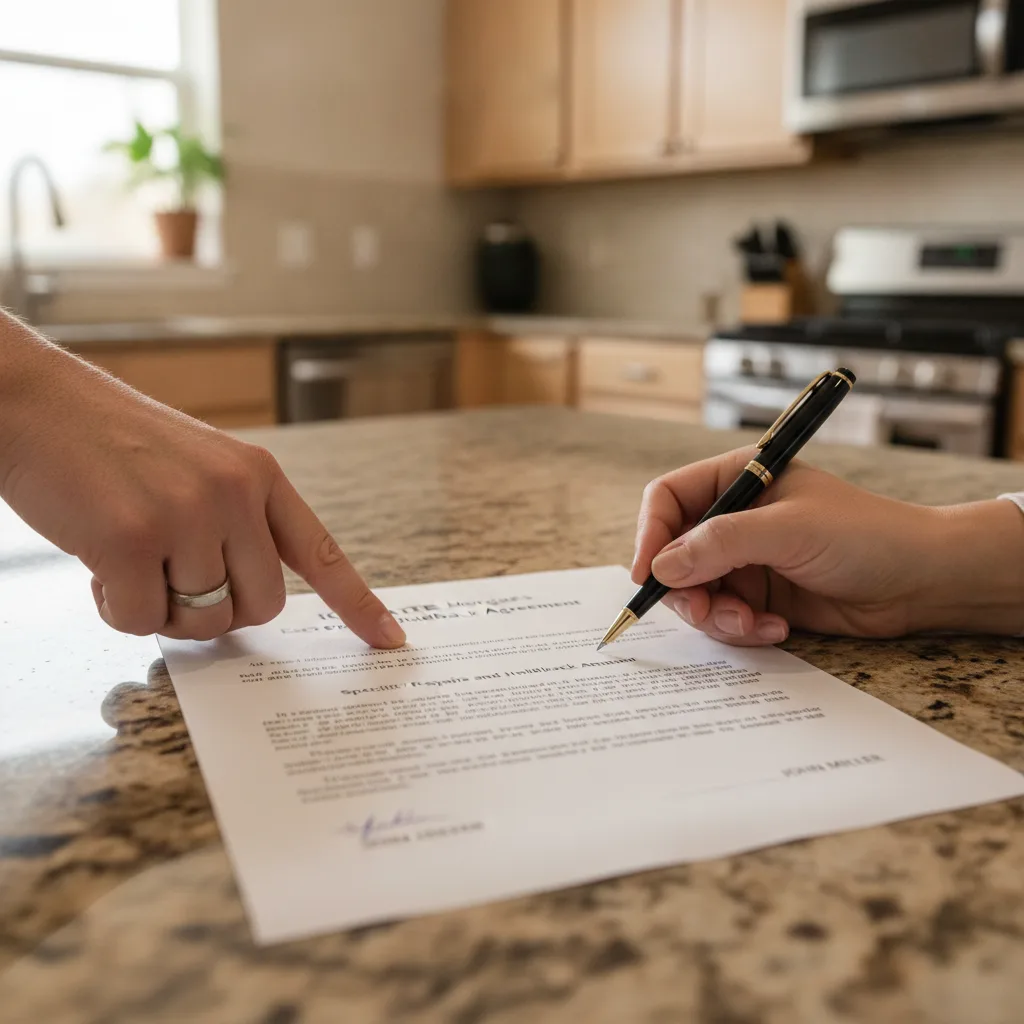
- Sign the Holdback Agreement: You, the seller, and the lender will all sign a formal escrow holdback agreement. This legal document outlines the specific repairs to be done, the timeline for completion (usually 30-60 days after closing), and the holdback amount.
- Funding at Closing: At the closing table, the specified holdback amount is withheld from the seller's proceeds and placed into a third-party escrow account.
- Post-Closing Repairs: After you officially own the home, the contractor completes the work within the agreed-upon timeframe.
- Final Inspection and Disbursement: A final inspection is conducted to verify the work meets FHA standards. Once approved, the funds are released from escrow to pay the contractor, and any remaining money is given to the seller.
This mechanism protects the lender’s investment, ensures you get a safe and sound home, and allows the seller to complete the sale without fronting cash for repairs.
The Steps to Formally Renegotiate Your Purchase Contract
Once the FHA appraisal comes back with required repairs, your original purchase agreement needs to be officially amended. You cannot rely on verbal agreements. All changes must be in writing to be legally binding.
- Step 1: Immediate Communication: Your real estate agent should immediately contact the seller's agent to inform them of the appraisal findings. Provide them with a copy of the FHA appraisal report detailing the required repairs.
- Step 2: Get Repair Bids: Quickly obtain detailed quotes from licensed contractors. This documentation is crucial for negotiation; it replaces abstract problems with concrete costs.
- Step 3: Draft a Contract Addendum: Your agent will draft an addendum to the purchase agreement. This document will clearly state the new terms. It could specify that the seller will complete and pay for certain repairs before closing, or it might detail the terms of an escrow holdback.
- Step 4: Negotiate the Terms: The seller may accept your terms, reject them, or make a counter-offer. This back-and-forth is a critical negotiation phase where having a skilled agent is invaluable.
- Step 5: Sign the Addendum: Once both parties agree on the solution, everyone signs the addendum. This legally modifies the original contract.
- Step 6: Submit to the Lender: The signed addendum must be sent to your mortgage lender immediately. The lender needs it to update the loan file and ensure the new terms comply with their guidelines before issuing a 'clear to close'.
What if Repairs Can't Be Completed Before Closing?
This is precisely the scenario where an escrow holdback becomes the hero of the transaction. If the roofer can't start for three weeks or a required part is on backorder, you don't have to terminate the contract. The escrow holdback agreement allows the closing to proceed on schedule while providing a secure, guaranteed source of funds for the work to be completed shortly after.
Communication with your lender is critical. You must inform them as soon as you know repairs won't be done by the closing date. They will guide you on their specific requirements for initiating a holdback. Without this formal arrangement, the lender will not fund the loan, and the closing will be delayed or canceled.
Is Switching to a Different Loan Program an Option?
Switching from an FHA loan to a conventional loan at the last minute is possible but challenging. Conventional loans have their own property standards, but they can sometimes be more flexible than the FHA's strict health and safety requirements. For example, a conventional appraisal might note a peeling paint issue but not require it to be fixed before closing.
However, consider these hurdles:
- Re-Underwriting: Your entire loan file must be re-submitted and re-underwritten for the new program, which takes time and can delay closing.
- Credit and Down Payment: Conventional loans typically have stricter credit score and higher down payment requirements than FHA loans.
- New Appraisal: In most cases, a new appraisal will be required for the conventional loan, which costs money and adds more time to the process.
Renovation loan products in the conventional space, like the Fannie Mae HomeStyle or Freddie Mac CHOICERenovation loan, are also options. Like the FHA 203(k), they allow you to finance repairs, but they come with their own set of guidelines and will also require a restart of the underwriting process.
Protecting Your Earnest Money Deposit During Repair Disputes
Your earnest money deposit is protected by key clauses in your residential purchase contract, specifically the financing contingency and the appraisal contingency.
- Appraisal Contingency: This clause allows you to back out of the contract if the property does not appraise for the agreed-upon sale price. If FHA-mandated repairs are the reason for the appraisal issues and you can't reach a solution with the seller, this contingency allows you to cancel the contract and have your earnest money returned.
- Financing Contingency: This clause protects you if you are unable to secure a mortgage. Since the FHA will not insure the loan until the property meets minimum standards, an unresolved repair issue effectively means you cannot get financing. This contingency would allow you to terminate the agreement and recover your deposit.
To use these protections, you must adhere to the deadlines specified in your contract. Pay close attention to your contingency periods and communicate with your agent and lender to ensure you are formally notifying the seller within the correct timeframe if you decide to cancel the contract.
Navigating FHA repair requirements under a tight deadline can be stressful. If you're facing this challenge, having an expert on your side is crucial. A knowledgeable mortgage advisor can explain your options, from negotiating with the seller to structuring an escrow holdback, ensuring you make the best decision to save your home purchase. When you're ready to move forward, Apply now for expert guidance.
Author Bio
David Ghazaryan is the expert mortgage strategist and founder behind iQRATE Mortgages. With a mission to fund home loans that traditional banks won't touch, David specializes in helping clients with unique financial situations, including those recovering from foreclosure or bankruptcy. He expertly crafts smart, strategic, and stress-free mortgages by leveraging a vast network of over 100 lenders to secure competitive rates for investors and homebuyers alike. Praised for exceptional customer service, David has helped hundreds of families with a 97% satisfaction rate, guiding them to the mortgage they deserve.
References
HUD FHA 203(k) Rehabilitation Mortgages









