


What is a Listing Financeability Audit?
A Listing Financeability Audit is a preemptive investigation into a property's eligibility for financing before it is listed for sale. Unlike a buyer's underwriting process, which focuses on the borrower's credit and income, this audit scrutinizes the property itself. It's a crucial due diligence step for listing agents to identify and address potential red flags that could derail a transaction deep into escrow.
The goal is to answer one critical question: Can a typical buyer get a loan for this specific property? By examining the property against the strict guidelines of FHA, VA, Jumbo, and even DSCR loan programs, you uncover issues that a simple visual inspection would miss. This proactive approach transforms you from a sales agent into a strategic advisor, safeguarding your client’s interests and your own commission.
Why a Buyer’s Pre-Approval Isn’t Enough in San Diego
In competitive markets like San Diego and La Jolla, agents often rely on a buyer’s pre-approval letter as proof of their ability to purchase. However, this document only confirms the buyer's financial capacity; it says nothing about the property they intend to buy. A buyer could be pre-approved for $2 million, but if the La Jolla townhouse they love is in an HOA with pending litigation, their lender will likely deny the loan, regardless of the buyer's stellar qualifications.
This gap between borrower qualification and property eligibility is where deals collapse. An agent can spend weeks or months marketing a property, accepting an offer, and entering escrow, only to have the financing fall through at the last minute because of a property-specific issue. This wastes time, drains marketing budgets, and damages your professional reputation. A financeability audit closes this gap by vetting the asset itself, ensuring the property is as ready for a loan as the buyer is.
The Four Pillars of Financeability: Key Loan Types to Audit
Auditing a property requires looking at it through the lens of different lenders and their specific programs. Each loan type has a unique set of rules that can make or break a deal.

FHA Loan Eligibility Audit
Federal Housing Administration (FHA) loans are popular with first-time homebuyers due to their low down payment requirements. However, the FHA has strict Minimum Property Requirements (MPRs) to ensure the home is safe, secure, and sound. An FHA appraiser acts as the eyes of the lender, and they will flag any deficiencies.
Common FHA Red Flags:
- Peeling or Chipping Paint: In homes built before 1978, this is a lead-based paint hazard that must be remediated.
- Unpermitted Additions: An unpermitted ADU or bedroom addition in a San Diego home will halt an FHA loan. The space must be permitted or, in some cases, brought to code.
- Safety and Structural Issues: This includes faulty electrical wiring, evidence of active roof leaks, broken windows, or staircases without handrails.
- Proximity to Hazards: Properties located too close to high-voltage power lines or high-pressure gas pipelines may be ineligible.
VA Loan Eligibility Audit
Backed by the Department of Veterans Affairs, VA loans are a fantastic benefit for service members and veterans. Like FHA loans, they also use a set of MPRs to protect borrowers. The core standard is that the property must be 'safe, sound, and sanitary.'
Common VA Red Flags:
- Condominium Approval: The entire condo complex must be on the VA-approved list. If a downtown San Diego condo project has let its VA approval lapse, no veteran can buy a unit there with a VA loan until the complex is recertified.
- Clear Pest/Termite Report: In many California regions, a 'Section 1' clearance is required, meaning any active infestation or damage from wood-destroying pests must be repaired. (The data, information, or policy mentioned here may vary over time.)
- Adequate Living Space: The property must have sufficient space for living, sleeping, cooking, and sanitation. Unique properties with unconventional layouts may not qualify.
Jumbo Loan Eligibility Audit
Jumbo loans exceed the conforming loan limits set by the FHFA, and they are common for financing homes in high-cost areas like La Jolla. Since these loans aren't backed by government agencies, lenders create their own stringent property guidelines, often called 'overlays.'
Common Jumbo Red Flags:
- Non-Warrantable Condos: Jumbo lenders are particularly wary of condos with high investor concentration (too many renters), a single entity owning more than 10% of the units, or insufficient reserve funds in the HOA budget.
- Deferred Maintenance: A luxury property with significant deferred maintenance, such as an aging roof or a failing HVAC system, may be deemed too risky by a jumbo lender.
- Litigation: Any active lawsuit involving the property or the HOA is often an immediate deal-killer for jumbo financing.
DSCR Loan Eligibility Audit (For Investment Properties)
Debt Service Coverage Ratio (DSCR) loans are used for investment properties and qualify based on the property's rental income rather than the borrower's personal income. The audit here focuses entirely on the asset's ability to generate cash flow.
Common DSCR Red Flags:
- Market Rents vs. In-Place Rents: If the current tenants are paying significantly below-market rent, the property's DSCR might be too low to qualify. Lenders want to see that the rental income can cover the mortgage payment, taxes, insurance, and HOA dues, with a buffer.
- Property Condition: A property needing significant repairs may not be considered 'rent-ready', impacting its cash flow potential and making it ineligible for a DSCR loan.
- Zoning Issues: A property being used as a multi-unit rental must be properly zoned. A single-family home in San Diego illegally converted into a duplex would not qualify for a DSCR loan.
Uncovering Deal-Killers: Common Red Flags in a California Audit
Beyond loan-specific rules, several overarching issues can sabotage any transaction. A thorough audit focuses on identifying these early.
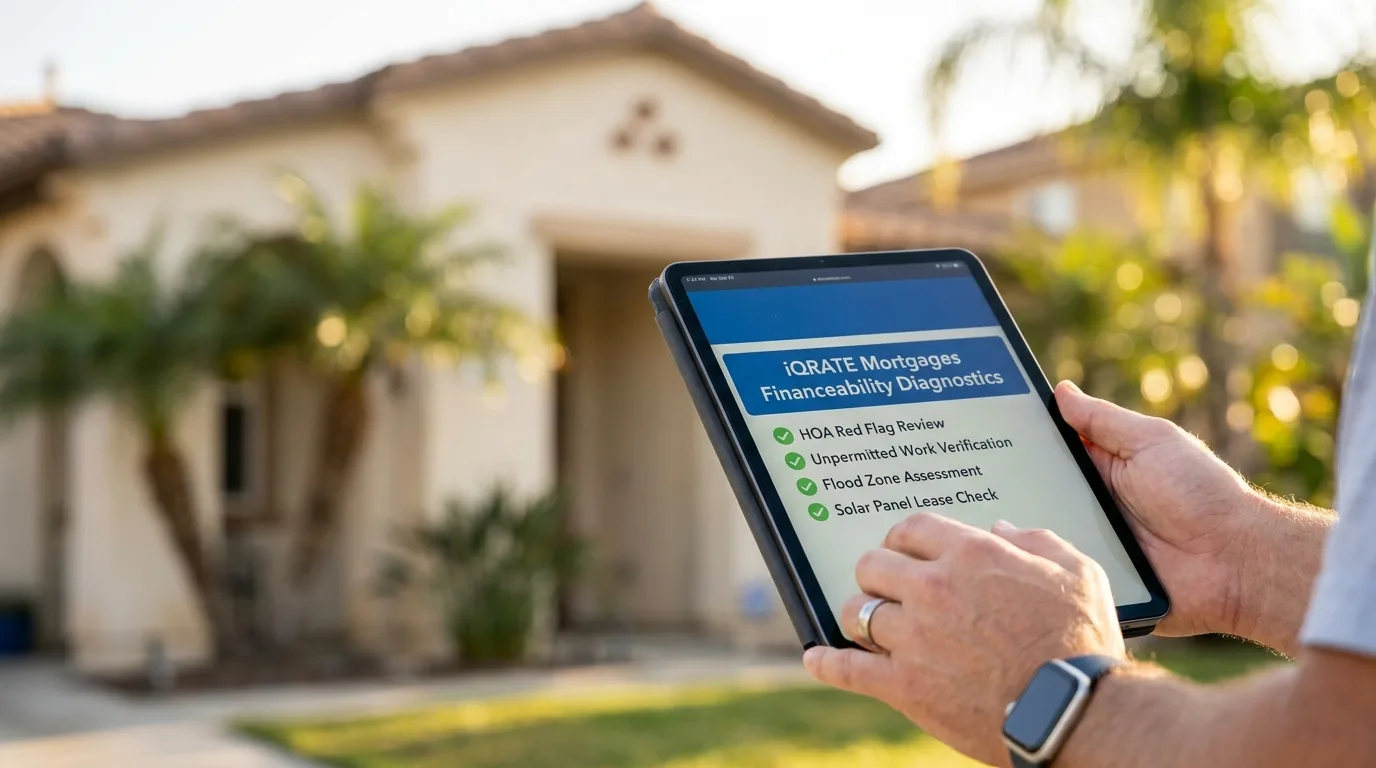
The Unpermitted Work Dilemma
Unpermitted work is one of the most common and damaging financing hurdles in California. A seller may have added a bathroom or enclosed a patio without securing the necessary city permits. While the space may be functional, a lender sees it as a liability.
- Appraisal Problems: An appraiser cannot include unpermitted square footage in the official valuation. If a 1,500-square-foot home has a 300-square-foot unpermitted addition, the appraiser will value it as a 1,200-square-foot home, potentially creating a significant appraisal gap.
- Safety and Liability: Lenders refuse to finance properties with known safety hazards or potential legal issues. Unpermitted work represents both.
- How to Check: Before listing, you can use the City of San Diego's public records portal to search for permits associated with the property address. Discrepancies between the records and the physical property are a major red flag.
Navigating HOA Minefields
A poorly managed Homeowners Association (HOA) can render an entire condo complex 'non-warrantable,' severely limiting the buyer pool to cash-only or specialized portfolio loans. An audit requires a deep dive into the HOA's health.
Key Areas to Investigate:
- Budget and Reserves: Does the HOA have adequate funds for routine maintenance and unexpected capital expenditures? Lenders want to see at least 10% of the annual budget allocated to reserves.
- Delinquency Rate: If more than 15% of homeowners are behind on their dues, most lenders will not finance a unit in the complex.
- Litigation: Active or pending lawsuits against the HOA or the developer are a near-certain financing denial.
- Investor Concentration: If more than 50% of the units are non-owner occupied (rentals), the project may be considered non-warrantable.
The Strategic Benefits of a Pre-Listing Audit for Your Business
Investing time in a financeability audit before listing pays significant dividends.
Set Accurate Expectations and Pricing
If your audit reveals a property can only be sold to a cash buyer or with a conventional loan, you can price it accordingly and prepare your seller for a more limited market. This prevents the frustration of accepting a high FHA offer only to have it fail weeks later.
Target the Right Buyer Pool
Knowledge is power in marketing. Instead of a broad approach, you can tailor your listing and outreach. A listing for a non-warrantable condo in San Diego should be marketed directly to investors and cash buyers. A home with minor FHA-flagged issues can be marketed with a note that 'seller will perform repairs for FHA financing,' attracting the right audience from the start.
Protect Your Commission and Reputation
Every deal that falls out of escrow costs you time and money. Worse, it damages your relationship with the seller and your reputation in the industry. By identifying and solving financing issues upfront, you ensure a smoother, more predictable path to closing. This leads to secure commissions, satisfied clients, and a stronger referral business. Before your next San Diego listing goes live, partner with a mortgage strategist who can diagnose financeability issues upfront. A proactive audit protects your time, your client’s equity, and your commission, leading to smoother closings and happier clients.
Ready to ensure your next transaction goes smoothly? Whether you're listing a property or looking to buy, understanding the financing landscape is key. Apply for a Mortgage to get expert guidance and a clear path forward.
Author Bio
David Ghazaryan is the expert mortgage strategist and founder behind iQRATE Mortgages. With a mission to fund home loans that traditional banks won't touch, David specializes in helping clients with unique financial situations, including those recovering from foreclosure or bankruptcy. He expertly crafts smart, strategic, and stress-free mortgages by leveraging a vast network of over 100 lenders to secure competitive rates for investors and homebuyers alike. Praised for exceptional customer service, David has helped hundreds of families with a 97% satisfaction rate, guiding them to the mortgage they deserve.
References









