


What Does It Mean When My Mortgage Rate Is Locked?
A mortgage rate lock is a formal agreement between you and your lender that guarantees a specific interest rate for a defined period, typically 30, 45, or 60 days. (The data, information, or policy mentioned here may vary over time.) Think of it as an insurance policy against rising interest rates. Once you are under contract for a home in a competitive market like San Diego, locking your rate removes the uncertainty of market fluctuations while your loan application goes through underwriting and processing.
Your rate lock agreement will specify three key components:
- The Interest Rate: The exact rate you will pay on the loan.
- Lender Credits or Discount Points: Whether you are paying extra (points) to lower your rate or receiving a credit from the lender to offset closing costs.
- The Lock Period: The number of days the rate is guaranteed. If your loan doesn't close within this window, you risk losing the locked rate.
Locking your rate provides peace of mind. You know exactly what your monthly principal and interest payment will be, which is crucial for budgeting your finances for a home purchase in a high-cost area like Los Angeles.

Can a Lender Legally Change My Rate After It Is Locked?
Generally, no. A rate lock agreement is a binding commitment. Your lender cannot arbitrarily increase your rate just because the market went up. The entire purpose of the lock is to protect you from that exact scenario. However, there are specific situations where your locked rate can legally change, and they all relate to changes in your application profile. These instances include:
- Change in Credit Score: If your credit score drops significantly before closing, the lender may adjust your rate because your risk profile has changed.
- Change in Loan Program or Terms: Switching from a 30-year fixed loan to a 15-year fixed loan or changing your down payment amount can trigger a rate change.
- Appraisal Issues: If the home appraises for less than the purchase price, it changes the loan-to-value (LTV) ratio. This adjustment can impact your final interest rate.
- Inaccurate Application Information: If the lender discovers discrepancies in the income or asset information you provided, they are permitted to re-evaluate and re-price your loan.
Critically, the lender cannot change the rate due to their own processing delays or general market volatility. The protection is solid, assuming your financial details remain consistent.
What Is a Mortgage Rate Float-Down Option?
A mortgage rate float-down option is a special provision in your rate lock agreement that allows you to take advantage of falling interest rates. It's a feature that lets you 'float down' to a new, lower market rate without having to cancel your existing application and start over.
This option is not standard on every rate lock; it's a specific product that you often must request and sometimes pay for upfront. It acts as a safety net. While the standard rate lock protects you from rates going up, the float-down option gives you the flexibility to benefit if rates go down. It's the best-of-both-worlds scenario for borrowers who are anxious about market timing.
How Do I Ask for a Float-Down on My San Diego Loan?
Discovering that rates have dropped after you’ve locked for your dream home in San Diego is disheartening, but you need to act quickly and strategically. Here are the precise steps to take.
Start by Reviewing Your Rate Lock Agreement
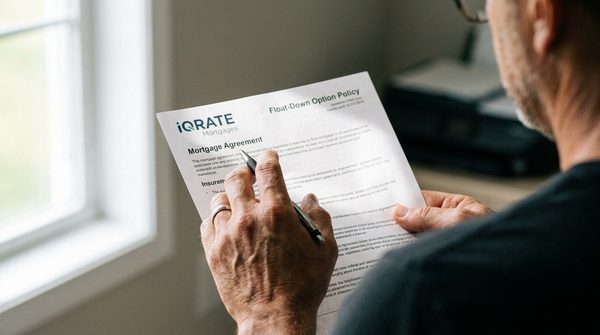
First, locate the rate lock confirmation document your lender sent you. This is usually a PDF you signed electronically. Read it carefully. You are looking for specific language like 'float-down provision', 'rate renegotiation', or 'one-time rate adjustment'. If the agreement explicitly includes this option, it will detail the terms and conditions for exercising it. If you don't see it, a float-down was likely not included.
Reach Out to Your Loan Officer
Time is of the essence. Call or email your loan officer right away. Be polite but direct. You can say something like, 'I’ve noticed that market interest rates have improved significantly since I locked my rate at 6.75%. I would like to formally request to exercise the float-down option on my loan for the property at 123 Main Street in San Diego. What are the specific steps and documentation required to proceed?'
Know the Lender's Float-Down Rules
Every lender's float-down policy is different. Most will have strict rules, such as:
- Trigger Point: The market rate must drop by a minimum amount, often 0.25% or more, before you can request a float-down. (The data, information, or policy mentioned here may vary over time.)
- Timing Window: You can typically only exercise the option within a specific timeframe, such as between 15 and 45 days after the initial lock and no later than 10 days before your scheduled closing.
- One-Time Use: Most float-down options can only be used once. If you use it and rates drop even further, you cannot adjust again.
Are There Fees Involved in Changing My Locked Rate in Los Angeles?
Yes, almost always. Lenders offer float-down options as a form of insurance, and insurance comes at a cost. Securing a lower rate on a home in Los Angeles is valuable, but you need to weigh the fee against the long-term savings. The fees are typically structured in one of two ways:
- Upfront Fee: Some lenders charge a fee at the time of the initial rate lock to add the float-down provision. This might be a flat amount (e.g., $400 - $800) or a percentage of the loan amount (e.g., 0.25%). (The data, information, or policy mentioned here may vary over time.) You pay this fee whether you use the option or not.
- Activation Fee: More commonly, a fee is charged only when you exercise the float-down. This fee is often around 0.50% of the total loan amount. (The data, information, or policy mentioned here may vary over time.)
Example Calculation: Let's say you have a $800,000 mortgage for a home in Los Angeles. Your lender’s policy requires a 0.50% fee to exercise the float-down. That fee would be $4,000. If rates dropped by 0.375%, your monthly payment would decrease by approximately $180. In this scenario, the $4,000 fee would pay for itself in about 22 months. Over the life of a 30-year loan, the savings would be substantial, making the fee a worthwhile investment.
What Market Change Is Needed to Justify a Rate Change?
Lenders will not renegotiate a rate for a minor dip. They require a significant and sustained market drop to trigger a float-down provision. The industry standard threshold is a drop of at least 0.25% (25 basis points). (The data, information, or policy mentioned here may vary over time.) Some lenders may require an even larger drop, such as 0.375% or 0.50%.
It’s important to understand that the lender will use their own daily rate sheet as the benchmark, not an advertised rate you see online from a competitor. Your loan officer can confirm what their current pricing is for a loan with your exact profile. You, the borrower, must be proactive and monitor the rates. Your lender will not call you to offer a lower rate; the responsibility to initiate the request falls entirely on you.
Should I Have Waited Longer Before Locking My Rate?
It's easy to second-guess your decision. However, trying to perfectly time the bottom of the interest rate market is impossible. The primary goal of a rate lock is to eliminate risk and provide certainty. By locking your rate, you successfully protected yourself from the possibility of rates increasing, which could have made your monthly payment unaffordable.
Remember, you made the best decision you could with the information available at the time. A rate lock secures an affordable payment and allows you to move forward with your home purchase. If a float-down option allows you to improve upon that, it's a bonus, not a correction of a mistake.
How Can I Protect Myself from Rate Drops in Riverside?
Being proactive is the best strategy, especially when buying in a fast-paced market like Riverside. Before you even commit to a lender, you should be asking questions to protect yourself from rate-drop regret.
Inquire About Float-Down Options Early
When you are interviewing potential lenders for your Riverside home loan, make this one of your key questions: 'Do you offer a float-down option on your rate locks? If so, what is the cost, what is the minimum rate drop required to trigger it, and what is the process?' A lender's willingness and ability to offer this flexibility can be a major deciding factor.
Explore 'Lock and Shop' Programs
Some lenders offer innovative 'Lock and Shop' programs. These allow you to lock in an interest rate for an extended period (e.g., 90 days) before you even have a property under contract. (The data, information, or policy mentioned here may vary over time.) This is incredibly powerful in markets like Riverside or San Diego, as it protects you from rising rates while you search for the right home. Many of these programs automatically include a one-time float-down option if rates improve before you close.
Partner With a Mortgage Broker
A mortgage broker who works with dozens of different lenders may have more options and flexibility than a single retail bank. They understand the nuances of various lenders' policies and can often place you with a lender whose float-down policies are more favorable to the borrower. This inside knowledge can be invaluable in a volatile rate environment. Navigating rate locks and float-down provisions requires a clear strategy. If you're unsure about your lender's policies or want to ensure you have the most flexibility for your home purchase, consult with an independent mortgage expert. They can help you compare lender options and advocate on your behalf to secure the best possible terms.
Navigating the complexities of rate locks and float-down provisions is key to a successful home purchase. When you're ready to move forward with a team that provides clarity and tailored advice, take the next step and Apply for a Mortgage.
Author Bio
David Ghazaryan is the expert mortgage strategist and founder behind iQRATE Mortgages. With a mission to fund home loans that traditional banks won't touch, David specializes in helping clients with unique financial situations, including those recovering from foreclosure or bankruptcy. He expertly crafts smart, strategic, and stress-free mortgages by leveraging a vast network of over 100 lenders to secure competitive rates for investors and homebuyers alike. Praised for exceptional customer service, David has helped hundreds of families with a 97% satisfaction rate, guiding them to the mortgage they deserve.
References
Consumer Financial Protection Bureau - What is a mortgage rate lock?









