


Why Lenders Consider Commingled Funds a Major Red Flag
For a self-employed homebuyer in California, a single bank account for both business and personal transactions is one of the fastest routes to a mortgage denial. Lenders and their underwriters view commingled funds as a significant red flag because it makes their primary job nearly impossible: accurately verifying your stable, usable income. When business revenue, client payments, equipment costs, payroll, and personal expenses like groceries and rent are all mixed, the underwriter cannot easily determine your true net income. They are left guessing which deposits are revenue and which are transfers, and what portion of the balance is available for a down payment versus what's needed for business operations.
This ambiguity creates unacceptable risk. Underwriters work with strict guidelines set by entities like Fannie Mae and Freddie Mac. They must be able to draw a clear line from your business's profitability to your personal ability to afford the mortgage payment. A messy bank statement full of indecipherable transactions forces them to make conservative, and often negative, assumptions about your financial health. They cannot approve a loan based on guesswork. Separating your funds isn't just a suggestion; it’s a fundamental requirement to present a clean, professional, and approvable financial picture.
The Underwriter's Perspective
An underwriter's goal is to validate two key things: your ability to repay the loan and the legitimacy of your down payment funds. Commingled accounts obscure both.
- Income Calculation: They need to see a consistent and predictable income stream. If you deposit a $10,000 client check and then immediately spend $7,000 on business inventory from the same account, they don't see $10,000 in income. They see a chaotic cash flow that is difficult to annualize.
- Down Payment Sourcing: Your down payment and closing costs must come from legitimate, documented sources. A large balance in a commingled account is suspect. How much of that is truly yours versus money earmarked for taxes, vendor payments, or other business liabilities? Without clear separation, the funds are not considered reliable.
The First Step: Separating Business and Personal Accounts in Los Angeles
The foundational step to cleaning up your finances for a mortgage is straightforward: open separate bank accounts. This is a non-negotiable first move, and you should do it long before you start viewing homes in Los Angeles or Anaheim. The process is simple but critical.
Open a Dedicated Business Checking Account: All gross revenue from your business activities must be deposited directly into this account. This includes client payments, sales income, and any other business-related earnings. All business expenses, such as software subscriptions, office supplies, contractor payments, and inventory, must be paid from this account.
Open a Separate Personal Checking Account: This account is for your personal life. All household bills, groceries, mortgage payments, car payments, and personal savings should flow through this account. The only deposits into this account should be your regular, documented 'owner's draw' or salary from your business account.
This clean separation creates an easy-to-follow paper trail that underwriters can quickly understand and verify. It immediately transforms your financial profile from risky and chaotic to organized and stable.

Seasoning Your Down Payment Funds
'Seasoning' is a term lenders use to describe the period of time your down payment funds must sit in your personal bank account before they can be used for a home purchase. The standard requirement is a minimum of 60 days, which covers two full bank statement cycles. (The data, information, or policy mentioned here may vary over time.) The purpose of seasoning is to ensure the funds are legitimately yours and not from an un-disclosed loan or a source that would add to your debt-to-income ratio.
For self-employed borrowers, this means you must transfer the money for your down payment and closing costs from your business account to your personal account and let it sit there, untouched, for at least two months. For example, if you plan to apply for a mortgage on June 1st, the funds should be in your personal account no later than April 1st. Your April and May bank statements will then show the funds resting in the account, satisfying the underwriter.
A large, recent deposit that appears just before a mortgage application is a massive red flag. Seasoning your funds demonstrates financial planning and stability, proving the money is yours to use.
Paying Yourself Correctly from Business to Personal Accounts
How you move money from your business to your personal account is just as important as having separate accounts. Random, sporadic transfers of varying amounts look erratic to an underwriter. You need to establish a consistent and logical method of paying yourself.
There are two primary methods:
- Owner's Draw: This is common for sole proprietors and single-member LLCs. You pay yourself by transferring a set amount of money from your business account to your personal account on a regular schedule (e.g., the 1st and 15th of every month). Consistency is key. A history of paying yourself $5,000 twice a month looks much better than random transfers of $3,000, then $11,000, then $4,500.
- W-2 Salary: If your business is structured as an S-Corp or C-Corp, you are likely paying yourself a formal salary through a payroll service. This is the cleanest method, as it generates regular pay stubs and W-2 forms, which are the gold standard for income verification.
Imagine you're a freelance marketing consultant in Anaheim. Instead of transferring money whenever you need it, you should set up a recurring transfer of $4,000 every two weeks from your business checking to your personal checking. This creates a predictable $8,000 monthly income that an underwriter can easily use for qualification calculations.
Essential Documents for Underwriting Verification
Once your funds are separated and seasoned, the underwriter will ask for a specific set of documents to verify everything. Having these ready will significantly speed up your approval process.
Bank Statements
You will need to provide at least two full, consecutive months of statements for all accounts, both business and personal. (The data, information, or policy mentioned here may vary over time.) These must be the complete, official statements from your bank, showing all pages, even if they are blank. The statements should clearly show:
- Consistent business revenue being deposited into the business account.
- Regular, scheduled owner's draws or salary payments from the business account to the personal account.
- The seasoned down payment funds sitting in the personal account.
- No large, unexplained deposits or frequent overdrafts.
Profit and Loss (P&L) Statement
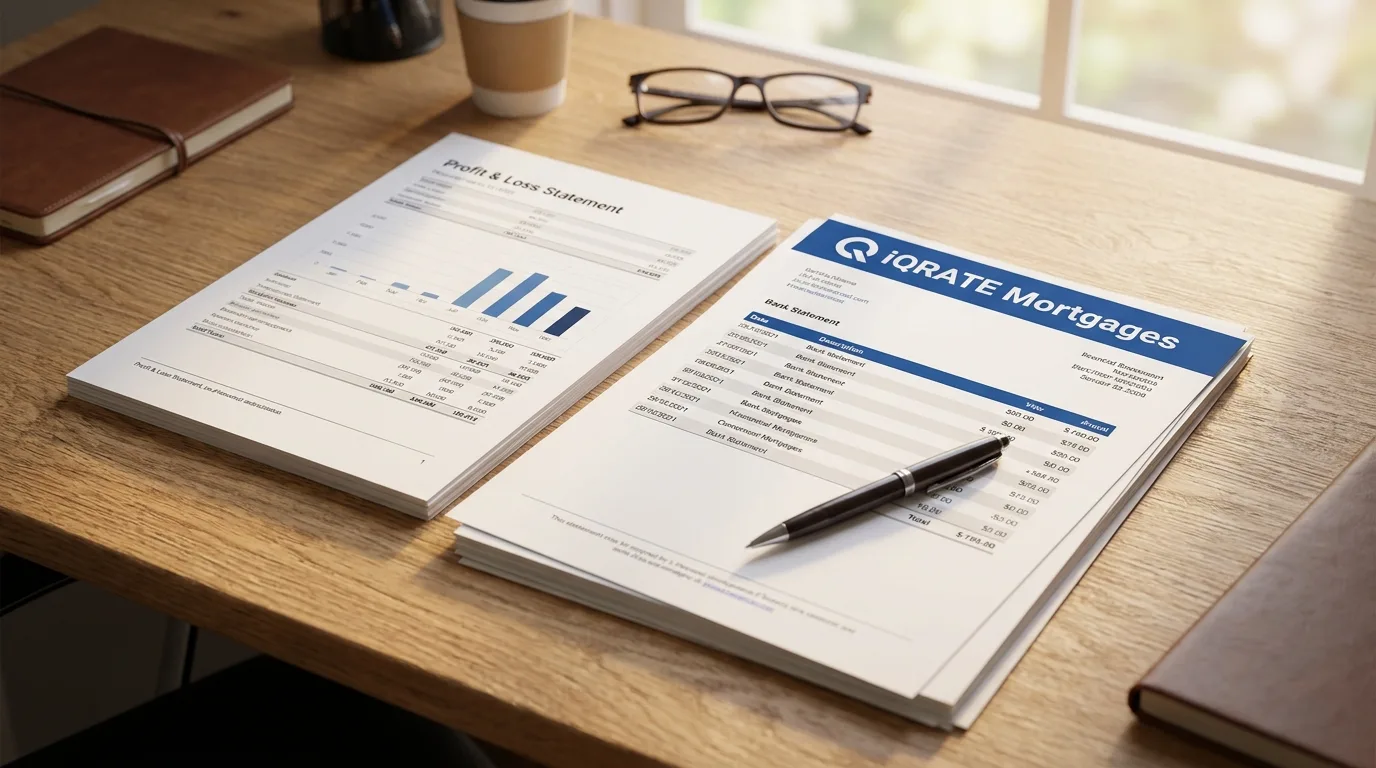
A year-to-date P&L statement is a standard requirement for any self-employed borrower. Often, lenders will also ask for a P&L from the previous one or two years. This document, preferably prepared by a CPA or bookkeeper, provides a clear summary of your business's financial health. It itemizes your gross revenues and subtracts your business expenses to arrive at your net income. The P&L gives context to the deposits seen on your business bank statements and validates the income you claim on your application.
Using a Large, Recent Business Transfer for a Down Payment
This is a common pitfall. Many business owners in Los Angeles assume they can simply move a large sum from their business account to their personal account right before closing. This is generally not allowed without extensive documentation. If you make a large transfer that has not been seasoned for 60 days, the underwriter will treat it as a suspicious deposit. (The data, information, or policy mentioned here may vary over time.)
To get it approved, you would need to provide a clear paper trail, including:
- The business bank statement showing the funds leaving the account.
- The personal bank statement showing the funds arriving.
- A letter of explanation detailing the purpose of the transfer.
- Additional business bank statements (potentially 6-12 months) and a detailed P&L to prove that transferring the funds did not negatively impact the business's financial stability or 'viability.'
This process is cumbersome and can cause significant delays. The far better strategy is to plan ahead and season the funds properly.
Common Bank Statement Mistakes by Freelancers in Anaheim
Even with separate accounts, small mistakes can create issues during underwriting. Freelancers and small business owners in Anaheim should avoid these common errors:
- Depositing Client Checks into Personal Accounts: Always deposit 100% of business revenue into the business account first.
- Paying for Business Expenses Personally: Using your personal debit card for a business lunch or software subscription breaks the clean separation of funds.
- Making Large Cash Deposits: Cash is difficult to source and is often viewed as a red flag.
- Overdrafts or Non-Sufficient Funds (NSF) Fees: Frequent overdrafts suggest poor financial management and instability, which can make a lender nervous.
How a Profit and Loss Statement Clarifies Your Finances
The P&L statement is your secret weapon. It acts as the bridge between your business bank statements and your mortgage application. While bank statements show the raw cash flow, the P&L organizes it into a story an underwriter can understand. It explicitly shows Total Revenue - Expenses = Net Income.
This is crucial because a lender qualifies you based on your net income, not your gross revenue. A well-prepared P&L, supported by clean bank statements, demonstrates that you run a professional, profitable business. It proves that the income you're paying yourself is sustainable and that the funds you've set aside for a down payment are a true reflection of your business's success, not just a temporary influx of cash. This level of clarity and organization builds trust with the underwriter and is essential for a smooth, fast mortgage approval.
As a self-employed professional, a well-organized financial profile is your key to a successful home purchase. If you’ve followed these steps to prepare your finances, you're ready for the next move. Connect with our mortgage experts who specialize in self-employed loans and apply now to confidently start your home buying journey.
Author Bio
David Ghazaryan is the expert mortgage strategist and founder behind iQRATE Mortgages. With a mission to fund home loans that traditional banks won't touch, David specializes in helping clients with unique financial situations, including those recovering from foreclosure or bankruptcy. He expertly crafts smart, strategic, and stress-free mortgages by leveraging a vast network of over 100 lenders to secure competitive rates for investors and homebuyers alike. Praised for exceptional customer service, David has helped hundreds of families with a 97% satisfaction rate, guiding them to the mortgage they deserve.
References
Fannie Mae - Self-Employed Borrower Income Guidelines
Consumer Financial Protection Bureau (CFPB) - Documents You Need to Apply for a Mortgage
U.S. Small Business Administration (SBA) - Open a Business Bank Account









