


Unlocking Your Retirement with a DSCR Cash-Out Refinance
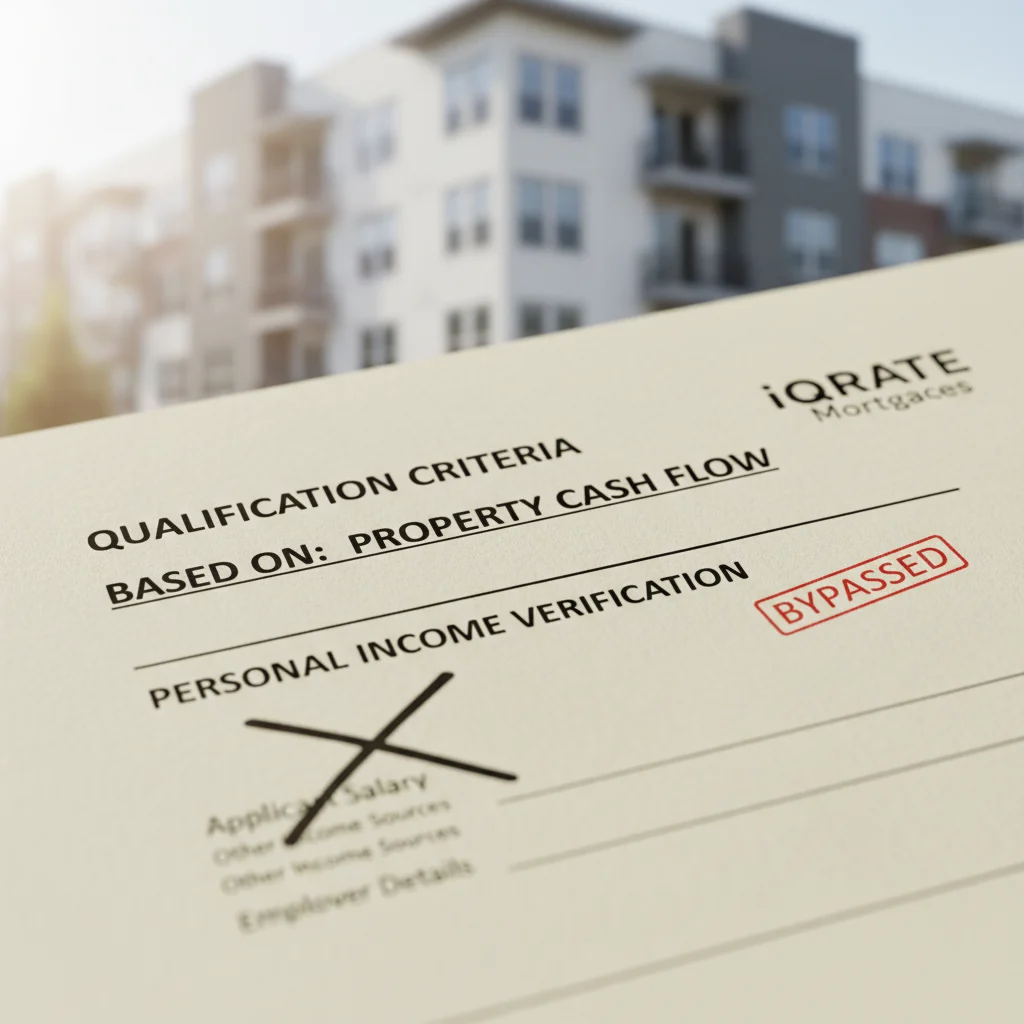
For Texas real estate investors, the path to retirement often involves a portfolio of rental properties built over decades. The challenge arises when you need to convert that illiquid equity into spendable income without triggering massive tax events by selling. A Debt Service Coverage Ratio (DSCR) cash-out refinance is a powerful financial tool designed precisely for this scenario. Unlike traditional loans that scrutinize your personal tax returns and W-2s, a DSCR loan focuses on one thing: does the rental property generate enough income to cover its own mortgage payment?
A cash-out refinance component allows you to borrow against your property's equity, replacing your current mortgage (or placing one on a free-and-clear property) with a new, larger loan. The difference is paid to you in a lump sum of cash. By combining these, you can extract significant capital from your investment properties based on their performance, not your personal employment income, which may be decreasing as you approach retirement.
The DSCR Calculation Explained
The core of this loan is the ratio itself. Lenders calculate it with a simple formula:
DSCR = Gross Rental Income / PITI
Where 'PITI' stands for Principal, Interest, Taxes, and Insurance of the proposed new loan. Lenders typically look for a DSCR of at least 1.0, with more favorable terms often available for ratios of 1.25x or higher. (The data, information, or policy mentioned here may vary over time.)
Example: An investor in Dallas owns a duplex generating $4,000 per month in rent. The proposed PITI on a new cash-out refinance loan is $3,000. The DSCR would be $4,000 / $3,000 = 1.33x. Since this is above the typical 1.25x threshold, the loan is likely to be approved.
Creating Retirement Income from Your Houston Rental Portfolio
Once you've tapped into your equity with a DSCR cash-out refinance, you can deploy that capital to create retirement income. This isn't about selling the assets that generate monthly cash flow; it's about leveraging them to build a more diversified and liquid retirement fund. Investors in a high-growth market like Houston have two primary strategies.
Strategy 1: The Lump-Sum Reinvestment
This is the most common and often most stable approach. You take the cash-out proceeds and invest them in assets designed to produce regular income. This diversifies your retirement plan beyond real estate.
- Dividend-Paying Stocks or ETFs: Invest in a portfolio of stable, blue-chip companies or funds that provide quarterly dividends.
- Annuities: Purchase an annuity from an insurance company that guarantees a fixed monthly payment for a set period or for life.
- High-Yield Bonds: Invest in corporate or municipal bonds that pay regular interest.
Example: A Houston investor has a portfolio of four single-family rentals with a combined value of $1.6 million and is completely debt-free. They execute a DSCR cash-out refinance at a 70% Loan-to-Value (LTV), pulling out $1,120,000 in cash. The new portfolio mortgage payment is covered by the rental income. They invest the $1.12M into a conservative fund yielding 4.5% annually. This generates $50,400 in new, passive retirement income per year, or $4,200 per month, without selling a single property.
Strategy 2: The Direct Drawdown
A more direct but finite strategy involves using the cash-out proceeds as your retirement fund. You place the lump sum in a high-yield savings or brokerage account and draw a set amount each month to live on. This requires disciplined budgeting, as the funds are not being replenished by market growth. It can be an effective way to bridge an income gap for a few years before social security or other pensions begin.
Cash-Out Limits and Lender Requirements
Lenders are not going to let you pull out 100% of your equity. They need to protect their position. The amount of cash you can take out is determined by two main factors:
- Maximum Loan-to-Value (LTV): For DSCR cash-out refinances, lenders in Texas typically cap the LTV at 70% to 75%. (The data, information, or policy mentioned here may vary over time.)
- DSCR Threshold: Even if you are below the LTV limit, the loan amount will be restricted by the DSCR calculation. The new PITI payment must be supported by the property's rental income at the lender's required ratio (e.g., 1.25x).
The lender will always use the lower of the two calculations to determine your maximum loan amount. If your 75% LTV calculation results in a PITI that your rental income can't support at a 1.25x DSCR, the loan amount will be reduced until the ratio is met.

Does Your 401(k) or IRA Status Matter?
Absolutely not. This is one of the most significant advantages of a DSCR loan for retirees or those nearing retirement. Lenders underwriting a DSCR loan are concerned with the asset's performance, not the borrower's personal financial situation.
- No Personal Income Verification: Your W-2s, tax returns, and pay stubs are not required.
- No DTI Ratios: Your personal debt-to-income ratio is not calculated or considered.
- Retirement Accounts are Irrelevant: The size of your 401(k), IRA, or other pension funds has no bearing on your qualification for the loan.
This allows investors with substantial real estate equity but low documented 'working' income to access their capital efficiently.
How Lenders Calculate Qualifying Rental Income in Austin
Lenders need a reliable figure for a property's income potential. They don't simply take the number on the lease agreement at face value. In a dynamic market like Austin, where rents can fluctuate, they use a methodical approach.
- Lease Agreement: The current, signed lease is the starting point.
- Appraisal and Form 1007: The appraiser will complete a Single-Family Comparable Rent Schedule (Form 1007). This report analyzes what similar properties in the immediate area are renting for. It establishes a 'market rent' for your property.
- The 'Lesser Of' Rule: The lender will typically use the lesser of the actual rent on the lease agreement or the market rent determined by the appraiser. This protects them if you are renting to a family member at an above-market rate or if the market has softened since the lease was signed.
- Vacancy Factor: Some lenders may apply a 'vacancy factor' deduction (often 5%) from the gross rent to account for potential periods between tenants, although many modern DSCR products simply use the gross rent figure. (The data, information, or policy mentioned here may vary over time.)
Using an LLC for Your Dallas Investment Properties
Operating your rental portfolio within a Limited Liability Company (LLC) is a smart business practice for asset protection. Fortunately, DSCR lenders are very comfortable with this structure. In fact, many prefer it.
When your properties are held in an LLC in Dallas, the LLC becomes the official borrower. This helps maintain the legal separation between your personal and business assets. While the LLC is the borrower, the lender will still require the primary members of the LLC (you and any partners) to sign a personal guarantee. This means that if the LLC defaults on the loan, you are still personally responsible for repaying the debt. Nonetheless, financing within an LLC is the standard and preferred method for serious real estate investors.
Tax Implications of a DSCR Cash-Out Refinance
Disclaimer: This information is for educational purposes only. You must consult with a qualified tax advisor or CPA to understand the specific tax implications for your situation.
One of the most attractive features of this strategy is its tax efficiency compared to selling.
- Loan Proceeds are Not Taxable Income: The cash you receive from a refinance is considered debt, not income. Therefore, it is not subject to income tax or capital gains tax.
- Preservation of Deductions: You continue to own the property, so you can still deduct operating expenses, property taxes, and mortgage interest (on the new, larger loan). You also continue to claim depreciation, which is a crucial tax shield for real estate investors.
- Deferral of Capital Gains: By not selling, you completely avoid triggering capital gains tax on the property's appreciation, which could be substantial for long-held assets in Texas.
DSCR Cash-Out Refinance vs. Reverse Mortgage
A reverse mortgage is another tool retirees use to access home equity, but it is fundamentally different from a DSCR loan. They are not interchangeable and apply to different types of property.
DSCR Cash-Out Refinance
- Property Type: Investment properties (non-owner occupied).
- Qualification: Based on property cash flow (DSCR).
- Repayment: Requires immediate, monthly principal and interest payments.
- Who It's For: Real estate investors looking to leverage their portfolio for capital.
Reverse Mortgage (HECM)
- Property Type: Primary residence only (owner-occupied).
- Qualification: Based on borrower's age (62+), home equity, and a financial assessment.
- Repayment: No monthly mortgage payments required. The loan balance grows and is repaid when the owner sells, moves, or passes away.
- Who It's For: Homeowners wanting to supplement their income using the equity in the home they live in.
In short, you use a DSCR loan for your business assets (rentals) and a reverse mortgage for your personal home. If you're a Texas real estate investor considering how to leverage your portfolio for a comfortable retirement, understanding your DSCR loan options is the first step. A consultation with an investment property finance specialist can clarify your borrowing power and help you model different income scenarios.
Ready to see how a DSCR loan can fit into your retirement strategy? Start your application to explore the options for your Texas investment properties.
Author Bio
David Ghazaryan is the expert mortgage strategist and founder behind iQRATE Mortgages. With a mission to fund home loans that traditional banks won't touch, David specializes in helping clients with unique financial situations, including those recovering from foreclosure or bankruptcy. He expertly crafts smart, strategic, and stress-free mortgages by leveraging a vast network of over 100 lenders to secure competitive rates for investors and homebuyers alike. Praised for exceptional customer service, David has helped hundreds of families with a 97% satisfaction rate, guiding them to the mortgage they deserve.
References
IRS Publication 527 - Residential Rental Property
Consumer Financial Protection Bureau - What is a cash-out refinance?









