


What are the Veteran Affairs Minimum Property Requirements in Texas?
When you use a VA loan to buy a home in Texas, the property must meet a set of standards known as Minimum Property Requirements (MPRs). These aren't Texas-specific rules; they are federal guidelines established by the Department of Veteran Affairs to ensure the home is safe, structurally sound, and sanitary for the veteran and their family. The VA isn't just protecting its investment—it's protecting you.
The appraiser’s job goes beyond determining the home's value. They perform a high-level inspection to check for obvious issues that violate MPRs. A home that fails the appraisal usually has one or more of these deficiencies.
Key MPRs for a Texas Home
- Safety: The property must be free of hazards that could endanger the occupants. This includes broken windows, faulty wiring, or significant foundation issues.
- Structural Soundness: The home must be structurally intact. The appraiser will look for evidence of major decay, termite damage, or a failing roof.
- Sanitary Conditions: The home must have a continuous supply of safe drinking water, a working sanitary facility, and a functional water heater.
- Adequate Space: There must be sufficient space for living, sleeping, cooking, and dining.
- Mechanical Systems: All heating, plumbing, and electrical systems must be in good working order and have a reasonable future utility.
- Safe Access: The property must have safe access from the street, whether it's a private drive or a public road.
Common Reasons a Texas Home Fails a VA Appraisal
While every home is unique, certain issues appear more frequently during VA appraisals across Texas, from the older homes in Houston to the newer constructions in Dallas. An appraiser will issue the appraisal 'subject to' completion of these repairs, meaning the loan cannot close until they are fixed and re-inspected.

Peeling Paint and Exposed Wood
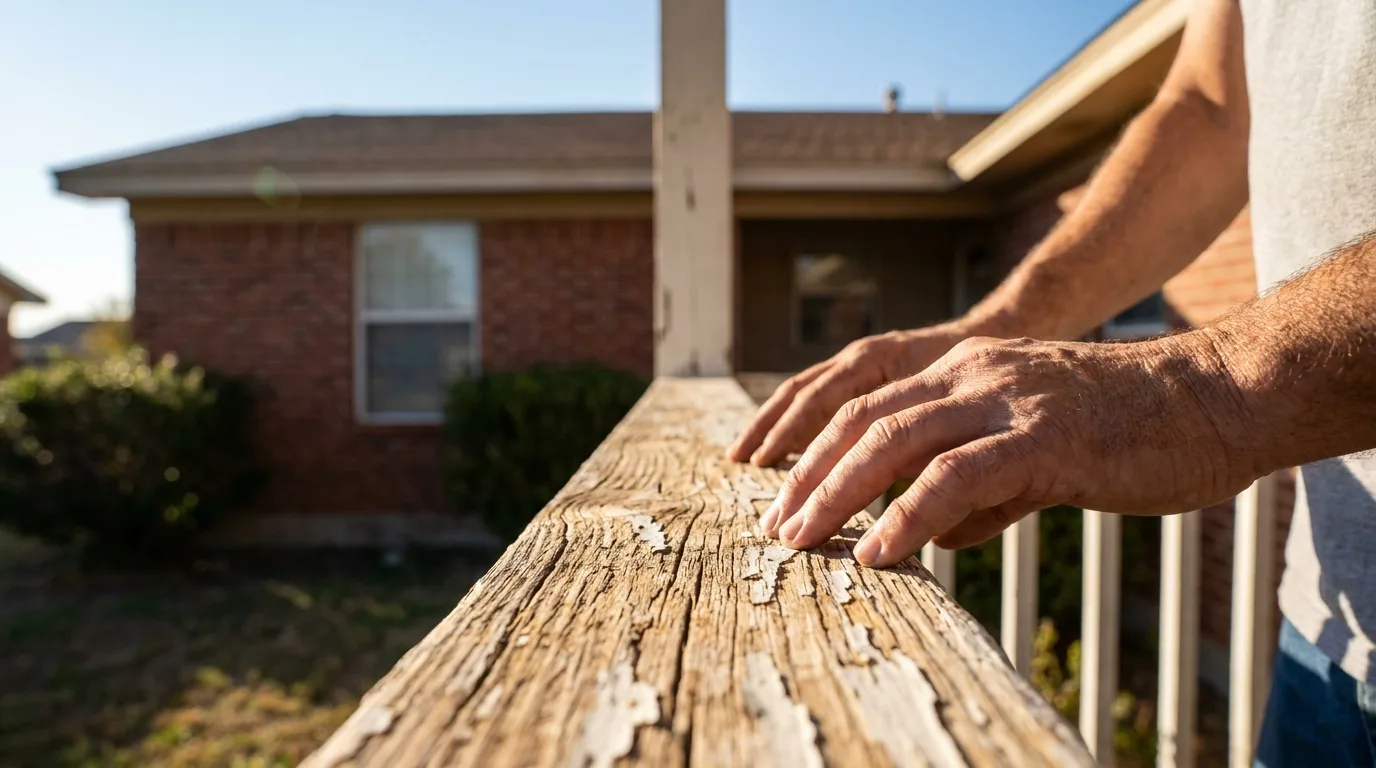
For any home built before 1978, the VA is concerned about lead-based paint. Any sign of chipping or peeling paint on both the interior and exterior must be scraped and repainted. This also applies to any exposed wood on outbuildings or fences, which must be painted or properly treated to prevent decay.
Roofing Issues
An aging or damaged roof is a major red flag. The VA appraiser must certify that the roof is in good condition and has a remaining economic life of at least three years. (The data, information, or policy mentioned here may vary over time.) Missing shingles, active leaks, or significant wear will almost always be called out for repair.
Inadequate Electrical Systems
Outdated or unsafe electrical systems are a common failure point, especially in older homes in cities like Austin. The appraiser will look for issues like frayed wiring, an insufficient electrical panel for the home's needs, or missing smoke and carbon monoxide detectors.
Poor Drainage and Foundation Problems
Given the soil conditions in many parts of Texas, proper drainage is critical. The appraiser will check to ensure the ground slopes away from the foundation. Any signs of standing water near the house or significant foundation cracks could trigger a requirement for a structural engineer's report.
Who Pays for VA-Required Repairs?
This is the most common question veterans ask, and the answer is: it’s negotiable. There is no set rule about who must pay for repairs flagged by a VA appraiser. The responsibility is determined by the negotiations between the buyer and the seller, as outlined in the purchase contract.
Here are the most common scenarios:
- The Seller Pays: This is the most frequent and ideal outcome. The seller agrees to complete all required repairs before closing. This keeps the deal moving forward without any additional cost to the veteran.
- The Buyer Pays: In a competitive market, a buyer might agree to pay for repairs. However, the VA and lenders are cautious about this. You generally cannot finance the cost of repairs into the primary VA loan. You would need to pay out-of-pocket, and the lender must approve this arrangement.
- A Seller Credit: The seller might offer a credit at closing for the estimated cost of repairs. This can be problematic for VA loans because the repairs must be completed before the loan can close. The funds would need to be held in an escrow account to pay a contractor, an arrangement that requires lender approval.
- Meet in the Middle: Both parties agree to split the cost of the repairs.
Example: A home in Dallas is appraised for the purchase price of $350,000, but the appraiser notes the roof needs repairs estimated at $5,000. The veteran's agent negotiates with the seller, who agrees to have the roof professionally repaired before the final inspection.
The Process for Challenging a Low Appraised Value
Sometimes, the issue isn't the property's condition but its appraised value coming in lower than the sales price. If you and your real estate agent believe the value is inaccurate, the VA has a specific process for this called the Tidewater Initiative.
This process is triggered before the appraisal report is even finalized. If the appraiser suspects the value will come in low, they will invoke Tidewater. Here’s how it works:
- Notification: The appraiser notifies the lender's point of contact (usually the loan officer or processor) that the value may be low.
- 48-Hour Window: The lender immediately informs the veteran’s real estate agent. You then have 48 business hours to provide the appraiser with additional data to support the sales price. This is not the time for opinions; you must provide hard data.
- Provide Comparable Sales: The best data is recent, comparable home sales (comps) that the appraiser may have missed. These should be similar in size, age, condition, and location to the subject property.
- Appraiser Review: The appraiser is required to review the provided comps. They will either adjust their valuation based on the new data or explain why the provided comps were not sufficient to change their original opinion of value.
Successfully navigating the Tidewater Initiative requires a knowledgeable real estate agent who can quickly pull strong, relevant comps. It is your single best chance to contest a low valuation.
Can I Switch Lenders for a New VA Appraisal?
No, you cannot simply switch lenders to get a different appraisal. A VA appraisal is tied to the property and the veteran's case number for six months. When an appraisal is ordered, it is assigned to the property in the VA's system. If you switch lenders, the new lender must use the existing appraisal report.
A new appraisal can only be ordered if the original one is canceled for a valid reason (like the deal falling through) or if the VA grants a specific waiver, which is rare. The system is designed to prevent 'appraiser shopping', where a buyer keeps trying different appraisers until they get the value they want.
What If the Seller Refuses to Make Repairs?
If the seller is unwilling or unable to complete the required repairs, you are not out of options. Your path forward depends on your contract and your financial situation.
- Walk Away: Your purchase contract should contain an appraisal contingency (often part of the 'FHA/VA Financing Addendum' in Texas). This clause allows you to terminate the contract and have your earnest money returned if the property doesn't appraise for the contract price or if repairs cannot be agreed upon.
- Pay for Repairs Yourself: As mentioned earlier, you can offer to pay for the repairs yourself. This requires cash on hand and your lender's approval. It’s a solution but means investing money into a home you don't yet own.
- Renegotiate the Price: You could ask the seller to lower the sales price to offset the cost of the repairs, which you would then complete after closing. This only works if the lender agrees and the repairs are not critical for occupancy (like a missing furnace in winter).
Timeline for Resolving VA Appraisal Issues
Resolving appraisal issues can add time to your closing, but it's often manageable.
- Minor Repairs: For simple fixes like scraping paint or installing a handrail, a contractor can often finish the work in a day or two. The appraiser's final inspection can be scheduled shortly after, potentially adding 3-7 business days to your timeline.
- Major Repairs: For significant work like a new roof or foundation repair, the process could take several weeks, depending on contractor availability.
- Tidewater Initiative: The Tidewater process itself is quick—just 48 hours to provide data. The appraiser’s final review may add another 2-3 business days.
The key is communication. Your lender, real estate agent, and the seller's agent must work together to create a plan and a realistic timeline to get the repairs done and verified.
Navigating VA appraisal requirements can be complex, but you don't have to do it alone. Our team of mortgage strategists specializes in VA loans across Texas and can guide you toward a successful closing. When you're ready to secure your VA home loan with confidence, Apply now and let our experts help you every step of the way.
Author Bio
David Ghazaryan is the expert mortgage strategist and founder behind iQRATE Mortgages. With a mission to fund home loans that traditional banks won't touch, David specializes in helping clients with unique financial situations, including those recovering from foreclosure or bankruptcy. He expertly crafts smart, strategic, and stress-free mortgages by leveraging a vast network of over 100 lenders to secure competitive rates for investors and homebuyers alike. Praised for exceptional customer service, David has helped hundreds of families with a 97% satisfaction rate, guiding them to the mortgage they deserve.
References
VA Minimum Property Requirements
Consumer Financial Protection Bureau - The Home Appraisal Process









