


Veteran Affairs Loan Occupancy Rules in San Antonio
The cornerstone of the Veteran Affairs (VA) home loan benefit is that it's designed to help service members and veterans purchase a primary residence, not a pure investment property. The Department of Veterans Affairs requires the borrower to certify that they intend to personally live in the home. This is the most important rule to understand.
In practical terms, this means you are expected to move into the property within a 'reasonable time', which is typically defined as 60 days after the loan closing. (The data, information, or policy mentioned here may vary over time.) You cannot, for example, close on a single-family home in a San Antonio neighborhood like Alamo Heights and immediately list it for rent without ever moving your belongings in. The intent must be genuine at the time of purchase.
Key Occupancy Requirements:
- Intent to Occupy: At closing, you sign documents stating your intent to use the home as your main residence.
- 60-Day Move-In: This is the standard timeline lenders expect for you to begin occupying the property.
- Primary Residence: The home must be where you live for the majority of the year. It cannot be a vacation home or a property purchased solely for rental income.
Can a Spouse Satisfy the Occupancy Requirement?
Yes, absolutely. The VA makes specific allowances for situations where the veteran or service member cannot personally occupy the residence right away, most notably due to military service. If you are an active-duty service member, your spouse can fulfill the occupancy requirement on your behalf.
This is a critical provision for military families. For instance, if you receive orders for a deployment shortly before or after closing on a home near Joint Base San Antonio, your spouse moving into the property satisfies the VA's rule. The key is that the person fulfilling the requirement must be your legal spouse. A non-borrowing girlfriend, boyfriend, parent, or child cannot satisfy the occupancy requirement for you.
Buying a Multi-Unit Property in Austin
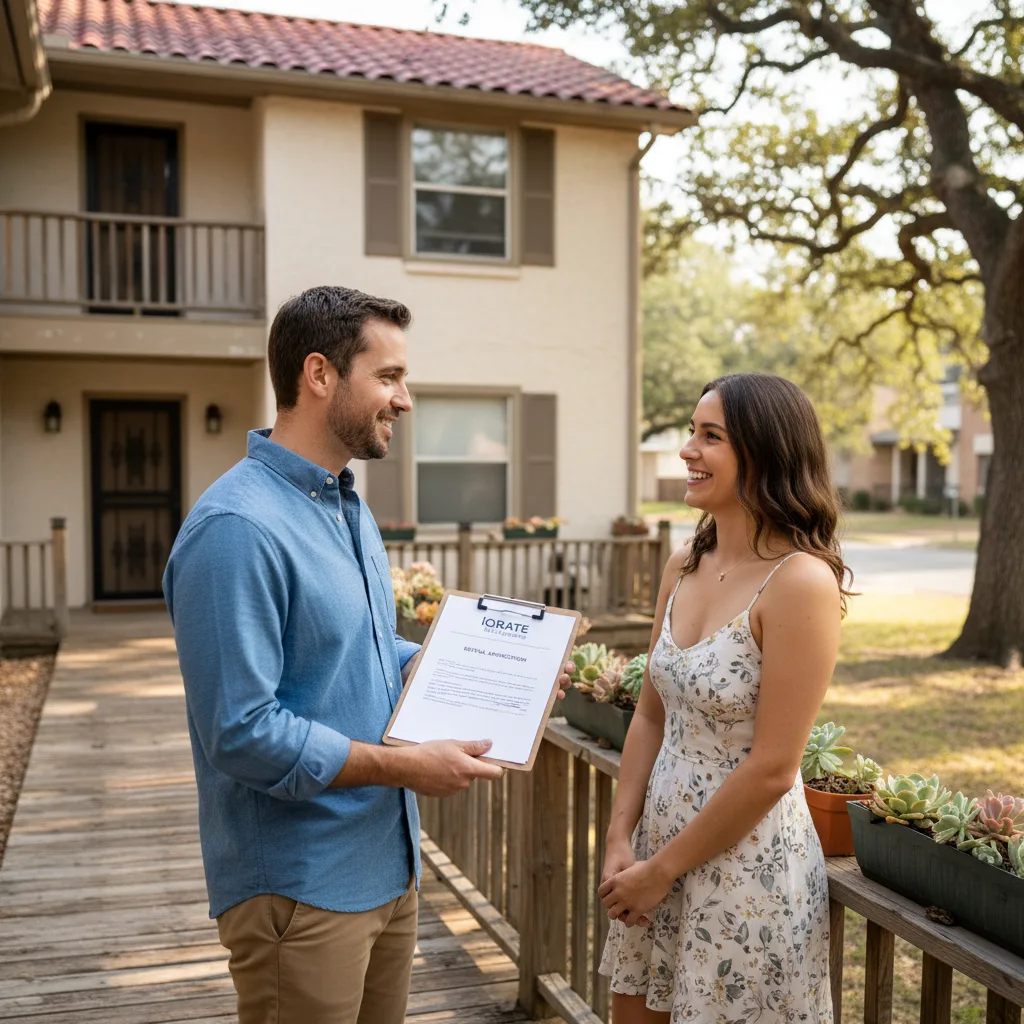
This is where the VA loan becomes an incredibly powerful tool for real estate investment, a strategy often called 'house hacking'. The VA allows you to purchase a multi-unit property with up to four residential units (a duplex, triplex, or fourplex), provided you live in one of the units as your primary residence.
You can then legally rent out the other one to three units. This strategy is popular in competitive markets like Austin, where rental income can significantly offset or even cover your entire mortgage payment.
Example of House Hacking in Austin:
Let's say you find a duplex in Austin for $750,000. Using your VA loan benefit, you could potentially purchase this property with $0 down.
- Your Residence: You move into Unit A.
- Rental Unit: You rent Unit B for $2,400 per month.
- Mortgage Offset: Your total mortgage payment (principal, interest, taxes, and insurance) might be around $5,000. The $2,400 in rental income reduces your personal housing cost to just $2,600 per month, allowing you to build equity in a $750,000 asset for a fraction of the cost.
Furthermore, lenders can often use the projected rental income from the additional units to help you qualify for a larger loan amount. (The data, information, or policy mentioned here may vary over time.)

The One-Year Occupancy Guideline
So, if you buy a home, how long do you have to live in it before you can legally turn it into a rental property? While the VA doesn't state a rigid, mandatory timeframe in days, the widely accepted industry and lender standard is one year. (The data, information, or policy mentioned here may vary over time.) Lenders underwrite the loan with the expectation that you will occupy the property for at least the first 12 months.
After fulfilling this one-year period, your circumstances can change. You might decide to move and rent the property out. This is generally permissible because your original intent at the time of purchase was to occupy it as your primary residence.
Legitimate Reasons for Moving Early
Life happens, and the VA understands that. You may be able to rent out your home before the one-year mark if you have a valid reason, such as:
- Permanent Change of Station (PCS): New military orders are the most common reason.
- Job Relocation: A new civilian job requires you to move to a different city.
- Family Changes: Needing a larger home due to a growing family.
It is crucial to document these reasons. If you buy a home in San Antonio, live in it for seven months, and then receive PCS orders, you are clear to rent it out. However, moving out after a few months without a valid, documented reason could raise red flags with your lender.
Penalties for Veteran Affairs Loan Occupancy Fraud
Attempting to circumvent the occupancy rule is a serious offense known as occupancy fraud. This occurs when a borrower lies on their loan application, stating they intend to live in the property when their actual plan is to use it as a pure investment rental from day one. The consequences are severe.
Potential Consequences:
- Loan Acceleration: The lender can declare the entire loan balance immediately due and payable.
- Civil Penalties: The federal government can impose significant fines.
- Criminal Charges: In egregious cases, occupancy fraud can lead to federal criminal charges, which may result in prison time.
- Loss of VA Benefits: You could forfeit your eligibility for any future VA home loan benefits.
Using Remaining Entitlement for a Second Rental Home
Your VA loan benefit is reusable. You have a certain amount of 'entitlement', and once you pay off a VA loan or sell the property, your full entitlement is restored. You can also use your remaining entitlement to buy another home.
This is a common path to building a real estate portfolio. For example, you buy your first home in Austin and live in it for several years. You then decide to move to San Antonio. You can use your remaining VA loan entitlement to purchase a new primary residence in San Antonio. Once you move, your former home in Austin can officially become a rental property.
The critical factor is that the occupancy rule applies to each new VA loan. The second home you purchase must become your new primary residence. This method allows you to acquire multiple properties over time, but not to buy a second home as a pure rental while still living in your first home.
Rules for Active-Duty Personnel Living On Base
What if you are an active-duty service member required to live in barracks or other on-base housing? You can still use your VA loan to purchase a home for your family nearby. In this specific scenario, the VA allows for a dependent (like a spouse or children) to satisfy the occupancy requirement if the service member cannot reasonably live there due to military obligations.
The property must be within a reasonable commuting distance to the military installation. So, if you're stationed at Joint Base San Antonio and required to live on base, you could still buy a home for your family in a nearby community. This ensures your family has a stable home while you fulfill your service requirements, allowing you to build equity and utilize your hard-earned benefit. Understanding the nuances of VA loan occupancy can be complex. If you're exploring how to leverage your VA benefits for a property in Texas, consulting with a mortgage strategist who specializes in these scenarios can provide clarity and ensure you remain compliant with all guidelines.
If these VA loan strategies sound like the right path for your goals in Texas, you can apply now to see what’s possible.
Author Bio
David Ghazaryan is the expert mortgage strategist and founder behind iQRATE Mortgages. With a mission to fund home loans that traditional banks won't touch, David specializes in helping clients with unique financial situations, including those recovering from foreclosure or bankruptcy. He expertly crafts smart, strategic, and stress-free mortgages by leveraging a vast network of over 100 lenders to secure competitive rates for investors and homebuyers alike. Praised for exceptional customer service, David has helped hundreds of families with a 97% satisfaction rate, guiding them to the mortgage they deserve.
References
VA.gov Lenders Handbook, Chapter 3: The Loan Underwriting
Consumer Financial Protection Bureau (CFPB): What is mortgage fraud?









