


Using a VA IRRRL to Remove a Spouse After a Divorce
For veterans in Florida facing a divorce, the question of what to do with a shared home and a joint VA loan is a significant source of stress. The Veteran Affairs Interest Rate Reduction Refinance Loan, often called the 'streamline refinance', offers a specific solution. While typically used to lower interest rates, a VA IRRRL can also be used to remove a co-borrower, such as an ex-spouse, from the mortgage.
However, it's critical to understand that this is not a standard IRRRL transaction. When you remove a borrower who contributed to the original loan's approval, the lender must re-verify your financial ability to handle the mortgage payments alone. This means the 'streamline' aspect is modified, and the process involves credit and income underwriting, much like a regular refinance. The primary goal is to transfer the property and the debt fully into your name, releasing your ex-spouse from all future liability.
Essential Legal Steps: The Divorce Decree
Before a lender will even consider your IRRRL application to remove a spouse, you must have a legally binding document that outlines the division of assets. This is typically a finalized divorce decree or a court-ordered separation agreement. A verbal agreement or a pending divorce is not sufficient.
The decree must be clear and unambiguous, containing specific language that addresses two key points:
- Awarding of the Property: The document must explicitly state that you, the veteran, are awarded full ownership of the marital home.
- Assignment of Debt: It must assign the entire mortgage debt associated with that property to you. The language should legally obligate you to be solely responsible for the payments.
Lenders will scrutinize this document carefully. Any ambiguity can halt the process. For instance, if your divorce decree for your Jacksonville home states you get the house but doesn't mention who is responsible for the mortgage, the lender cannot proceed. It’s crucial to work with your family law attorney to ensure the language is precise and meets mortgage lending requirements.

Navigating Ex-Spouse Consent and Cooperation
Even with a perfect divorce decree, you cannot unilaterally remove your ex-spouse from the mortgage. They must actively participate and consent to the refinance. Your ex-spouse will be required to sign legal documents that formally release their claim to the property. This is typically done through a Quitclaim Deed or a similar legal instrument that transfers their ownership interest to you.
Here’s why their cooperation is non-negotiable:
- Title Transfer: They are on the property's title. To have a loan in your name only, the title must also be in your name only. They must sign to be removed from the title.
- Loan Release: They are a legal party to the original mortgage contract. They must sign documents acknowledging their removal and release from liability.
If your ex-spouse is uncooperative, it can bring the entire process to a standstill. The divorce decree can mandate this cooperation, and if they refuse, you may need to seek legal enforcement through the court. Planning for this step and maintaining open communication can prevent significant delays.
IRRRL vs. Cash-Out Refinance for a Divorce Buyout
In a divorce, you may need to 'buy out' your ex-spouse’s equity in the home. This is where the choice between a VA IRRRL and a VA Cash-Out Refinance becomes critical. They serve very different purposes.
The VA IRRRL: No Cash Out Allowed
The IRRRL is strictly for refinancing the existing loan balance. You cannot receive cash back with an IRRRL, which means you cannot use it to directly fund a buyout. If your divorce decree requires you to pay your ex-spouse a sum for their equity, you must source those funds elsewhere, such as from personal savings, a separate personal loan, or another asset.
- Primary Benefit: The VA funding fee for an IRRRL is significantly lower at just 0.5% of the loan amount. The process can also be faster and require less documentation (though not in a borrower-removal scenario).
The VA Cash-Out Refinance: Accessing Equity
A VA Cash-Out Refinance allows you to refinance your existing mortgage for a higher amount and take the difference in cash. This is the ideal tool if you need to pay your ex-spouse their share of the home's equity.
- Primary Benefit: Provides the funds needed for the buyout as part of the mortgage transaction.
- Drawback: The VA funding fee is much higher, ranging from 2.15% to 3.3% depending on your service history and whether it is a first-time or subsequent use of your benefit. (The data, information, or policy mentioned here may vary over time.) It also requires a full appraisal and more extensive underwriting.
Example Scenario in Tampa: Let's say your home in Tampa is valued at $450,000 and your current VA loan balance is $300,000. You have $150,000 in equity. Your divorce decree requires you to pay your ex-spouse $75,000 for their share.
- Using an IRRRL: You would refinance the $300,000 loan balance. Your VA funding fee would be $1,500 (0.5% of $300k). You would need to come up with the $75,000 buyout from another source.
- Using a Cash-Out Refi: You would take out a new loan for $375,000 ($300k to pay off the old loan + $75k for the buyout). Your VA funding fee (assuming first-time use) would be $8,062.50 (2.15% of $375k). This fee is nearly $6,600 more, but it solves the buyout problem within the same transaction.
Re-Qualifying on Your Sole Income
This is the most significant departure from a standard streamline refinance. Because a contributing party is being removed from the loan, the VA and the lender must ensure you can afford the mortgage payments by yourself. The lender will conduct a full credit and income analysis.
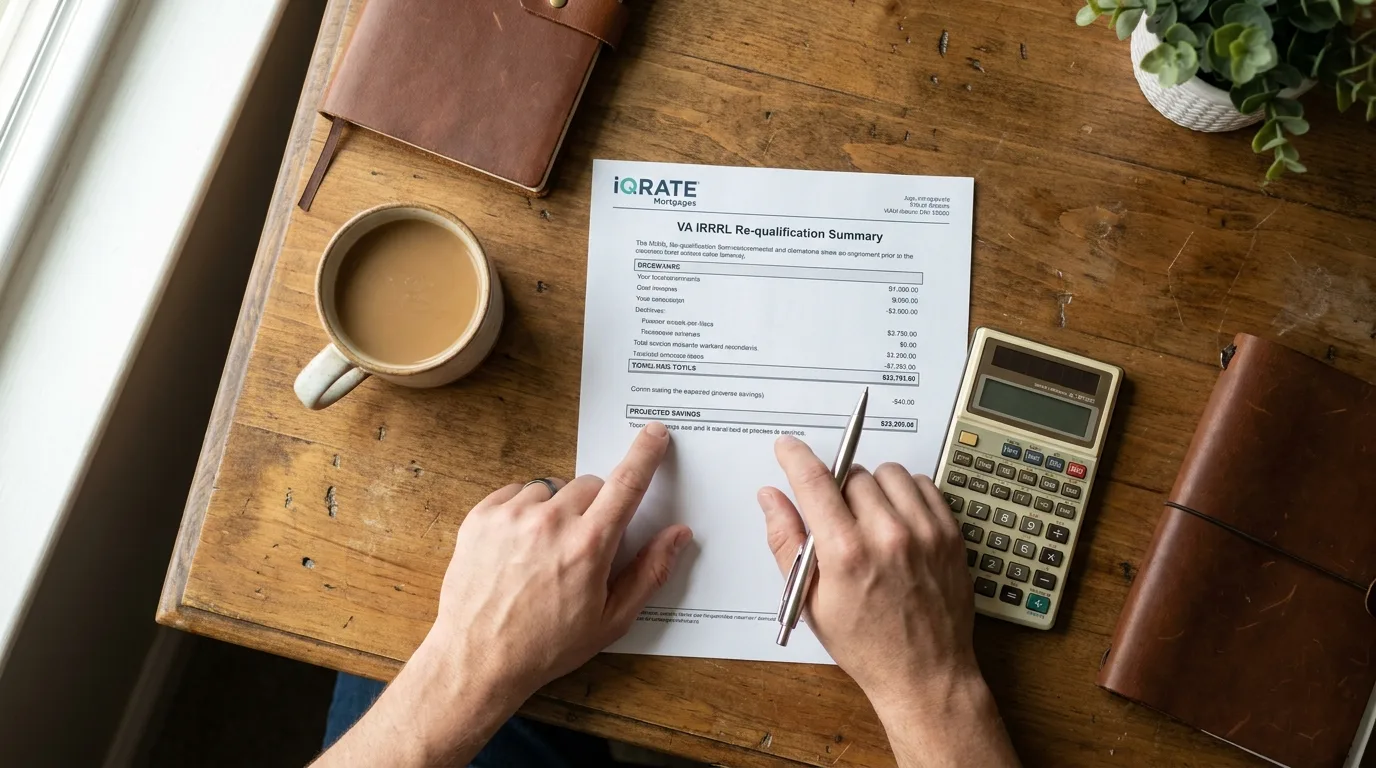
What Lenders Will Evaluate:
- Stable Income: You must provide proof of sufficient and stable income through pay stubs, W-2s, and tax returns. If you are receiving alimony or child support and wish to use it for qualifying, you'll need the divorce decree and proof of consistent receipt.
- Credit Score: While the VA doesn't set a minimum credit score, most lenders look for a score of 620 or higher. (The data, information, or policy mentioned here may vary over time.) A clean payment history on the existing mortgage is also vital.
- Debt-to-Income (DTI) Ratio: Your DTI will be recalculated based on your sole income. While the VA's primary focus is on your residual income, many lenders use a DTI ratio of 41% or less as a general guideline, though this can be flexible if you have strong compensating factors. (The data, information, or policy mentioned here may vary over time.)
Restoring Your Ex-Spouse’s VA Loan Entitlement
A major benefit of this process for your ex-spouse is the restoration of their VA loan entitlement. If your ex-spouse is also a veteran, their entitlement was tied up in the joint loan. Once the IRRRL closes and they are officially removed from the mortgage, their entitlement is fully restored, allowing them to use their VA loan benefit to purchase another home.
This can be a powerful negotiating point to encourage their cooperation. You must ensure the lender properly processes the paperwork to release their entitlement with the VA upon closing.
Special Considerations for Veterans in Jacksonville and Tampa
The process for a VA IRRRL divorce refinance is consistent nationwide, but market conditions in Florida cities like Jacksonville and Tampa can add layers to consider.
- Property Valuations: While a standard IRRRL doesn't require an appraisal, some lenders may require one when removing a borrower to reassess their risk, especially in rapidly appreciating markets like Tampa. (The data, information, or policy mentioned here may vary over time.) This is a lender-specific policy, not a VA rule.
- Local Legal Counsel: Having a mortgage professional who understands Florida's family law nuances is invaluable. They can review your divorce decree to spot potential red flags before you even submit it to underwriting, saving you time and stress.
- Lender Experience: Not all lenders are experienced with this specific type of IRRRL. Working with a mortgage broker in the Jacksonville or Tampa area who specializes in VA loans ensures they know the exact documentation and steps required by the VA for releasing a co-borrower's liability.
Common Obstacles and How to Overcome Them
Navigating this process can be challenging. Anticipating common hurdles is the best way to ensure a smooth closing.
- The Unclear Divorce Decree: The most common obstacle is a decree that doesn't explicitly assign the property and the debt. Solution: Proactively work with your attorney to get the precise language needed. If the decree is final, you may need a court order modification.
- Failure to Qualify Solo: Many veterans are surprised to find they don't qualify on their own income, especially if their ex-spouse was the higher earner. Solution: Before starting the process, work with a loan officer to get a full pre-qualification based on your sole income and credit. This identifies any financial gaps you need to address.
- Uncooperative Ex-Spouse: An ex-spouse may refuse to sign the necessary documents. Solution: Remind them that their cooperation is required by the court order and is the only way to restore their VA entitlement. If necessary, your attorney may need to file a motion to compel them to sign.
- Liens on the Property: A title search may uncover unexpected liens (e.g., from a contractor or an IRS lien against your ex-spouse) that must be cleared before the refinance can close. Solution: Run a preliminary title report early in the process to identify and resolve any issues. If you are a veteran navigating a divorce in Florida and need to understand your VA loan options, the best first step is to speak with a mortgage specialist who understands the complexities of an IRRRL for co-borrower removal. A clear strategy can help you secure your home and your financial future.
Navigating a VA loan during a divorce requires expert guidance. If you're ready to understand your options and secure your home, take the first step. Apply now to get a clear picture of your qualifications and path forward.
Author Bio
David Ghazaryan is the expert mortgage strategist and founder behind iQRATE Mortgages. With a mission to fund home loans that traditional banks won't touch, David specializes in helping clients with unique financial situations, including those recovering from foreclosure or bankruptcy. He expertly crafts smart, strategic, and stress-free mortgages by leveraging a vast network of over 100 lenders to secure competitive rates for investors and homebuyers alike. Praised for exceptional customer service, David has helped hundreds of families with a 97% satisfaction rate, guiding them to the mortgage they deserve.
References









