


What Is the Primary Residence Requirement for a VA IRRRL?
The VA Interest Rate Reduction Refinance Loan, often called the 'IRRRL' or 'Streamline', is a powerful tool designed for one primary purpose: to help veterans with an existing VA loan refinance into a lower interest rate with minimal paperwork and cost. However, its streamlined nature comes with a strict set of rules, the most important of which is the occupancy requirement.
Unlike a standard VA purchase loan where you must intend to occupy the home as your primary residence, the IRRRL has a different standard. For an IRRRL, you must certify that you previously occupied the property as your home. The key word is 'previously'. The VA's goal with the IRRRL is to help veterans improve the financial terms of the loan on a home they once lived in, not to help finance a portfolio of investment properties.
This distinction is critical. You are not required to be living in the home at the time of the refinance. This flexibility acknowledges that life happens: veterans are getting a new job, families grow, and military orders force relocations. So, if you bought a home in Miami with a VA loan, lived in it for a few years, and have since moved, you may still be eligible to use an IRRRL to lower your monthly payment on that property. The lender will require you to sign a certification statement confirming your prior occupancy as part of the loan application process.
Can I Refinance My Miami Property if I Have PCS Orders and Moved Away?
Yes, this is one of the most clear-cut exceptions to any occupancy confusion. The VA explicitly accommodates active-duty servicemembers who are forced to relocate due to Permanent Change of Station (PCS) orders. If you originally purchased a home in Miami or Fort Lauderdale using your VA loan benefit and lived in it as your primary residence, receiving PCS orders does not disqualify you from using an IRRRL.
Here's a practical example:
- An active-duty Coast Guard member is stationed in Miami and buys a townhouse with a VA loan at a 6.5% interest rate. They live there for two years.
- They then receive PCS orders to a new duty station in another state and decide to rent out their Miami townhouse rather than sell it.
- A year later, interest rates drop significantly. The servicemember can apply for a VA IRRRL to refinance their Miami property to a new, lower rate, even though they no longer live there. Their PCS orders provide a clear and acceptable reason for the change in occupancy.
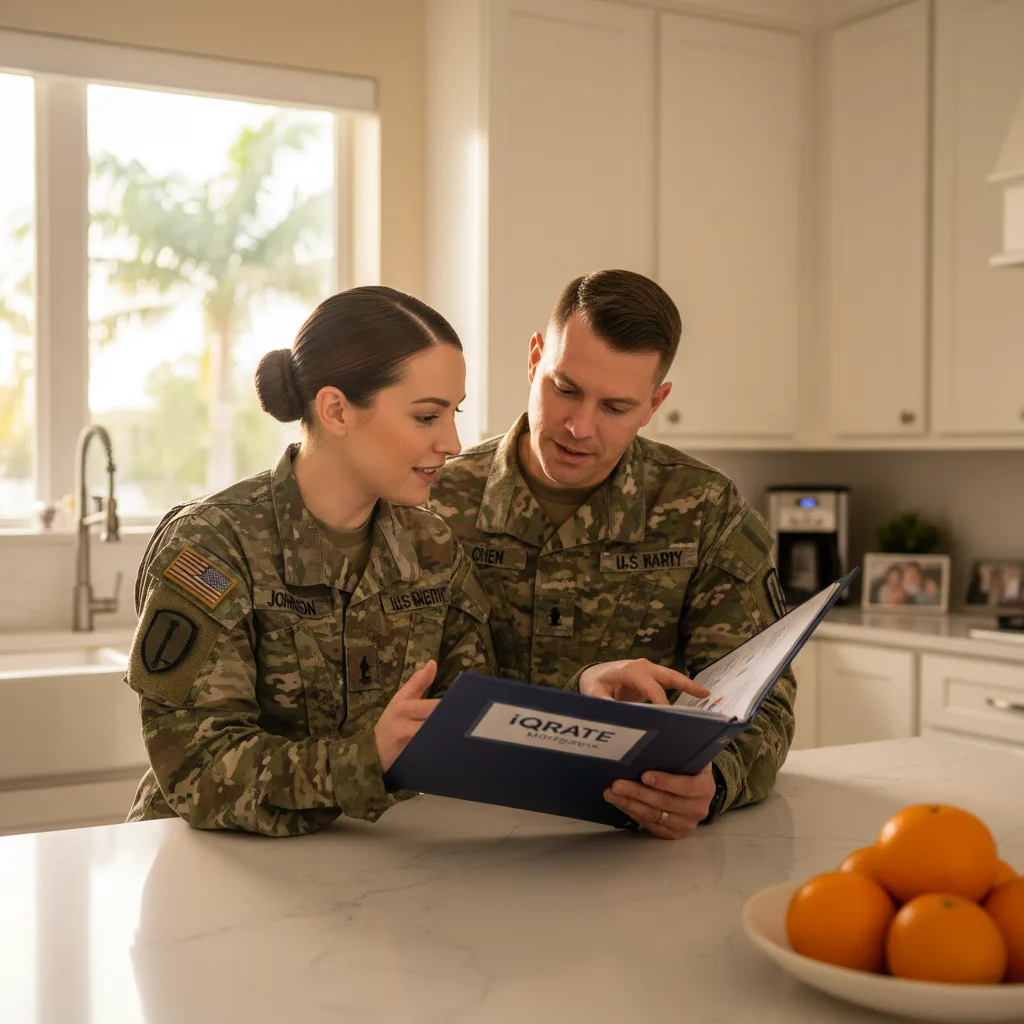
The lender will likely ask for a copy of your PCS orders as part of the documentation to verify the situation. This exception is designed specifically to ensure military members are not penalized for their service-related moves and can still take advantage of favorable interest rate environments.
Are There Exceptions for Refinancing a Home That Is Now a Rental Property?
This is where many veterans find themselves in a gray area, but the rule is simpler than it seems. The core requirement remains the same: you must have previously occupied the home. The fact that it is now a rental property does not automatically disqualify you.
The VA understands that a veteran’s housing needs can change over time for reasons unrelated to military service. For instance, you might move for a civilian job opportunity, to be closer to family, or because you need a larger home.
Consider this scenario:
A veteran buys a single-family home in a Fort Lauderdale suburb and lives there for five years. They then get a major career promotion that requires moving to another part of the state. They decide to keep their Fort Lauderdale home and rent it out to generate income. As long as they can truthfully certify that they originally occupied that home as their primary residence, they are eligible to use a VA IRRRL to refinance it.
The critical factor is your initial intent and history with the property. The IRRRL cannot be used on a property that was purchased purely as an investment from the outset. If you used a VA loan to buy a property you never lived in and immediately rented it out, you would not be eligible for an IRRRL on that loan because you never met the initial occupancy requirement. The loan is intended to reduce the burden on a veteran's homestead, past or present, not to enhance the profitability of an investment.
What Documents Do I Need to Prove Prior Occupancy for the Loan?
While the primary proof is the certification you sign, a lender may ask for documentation to support your claim of prior occupancy, especially if the situation is not straightforward. Being prepared with these documents can help streamline the process.
Commonly requested documents include:
- Original Closing Documents: Your closing statement (HUD-1 or Closing Disclosure) from the original VA loan will show it was financed as a primary residence.
- Utility Bills: Copies of old electric, water, or gas bills in your name for the property's address covering the period you lived there.
- Driver’s License or State ID: An old ID showing the property address can serve as strong proof of residency.
- Tax Records: If you filed for a homestead exemption on your property taxes while living there, those public records are definitive proof of primary residency.
- Voter Registration: Proof of being registered to vote at that address.

In most IRRRL transactions, the lender already holds your existing VA loan or can easily verify its history, so they may only require the signed certification. However, if your loan was sold to a new servicer or if there are any questions, having this information on hand is a good practice. (The data, information, or policy mentioned here may vary over time.)
What Happens if I Use an IRRRL on a Non-Qualifying Fort Lauderdale Property?
The consequences of improperly using a VA IRRRL are severe. Certifying that you previously occupied a property when you never did constitutes mortgage fraud. If the VA discovers the misuse, it can take several serious actions.
- Loan Acceleration: The lender or the VA could invoke the 'acceleration clause' in your mortgage contract. This demands the entire loan balance be paid back immediately.
- Loss of Future VA Loan Eligibility: The VA could revoke your ability to use your home loan benefit in the future, preventing you from buying another home with a VA loan.
- Legal Penalties: Since this involves a federal loan program, there could be federal fines and, in egregious cases, even prison time. The Department of Veterans Affairs takes the integrity of its programs very seriously.
It is never worth the risk to misrepresent your occupancy status. If you are unsure whether your Fort Lauderdale property qualifies—for example, if you bought it but had to move for a family emergency before you could live there for long—it is essential to speak with a mortgage professional who specializes in VA loans. They can help you understand the nuances and determine your true eligibility.
How Does This Differ from the Rules for a Standard VA Cash-Out Refinance?
Understanding the difference between an IRRRL and a VA Cash-Out refinance is crucial, as their occupancy requirements are direct opposites. This is a common point of confusion that can lead veterans to apply for the wrong loan.
IRRRL Occupancy: A Look Back
The requirement for an IRRRL is prior occupancy. You must certify you used to live there. This loan is designed to be a simple rate-and-term refinance to lower the payment on an existing VA loan. It does not allow you to take cash out of your equity, though you can finance some closing costs. An appraisal is also typically not required.
Cash-Out Occupancy: The Here and Now
The requirement for a VA Cash-Out refinance is current or intended occupancy. You must certify that you will occupy the property as your primary residence after the refinance is complete. This loan allows you to tap into your home's equity by refinancing your current mortgage for a higher amount and taking the difference in cash. Unlike an IRRRL, it can be used to refinance any type of loan (not just a VA loan) and requires a new appraisal.
Can My Spouse's Occupancy Satisfy the VA Loan Requirement?
For a VA IRRRL, the veteran's own history with the property is what matters. The certification of prior occupancy must be made by the veteran who used their eligibility for the original loan. A spouse's current or prior occupancy does not substitute for the veteran's requirement in this specific refinance program.
However, the rules are different for other VA loans. In a VA purchase or a VA Cash-Out refinance, a spouse's occupancy can satisfy the requirement if the veteran is on active duty and cannot be present due to their service obligations. For example, if an active-duty servicemember is deployed, their spouse can move into the new home and fulfill the occupancy requirement on their behalf. But for an IRRRL, the focus is backward-looking at the veteran's own history.
Are the Occupancy Rules Different for Active Duty Versus Retired Veterans?
While the core rule of 'prior occupancy' applies to all veterans, the practical application can differ slightly based on military status.
Considerations for Active-Duty Servicemembers
The primary difference for active-duty servicemembers is the explicit exception for PCS orders. This provides a clear, VA-approved reason for no longer occupying a home in Miami or elsewhere. It removes ambiguity from their IRRRL eligibility. An active-duty member who moves for personal reasons (not under orders) would be assessed under the same standards as a retired veteran.
Rules for Retired Veterans
Retired veterans do not have PCS orders to justify a move. For them, the reason for vacating the property is less important than the fact that they did, in good faith, occupy it as their primary residence after purchase. As long as they can truthfully make that certification, they generally remain eligible for an IRRRL. Whether they moved for a new job, for family, or for health reasons, the original occupancy is the qualifying event. The VA's intent is to ensure the benefit was initially used for housing, not for pure investment. Navigating VA IRRRL occupancy rules can be complex, especially when dealing with second homes or rental properties. If you have questions about your specific situation with a Miami or Fort Lauderdale property, a mortgage expert can clarify your eligibility and ensure you proceed correctly and confidently.
Ready to see if a VA IRRRL can lower your mortgage payment? Take the next step and Apply now to explore your eligibility and potential savings.
Author Bio
David Ghazaryan is the expert mortgage strategist and founder behind iQRATE Mortgages. With a mission to fund home loans that traditional banks won't touch, David specializes in helping clients with unique financial situations, including those recovering from foreclosure or bankruptcy. He expertly crafts smart, strategic, and stress-free mortgages by leveraging a vast network of over 100 lenders to secure competitive rates for investors and homebuyers alike. Praised for exceptional customer service, David has helped hundreds of families with a 97% satisfaction rate, guiding them to the mortgage they deserve.
References









