
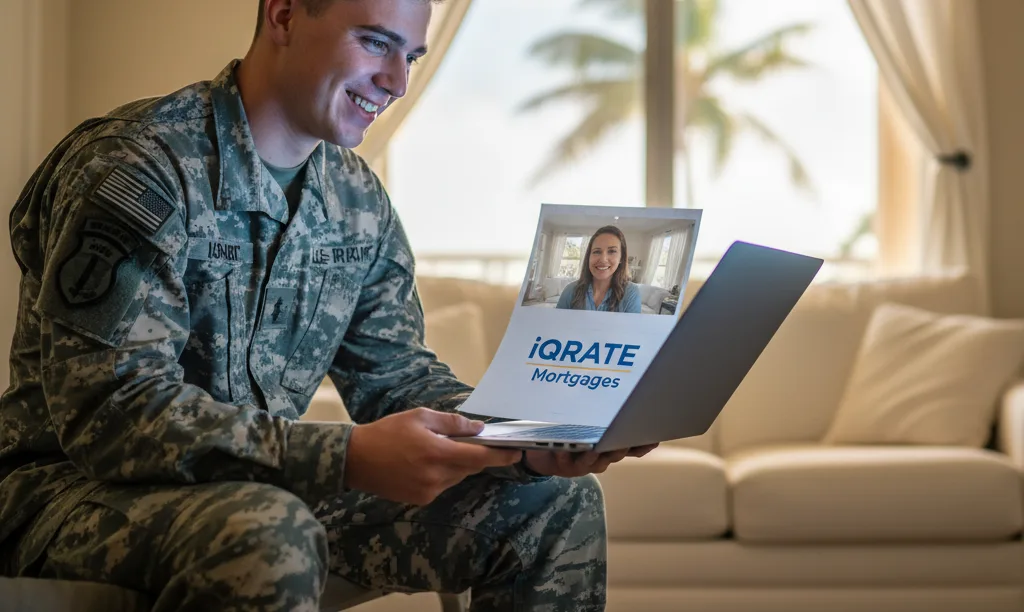

Can I refinance my Jacksonville home while I am deployed?
Yes, you can absolutely refinance your Jacksonville home with a VA Interest Rate Reduction Refinance Loan (IRRRL) while you are deployed. Being overseas does not disqualify you from taking advantage of lower interest rates. The VA IRRRL, often called the 'streamline refinance', is specifically designed for simplicity, making it ideal for service members who are not physically present.
Key features of the IRRRL that facilitate a remote refinance include:
- No Appraisal Required: In most cases, the VA does not require a new appraisal, which eliminates the need to coordinate an appraiser’s visit to your property. (The data, information, or policy mentioned here may vary over time.)
- Limited Documentation: The program typically requires less income and asset verification than a standard refinance, simplifying the paperwork you need to gather and transmit. (The data, information, or policy mentioned here may vary over time.)
To overcome the logistical challenge of signing legal documents from another country, the mortgage industry uses two powerful tools: the Specific Power of Attorney (POA) and Remote Online Notarization (RON). These mechanisms ensure that the process can move forward securely and legally, whether your home is in Jacksonville, Pensacola, or another Florida community. With proper planning, you can complete the entire refinance process from your station, securing a lower monthly payment for your family back home.
What is a specific power of attorney for a VA refinance?
A power of attorney is a legal document that grants a person you trust—known as your 'agent' or 'attorney-in-fact'—the authority to act on your behalf in financial or legal matters. For a VA refinance, however, you cannot use just any POA. Lenders and the VA require a 'Specific Power of Attorney', sometimes called a Special Power of Attorney.
Unlike a 'General POA', which grants broad authority, a specific POA is strictly limited to a single transaction. It must explicitly detail the authority you are granting. For a VA IRRRL, the document must contain:
- The full property address.
- The name of the mortgage lender.
- The exact type of loan (e.g., VA IRRRL).
- The specific actions your attorney-in-fact is authorized to take, such as signing the promissory note, the security instrument (mortgage/deed of trust), and the closing disclosure.
Crucially, the VA requires that the specific POA be reviewed and approved by your lender before you sign it. Do not download a generic template online. Your lender or the title company will provide a draft that meets all legal and VA requirements. For instance, a deployed Navy pilot from Pensacola looking to refinance a $400,000 mortgage would need a POA that explicitly names their spouse, lists the Pensacola property address, names the lender, and authorizes the signing of all documents related to that specific VA IRRRL transaction.

Who can I appoint to sign my mortgage documents for me?
You can appoint any trustworthy and legally competent adult to act as your attorney-in-fact. The most common choice for deployed service members is their spouse, as they are often already involved in the family's finances. However, you are not limited to your spouse.
Other suitable individuals include:
- A parent
- An adult child
- A sibling
- A close, trusted friend
When choosing your attorney-in-fact, consider their reliability, attention to detail, and availability. This person will be stepping into your shoes to execute legally binding documents. They must be available to communicate with the lender and title company and, in some cases, attend the physical closing appointment. Before making a final decision, have an open conversation with the individual to ensure they understand the responsibility and are comfortable with the role. Their signature will be legally considered your own, so complete trust is non-negotiable.
How does remote online notarization work for military members?
Remote Online Notarization (RON) is a game-changing technology for deployed military personnel, sometimes eliminating the need for a POA altogether. RON allows you to appear before a commissioned notary public in real time using secure, two-way audio-visual technology from anywhere in the world with a stable internet connection.
Here’s how the RON process typically works:
- Confirmation: First, confirm that your lender and the title company handling the closing are approved to use RON for mortgage transactions. Florida is a RON-friendly state, making this a widely available option for Florida-based properties.
- Identity Verification: Before the signing session, you will go through a multi-step identity verification process. This often includes answering knowledge-based authentication questions (e.g., 'Which of these previous addresses have you been associated with?') and uploading a photo of your government-issued ID.
- The Video Session: You will join a live video call with the notary. They will witness you electronically sign the documents on your screen.
- Digital Sealing: After you sign, the notary will apply their electronic seal and digital certificate to the documents, making them legally valid and tamper-evident.
RON allows you to be the one signing the documents, providing peace of mind and direct control over the final steps of your refinance. It removes the dependency on an attorney-in-fact and simplifies coordination across different time zones.
What steps should I take before deployment to prepare for a refinance?
Proactive preparation is the single most important factor for a smooth remote refinance. Taking key steps before you deploy can prevent significant delays and stress down the line.

Pre-Deployment Refinance Checklist:
- Consult a VA Loan Specialist: Speak with a mortgage professional who is experienced with military clients and the IRRRL program. Discuss your goals, get a rate quote, and understand the lender’s specific process for deployed borrowers.
- Gather Your Documents: Organize digital copies of essential documents, including your current mortgage statement, homeowners insurance policy declaration page, and your VA Certificate of Eligibility (COE). If you cannot find your COE, your lender can typically retrieve it for you.
- Draft and Approve a Specific POA: Even if you plan to use RON, having a lender-approved specific POA ready is an excellent backup plan. Internet connectivity can be unreliable in some locations. Work with your lender to get a draft prepared and approved before you leave.
- Establish Secure Communication: Set up a reliable and secure method for communicating. This includes a personal email address you can access, and you should obtain your lender’s secure document portal login information.
- Brief Your Point Person: Whether it’s your spouse or another trusted individual, walk them through the plan. Ensure they know who the lender is, have contact information for the loan officer, and understand their potential role as attorney-in-fact.
Are there any special considerations for my spouse during the process?
Yes, your spouse's role is pivotal, especially if they are named as your attorney-in-fact. While the IRRRL process is streamlined, your spouse will become the primary point of contact for the lender and title company in the United States.
Key considerations include:
- Communication Hub: Your spouse will field questions, provide requested information, and coordinate scheduling. Clear and regular communication between you and your spouse is essential to ensure you are aligned on all decisions.
- Legal Authority: If your spouse is not on the original loan, the specific POA is the only thing that grants them the legal authority to sign documents on your behalf. If they are already a co-borrower on the loan, they will sign for themselves, but they will still need the POA to sign for you.
- Understanding the Documents: While the attorney-in-fact is not financially liable for the loan (unless they are a co-borrower), they are executing a legal act. Ensure your spouse has a basic understanding of the documents they are signing, such as the Closing Disclosure, which outlines the final loan terms and costs.
How do I securely transmit sensitive documents from overseas?
Never send documents containing your Social Security number, date of birth, or other personal identifying information through standard, unencrypted email. Your personal data is a prime target for identity theft.
Use these secure methods for transmitting documents:
- Lender's Secure Portal: This is the best and most preferred method. Nearly all reputable lenders provide a secure, encrypted online portal where you can upload documents directly. It functions like a secure digital locker shared between you and your loan team.
- Password-Protected Files: If a portal is unavailable, you can place documents into a compressed (ZIP) file or a PDF and encrypt it with a strong password. You would then send the password to your loan officer in a separate communication, such as a text message or different email.
- Secure Fax Services: While less common now, secure e-fax services can be an option if available at your deployed location.
Always double-check the recipient's email address before sending anything and be wary of any sudden changes in communication methods, as this can be a sign of a phishing attempt.
What is a realistic timeline for a remote IRRRL?
An IRRRL is one of the fastest mortgage transactions available, but handling it remotely requires accounting for potential communication delays due to time zone differences. A realistic timeline for refinancing your home while deployed is typically 30 to 45 days. (The data, information, or policy mentioned here may vary over time.)
Here is a sample breakdown:
- Week 1: Application and Disclosures. You submit your application and initial documents through the lender's portal. The lender sends back the initial loan disclosures for your electronic review and signature.
- Week 2: Processing and Title. The loan processor verifies your information and the title company begins its work. This is the stage where you finalize and get lender approval for your specific POA if you are using one.
- Week 3: Underwriting and Approval. The underwriter issues a final loan approval, or 'clear to close'. You will then coordinate with the title company to schedule the remote closing, either via RON for you or with your attorney-in-fact.
- Week 4-5: Closing and Funding. The final documents are signed. After a mandatory three-day rescission period (for primary residences), the loan officially funds, and your old mortgage is paid off. You will receive confirmation that the refinance is complete.
Building in a buffer for communication and document transfer is wise. A responsive lender who is experienced with military clients can help keep the process on the shorter end of this timeline. If you're an active-duty military member considering a VA IRRRL, planning is key. Connect with a VA loan specialist who understands the unique needs of deployed service members to create a clear strategy for your remote refinance.
Ready to take advantage of today's rates while you're serving overseas? Connect with a VA loan specialist who understands the unique needs of deployed service members and get started on your remote refinance. Apply for your VA IRRRL now.
Author Bio
David Ghazaryan is the expert mortgage strategist and founder behind iQRATE Mortgages. With a mission to fund home loans that traditional banks won't touch, David specializes in helping clients with unique financial situations, including those recovering from foreclosure or bankruptcy. He expertly crafts smart, strategic, and stress-free mortgages by leveraging a vast network of over 100 lenders to secure competitive rates for investors and homebuyers alike. Praised for exceptional customer service, David has helped hundreds of families with a 97% satisfaction rate, guiding them to the mortgage they deserve.
References









