

Why VA Manufactured Home Loans Are So Complex
Financing a manufactured home with a VA loan is fundamentally different from buying a traditional, site-built house. While the VA loan benefit is an incredible advantage for veterans, its guarantee to the lender is contingent on the property itself being a secure investment. Manufactured homes, by their nature, present unique risks that traditional homes do not. The primary concern is that a manufactured home could be moved or may depreciate faster than a site-built home, making it less reliable as collateral.
To mitigate this risk, the Department of Veterans Affairs (VA) has established strict guidelines that the property must meet. The single most important rule is that the loan must be for real property, which includes both the structure and the land it sits on. The home cannot be considered personal property or a chattel, which is how vehicles are classified. This legal distinction is the root of most financing denials. Lenders in competitive Florida markets like Orlando often add their own 'overlays', or extra rules, on top of the VA's minimum requirements, making the process even more stringent. (The data, information, or policy mentioned here may vary over time.)
Understanding the Real Property Requirement
For a manufactured home to qualify for a VA loan, it must be:
- Permanently affixed to a foundation that meets specific federal guidelines.
- Titled as real estate with the local municipality. This often involves surrendering the original vehicle-like title.
- Sold with the land it occupies. You cannot get a VA loan for just the home if you are leasing the land.
VA Permanent Foundation Requirements Explained
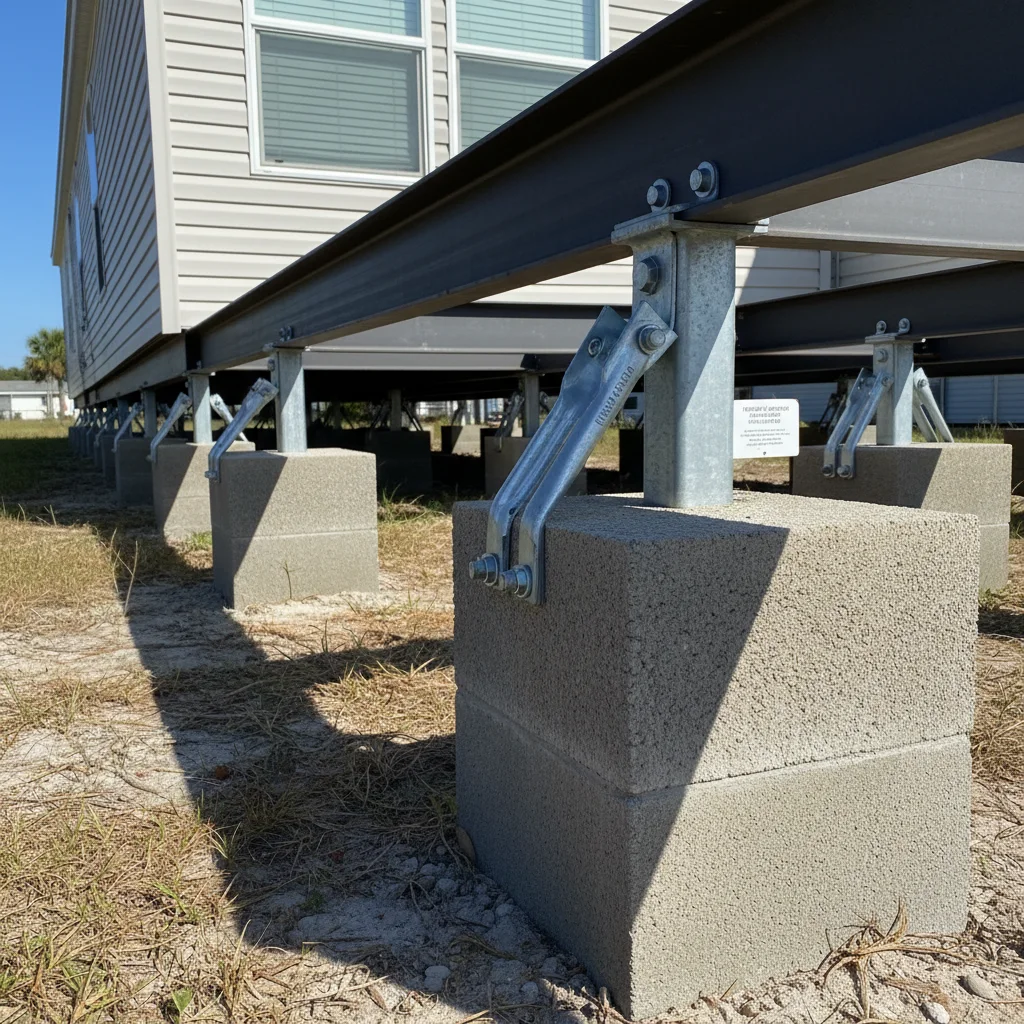
The foundation is the most scrutinized element of a VA manufactured home appraisal. It must be a permanent installation designed to withstand the environmental conditions of Florida. A simple setup of blocks on the ground will not pass inspection. The VA largely adopts the standards set by the Department of Housing and Urban Development (HUD).
The Critical Foundation Engineering Certification
Before a VA loan can be approved, a licensed structural engineer must inspect the home's foundation and issue a certification letter. This letter explicitly states that the foundation complies with the 'HUD Permanent Foundations Guide for Manufactured Housing' (PFGMH). This is a non-negotiable document that the lender and VA appraiser require.
The engineer will verify several key points:
- Proper Anchoring: The home must be securely attached to the foundation with anchors and tie-downs designed to resist uplift from high winds, a critical feature in Florida.
- Load Distribution: The foundation must be able to support the home's weight without shifting or settling.
- Durable Materials: The foundation must be constructed of materials like reinforced concrete that are resistant to decay and pests.
Removal of Axles, Wheels, and Towing Hitch
A clear visual indicator that a manufactured home has been converted to permanent real property is the complete removal of its transport equipment. A VA appraiser in Jacksonville will physically inspect the crawlspace or skirting to ensure the steel chassis is permanently secured to the foundation piers. They will also confirm that the towing hitch (or tongue) and all axles have been detached. If these components are still present, the home is considered mobile, not permanent, and will not qualify for VA financing.
Property and Unit Specifications for VA Approval
Beyond the foundation, the manufactured home unit itself must meet certain criteria related to its size, age, and location to be eligible for a VA loan.
Does the Home Need to Be a Double-Wide?
While the VA itself does not set a minimum square footage, lenders often impose their own, typically requiring at least 400 square feet for a single-wide unit and 700 square feet for a multi-wide unit. While a single-wide home can technically qualify under VA rules, many lenders will not finance them. This is a common lender overlay. Lenders perceive double-wide or larger homes as having better resale value and being more comparable to traditional homes, making them a safer investment. In practice, finding a lender willing to approve a VA loan for a single-wide manufactured home in Orlando can be extremely challenging.

Age Restrictions on Manufactured Homes in Jacksonville
The VA does not set a maximum age limit for a manufactured home. However, the property must have been built after June 15, 1976. This date is significant because it's when the federal HUD code for manufactured housing construction and safety standards went into effect. Homes built before this date are largely considered un-financeable by most lenders, including for VA loans.
Furthermore, individual lenders often impose their own age restrictions. For example, a lender might have an internal policy not to finance any manufactured home that is more than 20 years old, regardless of its condition or adherence to the 1976 HUD code. (The data, information, or policy mentioned here may vary over time.) This is purely a risk-management decision on the lender's part.
Can I Use a VA Loan for a Home in a Mobile Home Park in Orlando?
This is a common point of confusion. The answer is almost always no, if you are leasing the lot. A core requirement of the VA loan program is that the financing must cover both the dwelling and the land beneath it, which you must own. In most mobile home parks, residents own their home but pay a monthly lot rent to the park owner. This arrangement is incompatible with VA financing.
The exception is if the home is located in a community structured as a condominium or a Planned Unit Development (PUD), where you purchase and legally own the specific lot your home occupies. If you have a deed for the land, you may be eligible for a VA loan.
The VA Appraisal and Documentation Process
The appraisal for a manufactured home is more intensive than for a standard home. The appraiser is tasked with ensuring the property meets all VA Minimum Property Requirements (MPRs) and has all the correct legal documentation.
Essential Documents for the VA Appraiser
To ensure a smooth appraisal process, you or the seller should have the following documents ready for inspection:
- HUD Data Plate / Compliance Certificate: This is a paper label or metal plate located inside the home, often on a kitchen cabinet door, in a bedroom closet, or near the main electrical panel. It contains manufacturer information, the date of construction, and serial numbers. If this plate is missing, it can be extremely difficult to get the home financed.
- Foundation Engineering Certification: The engineer's report confirming the foundation meets HUD standards.
- Proof of Real Property Conversion: Documentation from the local county property appraiser's office showing the home's vehicle title has been retired and it is taxed as real property.
- Proof of Land Ownership: A copy of the deed for the land.
Common Repair Items That Halt VA Financing
A VA appraiser will issue the appraisal 'subject to' the completion of certain repairs if the property fails to meet MPRs. Common required repairs for manufactured homes include:
- Damaged or Missing Skirting: The space beneath the home must be enclosed to protect it from weather and pests.
- Unsafe Porches or Steps: Any attached structures like decks or stairs must be secure and have handrails if required by code.
- Leaky Roof: Any evidence of an active roof leak or interior water damage must be repaired.
- Faulty Electrical or Plumbing Systems: All utilities must be safe and fully functional.
- Soft Floors or Structural Damage: Any issues indicating wood rot or structural instability must be addressed by a qualified contractor. Navigating VA guidelines for manufactured homes requires precision. If you're unsure whether a property in Orlando or Jacksonville meets these strict standards, consulting with a mortgage expert who specializes in VA loans can save you time and prevent costly mistakes.
Navigating the complexities of VA manufactured home loans can be challenging, but you don't have to do it alone. If you're ready to see if your chosen property meets the requirements and want to move forward with confidence, Apply now to consult with our VA loan specialists.
Author Bio
David Ghazaryan is the expert mortgage strategist and founder behind iQRATE Mortgages. With a mission to fund home loans that traditional banks won't touch, David specializes in helping clients with unique financial situations, including those recovering from foreclosure or bankruptcy. He expertly crafts smart, strategic, and stress-free mortgages by leveraging a vast network of over 100 lenders to secure competitive rates for investors and homebuyers alike. Praised for exceptional customer service, David has helped hundreds of families with a 97% satisfaction rate, guiding them to the mortgage they deserve.
References









