

Required Power of Attorney Type for VA Loans
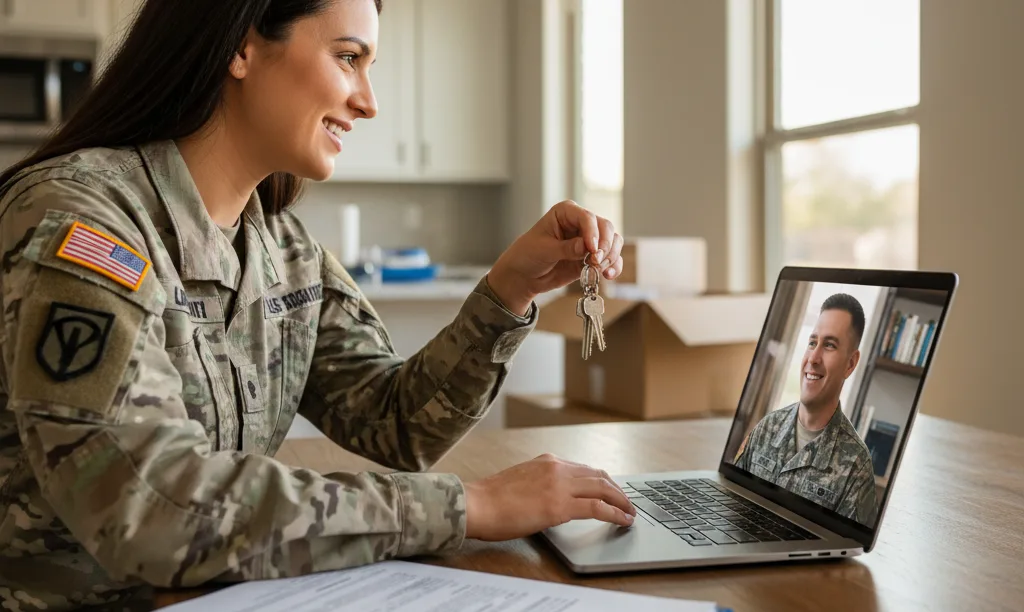
When you're an active duty service member buying a home with a VA loan, a Power of Attorney (POA) allows a designated person, known as your agent or 'attorney-in-fact', to sign legal documents on your behalf. The Department of Veterans Affairs (VA) has specific requirements for this document to be valid for a home loan transaction. Lenders and title companies in Texas, from Killeen to San Antonio, will scrutinize this document closely.
There are two primary types of POAs relevant to a VA loan:
- Special Power of Attorney: This is the most common and recommended type for real estate transactions. It grants your agent specific, limited powers for a single purpose, such as purchasing a particular property. For example, it would explicitly authorize your agent to buy the home at '123 Main Street, San Antonio, TX' and sign all associated mortgage documents. Because it's narrowly focused, it provides greater security and is preferred by most lenders.
- General Power of Attorney: This document grants your agent broad authority to act on your behalf in various financial and legal matters. While the VA permits the use of a General POA, it must contain specific language authorizing real estate and mortgage transactions. A generic General POA that doesn't explicitly mention the power to 'encumber real property' or 'execute a deed of trust' will be rejected by the lender's underwriting department.
The key takeaway is that regardless of the type, the POA must unambiguously give your agent the power to complete the home purchase. Before you have a POA created, you must get a draft copy approved by your lender and the title company handling your closing.
Lender and Title Company Discretion
While the VA sets the baseline rules, the lender and title company have the final say. A lender in Killeen might have an internal policy that requires a Special POA, even if the VA would accept a properly worded General POA. They do this to minimize risk. The title company, which insures the property title is clear, will also have its own legal review process.
If the language in the POA is even slightly ambiguous, they will not issue title insurance, which will stop the closing cold. Always provide a draft of your POA to the loan officer and closing agent as early in the process as possible.
Who Can Be Your Attorney-in-Fact?
Legally, you can appoint any competent adult to be your attorney-in-fact. For most active duty service members using a VA loan, this person is their spouse. However, it can also be a trusted parent, sibling, or close family friend. The person you choose must be reliable, organized, and capable of handling a complex financial transaction.
There is one critical restriction that both the VA and lenders enforce: your attorney-in-fact cannot have any other financial interest in the transaction. This means you cannot appoint:
- Your real estate agent
- Your loan officer or mortgage broker
- The property seller
- Anyone employed by the title company
- Anyone else who stands to gain financially from the sale
This rule prevents a conflict of interest. For instance, if your real estate agent were also your attorney-in-fact, they would be representing both your interests and their own financial commission, which is not permitted. Choosing a neutral, trusted individual like your spouse is the safest and most common practice for a smooth home purchase in San Antonio or elsewhere in Texas.
Essential Language for a VA-Compliant POA in Killeen
For a POA to be accepted for a VA loan in Texas, it must move beyond generic permissions and include highly specific language. A lender financing a home near Fort Cavazos in Killeen will look for precise clauses that leave no room for interpretation. Failing to include this language is the most common reason for closing delays.
Your POA must clearly state the following:
Intent to Use VA Loan Benefits: The document should include a phrase indicating the service member’s intent to use their VA loan eligibility. For example: 'This Power of Attorney is granted for the purpose of obtaining a loan to be guaranteed by the U.S. Department of Veterans Affairs.'
Full Property Description: The POA must identify the property. If the address is known, it should be listed in full (e.g., '456 Oak Avenue, Killeen, Bell County, Texas 76543'). If you are shopping for a home while deployed and don't have a specific property under contract yet, you can use broader language like, 'a residential property to be purchased in Bell County, Texas.'
Maximum Loan Amount and Interest Rate: To protect the service member, the POA must set a ceiling on the financial obligations. It needs to specify the maximum loan amount the agent is authorized to secure and the maximum interest rate. For example: 'to execute a promissory note and deed of trust for a loan not to exceed $400,000 with an interest rate not to exceed 8.0%.'
Statement of Occupancy: The service member must certify their intent to occupy the property as their primary residence upon their return from duty. A spouse's occupancy can also satisfy this requirement. The POA should contain this attestation.
Entitlement Statement: The POA must include a statement that the veteran is entitled to the full benefits of the Servicemembers Civil Relief Act (SCRA).
A military legal assistance attorney (JAG) can help you draft a POA, but you must provide them with these specific requirements from your lender. It's a best practice to have the lender's legal department provide a template or review your draft before it is signed and notarized. (The data, information, or policy mentioned here may vary over time.)
Navigating the Closing Process in San Antonio with a POA
Once you have a VA-compliant POA, your appointed agent will attend the closing on your behalf. The process in a major hub like San Antonio is standardized, but preparation is key.
Here are the steps your agent will take:
- Early Submission: The final, notarized POA document should be sent to the lender and title company well in advance of the closing date. They need time for a final legal review. A last-minute submission is a recipe for disaster.

- Closing Day: Your agent must bring two things to the title company's office: the original, wet-signed POA document (photocopies are not accepted) and their own valid, government-issued photo identification.
- Signing Documents: The title company's escrow officer will guide your agent through the stack of documents. The agent will sign your name exactly as instructed, typically followed by their own signature as attorney-in-fact. For example: 'Sgt. John Miller, by Jane Miller, his Attorney-in-Fact.'
- Final Steps: The agent will provide any necessary funds for closing costs or down payment (if applicable) and will receive the keys to your new home.
Communication is vital. Even with a POA, you should be reachable by phone or email in case any last-minute questions arise. Your agent is signing the papers, but you are still the borrower responsible for the loan.
Common POA Mistakes That Delay VA Loan Closings
Even with careful planning, simple mistakes can derail a closing. Here are the most frequent errors to avoid:
- Vague or Missing Authority: The POA doesn't explicitly grant the power to purchase real estate, execute a promissory note, and sign a deed of trust.
- Using a Generic Template: Downloading a generic POA template from the internet is almost a guaranteed failure. It will not contain the specific language required by the VA and Texas lenders.
- Improper Notarization: A POA must be properly notarized. If you are overseas, this should be done at a U.S. embassy or consulate, or by a qualified military officer authorized to act as a notary.
- Last-Minute POA Review: The number one cause of delays is waiting until the week of closing to show the lender the POA. It must be reviewed and approved during the underwriting process, which happens weeks before closing.
- Original Document Issues: The agent forgets to bring the original POA to closing, or the original document is lost in transit. Always have a secure plan for handling the original.
Does the Service Member Still Need to Be Involved?
Yes, absolutely. The Power of Attorney only delegates the authority to sign documents at the closing table. The active duty service member remains the primary borrower and is deeply involved in every other stage of the loan process.
Your direct responsibilities include:
- Obtaining Your Certificate of Eligibility (COE): This is the document that proves to the lender you have VA loan entitlement.
- Completing the Loan Application: You will fill out and sign the initial Uniform Residential Loan Application (Form 1003).
- Providing Documentation: You are responsible for supplying all required financial documents, such as Leave and Earning Statements (LES), bank statements, and tax returns.
- Signing Initial Disclosures: You will electronically sign the initial loan estimate and other disclosures sent by the lender at the beginning of the process.
- Staying in Communication: You need to be available to your loan officer to answer questions throughout the underwriting process.
The POA is a tool for the final step, not a replacement for your involvement as the borrower.
Preparing a VA-Compliant POA While Deployed
Creating a valid POA while stationed overseas is straightforward if you follow the correct procedure. Military installations, U.S. embassies, and consulates have legal assistance services available to service members.
- Contact Your Lender First: Before you do anything, ask your loan officer if they or their preferred title company have a specific POA template they require. Using their pre-approved format is the easiest way to avoid issues.
- Consult with Military Legal Assistance: Take the lender's requirements or template to a military legal assistance attorney (JAG). They can help you draft the document correctly and ensure it complies with both military regulations and Texas state law.
- Proper Notarization: The POA must be signed and notarized. Overseas, this can be done by a military officer authorized under 10 U.S.C. § 1044a or at a U.S. embassy or consulate. This creates a legally binding document that will be recognized in the United States.
- Securely Send the Original: Once the POA is executed, you must send the original document to your agent back in Texas. Use a reliable, trackable shipping service like USPS Registered Mail, FedEx, or UPS to ensure it arrives safely. Your agent will need this physical document for the closing in Killeen or San Antonio.
How Title Companies Verify the POA's Validity
The title company plays a critical role in verifying the POA. Their job is to ensure the transfer of ownership is legally sound so they can issue title insurance. Their legal team will conduct a thorough review.
- Document Scrutiny: They will first examine the POA document itself, checking for the required specific language, the property description, financial limits, proper signatures, and a valid notary seal.
- Affirmation of Principal: The title company has a duty to verify that the POA is still in full force and effect at the time of closing. They will often require the agent to sign an affidavit stating they have no knowledge that the POA has been revoked. In many cases, they will also make a good faith effort to contact the service member (the 'principal') directly, even if they are deployed, to confirm they are alive, well, and still authorize the transaction. A simple email or a brief video call is often sufficient.
- Compliance with Texas Law: The title company's attorneys will ensure the document complies with the Texas Property Code regarding the conveyance of real estate via a Power of Attorney. This protects all parties involved, including you, the lender, and the future owner of the property. Navigating VA loan rules with a Power of Attorney requires careful planning. If you're an active duty service member planning a purchase in Texas, consulting with a mortgage strategist who understands these military-specific challenges can prevent costly closing delays. Ensure your team is prepared from the start.
Understanding the nuances of a VA loan POA is crucial for a smooth home purchase. If you're an active duty service member ready to take the next step in Texas, our team is here to help. Apply now to partner with a mortgage expert who understands your unique needs.
Author Bio
David Ghazaryan is the expert mortgage strategist and founder behind iQRATE Mortgages. With a mission to fund home loans that traditional banks won't touch, David specializes in helping clients with unique financial situations, including those recovering from foreclosure or bankruptcy. He expertly crafts smart, strategic, and stress-free mortgages by leveraging a vast network of over 100 lenders to secure competitive rates for investors and homebuyers alike. Praised for exceptional customer service, David has helped hundreds of families with a 97% satisfaction rate, guiding them to the mortgage they deserve.
References
CFPB: What is a power of attorney?
VA Lenders Handbook - Chapter 7: Borrower, Guaranty, and Maximum Loan Amount









